
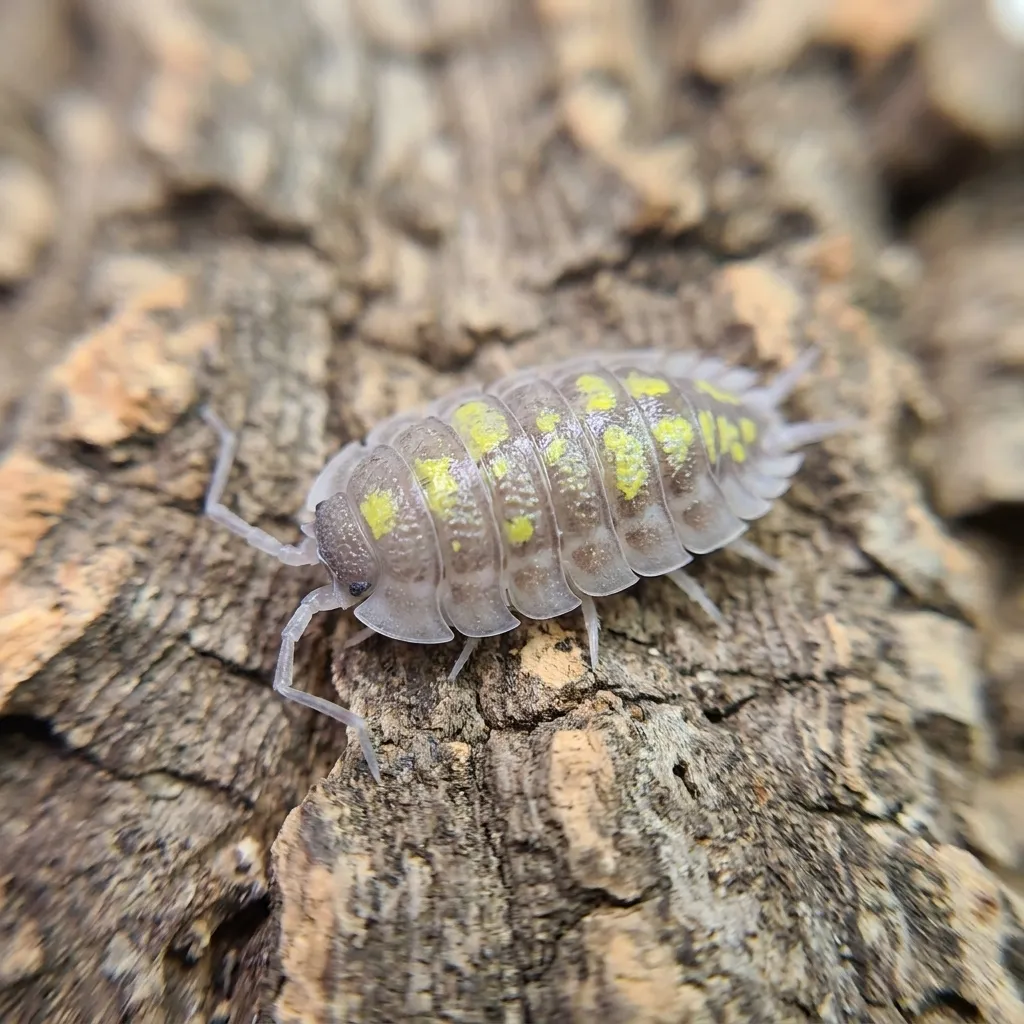
Porcellio haasi Giant Isopods for Sale
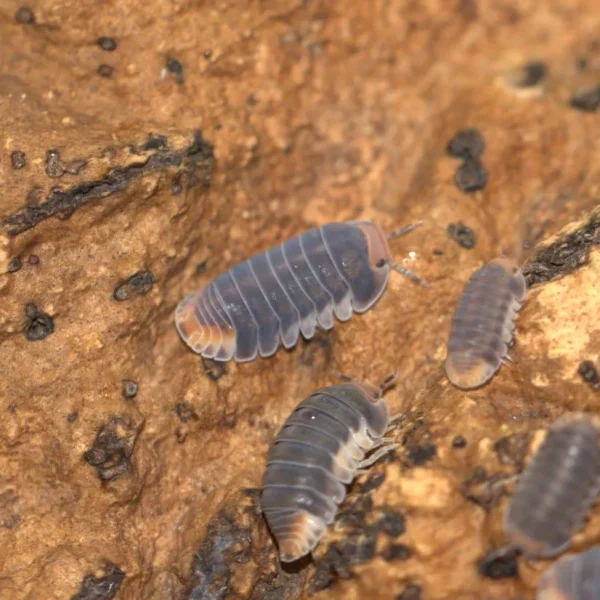
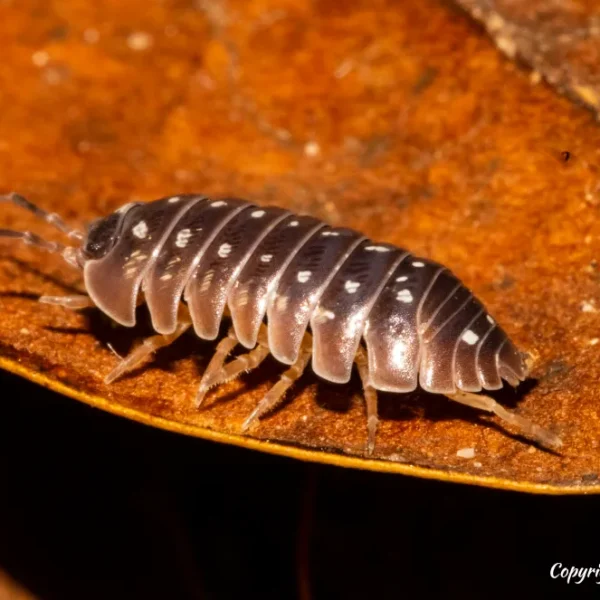
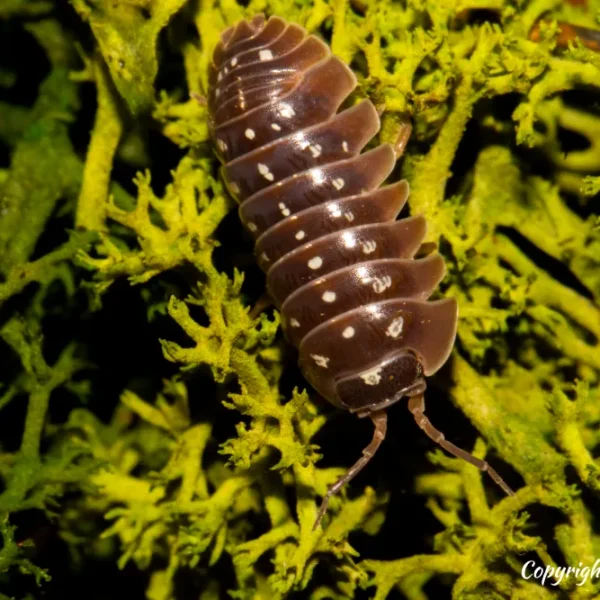
TC INSECTS ships live captive-bred Porcellio haasi “Giant” as a mixed-size starter group for display cultures and dedicated breeding projects. This is a size-selected line of the Spanish mountain haasi species. Therefore, “Giant” refers to consistent adult size output rather than a distinct locale, color morph, or subspecies.
Overview
Porcellio haasi is a large Spanish Porcellio from the mountainous regions of Spain. The “Giant” line produces adults that typically reach 1.25 to 1.4 inches at full maturity. In comparison, standard haasi lines average closer to 1 to 1.1 inches for large males. That size difference is meaningful in a display culture and is the defining reason to choose this line over others.
However, care, temperament, and husbandry are essentially identical between Giant and haasi “Bright”. Both are reclusive, both require very dry overall gradients, both have territorial males, and both breed slowly. The larger body size of the Giant line simply amplifies those characteristics: males need even more floor space, calcium demand is higher during larger molts, and reaching full display size takes longer.
As a result, this product suits keepers who specifically want the largest possible haasi adults for display and are patient enough to build the colony to full size.
Why Keep Porcellio haasi “Giant”?
- Maximum haasi adult size. Full-grown Giant males with extended uropods produce one of the most visually impressive large Porcellio displays in the hobby.
- Established size-selected line. Additionally, the “Giant” designation reflects a line with documented adult size output rather than a marketing claim on standard haasi adults.
- Ideal top of a haasi collection. Furthermore, keepers who already keep haasi “Bright” or haasi “High Yellow” often add Giant to display the full size range of the species.
- Same care framework as haasi “Bright.” Specifically, keepers who already manage a dry-gradient haasi culture can apply the same setup knowledge directly to the Giant line.
- Long-term display payoff. As a result, a well-managed Giant culture, once adults reach full size, produces some of the most striking large Porcellio in a dedicated Spanish isopod room.
Honest Note: “Giant” Is a Size-Selected Line, Not a New Species
The “Giant” label describes a size-selected hobby line of Porcellio haasi. It does not indicate a distinct locale, subspecies, color morph, or scientifically recognized form. The underlying species is the same Spanish mountain haasi documented across the Aragón region and other mountainous areas of Spain.
Care, behavior, and husbandry are essentially identical to haasi “Bright.” Therefore, if you already own haasi “Bright” and are considering adding Giant, the experience of keeping both will be very similar. The practical difference is adult size at full maturity. If you want maximum size, Giant is the right choice. If you want the same species with a confirmed locale identity, haasi “Bright” is the right choice.
What Larger Size Actually Means in Practice
The Giant line’s adult size advantage comes with real husbandry implications beyond just display appeal.
First, males at 1.25 to 1.4 inches are more territorial than smaller haasi individuals. Therefore, the enclosure needs more floor space and more hides to reduce conflict. A minimum 15 to 25 liter bin is strongly recommended for a starter culture, not a small deli cup.
Second, larger molts require more calcium. At full size, a Giant adult uses substantially more calcium per molt than a standard haasi adult. As a result, calcium access must stay continuous rather than occasional. Use TC Calcium Ultra Fine, cuttlebone, or crushed oyster shell and replace it as the colony consumes it.
Third, reaching full adult size takes longer. Additionally, a starter culture of mixed-size juveniles may take several months before any individuals reach the impressive adult size that distinguishes this line. Patience is part of the purchase.
Care and Setup
Setup Framework
Care for Porcellio haasi “Giant” follows the same framework as haasi “Bright”: very dry overall, with roughly one-fifth of the enclosure kept moist, strong cross-ventilation, multiple hides for territorial males, and a steady calcium and protein rotation. Below, each section addresses the Giant-specific nuances of that framework.
Temperature
Hold the culture between 70 and 80°F, with 72 to 78°F as the preferred range. Room temperature works for most homes. Avoid cold drafts, direct sun, and heat lamps aimed at the container. Stable warmth matters more than a precise number.
Humidity
Keep roughly one-fifth of the enclosure moist with sphagnum moss or a damp substrate corner. Leave the rest genuinely dry with cork bark, leaf litter, and good airflow. The dry zone is not optional for this species.
Do not spread dampness across the enclosure. Additionally, check that the dry side stays actually dry rather than slowly absorbing moisture through substrate contact. Stagnant humidity is one of the faster ways to stress a *Porcellio haasi* colony of any size.
Substrate
Use a substrate with organic matter built in. Coco fiber, decaying hardwood, and leaf litter mixed through work well. Three to five inches of depth suits a larger culture. The enclosure also needs enough floor area for large adults and territorial males to spread out.
Food and Calcium
Keep dried hardwood leaves and decaying wood available at all times. On top of that, offer small amounts of vegetables two to three times per week. Carrot, squash, sweet potato, and zucchini all work well.
Rotate in protein through TC INSECTS Isopod Food, fish flakes, or freeze-dried shrimp two to three times per week. Remove uneaten fresh food within one to two days. Furthermore, keep TC Calcium Ultra Fine, cuttlebone, or crushed oyster shell continuously available. Calcium demand is higher in the Giant line because larger molts consume more calcium per individual.
Ventilation and Space
Use a fully ventilated lid plus cross-vents on the sides. Strong cross-ventilation protects the dry zones and prevents stagnant air buildup. A larger gasket-sealed bin with cross-vents outperforms small containers for the Giant line specifically, because the larger adults need proportionally more floor area.
Provide multiple cork bark pieces, rotting wood slabs, and bark hides spread across both the dry and moist zones. Males claim separate hides and conflict escalates in overcrowded setups. Therefore, more hides reduce colony stress and support steady breeding.
Bioactive Use
The Giant line works in dry to semi-dry bioactive setups with strong airflow. It is not suited to wet vivariums or constantly humid enclosures. For bioactive use, add TC INSECTS Assorted Hardwood Leaf Litter before introducing the colony. Pair with Springtails to manage the moist corner and fine organic debris.
Breeding Notes
Females carry developing young in a brood pouch called a marsupium and release pale mancae once ready. The colony breeds at a slow to moderate pace. Furthermore, reaching full Giant adult size takes longer than in smaller haasi lines, so the payoff of maximum display size requires patience from setup through to mature adults.
To support breeding, keep calcium continuously available, maintain the moist retreat, provide leaf litter at all times, and minimize substrate disturbance. Additionally, ensure males have separate hides to reduce territorial conflict during the vulnerable post-molt window when freshly molted adults are soft.
As the colony grows, increase floor space or split into a second container. This protects the main colony and provides a backup culture over time.
Best For
- Display cultures where maximum haasi adult size is the primary goal
- Dedicated Spanish Porcellio collections alongside haasi “Bright” or other haasi lines
- Keepers who already manage dry-gradient haasi cultures successfully
- Intermediate-to-advanced keepers comfortable with territorial males and slow breeding
- Larger culture bins (15 to 25 liter minimum) with strong cross-ventilation
- Long-term breeding projects where building a colony of maximum-size adults is the target
Not Best For
- Keepers who already own haasi “Bright” and expect a meaningfully different husbandry experience. The care is essentially the same.
- First-time isopod keepers. Start with Dwarf Whites, Powder species, or Giant Canyons first.
- Small, sealed containers. Larger adults and territorial males need generous floor space and airflow.
- Wet or tropical setups. This species requires a genuinely dry overall gradient.
- Keepers expecting fast visible growth to display size. Reaching 1.25 to 1.4 inches takes time.
- Feeder use. Size, slow breeding, and price point all make these a poor reptile food option.
Origin and Locality Notes
Porcellio haasi is native to the mountainous regions of Spain, most commonly associated with the Aragón area of northeastern Spain in detailed hobby sources. The “Giant” line does not carry a documented distinct wild locality. Instead, it represents a captive size-selected line within the broader Spanish haasi population.
TC INSECTS does not claim a specific collection point for this culture beyond the confirmed Spanish mountain origin of the species. The care framework reflects that origin: dry mountainous conditions, strong ventilation, bark and rocky cover, and a small reliable moist retreat.
Receiving and Acclimation
Open your package soon after delivery in a calm indoor area. Inspect the culture carefully. Some isopods may hide under moss or packing material after shipping. Move the packing material directly into the prepared enclosure rather than picking out individuals, since juveniles are easy to miss.
Prepare the enclosure before opening the culture. The dry zone should already feel dry to the touch. Place leaf litter, multiple bark hides, and a calcium source before adding the isopods. Set them near the moist retreat under cover, then leave them mostly undisturbed for the first week.
Initial hiding after shipping is normal and expected, especially for a reclusive species. Activity typically increases after the colony settles, particularly during low light and when you add fresh food.
Recommended Add-Ons
- TC INSECTS Isopod Food for regular protein rotation, important for large-bodied isopods.
- TC INSECTS Assorted Hardwood Leaf Litter as the foundation grazing and cover layer.
- TC INSECTS Ultra Isopod Habitat Kit for a richer, better-ventilated starter setup suited to large, territorial adults.
- TC Calcium Ultra Fine for continuous calcium availability, critical for supporting larger molts.
- Springtails to manage the moist corner and fine organic debris alongside the Giant colony.
Frequently Asked Questions
What is the actual difference between haasi “Giant” and haasi “Bright”?
The core difference is adult size. Haasi “Bright” is a locale form from northwestern Spain, with large males averaging 1 to 1.1 inches. The Giant line is a size-selected line that produces adults consistently reaching 1.25 to 1.4 inches. Care, temperament, and husbandry are essentially the same between both.
Therefore, if you already own haasi “Bright,” you will not experience a meaningfully different keeping challenge with Giant. The purchase is justified by the size difference at full maturity, not by a new behavioral or husbandry experience.
How long does it take to reach full adult size?
Reaching full Giant adult size takes longer than in smaller haasi lines. A starter culture of mixed juveniles and sub-adults may need several months of stable care before any individuals display the 1.25 to 1.4 inch adult size. Furthermore, the colony produces a mix of sizes continuously. The full display payoff builds as the culture matures over time.
Are the care requirements different from haasi “Bright”?
No. Care is essentially identical. Both lines need a very dry overall gradient with roughly one-fifth moist, strong cross-ventilation, multiple hides for territorial males, continuous calcium access, and protein in regular rotation. The Giant line’s larger adults simply need proportionally more floor space and slightly higher calcium consumption per individual during larger molts.
Do Giant haasi isopods behave differently from standard haasi?
No notable behavioral difference separates Giant from other haasi lines. This species is reclusive regardless of size, spending most of its time under cork bark and leaf litter. Males are territorial across all haasi lines. Additionally, as with all haasi, activity tends to increase at lower light levels and when you add fresh food. Expect the same patience-based long-term culture approach that haasi “Bright” requires.
Can I keep haasi “Giant” with haasi “Bright” in the same enclosure?
Generally no, and not because of any species incompatibility. Both are the same species, so there is no biological barrier. However, mixing lines risks hybridization between size-selected and locale-selected individuals, which can gradually blur the size and pattern traits that distinguish the lines. For keepers who want to maintain each line’s characteristics, separate enclosures are the stronger approach.
Can haasi “Giant” live in a reptile enclosure?
They can suit dry to semi-dry ventilated reptile enclosures where the reptile does not actively hunt isopods faster than the colony replaces them. However, the slow breeding pace and the need for generous floor space make them a poor match for most high-activity reptile bioactive setups. For reptile cleanup crew use, Giant Canyon isopods or Dwarf Whites work much better.
Learn More About Porcellio haasi
For keepers who want taxonomic context and natural history on Porcellio haasi, these sources are worth a look.
- GBIF: Porcellio haasi. The Global Biodiversity Information Facility taxonomic record and distribution data for Porcellio haasi, including observation records from Spain. Useful for verifying the species name, confirmed range, and understanding the geographic context of the Spanish mountain habitats this line originates from.
- iNaturalist: Porcellio haasi. Community observation records and habitat photographs from the species’ native Spanish range. The habitat images show the rocky, dry mountainous environments that explain why this species needs a very dry enclosure with a small moist retreat rather than a standard moderate-humidity setup.
- PMC / NCBI: Conglobation and water conservation in terrestrial isopods. Peer-reviewed research on how isopod pleopodal structures interact with humidity and water loss. This paper explains in biological terms why a mostly-dry enclosure with a small moist corner suits a Spanish mountain species like Porcellio haasi better than constant moderate humidity.
Reviews
There are no reviews yet.