
Blue Pidgeon Isopods for Sale
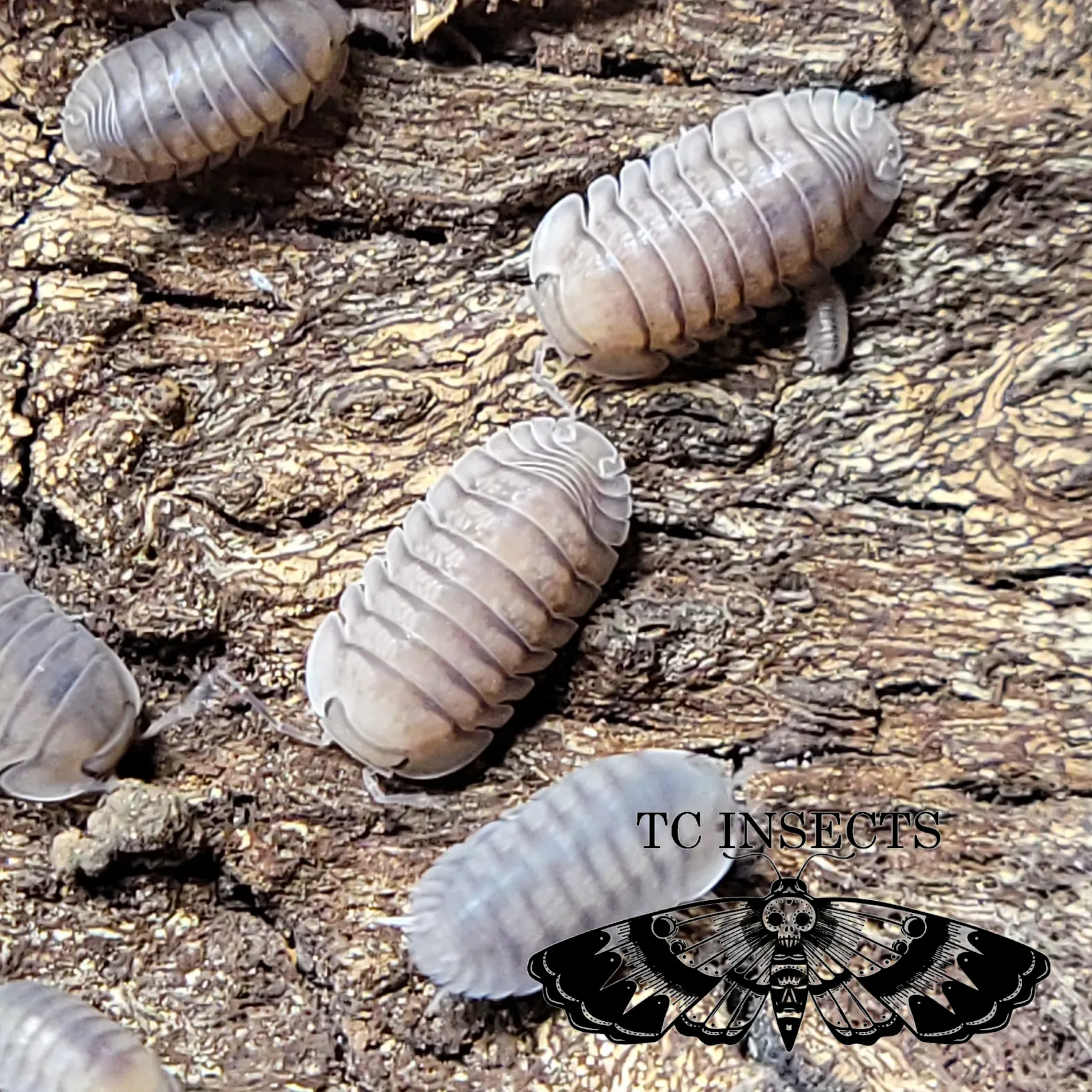
Cubaris sp. “Blue Pidgeon” is the smallest-starter collector Cubaris in our catalog. Cultures ship in 5 or 10 counts, which is intentional because the species is sold at an accessible collector tier rather than a bulk bioactive workhorse. As a result, the buyer audience is collectors who want a subtle blue-gray Cubaris without committing to a large starter count or a premium price tier.
The trade name uses the “Pidgeon” spelling because that is the established hobby spelling for the line. Buyers searching the standard English “Blue Pigeon” spelling land on the same product.
Overview
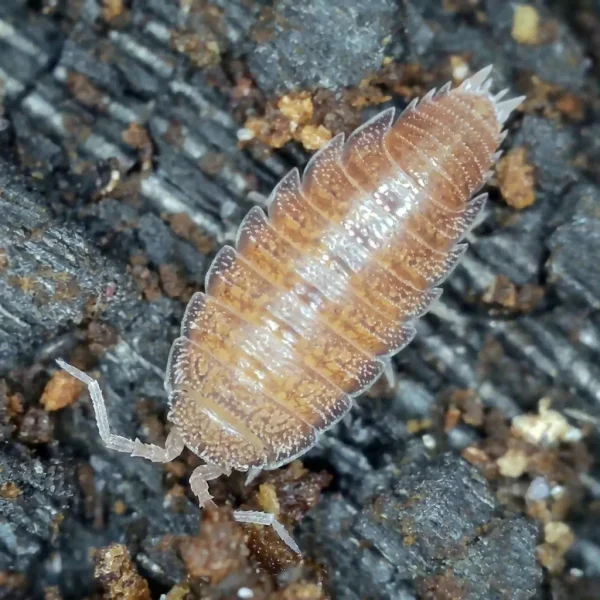
Blue Pidgeon carries soft slate, dusty blue, and muted gray body tones. The color is subtle rather than bold, and individuals vary in how strongly the blue cast reads. As a result, the colony looks quiet and refined rather than vivid, which suits collectors building a varied multi-tone Cubaris lineup.
This is a display and breeding culture first. The small starter count means bioactive use should wait until the colony has grown several months in its own bin.
Why Keep Blue Pidgeon Isopods?
- Subtle blue-gray color: Soft slate and dusty blue tones that contrast against warmer Cubaris in a collection.
- Small-starter entry: 5- and 10-count cultures make this the most accessible collector Cubaris to try.
- Collector appeal: Adds a quiet blue tone to a multi-Cubaris lineup that already includes warm or contrast morphs.
- Curl response: Rounded Cubaris body curls tightly, which photographs well in display jars.
- Moderate breeding: Colony builds slowly but steadily once stable.
Honest Note on the “Pidgeon” Spelling
This is the most important detail before searching for this product. “Pidgeon” is a non-standard spelling of “Pigeon,” but it is the established hobby trade spelling for this line. As a result, the product URL, listing, and most seller pages use “Pidgeon” while many buyers naturally type “Pigeon.” Both spellings refer to the same hobby Cubaris.
Keep your own culture labels consistent with the spelling you prefer, because mixed labels across sellers can confuse trade records if you ever sell or trade animals later.
Honest Note on the Subtle Blue Color
The “blue” in Blue Pidgeon is muted and pigeon-feather inspired, not a vivid saturated blue. The colony reads as soft slate and dusty blue-gray rather than bright blue. As a result, online photos under bright lighting can exaggerate the blue cast, and the animals in person often look more gray-blue than catalog images suggest.
Buyers wanting a more obvious blue tone may be disappointed because no captive isopod in the hobby trade produces a saturated bright blue color. The subtle pigeon-feather tone is what this trade name actually delivers.
Honest Note on the 5- and 10-Count Starter
Most catalog Cubaris ship in 10, 25, 50, or 100 counts. Blue Pidgeon ships in 5 or 10 only, which is a real factor in colony establishment. A 5-count starter has fewer breeding adults, which means slower initial growth than a larger pack would deliver. Buyers planning a fast bioactive seed should pick a larger-pack species like Dwarf White Isopods instead. Buyers comfortable with patient growth from a small group will find Blue Pidgeon manageable.
Honest Note on Species Identification
This isopod is sold as Cubaris sp. “Blue Pidgeon” because the exact species is not formally described. The name is a hobby trade designation. Because of this, the page focuses on practical captive care rather than wild-locality claims.
Care and Setup
Blue Pidgeon does well in a stable tropical setup with a clear moisture gradient. The small starter count means the bin scale should be small at first. The subsections below cover the core requirements.
Temperature
Hold the enclosure between 70 and 78°F. Cold drafts and heat spikes both stall a small starter colony harder than they would stall a larger group. Avoid heat lamps directly on the bin, sunlit windows, and unheated garage corners.
Humidity
Aim for moderate to high humidity with a reliable moist retreat. However, leave one corner slightly drier under bark and dry leaves so the isopods can pick their preferred zone. Sealed soggy bins are the most common new-keeper mistake.
Substrate
Use a deep organic substrate at least 2 to 3 inches thick. Mix in decaying hardwood, leaf litter, and a small amount of sphagnum. Deeper substrate matters more than usual for small starter cultures because juveniles need extra hiding space when adult numbers are low.
Enclosure Size
Use a small ventilated bin for a 5- or 10-count starter, not a large container. Small bins hold humidity more consistently and concentrate the isopods near food and cover. Upgrade to a larger bin only after the colony has been producing juveniles for a few months.
Food
Offer leaf litter and decaying wood as the base diet. Add small portions of TC INSECTS Isopod Food, occasional vegetables like squash or carrot, and very light protein. Feed in tiny amounts because a small starter group eats very little.
Ventilation
Use moderate ventilation. A few small air holes or a partial mesh lid keeps airflow steady without drying the culture too fast. Stagnant air encourages mold and sour substrate.
Calcium
Keep calcium available at all times. A small dish of TC Calcium Ultra Fine or crushed cuttlebone supports healthy molts. Small cultures use very little calcium at first, so refresh only when the dish gets dirty or moldy.
Bioactive Use
Blue Pidgeon should not be seeded directly into a bioactive enclosure from a 5- or 10-count starter. Grow the colony in its own bin for several months first. Then move a portion into a bioactive setup while keeping the original culture as a backup.
Breeding Notes
Blue Pidgeon breeds at a moderate pace once stable. Females carry developing young in a marsupium, and mancae stay under bark and leaf litter for weeks after release. Therefore, a small starter group will look quiet for the first month or two, but the colony is almost always larger than it looks from above.
For steady output, hold humidity stable, keep TC INSECTS Assorted Hardwood Leaf Litter available year-round, and avoid splitting the culture for the first 6 to 12 months. Small starter colonies need every breeding adult in one place to reach a self-sustaining population.
Best For
- Cubaris collectors adding a subtle blue tone to a varied lineup
- Display jars and small culture bins
- Intermediate keepers comfortable growing a small colony slowly
- Bioactive setups where the colony will be grown in its own bin first
- Long-term breeding projects with patience for slow population growth
Not Best For
- New keepers buying their first isopod culture
- Buyers expecting vivid saturated blue color
- Direct bioactive seeding from a 5- or 10-count starter
- Heavy cleanup crew duty in large reptile enclosures
- Use as a feeder insect
Origin and Locality Notes
The wild origin of Cubaris sp. “Blue Pidgeon” is not formally documented in the hobby trade. Some sources broadly associate the line with Southeast Asian Cubaris stock, but the exact locality should not be treated as confirmed. Because of this, captive care should focus on stable tropical conditions rather than mimicking a specific wild habitat.
In practice, that means warm temperatures, steady humidity, deep organic substrate, decaying hardwood, leaf litter, and calcium access. This setup style works for most tropical Cubaris-type isopods sold under unconfirmed trade names.
Receiving and Acclimation
Open the package promptly when it arrives. With a 5- or 10-count starter, every animal matters more than in a larger culture, so check the moss, paper, and substrate carefully before assuming any are missing. Curled or slow-moving isopods after transit are normal and usually recover within a day.
Prepare a small ventilated enclosure ahead of delivery with moist moss, leaf litter, cork bark, and calcium already in place. Place the shipping cup or packing material directly into the prepared bin near the moist side and let the isopods walk out on their own. Feed lightly for the first few days and avoid digging through the culture while it settles.
Recommended Add-Ons
- TC INSECTS Isopod Habitat Kit for a small-scale setup that matches the 5- or 10-count starter.
- TC INSECTS Assorted Hardwood Leaf Litter for cover, food, and humidity support.
- TC INSECTS Isopod Food for varied nutrition beyond leaf litter alone.
- TC Calcium Ultra Fine for healthy molts and stronger juvenile survival in small starter groups.
- Springtails for mold control in the small humid setup.
Frequently Asked Questions
Is it Blue Pidgeon or Blue Pigeon?
Both spellings refer to the same hobby Cubaris line. “Pidgeon” is the established hobby trade spelling used in the URL, product listing, and most seller pages. “Pigeon” is the standard English word that many buyers naturally type. The animal is the same either way, so search results for both spellings should land on this product.
How blue do they actually look?
Subtle. The blue is muted and pigeon-feather inspired, not vivid or saturated. The colony reads as soft slate and dusty blue-gray, especially under natural lighting. No captive isopod in the hobby trade produces a bright saturated blue, so buyers expecting one should adjust the expectation.
Why are starter cultures only 5 or 10 count?
Blue Pidgeon is sold as a collector-tier species at an accessible price rather than a bulk bioactive workhorse. The small starter counts match the collector positioning. Buyers wanting larger starter packs for fast bioactive seeding should pick Dwarf White Isopods or a similar high-output species instead.
Are Blue Pidgeon isopods beginner-friendly?
They sit at intermediate care. The species is not extremely difficult, but the small starter count means dehydration, dry spells, and acclimation stress hit harder than they would in a larger culture. New keepers usually do better starting with Cubaris murina “Anemone” or Florida Orange.
How fast do Blue Pidgeon isopods breed?
Reproduction is moderate once stable, but the small starter count means the colony looks quiet for the first month or two. Avoid splitting the culture for the first 6 to 12 months because small starter groups need every breeding adult in one place to reach a self-sustaining population.
How does Blue Pidgeon compare to other catalog Cubaris?
Blue Pidgeon fills the subtle blue-gray niche that no other catalog Cubaris occupies. For warm tones, Cubaris Amber or Florida Orange. For contrast pattern, Penguin or White Panda. For pale solid color, Pearls. Blue Pidgeon is the muted blue-gray pick.
Learn More About Tropical Cubaris
The following non-commercial references give helpful background on terrestrial isopod biology and the Cubaris genus for keepers buying a small-starter collector culture.
- Royal Society Publishing: Terrestrial Isopod Ecology. Peer-reviewed background on isopod biology and microhabitat dependence, useful for keepers who want to understand why moisture gradients matter for small starter cultures.


Reviews
There are no reviews yet.