

Red Armadillo Isopods for Sale
Overview
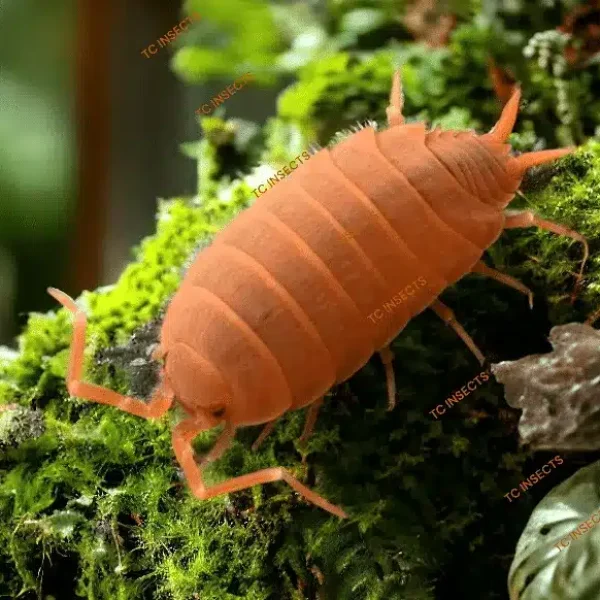
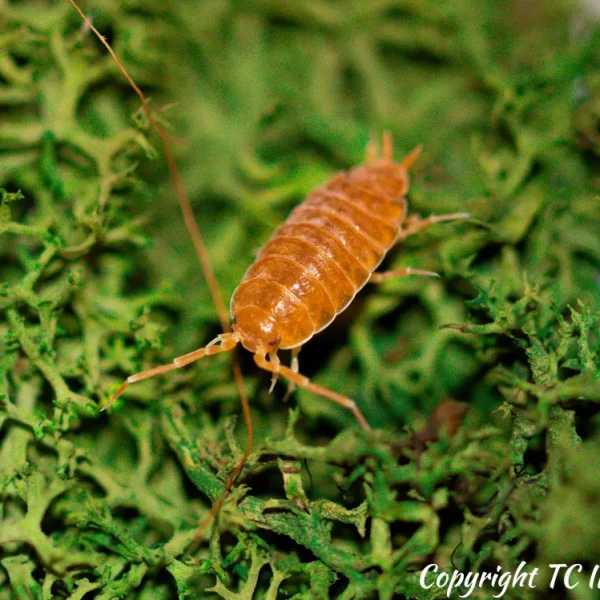
Red Armadillo Isopods are a hobby trade color line of Armadillo officinalis, a large Mediterranean full-rolling species. The “Red” designation refers to the warmer reddish-brown to russet coloration that distinguishes this
line from the more grayish wild-type form. Adults conglobate into a tight defensive ball when disturbed, like other full rollers, but the species stands out for its size and for an unusual behavior: audible stridulation, a
rasping sound produced when individuals are handled.
Additionally, despite the similar common naming, Armadillo officinalis sits in a different genus from the much more familiar Armadillidium vulgare and other Armadillidium morphs. This is a genuinely distinct species,
not a color form of Armadillidium, which matters for keepers researching the line.
Why Keep Red Armadillo Isopods?
- Large full-roller: Adults reach 18 to 22 mm, larger than most common Armadillidium morphs, which gives the rolling display real visual weight.
- Stridulation behavior: The species produces an audible rasping sound when handled, a genuinely unusual trait among hobby isopods.
- Warm color line: The reddish-brown tones contrast clearly with grayish wild-type animals and with most Armadillidium color morphs.
- Distinctive genus: Armadillo officinalis sits in the Armadillo genus, separate from Armadillidium, which adds collector value to a varied roller shelf.
- Bioactive support: Established colonies contribute moderate leaf-litter processing in mid-to-large enclosures with stable conditions.
Honest Note on Armadillidium Confusion and Mediterranean Care
Two honest points are worth flagging clearly before purchase. First, the common name confusion. Armadillo officinalis is not the same species as Armadillidium vulgare, and it does not belong to the Armadillidium genus.
Buyers who arrive expecting a large red Armadillidium morph should reset expectations: this is a separate genus with its own behavior, including the stridulation response and a different size profile.
Second, Mediterranean care preferences. The species comes from a Mediterranean climate, which means it prefers warmer conditions than European partial rollers like Cylisticus convexus, but less consistent tropical
humidity than Spherillo or Cubaris lines. A humid retreat zone alongside a slightly drier feeding area suits this species better than uniform high humidity.
If you specifically want a tropical full roller, Dream Isopods in the Spherillo genus are a closer fit. If you want a smaller, more humid-tolerant full roller, Silent Hill Isopods are a better starting point.
Care and Setup
Care follows a Mediterranean-style framework: warmer temperatures, a clear humidity gradient, and moderate ventilation. The species tolerates a wider temperature range than tropical collector lines and benefits from a setup that mimics its native climate.
Temperature
Hold the enclosure between 70 and 82°F. The species handles the upper end of that range better than tropical-humid lines, since its native climate runs warmer than many hobby isopod sources. Avoid sustained
temperatures above the mid-80s, since prolonged heat still stresses juveniles.
Humidity
Maintain a clear humidity gradient. One side of the enclosure should stay reliably moist, while the opposite side can dry meaningfully between mistings. Armadillo officinalis handles drier conditions better than tropical rollers, but a humid retreat zone is still essential for molting and juvenile survival.
Substrate
Use a mix of coco fiber, decomposed hardwood, sphagnum moss, and crushed leaf litter, with a slightly drier surface layer toward the ventilation side. TC INSECTS Assorted Hardwood Leaf Litter provides cover and a slow food source. Add cork bark slabs and larger wood pieces on the surface, since this species shelters under solid cover.
Food
Rotate TC INSECTS Isopod Food with regular portions of fresh vegetables. Larger species like A. officinalis eat more than small hobby lines, so feed slightly heavier than you would a Powder culture. Supplement with TC Calcium Ultra Fine, since rolling species rely on calcium intake to maintain the hardened exoskeleton that supports full conglobation. Pull uneaten fresh food before mold sets in.
Ventilation
Use moderate to generous ventilation. Armadillo officinalis handles airflow better than tropical-humid lines, and good ventilation helps prevent stagnant conditions and mite blooms. Vented lids, mesh-covered holes, or partial screen panels all work well.
Bioactive Use
Red Armadillo Isopods work well in mid-to-large bioactive enclosures with a humidity gradient. They contribute to leaf-litter processing and small organic debris cleanup on a moderate scale. Pair them with Springtails for stronger fine cleanup, since the two groups handle different particle sizes.
Breeding Notes
Breeding pace is moderate. Once a colony establishes, expect a steady supply of juveniles, faster than slow collector lines but not at the explosive pace of the most prolific Porcellionides. To support reproduction, maintain a
clear humidity gradient, offer protein and calcium consistently, and avoid heavy disturbance during the first several weeks. Red color expression in juveniles often becomes clearer through successive molts as they grow.
Best For
- Roller-isopod collectors building a varied shelf with both Armadillidium and Armadillo genera represented.
- Dedicated display cultures focused on a large, dramatic full-roller with audible stridulation.
- Mid-to-large bioactive enclosures with a humidity gradient and moderate ventilation.
- Keepers comfortable maintaining Mediterranean-style conditions, warmer and slightly drier than tropical setups.
- Buyers who already run other rollers and want a less common large-bodied species.
Not Best For
- Buyers expecting an Armadillidium color morph. This is a different genus, so Silent Hill Isopods or true Armadillidium lines fit that intent better.
- Small dart frog vivariums or compact enclosures, where adult size is too large.
- Fully tropical, uniformly humid setups without a drier zone, since the species prefers a gradient.
- Cold, unheated rooms below the upper 60s, which slow this species more than European partial rollers like Ukraine Pied Isopods.
- Feeder rotations, since adults are large, hard-bodied, and roll defensively when handled.
Origin and Locality Notes
Armadillo officinalis is widely distributed across the Mediterranean region and adjacent areas, with naturalized populations in parts of North America and elsewhere. The wild-type species is well-documented in published
sources. The “Red” designation specifically refers to a hobby trade color line that emphasizes warmer reddish-brown tones, not a wild-collected locality form or formally described subspecies. As a result, this product is sold
as a hobby trade color line rather than a wild locality form, and care guidance follows standard A. officinalis husbandry.
Receiving and Acclimation
Cultures ship in a deli cup with moist substrate, leaf litter, and a piece of bark or cork. On arrival, open the cup in a calm area, check moisture, and transfer the contents directly into a prepared enclosure with a humidity
gradient. Keep animals with their shipping substrate, since that material carries microfauna and helps the colony settle. Many rollers stay tucked into a defensive ball for a short while after unpacking, which is normal. You
may notice the audible stridulation response during the first handling, which is also normal. Mist lightly if the substrate looks dry, then leave the culture undisturbed for at least a week before evaluating activity or color
expression.
Recommended Add-Ons
- TC INSECTS Isopod Food for a consistent protein and calcium rotation that supports a large, productive species.
- TC INSECTS Assorted Hardwood Leaf Litter for cover, microfauna support, and a slow food source.
- TC Calcium Ultra Fine to support the hardened exoskeleton required for full conglobation.
- TC INSECTS Ultra Isopod Habitat Kit for a complete starter setup ready for a larger Mediterranean roller.
- Springtails as a microfauna partner that handles fine cleanup alongside the isopods.
Frequently Asked Questions
Is Armadillo officinalis the same as Armadillidium vulgare?
No. The names are similar, but the species belong to different genera. Armadillidium vulgare sits in the Armadillidium genus and is the small to mid-sized common pillbug familiar to most keepers. Armadillo officinalis sits in the Armadillo genus, runs noticeably larger, and produces audible stridulation when handled. Both are full rollers, but they are distinct species.
Do they really make a sound?
Yes. Armadillo officinalis is documented to produce an audible rasping or stridulating sound when handled, which is genuinely unusual among hobby isopods. The behavior is one of the main reasons collectors keep this species, and it tends to be most noticeable when adults are picked up or disturbed.
Will every Red Armadillo Isopod show strong red color?
No. Color expression varies between individuals, so a starter culture contains a mix of stronger and more muted animals. The line intensifies through selective breeding over generations as keepers remove paler individuals from the breeding pool.
Are Red Armadillo Isopods beginner-friendly?
Generally intermediate. The species itself tolerates a reasonable range of conditions thanks to its Mediterranean origin, but the humidity-gradient setup and the larger enclosure scale tend to suit keepers with some prior isopod experience. First-time keepers usually do better with Powder Orange Isopods or Dwarf White Isopods first.
How does this compare to Sunset Porcellio dilatatus?
Both are large, warm-colored hobby trade lines suited to mid-to-large bioactive enclosures. The behavior differs significantly. Sunset Isopods are productive surface-active cleanup workers that do not fully roll, while Red Armadillo officinalis conglobates fully into a defensive ball and produces stridulation. Collectors often run both for variety.
Can these be used in a bioactive terrarium?
Yes, in mid-to-large enclosures with a humidity gradient. They contribute to leaf-litter processing on a moderate scale. Pair them with Springtails for stronger fine cleanup, since the two groups handle different particle sizes.
Learn More About Armadillo officinalis and Mediterranean Isopods
For background on the species and the biology of large Mediterranean rolling isopods, the following non-commercial sources are useful starting points.
-
World Register of Marine Species: Armadillo officinalis Duméril, 1816. A taxonomy reference for the species, useful for keepers who want a baseline on its formal naming and confirmation that it sits in the Armadillo genus rather than Armadillidium.
-
GBIF: Armadillo officinalis. A global biodiversity database showing distribution records across the Mediterranean region and naturalized populations elsewhere, useful for understanding the species’ native climate context.
-
iNaturalist: Armadillo officinalis. An observation-driven taxon page that shows real-world photos and records of the species, useful for keepers who want to see how wild-type and color-line animals present outside of curated culture images.


Reviews
There are no reviews yet.