

Orange Dalmatian Isopods for Sale
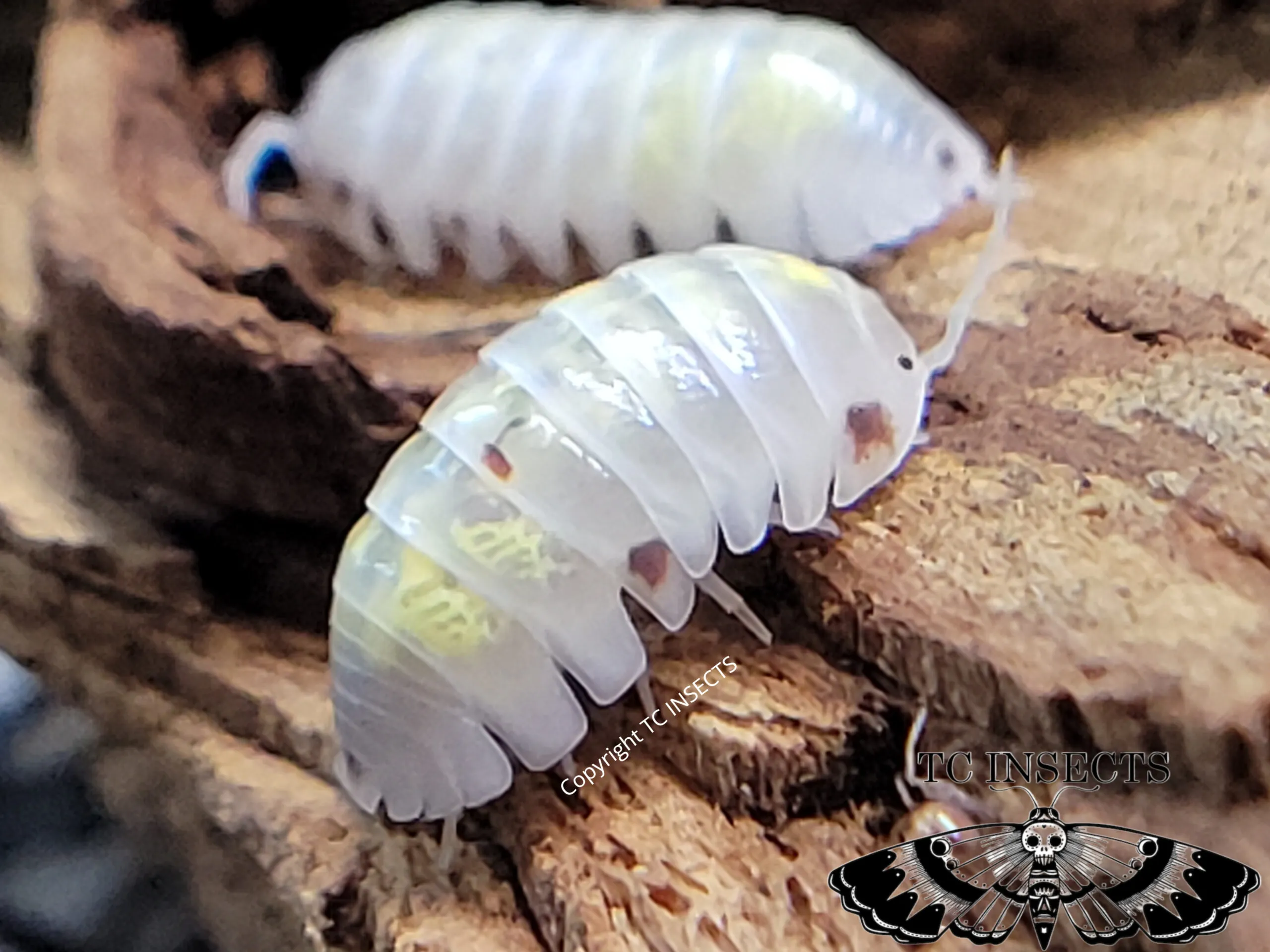
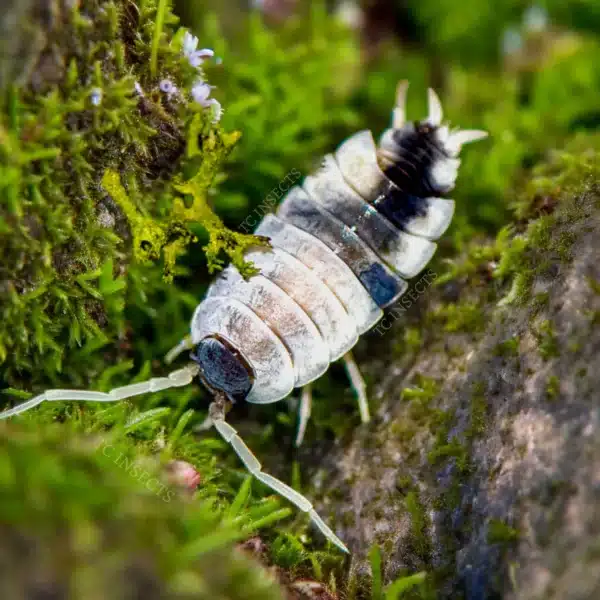
Orange Dalmatian is a US captive-selected hobby morph of Armadillidium vulgare, the common pill bug. This listing is a live single-morph culture from TC INSECTS. Specifically, it is packed for display-focused keepers,
dalmatian-gene breeding projects, and collectors building a multi-morph A. vulgare lineup. The species was formally described by French zoologist Pierre André Latreille in 1804. Today, it is the most extensively studied
terrestrial isopod in the world. Orange Dalmatian specifically combines two documented hobby genetics. First, it carries the recessive dalmatian spotting mutation that also produces Magic Potion. In addition, it carries the
orange coloration shared with the Orange Vigor line.
Overview
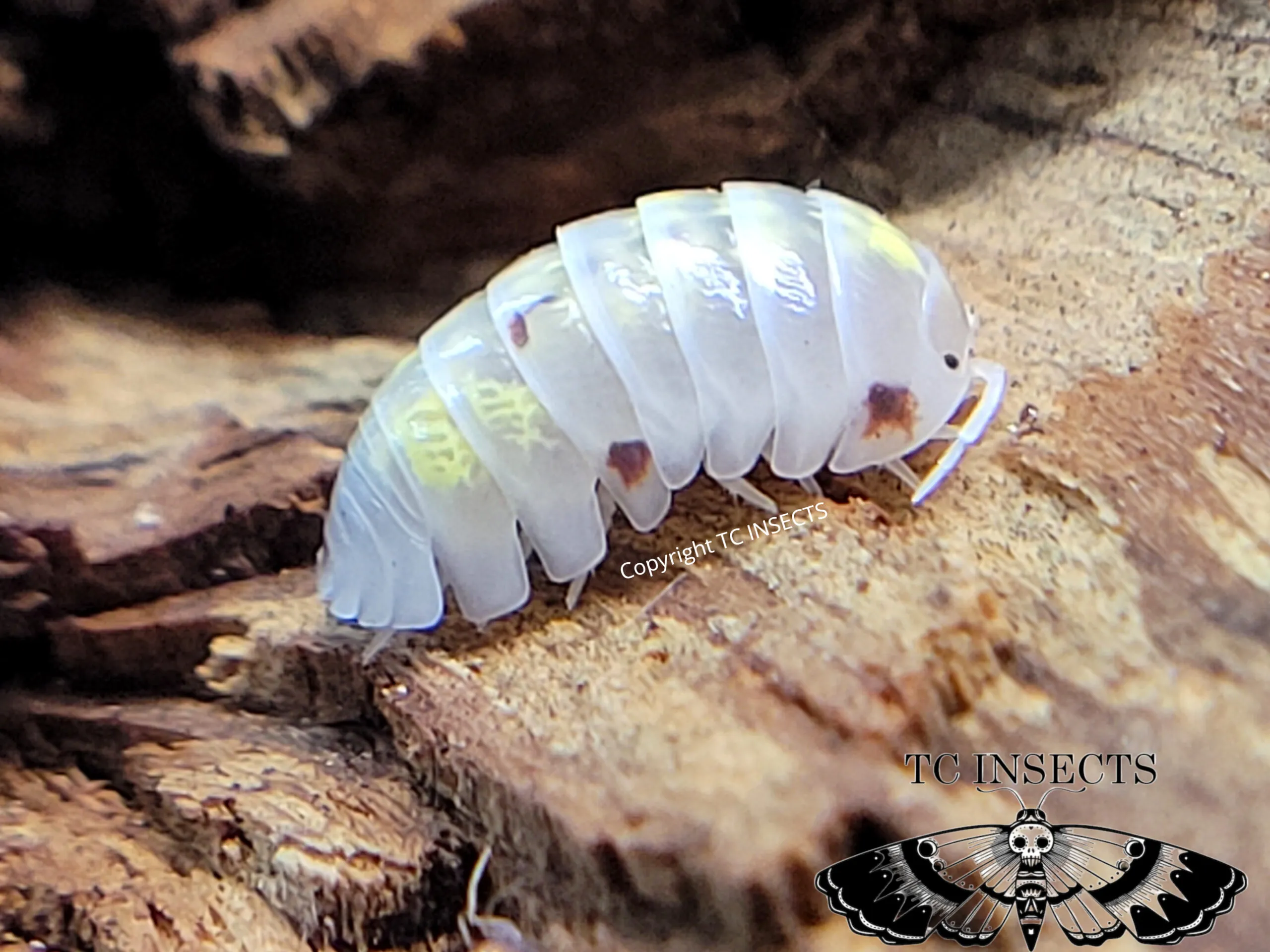
The visual signature is a pale base color overlaid with bold orange spotting. Typically, the base is light gray to off-white. However, spot size, density, and intensity vary across individuals. For example, some animals show
fine orange speckling. Meanwhile, others show larger orange blotches. In addition, a few may show rusty-brown variations. Often, the base also retains natural yellow spotting from the underlying A. vulgare wild-type
genetics. This happens because the dalmatian recessive gene only affects dark pigment. As a result, natural yellow markings stay visible.
Overall, the morph retains the standard A. vulgare behaviors. For example, adults conglobate into a tight ball when disturbed. In addition, both juveniles and adults are partially day-active and partially night-active.
Generally, the colony grows steadily under reasonable conditions. Notably, the species is one of the easier pill bugs in the hobby. As a result, it suits intermediate keepers who want a more colorful and genetically interesting
culture.
Why Keep Orange Dalmatian?
- Bold orange-on-pale contrast: The orange spotting on a light base creates a striking visual signature.
- Documented dalmatian genetics: First, the morph expresses the recessive dalmatian mutation. Furthermore, US hobbyists have selectively bred this gene for over a decade.
- Genetic breeding interest: Notably, this morph pairs naturally with breeding projects involving Orange Vigor and Magic Potion.
- Day and night active: Visible at various times, not only after dark. Therefore, it makes a strong display species.
- Hardy and forgiving: The morph inherits the easy care needs of common A. vulgare. As a result, it suits intermediate keepers well.
Honest Note on Sister Products in the TC INSECTS A. vulgare Lineup
TC INSECTS sells three A. vulgare products. Importantly, each suits a different buyer.
First, this Orange Dalmatian listing is a single-morph isolated culture. Specifically, every animal carries the dalmatian gene paired with orange coloration. Therefore, choose this listing if you want consistent orange-spotted animals. In addition, it works well for breeding projects focused on the dalmatian gene.
Second, the Orange Vigor listing is a single-morph isolated culture. However, it has solid orange-to-red body color with no dalmatian spotting. Therefore, choose this listing if you want solid orange animals. In addition, it works for starting a breeding project from the suspected source of the orange gene.
Finally, the Gem Mix listing is a multi-morph mixed culture. Notably, it may include Orange Dalmatian, Orange Vigor, Magic Potion, Wild Type, and other morphs together. Therefore, choose this listing if you want a genetic lottery of multiple morphs in one starter pack.
Honest Note on Dalmatian Gene Genetics
The dalmatian mutation is a documented recessive gene in A. vulgare. Specifically, it produces spotted patterns. According to Smug Bug’s 2020 breeder records, the gene only affects dark pigment. As a result, natural
yellow spotting from wild-type genetics stays visible under the dalmatian pattern. In addition, the same recessive mutation exists in other isopod species. For example, it appears in Porcellio scaber, Armadillidium
granulatum, A. depressum, and A. nasatum. Furthermore, hobbyists have crossed it with other color mutations in those species. In A. vulgare, however, the dalmatian gene combined with orange coloration produces this
Orange Dalmatian line.
Honest Note on Orange Dalmatian vs Magic Potion Naming
Hobby breeders disagree about whether Orange Dalmatian is a Magic Potion variant or a separate line. For example, some breeders treat it as a Magic Potion variant. In that view, the spots happen to be orange instead of
black. Notably, they cite the documented isolation of Orange Dalmatian individuals from American Magic Potion stock. However, other breeders, including Roach Crossing, take a purist position. Specifically, they argue that
true Magic Potion has only black and yellow spotting. By this view, any orange-spotted animals represent a separate line. Either interpretation is defensible. Ultimately, your Orange Dalmatian culture is the orange-spotted
expression of the dalmatian gene in A. vulgare.
Care and Setup
Orange Dalmatian care follows the standard A. vulgare approach. Specifically, it is built around four things: stable warmth, a moisture gradient, deep substrate for burrowing, and reliable calcium availability. Importantly, the morph inherits the forgiving care window of common A. vulgare.
Temperature
Aim for 68 to 78°F as the everyday range. Generally, room temperature works for most keepers. In fact, the species tolerates a wider range than most isopods. This is because generations of indoor captive breeding have shaped its tolerance. However, avoid sustained heat above the mid-80s. Also, avoid cold drafts.
Humidity
Keep one side of the enclosure damp with moss and substrate. Meanwhile, let the other side stay noticeably drier. Importantly, the substrate should not be uniformly wet. This species handles the drier side better than tropical isopods. Still, a moist retreat is essential for molting.
Substrate
Use an isopod substrate blend at least 2 to 3 inches deep. This is because A. vulgare burrows readily. For example, a coco fiber base mixed with decomposed hardwood, sphagnum, and a small amount of clay or worm castings works well. In addition, calcium support matters here. Specifically, the heavy conglobating exoskeleton requires ongoing calcium turnover.
Food
Leaf litter and decaying hardwood should always be available. In addition, supplement with TC INSECTS Isopod Food, calcium, and small portions of vegetables. Notably, some breeders report that carotenoid-rich
vegetables support more vivid orange color. For example, carrots, squash, and pumpkin are the common picks. However, this is hobby experience rather than published research.
Ventilation
Generally, cross-ventilation works best. For example, two side vents or a vented lid beats a single small airhole. As a result, good airflow keeps the substrate from souring. Meanwhile, the moist retreat handles hydration needs.
Bioactive Use
Overall, Orange Dalmatian is well suited to bioactive enclosures. For example, it works in reptile vivariums, planted terrariums, and amphibian habitats with moderate humidity. In addition, the high-contrast orange-on-pale spotting makes it a stronger display choice than wild-type A. vulgare. Therefore, it works especially well in setups where visibility is the goal.
Breeding Notes
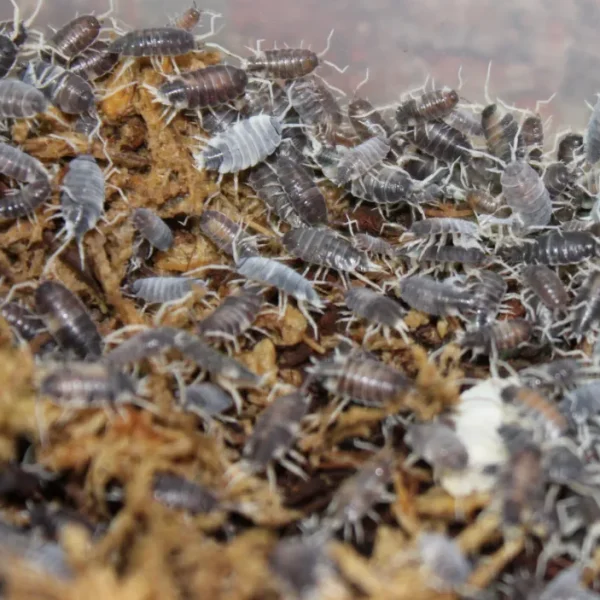
Mature females carry developing young in a brood pouch called a marsupium. Then, they release small juveniles that hide in damp substrate and leaf litter. Generally, reproduction is moderate once the culture has stable
temperature, moisture, and calcium. In addition, larger starter counts establish more reliably. This is because they include more breeding-age adults from the start.
Importantly, the dalmatian gene is recessive. As a result, crossing Orange Dalmatian animals together produces consistently spotted offspring. However, crossing Orange Dalmatian with a wild-type or Orange Vigor animal
yields mostly non-spotted juveniles in the first generation. Then, dalmatian patterns reappear in later generations as the recessive gene recombines. Notably, juveniles may take several molts to develop full adult orange-
spotted intensity. Therefore, be patient with young animals that look less colorful than their parents.
Best For
- Display vivariums where high-contrast orange-on-pale spotting adds visual interest
- Dalmatian-gene breeding projects exploring single-line genetics
- Color-focused collector shelves featuring multiple A. vulgare morphs
- Intermediate keepers who want a unique morph with documented genetic history
- Bioactive vivariums where visibility and color matter
Not Best For
- Buyers who want an unpredictable variety of morphs (instead, choose the Gem Mix)
- Buyers who want solid orange without spotting (instead, choose Orange Vigor)
- Fully wet tropical setups (instead, use Cubaris murina “Little Sea”)
- Sole feeder cultures for high-volume reptile feeding
- Sterile or completely freshly built enclosures with no leaf litter or decaying wood
Origin and Hobby Line Notes
The species Armadillidium vulgare was described by Latreille in 1804 from Mediterranean Europe. Today, it is naturalized across most temperate regions of the world. However, the Orange Dalmatian morph itself is a US
captive selection. Specifically, Smug Bug’s published hobby records document its isolation from the American Magic Potion line. In addition, the orange gene in the spotting likely entered through outcrossing with the
Orange Vigor line. Alternatively, some breeders propose it arose as a spontaneous mutation within Magic Potion stock. Either way, manage the culture as a captive selection line with documented husbandry needs.
Receiving and Acclimation
First, bring the package indoors as soon as it arrives. Then, open it in a calm area away from direct sun, heat, or cold drafts. Importantly, prepare the enclosure before opening the cup. Specifically, the setup should already
have substrate at least 2 to 3 inches deep, leaf litter, bark hides, a moist moss retreat, calcium, and a drier feeding zone.
Next, gently tip the cup contents, including shipping material, into the prepared enclosure near the moist side. Often, some animals will stay curled or hidden during the first few days. This is because conglobating species
often roll up when stressed. Therefore, feed lightly during the first week. Then, increase feeding once the colony becomes more active. Finally, avoid digging through the culture during this settling period.
Recommended Add-Ons
- TC INSECTS Premium Isopod Habitat Kit for a straightforward starter setup matched to the moisture-gradient approach
- TC INSECTS Assorted Hardwood Leaf Litter for food, cover, and the natural grazing layer
- TC INSECTS Isopod Food to supplement leaf litter as the culture grows
- TC Calcium Ultra Fine for healthy molts on a conglobating pill bug
- Springtails to complement the Orange Dalmatian culture in bioactive setups
Frequently Asked Questions
What is the difference between Orange Dalmatian, Orange Vigor, and Magic Potion?
All three are captive-bred morphs of the same species, Armadillidium vulgare. First, Orange Vigor is solid orange-to-red without spotting. Second, Magic Potion has black spotting on a pale base. Third, Orange Dalmatian has orange spotting on a pale base. Specifically, it combines the dalmatian gene with the orange color genetics. Notably, the orange-spotted form likely originated through spontaneous mutation or outcrossing of Magic Potion with Orange Vigor.
Will all my Orange Dalmatian isopods look the same?
No, and that is normal. Specifically, spot size, density, and intensity vary across individuals. For example, some animals show fine orange speckling. Meanwhile, others show larger orange blotches. In addition, a few may show rusty-brown variations. Even within a single culture, individuals may look quite different. Importantly, this variability is part of the morph’s character.
Can I breed Orange Dalmatian with other A. vulgare morphs?
Yes. Importantly, all A. vulgare morphs are the same species and cross freely. For example, crossing Orange Dalmatian with another Orange Dalmatian produces consistently spotted offspring. This is because the dalmatian gene is recessive. However, crossing with a non-dalmatian morph produces mostly non-spotted F1 juveniles. Then, dalmatian patterns reappear in later generations as the recessive gene recombines.
Are Orange Dalmatian isopods beginner-friendly?
Generally yes for intermediate beginners. Specifically, they inherit the hardy care needs of common A. vulgare. For best results, set up a basic moisture gradient with leaf litter, decaying wood, and calcium. Then, the colony will establish reliably. However, first-time keepers may prefer the slightly easier Gem Mix as a starter culture.
Why is this morph more expensive than Orange Vigor or Gem Mix?
Orange Dalmatian is one of the more recent A. vulgare morphs in the hobby. Specifically, breeding stock is more limited. In addition, reproduction is slower than for the explosive cleanup species. As a result, these factors drive the price differential. However, as more breeders establish the line, prices may equalize over time.
Will the spots get more orange as the animals mature?
Generally yes. Specifically, Orange Dalmatian juveniles often start with lighter or less defined spotting. Then, they develop more intense orange spots over several molts. Therefore, expect lighter young animals that intensify as they grow.
Learn More About Armadillidium vulgare and Hobby Morphs
The following references offer useful background on the species, its research role, and the broader pill bug family.
-
World Register of Marine Species: Armadillidium vulgare Latreille, 1804. Specifically, the authoritative species record. In addition, it is useful for confirming the scientific name, the original 1804 description by Latreille, and the family placement in Armadillidiidae.
-
British Myriapod and Isopod Group: Woodlouse and Waterlouse Recording Scheme. Specifically, background on the wider terrestrial isopod group from a long-running scientific recording body. In addition, it is helpful for understanding how pill bugs and other woodlice live, feed, and reproduce.
-
Natural History Museum: Giant isopods, curious crustaceans on the ocean floor. Specifically, a short, plain-language overview from the NHM. In addition, it puts the woodlouse family in context with their marine relatives.

Reviews
There are no reviews yet.