
Armadillidium corcyraeum Isopods for Sale
This listing is a live culture of Armadillidium corcyraeum, a Greek pill bug commonly called Corfu’s Pill Woodlouse, packed by TC INSECTS for intermediate keepers, display vivarium owners, and collectors building a
Mediterranean Armadillidium shelf. The species was formally described by German zoologist Karl Wilhelm Verhoeff in 1901 in Zoologischer Anzeiger, the same year Verhoeff described Armadillidium germanicum (the
Darth Vader / Adige Valley line) and Armadillidium flavoscutatum (the Red Head line). The species name corcyraeum literally means “from Corcyra,” with Corcyra being the ancient Greek and Latin name for the island of
Corfu (modern Kerkyra).
Overview
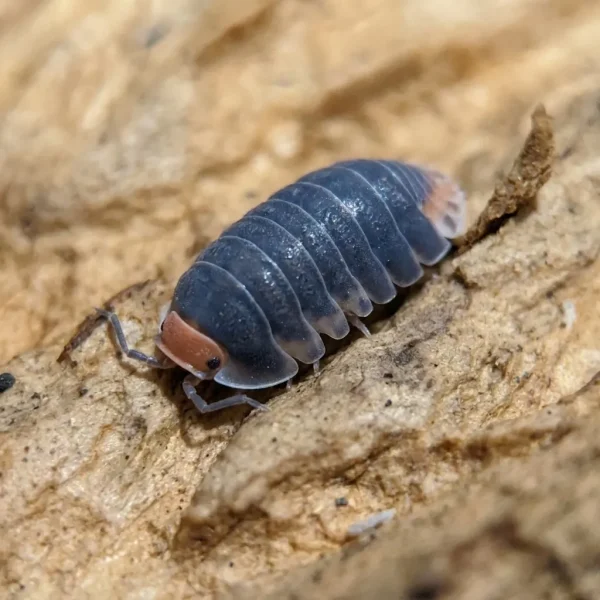
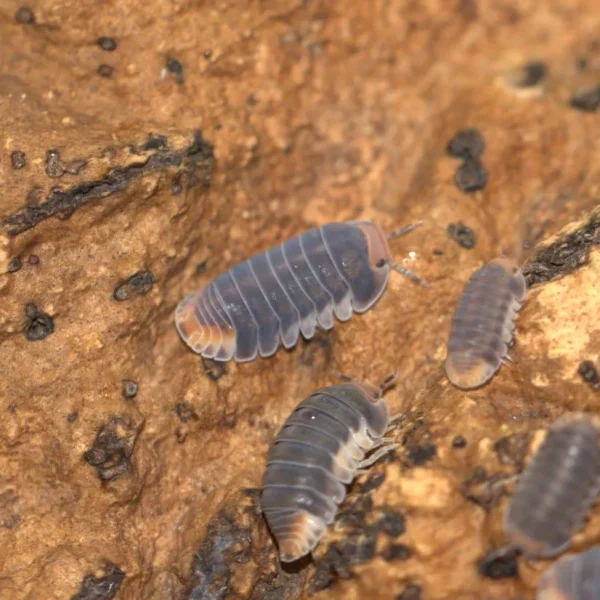
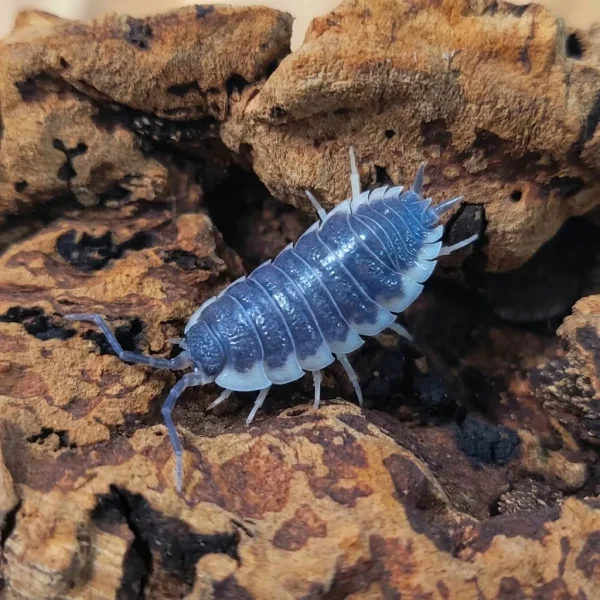
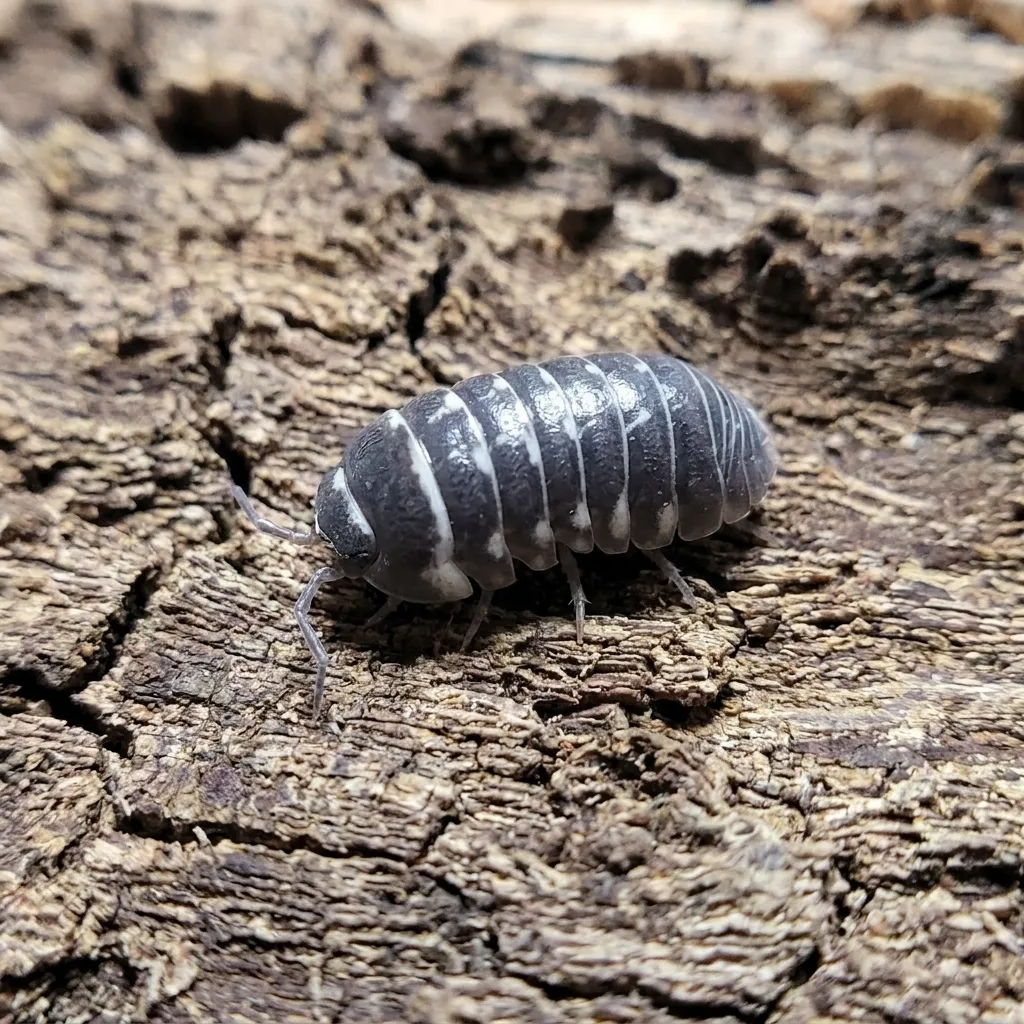
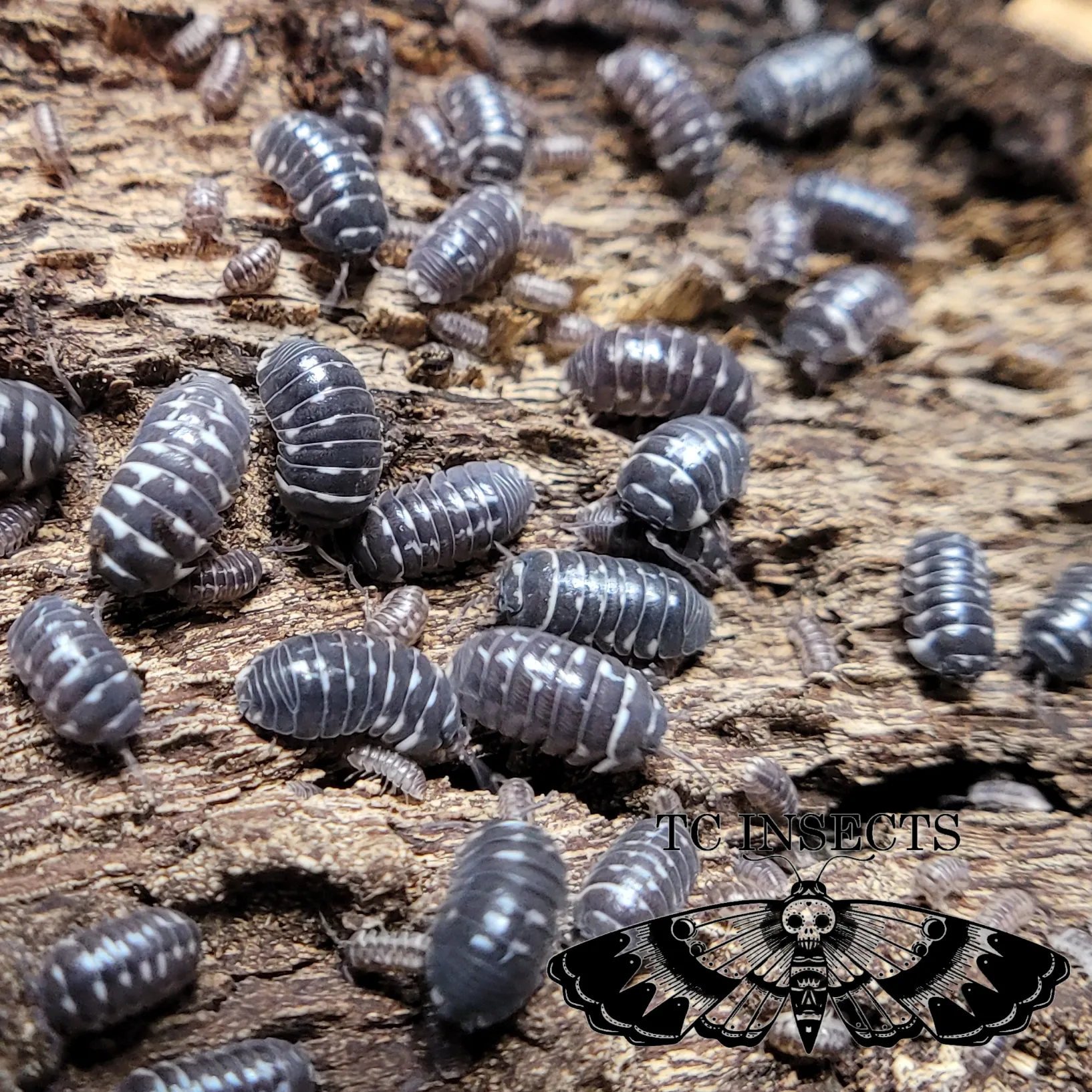
Adults reach about 10 to 18 mm and have a dark gray to nearly black body color with pale spotting across the back, sometimes giving the colony a clean speckled look that improves as the animals mature. Young animals
may appear lighter or browner before darkening with age. The body shape is rounded and smooth in classic Armadillidium form, and the animals conglobate into a tight ball when disturbed, the typical pill bug defensive
behavior.
The species is documented from Greece, with the type locality on Corfu in the Ionian island region. The broader range extends into nearby Greek areas. Wild populations live among leaf litter, soil, stones, and decaying plant
material in Mediterranean-climate habitats, which informs the captive care recommendations below.
Why Keep Armadillidium corcyraeum?
- Documented Greek species: Formally described by Verhoeff in 1901 from Corfu, with the common name “Corfu’s Pill Woodlouse” recorded on iNaturalist and other databases.
- Dark body with pale spotting: A clean, classic pill bug look that contrasts well against natural setups with bark, moss, and leaf litter.
- Conglobating behavior: Rolls into a tight ball when disturbed, the classic pill bug display behavior.
- Less common in the hobby: A more collector-grade Armadillidium than the common cleanup species, suited to keepers who want something different.
- Classical naming heritage: The species’ taxonomic history includes the junior synonym A. odysseum, named after the Greek hero Odysseus, which makes this a small piece of classics-meets-zoology history.
Honest Note on the Species Name and the “Sp.” Designation
Some hobby listings, including the previous version of this page, label this species as Armadillidium sp. corcyraeum. The “sp.” abbreviation conventionally designates an undescribed species, but A. corcyraeum is a
formally described 1901 Verhoeff species with a proper binomial name, type locality (Greece), and accepted WoRMS entry. The correct way to write it is simply Armadillidium corcyraeum, with full species rank. If you
cross-reference older hobby labels using the “sp.” prefix, those predate clearer modern taxonomic listings.
Honest Note on Pronunciation
The Latin word Corcyra uses a hard “c” before “y” in classical pronunciation, so a closer phonetic guide is “kor-kih-RYE-um” rather than the soft-c “kor-sir-EE-um” that sometimes appears in hobby pronunciation guides.
Either version is understood in conversation, since scientific Latin pronunciation varies by convention, but the classical hard-c version aligns with the ancient Greek and Latin roots of the place name. The “ae” diphthong is
pronounced like the “y” in “eye” in classical Latin and like “ay” in ecclesiastical Latin, so “kor-kih-RYE-um” and “kor-kih-RAY-um” are both reasonable approximations.
Honest Note on the Classical Naming Heritage
For collectors interested in the taxonomic history of this species, WoRMS records two junior synonyms that capture the classical Greek origin of the type locality. Armadillidium graecorum Verhoeff, 1907 means “of the
Greeks.” Armadillidium odysseum Verhoeff, 1901 is named after Odysseus, the legendary king of Ithaca in Homer’s Odyssey. Ithaca sits in the same Ionian island chain as Corfu, which makes the Odysseus reference
geographically appropriate as well as poetically resonant. Both names were synonymized into A. corcyraeum when later taxonomic work showed they referred to the same species, but the classical-naming history is still part
of what makes this species interesting to collectors who appreciate small pieces of zoological tradition.
Care and Setup
A. corcyraeum care follows the standard Armadillidium approach with stable warmth, a moisture gradient, steady airflow, and reliable calcium availability. The species suits a Mediterranean care style rather than tropical humidity.
Temperature
Aim for 68 to 76°F as the everyday range. The species is adapted to Greek Ionian climate conditions, which means stable moderate temperatures with seasonal variation. Room temperature works for most keepers. Avoid sustained heat above the mid-80s and avoid cold drafts.
Humidity
Keep one side of the enclosure damp with moss and substrate, and let the other side stay noticeably drier. The substrate should not be uniformly wet. This species handles moderate humidity well and does not need a tropical wet setup.
Substrate
Use an isopod substrate blend that holds light moisture without compacting. A coco fiber base mixed with decomposed hardwood, sphagnum, and a small amount of crushed limestone or oyster shell works well. The added limestone supports the heavy conglobating exoskeleton.
Food
Leaf litter and decaying hardwood should always be available. Supplement with TC INSECTS Isopod Food, calcium, and small portions of vegetables. Feed lightly because slower breeders eat less and uneaten food molds quickly in the moist zone.
Ventilation
Cross-ventilation works best. Two side vents or a vented lid beats a single small airhole. Good airflow keeps the substrate from souring while the moist retreat handles hydration needs.
Bioactive Use
This species works in bioactive enclosures with moderate humidity and a clear moisture gradient. It suits Mediterranean-themed naturalistic vivariums and works particularly well with Greek-themed setups featuring limestone or natural rock features. For tropical dart frog setups, a more humidity-tolerant species like Dwarf Whites is a better fit.
Breeding Notes
Mature females are slightly larger than males and carry developing young in a brood pouch called a marsupium. Reproduction is moderate, with stable cultures producing visible juveniles within the first month or two and
consistent colony growth once established. Stable temperature, calcium availability, and a reliable moisture gradient are the most important inputs. Larger starter counts establish more reliably because they include more breeding-age adults from the start.
Best For
- Display vivariums featuring Greek and Mediterranean pill bug species
- Collector shelves featuring Verhoeff 1901 Armadillidium descriptions
- Naturalistic Greek and Ionian-themed setups with limestone or natural rock features
- Intermediate keepers comfortable with moisture-gradient management
- Classics enthusiasts who appreciate the Corcyra and Odysseus naming heritage
Not Best For
- Fully wet tropical setups (use a tropical species instead)
- High-volume feeder cultures (the slower pace does not fit feeder economics)
- First-time isopod keepers wanting the easiest possible starter (try an A. vulgare Gem Mix first)
- Display setups expecting bright or flashy color (the dark body with pale spots is subtle, not bold)
- Sterile or completely freshly built enclosures with no leaf litter or decaying wood
Origin and Locality Notes
The species was described by Verhoeff in 1901 from Greek specimens, with the type locality on Corfu in the Ionian island region. The broader documented range extends into nearby Greek areas. Captive hobby culture line
s may not trace to a specific Greek collection point, so manage this as a captive Greek line with known husbandry needs rather than a strict locality animal.
Receiving and Acclimation
Bring the package indoors as soon as it arrives and open it in a calm area away from direct sun, heat, or cold drafts. Prepare the enclosure before opening the cup so the isopods move directly into a stable environment with
substrate, leaf litter, bark hides, a moist moss retreat, calcium, and a drier feeding zone already in place.
Gently tip the cup contents, including shipping material, into the prepared enclosure near the moist side. Some animals will stay curled or hidden during the first few days because conglobating species often roll up when
stressed. Feed lightly during the first week, then increase feeding once the colony becomes more active. Avoid digging through the culture during this settling period.
Recommended Add-Ons
- TC INSECTS Premium Isopod Habitat Kit for a straightforward starter setup matched to the moisture-gradient approach
- TC INSECTS Assorted Hardwood Leaf Litter for food, cover, and the natural grazing layer
- TC INSECTS Isopod Food to supplement leaf litter
- TC Calcium Ultra Fine for healthy molts on a conglobating pill bug
- Springtails to handle mold in the moist retreat alongside the corcyraeum culture
Frequently Asked Questions
What does the name “corcyraeum” mean?
The species name literally means “from Corcyra,” with Corcyra being the ancient Greek and Latin name for the island of Corfu (modern Greek Kerkyra). The species was originally described from Greek specimens collected in the Ionian island region around Corfu.
Why is the common name “Corfu’s Pill Woodlouse”?
iNaturalist and other public databases record “Corfu’s Pill Woodlouse” as the documented common name. It follows directly from the type locality on the island of Corfu. The hobby trade also sometimes uses “Corfu Isopod” or “Corfu Pillbug” as informal common names.
Is this related to the Red Head and Darth Vader isopods?
All three species were described by Karl Wilhelm Verhoeff in 1901 in Zoologischer Anzeiger. They are different species from different regions (Greek Ionian islands for corcyraeum, Italian Alps for A. germanicum, and the broader Balkan range for A. flavoscutatum), but they share a taxonomic origin year and describer, which makes them a natural collector cluster.
Are these isopods beginner-friendly?
Generally yes for intermediate beginners. They tolerate a reasonable care window once the moisture gradient is set up correctly. First-time keepers usually do better starting with an easier species like an A. vulgare Gem Mix before moving up.
What are the junior synonyms I see in older references?
WoRMS records two junior synonyms for this species: Armadillidium graecorum Verhoeff, 1907 (meaning “of the Greeks”) and Armadillidium odysseum Verhoeff, 1901 (named after the Greek hero Odysseus). Both names were synonymized into A. corcyraeum when later taxonomic work showed they referred to the same species. The classical-naming history is part of what makes this species interesting to collectors.
How fast will the colony grow?
Moderately. Stable cultures show visible juveniles within the first month or two and consistent colony growth over the following months. Larger starter counts establish faster because they include more breeding-age adults from the start.
Learn More About Armadillidium and Greek Pill Bugs
The following references offer useful background on the species, its native habitat, and the broader pill bug family.
-
World Register of Marine Species: Armadillidium corcyraeum Verhoeff, 1901. The authoritative species record, including the original 1901 description by Verhoeff in Zoologischer Anzeiger and the documented junior synonyms A. graecorum and A. odysseum, useful for confirming the scientific name and the species’ taxonomic history.
-
British Myriapod and Isopod Group: Woodlouse and Waterlouse Recording Scheme. Background on the wider terrestrial isopod group from a long-running scientific recording body, helpful for understanding how pill bugs and other woodlice live, feed, and reproduce.
-
Natural History Museum: Giant isopods, curious crustaceans on the ocean floor. A short, plain-language overview from the NHM that puts the woodlouse family in context with their marine relatives.