
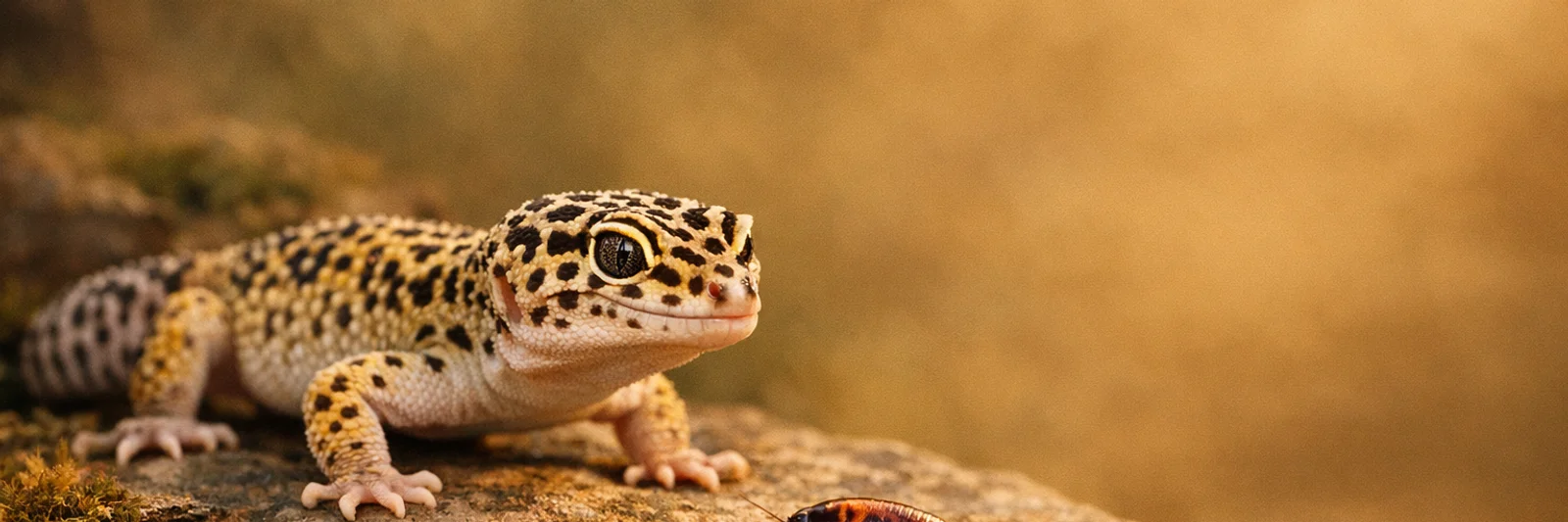
- Red runner roaches excel for animals that hunt by movement, because their constant fast motion triggers a strong feeding response.
- They are one of the best feeders for reluctant or bored eaters, since the scatter and dart can prompt a strike when slower prey is ignored.
- Red runners are ideal for leopard geckos and small geckos, tarantulas and other inverts, and appropriately sized dart frogs and small amphibians.
- Size prey correctly: for reptiles, feed insects no wider than the space between the animal's eyes, and match invertebrate prey to the hunter's size.
- Use red runners in rotation with a nutritious staple, and dust with calcium and gut-load before feeding for insectivores.
Best Pets for Red Runner Roaches, Ranked
Here is how red runners fit different animals, from the pets they suit best to the ones that can take them as one feeder in a wider mix. The ranking follows a simple idea: the more an animal hunts by movement and prefers smaller, faster prey, the better red runners fit.
- Leopard geckos and other small geckos - best all-around match. Small ground-hunting geckos are built to chase, and a scattering red runner is exactly the kind of moving target they pounce on. The feeder's size suits their mouths, and the quick motion keeps even a picky gecko interested. Shop red runner roaches.
- Tarantulas and other inverts - fast prey they can subdue. Many tarantulas and predatory inverts respond well to active prey, and red runners deliver movement without the hard shell of a beetle or the bulk of a large roach. Match the runner to the spider's size so it can be caught and eaten safely.
- Dart frogs and small amphibians - great when sized correctly. Small, fast-moving prey suits many dart frogs and little amphibians, and appropriately sized red runner nymphs can be an excellent option alongside springtails and flightless flies. Only offer prey small enough to swallow easily.
- Chameleons and other visual hunters - movement they cannot resist. Chameleons hunt with their eyes and lock onto motion, so a red runner's darting is a strong trigger for a tongue strike. Offer them from a feeding cup or by hand so the fast feeders do not simply vanish into the enclosure.
- Bearded dragons - a lively part of the rotation. Beardies do well on a staple-based diet, and red runners add variety and a burst of activity that keeps feeding interesting. Use them alongside a nutritious staple rather than as the only feeder, and size them to the dragon.
- Monitors and larger lizards - one feeder among several. Bigger lizards can take red runners, but a single small roach is a small meal for them, so runners work best as one part of a varied feeder lineup rather than the main course. They add movement and variety to a larger animal's diet.
Why Movement Matters
Most reptiles, amphibians, and predatory inverts are wired to notice motion. A prey item that sits still can be completely ignored, while the same food darting across the enclosure sets off an instinctive feeding response. Red runners are among the most active feeders you can buy, so they are one of the easiest ways to trigger that instinct.
This is where red runners genuinely shine. If you keep a committed hunter, or you are trying to tempt an animal that has grown bored of slow, easy prey, the scatter of a red runner often gets a strike when nothing else will. For a reluctant or recovering eater, that lively motion can be the difference between a refused meal and a clean feeding.
Sizing Prey Correctly
Getting the size right matters more than any single nutrition number. For reptiles, a reliable rule is to feed insects no wider than the space between the animal's eyes. Anything larger is harder to swallow and best avoided, especially for smaller geckos and juveniles.
For tarantulas and other inverts, match the prey to the hunter: a feeder roughly the size of the spider's body, or a bit smaller, is a safe starting point, and smaller is better than too large. For dart frogs and small amphibians, offer only small nymphs that go down easily. Red runners come in a range of sizes, so pick the stage that fits your animal rather than forcing one size to work for everything.
When Dubia May Be the Better Pick Instead
Red runners' greatest strength, their speed, is also their main drawback for some keepers. They are fast, they scatter quickly, and unlike dubia they can be harder to corral at feeding time. If you want a calmer feeder that stays put and is simple to manage, dubia roaches are often the better choice.
Dubia are slow-moving, cannot climb smooth glass or plastic, and cannot jump, so escapes are rare and feeding is tidy. That calm nature makes them ideal for animals that will happily take stationary prey and for keepers who want low daily hassle. Many experienced keepers simply keep both on hand: dubia as the easy staple and red runners for the animals and moments that need movement. To weigh them side by side, see our Dubia vs Red Runners comparison.
Frequently Asked Questions
What eats red runner roaches?
Red runner roaches (Blatta lateralis) are eaten by a wide range of insect-eating pets, and they suit hunters that respond to movement best. Great matches include leopard geckos and other small geckos, tarantulas and other inverts, and appropriately sized dart frogs and small amphibians. Chameleons, bearded dragons, and larger lizards or monitors also take them, usually as part of a varied diet.
Are red runners good for leopard geckos?
Yes, red runners are an excellent feeder for leopard geckos. Their fast, darting movement triggers a strong feeding response, and their size suits a gecko's mouth. Dust with calcium and gut-load before feeding, and offer insects no wider than the space between the gecko's eyes.
Can tarantulas eat red runners?
Yes, many tarantulas readily take red runners, and the roach's active movement can prompt a quick response. Match the feeder to the spider's size so it can be caught and subdued safely, choosing prey about the size of the tarantula's body or smaller. Remove any uneaten feeders so they do not disturb a molting spider.
Are red runners good for dart frogs?
Red runners can be a good feeder for dart frogs when sized correctly. Offer only small nymphs that the frog can swallow easily, alongside other small prey like springtails and flightless fruit flies. Their small size and quick movement suit the way dart frogs hunt.
Do bearded dragons eat red runners?
Yes, bearded dragons happily eat red runners, and the lively movement adds variety to feeding time. Use them as part of a rotation with a nutritious staple rather than as the only feeder, and size the roaches to the dragon. As with any feeder, dust with calcium and gut-load before offering.
Are red runners or dubia better feeders?
It depends on the animal. Red runners are faster and better at triggering a feeding response in movement-driven hunters, which makes them great for geckos, tarantulas, and picky eaters. Dubia are calmer, cannot climb or jump, and are easier to keep and corral, so many keepers use dubia as the staple and red runners for the animals that need movement.
Keep comparing: Dubia vs Red Runners· Red Runner Care Guide· Best Feeders for Leopard Geckos· Best Feeders for Tarantulas
