
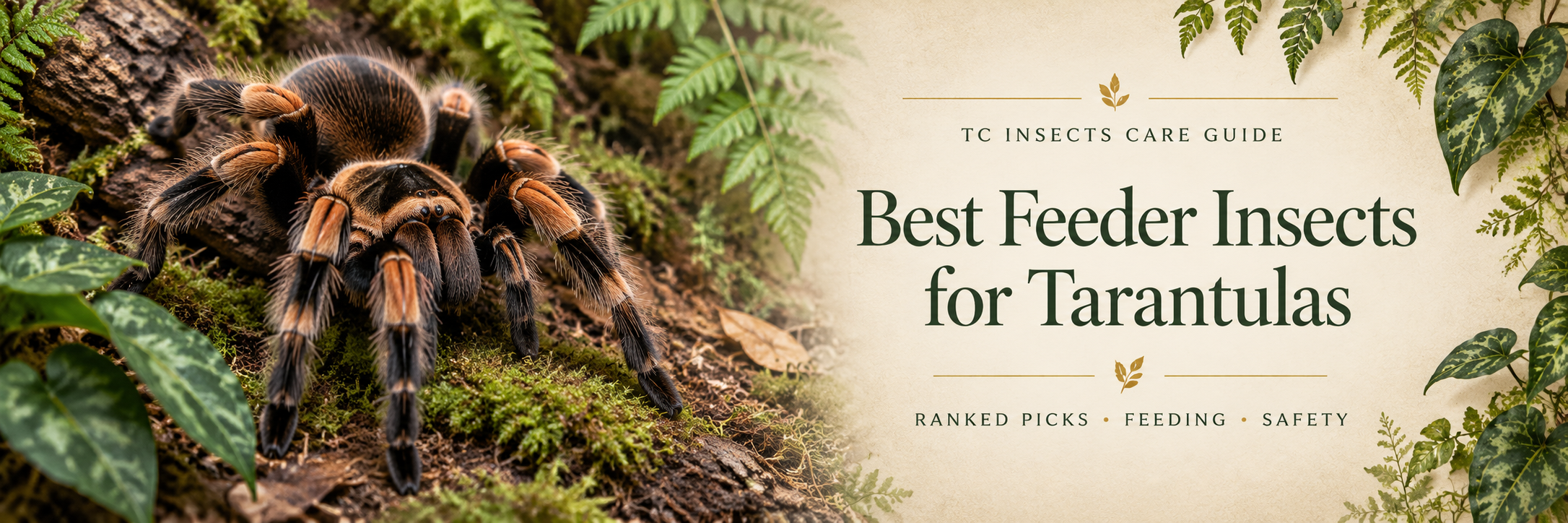
- For most tarantulas, dubia roaches are the best all-around staple: they are calm, meaty, easy to keep, and cannot climb smooth walls to escape a low enclosure.
- For Tarantulas, the ranking starts with Dubia Roaches as the top staple.
- Nearly every feeder insect is calcium-deficient with an inverted calcium-to-phosphorus ratio, so dust with a calcium supplement and gut-load before feeding.
- These figures are on an as-fed (live) basis compiled from published feeder-insect composition research, so they are guidance, not guarantees.
The Best Feeders for Tarantulas, Ranked
There is no single perfect feeder, but there is a clear order that works for most tarantulas. This ranking balances how easy each feeder is to keep, how reliably it triggers a feeding response, and how safe it is to leave in the enclosure. When in doubt, a mixed diet built mostly on the top two is hard to beat.
- Dubia Roaches. The best all-around staple. They are calm, meaty, simple to keep, and cannot climb smooth glass or plastic, so they will not escape a low tarantula enclosure. Shop dubia roaches.
- Red Runner Roaches. Fast and busy, which makes them the go-to for a reluctant feeder or a sling. That quick movement drives a strong feeding response when a slow dubia gets ignored. Shop red runner roaches.
- Crickets. The classic feeder: soft-bodied and widely available. The one caution is that a cricket can bite, so remove any that go uneaten, and never leave one in with a molting tarantula. Shop crickets.
- Superworms. A hearty, higher-fat occasional feeder for larger tarantulas. They can bite, so if you offer one to a small or molting animal, pre-crush the head first, and use them as a treat rather than a daily staple. Shop superworms.
How the Feeders Compare
The table below sums up the trade-offs. Notice the two supplement columns: for reptiles you would dust and gut-load nearly every feeder, but tarantulas are invertebrates and do not need calcium dusting the way reptiles do. Gut-loading the feeder, meaning feeding it well before it becomes food, still helps your tarantula, so it is worth doing. Read the dusting column as what a reptile keeper would do, not as a rule for tarantulas.
| Dubia Roaches | Red Runner Roaches | Crickets | Superworms | |
|---|---|---|---|---|
| Protein | 20 to 23% | about 16 to 19% | 15 to 21% | 19 to 20% |
| Fat | 6 to 7% | about 5 to 7% | 3 to 7% | 17 to 18% |
| Dust with calcium? | Yes | Yes | Yes | Yes |
| Gut-load? | Yes | Yes | Yes | Yes |
| Best known for | High-protein everyday staple; best calcium ratio among feeder roaches | Fast-breeding, lean, active feeder that drives a strong feeding response | Balanced, widely available staple that triggers a strong feeding response | Larger, high-fat feeder for bigger appetites; room-temperature storage |
How Often and How Many to Feed
The single most important rule is size: feed prey no larger than your tarantula's body or abdomen. A feeder that is too big can stress, injure, or simply be refused. As a rough guide, spiderlings and juveniles eat small prey often, while adults eat less often, sometimes just once every week or two, because they grow slowly and can go long stretches without a meal.
Let your tarantula's appetite and body set the pace. A plump abdomen means you can space feedings out; a slim one means offer food more often. And always remove any uneaten prey, ideally within a day. This matters most before and after a molt, when a loose feeder can wander the enclosure and injure a soft, defenseless spider.
What to Avoid
A few mistakes cause most feeding problems with tarantulas, and all of them are easy to sidestep.
- Never leave crickets in with a molting or fasting tarantula. A hungry cricket can bite a soft, freshly molted spider, and a molting tarantula cannot defend itself.
- Avoid wild-caught insects. They can carry pesticides or parasites. Stick to captive-bred feeders raised as food.
- Do not feed prey that is too large. Keep every feeder no bigger than your tarantula's body or abdomen.
- Do not dust feeders with calcium for a tarantula. That is a reptile rule; tarantulas are invertebrates and do not need it.
Frequently Asked Questions
What is the best feeder insect for a tarantula?
For most tarantulas, dubia roaches are the best all-around staple: calm, meaty, easy to keep, and unable to climb smooth walls to escape. For a reluctant feeder or a sling, red runner roaches often work better because their fast movement triggers a stronger feeding response. Crickets and superworms round out a varied diet.
How often should I feed my tarantula?
It depends on age. Spiderlings and juveniles eat small prey often, while adults eat much less, sometimes only once every week or two. Let the abdomen guide you: a plump one means you can wait, a slim one means offer food sooner. Always remove uneaten prey.
Can I feed my tarantula crickets?
Yes. Crickets are a classic, soft-bodied, widely available feeder. The one caution is that a cricket can bite, so remove any that go uneaten and never leave a cricket in the enclosure with a molting or fasting tarantula, when the spider cannot defend itself.
What size feeder should I give my tarantula?
Feed prey no larger than your tarantula's body or abdomen. A feeder that is too big can stress or injure the spider and is often refused. Smaller and more frequent is safer than large and occasional, especially for slings and juveniles.
Should I feed my tarantula before or after a molt?
Wait until after a molt has fully hardened, usually several days to a couple of weeks depending on the tarantula's size. A freshly molted spider is soft and defenseless, so do not offer prey yet, and never leave a live feeder in the enclosure during a molt, when a loose insect can injure it.
Keep comparing: Dubia vs Crickets· Dubia vs Red Runners· Crickets vs Superworms· Feeder Nutrition Chart
