
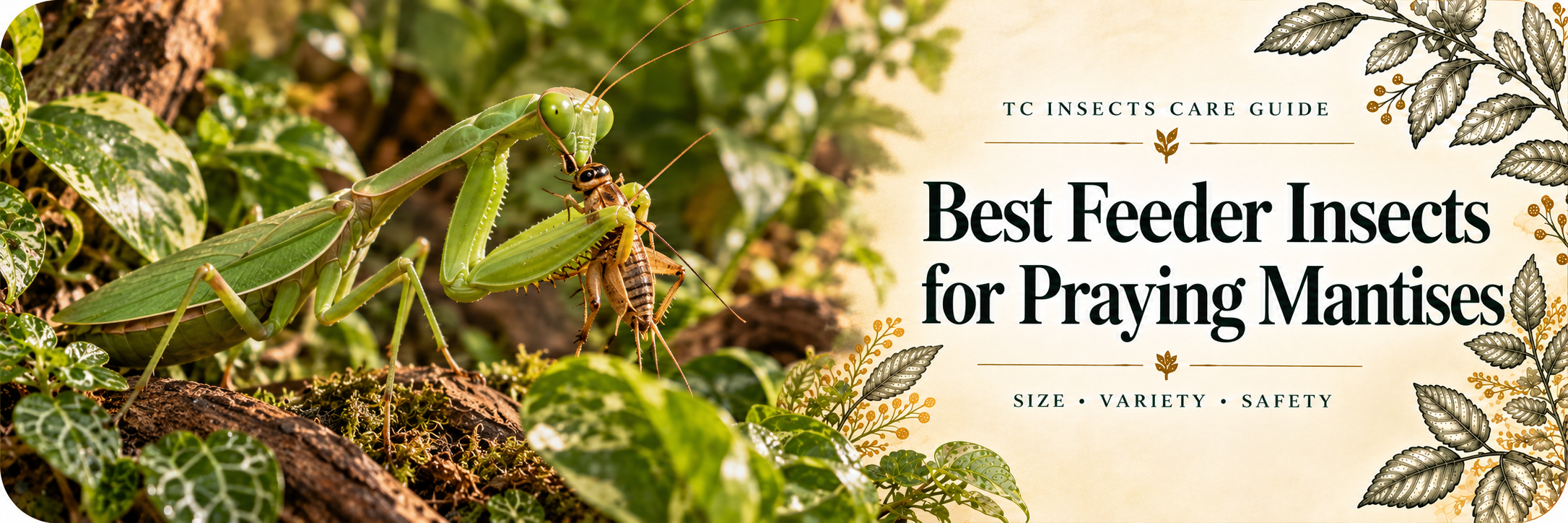
- Praying mantises need live, moving prey, since they hunt by sight and rarely notice still food.
- Match feeder size to roughly one third of the mantis's body length, not the other way around.
- Small dubia roach nymphs and appropriately sized crickets are the two most reliable staple feeders.
- Black soldier fly larvae and other tough or hard-shelled feeders are not a good fit for mantises and are best avoided.
- Prey that is too large can fight back hard enough to injure a mantis, so undersize slightly when in doubt.
Why Feeder Choice Matters More for Mantises
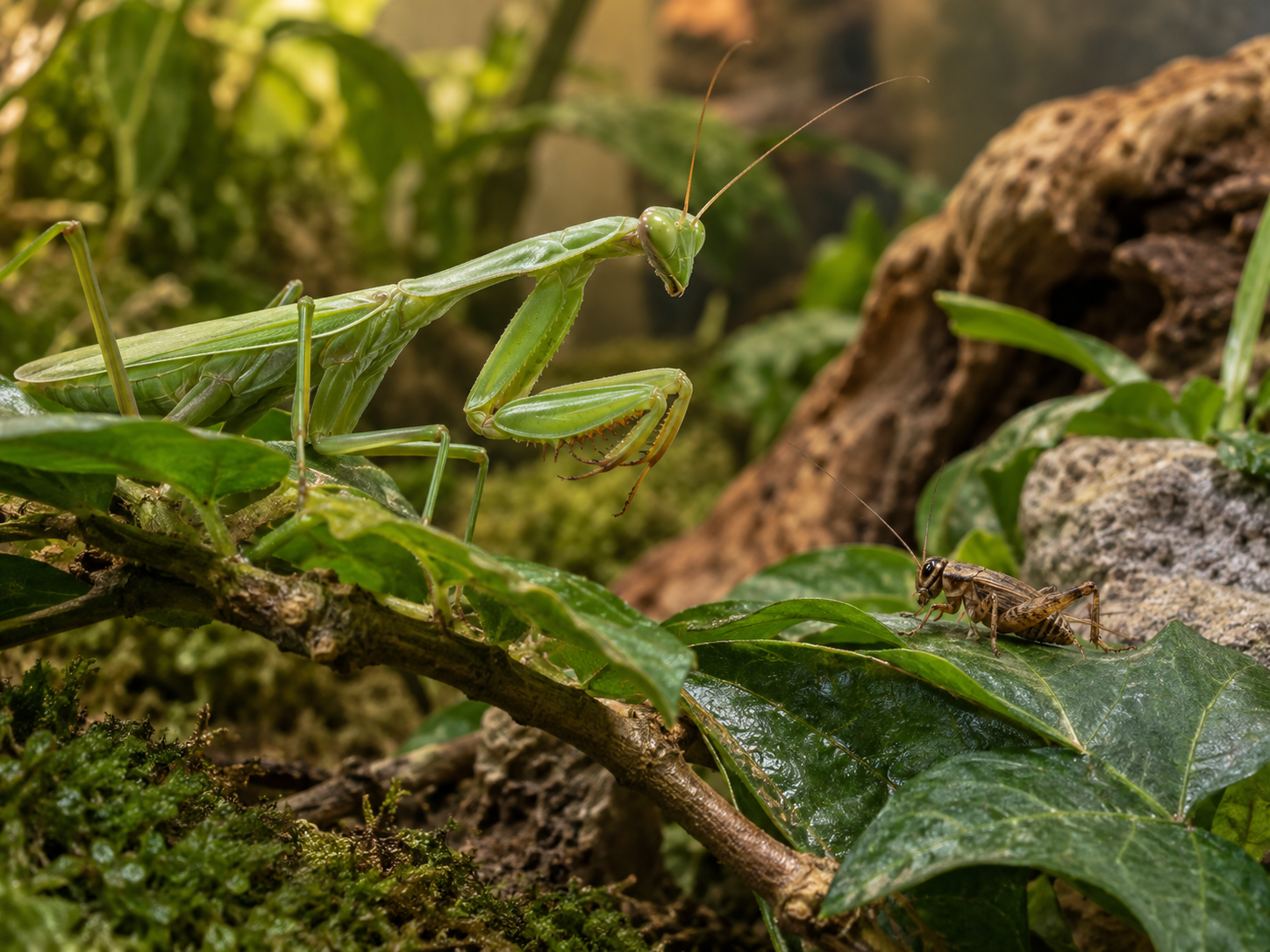
A praying mantis is an ambush predator that strikes with its raptorial front legs and relies almost entirely on movement to trigger a strike. That means a mantis will often ignore food that just sits there, even if it is perfectly nutritious. It also means the physical toughness and size of the prey matters in a way it does not for many other pet insects, because a mantis has no way to back out of a bad match once it has struck.
Unlike a bearded dragon or gecko that can crunch through almost anything, a mantis is a smaller, more delicate hunter. A feeder that is too tough, too armored, or too large is not just less appealing, it can actually cause real harm. That is why the ranking below leans as much on safety as it does on nutrition.
The Best Feeders for Praying Mantis, Ranked
For most keepers, these two feeders will cover a mantis from small nymph through adulthood. Rotate between them and simply adjust the size you offer as your mantis grows.
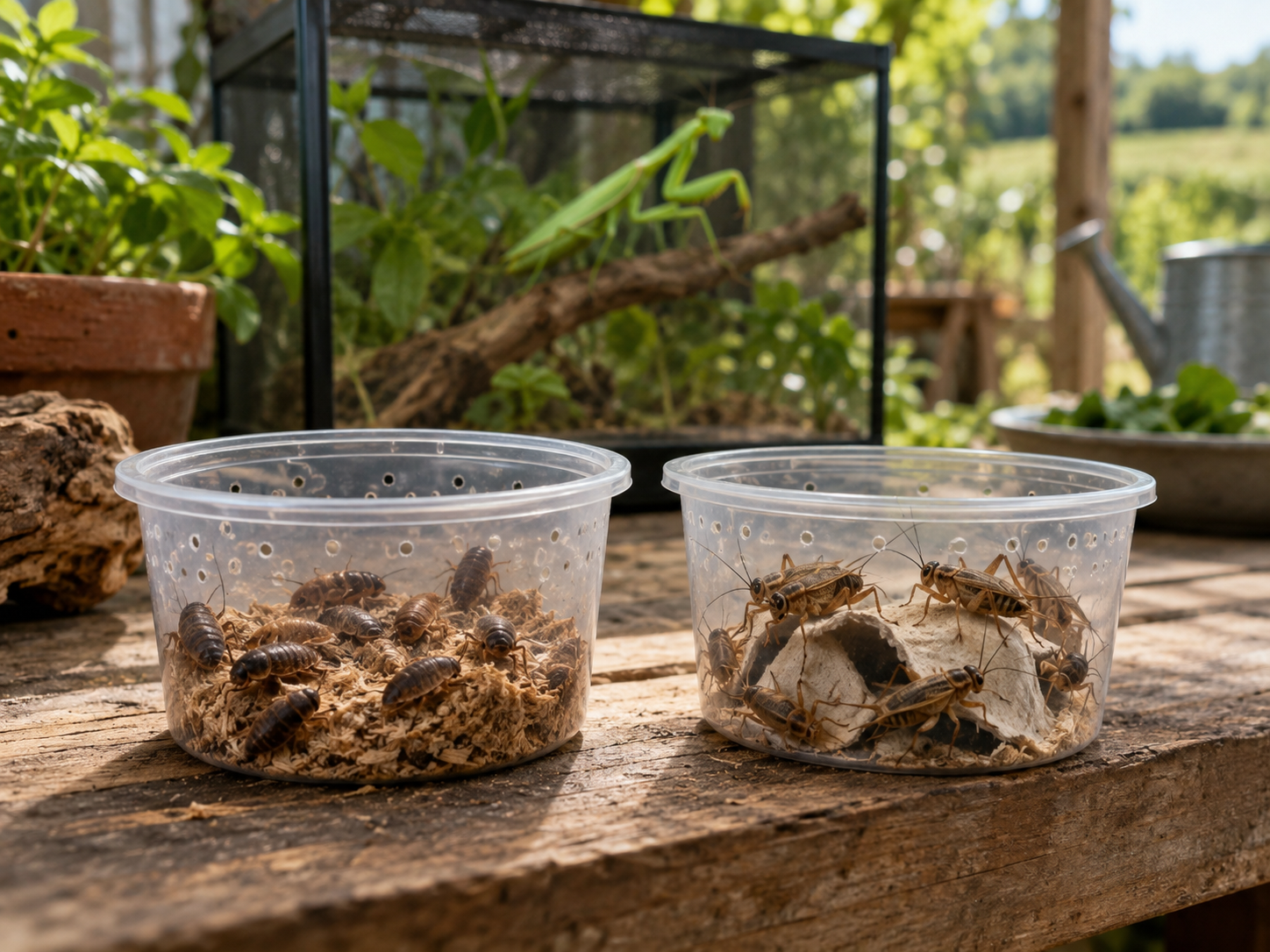
- Small Dubia Roach Nymphs: Dubia are soft-bodied, easy to size down to even the tiniest mantis nymphs, and simple to keep on hand since a colony lives for months. Their movement is a bit slower and more deliberate than a cricket's, which many keepers find is still plenty to trigger a strike once the mantis is hungry. Shop live dubia roaches.
- Appropriately Sized Crickets: Crickets are the classic mantis feeder for good reason. Their constant hopping and erratic movement is exactly the kind of motion that gets a mantis's attention fastest, and they come soft-bodied and easy to eat when sized correctly for the mantis offered. Shop live crickets (check current availability, as this feeder sells out and restocks).
Match the Feeder to the Instar
Mantises grow through a series of molts called instars, and a feeder that is perfect for one instar can be dangerously oversized for the next one down. The general rule keepers use is to offer prey around one third of the mantis's own body length, measured head to abdomen tip.
A tiny L1 or L2 nymph fresh out of the ootheca needs something like a fruit fly or a pinhead sized cricket or roach nymph. As your mantis molts up, you simply size up your feeder in small steps rather than jumping straight to full grown insects. When in doubt, go a size smaller rather than a size larger. An undersized meal just means feeding a little more often, while an oversized one can lead to an injured mantis.
Feeders to Avoid: Black Soldier Fly Larvae and Tough-Bodied Prey
This is the safety point most care guides skip entirely. Black soldier fly larvae are not a good feeder for praying mantises. Their thicker, tougher exoskeleton is built to resist digestion in a way that suits a reptile's crushing bite and stomach acid, but it is a poor match for how a mantis handles prey. The same caution applies to other hard-shelled or heavily armored feeders in general, and to mealworm or superworm beetles with their harder, more chitinous casing.
A mantis pierces and slowly consumes its prey rather than crushing it the way a lizard does, so it benefits from soft-bodied, easy to process feeders. Sticking to small dubia nymphs and appropriately sized crickets keeps your mantis's diet in the range it is actually built to handle.
Watch for Prey That Is Too Large
The other side of the size equation is just as important. A struggling insect that is too big and too strong for the mantis to fully subdue can twist, kick, or thrash in ways that damage delicate legs, wings, or the mantis's grip. This is especially risky right after a molt, when a mantis's new exoskeleton is still soft and vulnerable.
If you are ever unsure whether a feeder is the right size, choose the smaller option. A slightly undersized meal is a normal, safe part of feeding, an oversized one is a real injury risk.
Frequently Asked Questions
What do praying mantises eat?
Praying mantises eat live, moving insect prey sized to roughly one third of their own body length. Small dubia roach nymphs and appropriately sized crickets are the two most reliable staple feeders for keepers, since mantises hunt by sight and need movement to trigger a strike.
Can a praying mantis eat dubia roaches?
Yes, small dubia roach nymphs are one of the best feeders for a praying mantis. They are soft-bodied, easy to size down for even young nymphs, and simple to keep on hand since a dubia colony lives for months between restocks.
What size feeders for a praying mantis?
Offer feeders around one third of your mantis's body length, measured head to abdomen tip. Size up gradually as your mantis molts through each instar, and when you are unsure, choose the smaller feeder rather than the larger one.
Can mantises eat black soldier fly larvae?
No, black soldier fly larvae are not recommended for praying mantises. Their tougher, more chitinous exoskeleton is built for animals that crush their food, not for a mantis that pierces and slowly consumes softer bodied prey.
How often should I feed my praying mantis?
Most mantis keepers offer appropriately sized feeders every two to three days for adults, and more often for fast-growing younger nymphs. Watch your mantis's abdomen and appetite, a visibly full abdomen and reduced interest in prey both signal it is time to slow down.
Keep comparing: Best Feeders for Tarantulas· Feeder Insect Size Chart· Best Feeders for Dart Frogs· How to Gut-Load Feeders
