Isopod Substrate Base Layer vs Topper: How Much You Need
Most isopod bins need about 2 to 3 inches of substrate, built from two different bagged products rather than one: Premium Isopod Substrate as the working base for most of that depth, and Ultra Isopod Substrate layered on top as a richer, nutrient-heavy topper. They are not two ways to buy the same thing, and buying only one is a common way to either waste money or under-feed a colony. Below is what each layer does, how the mix should lean by isopod type, and a size-by-size buying guide using the real 1-quart to 2-gallon bag options, so you are not guessing at checkout. For a from-scratch mix instead, see our isopod substrate recipe.
Total substrate depth for a typical starter isopod bin
Premium is the working base; Ultra layers on top to enrich it
Both substrates share the same five sizes, so they scale together
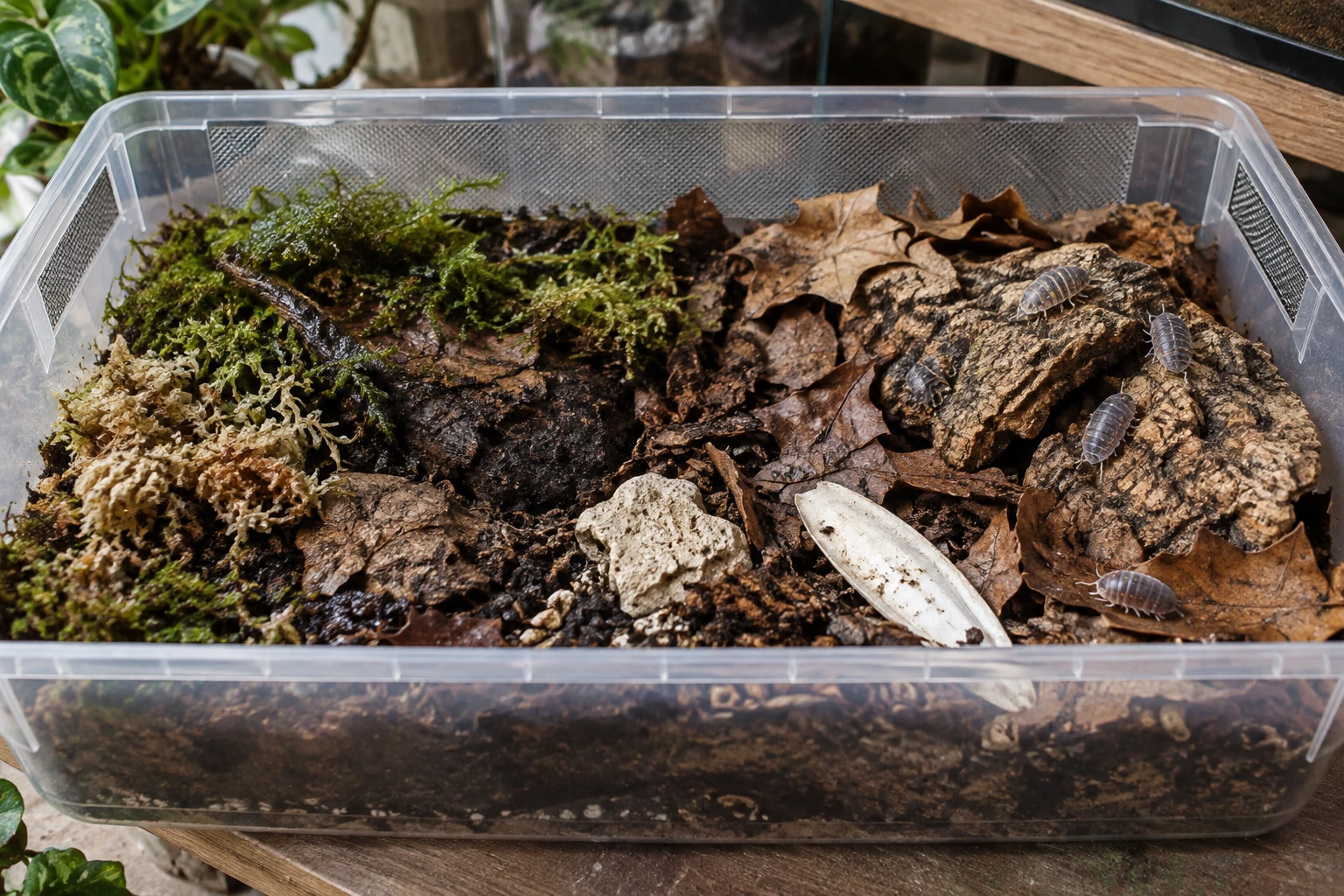
What the Base Layer Actually Does
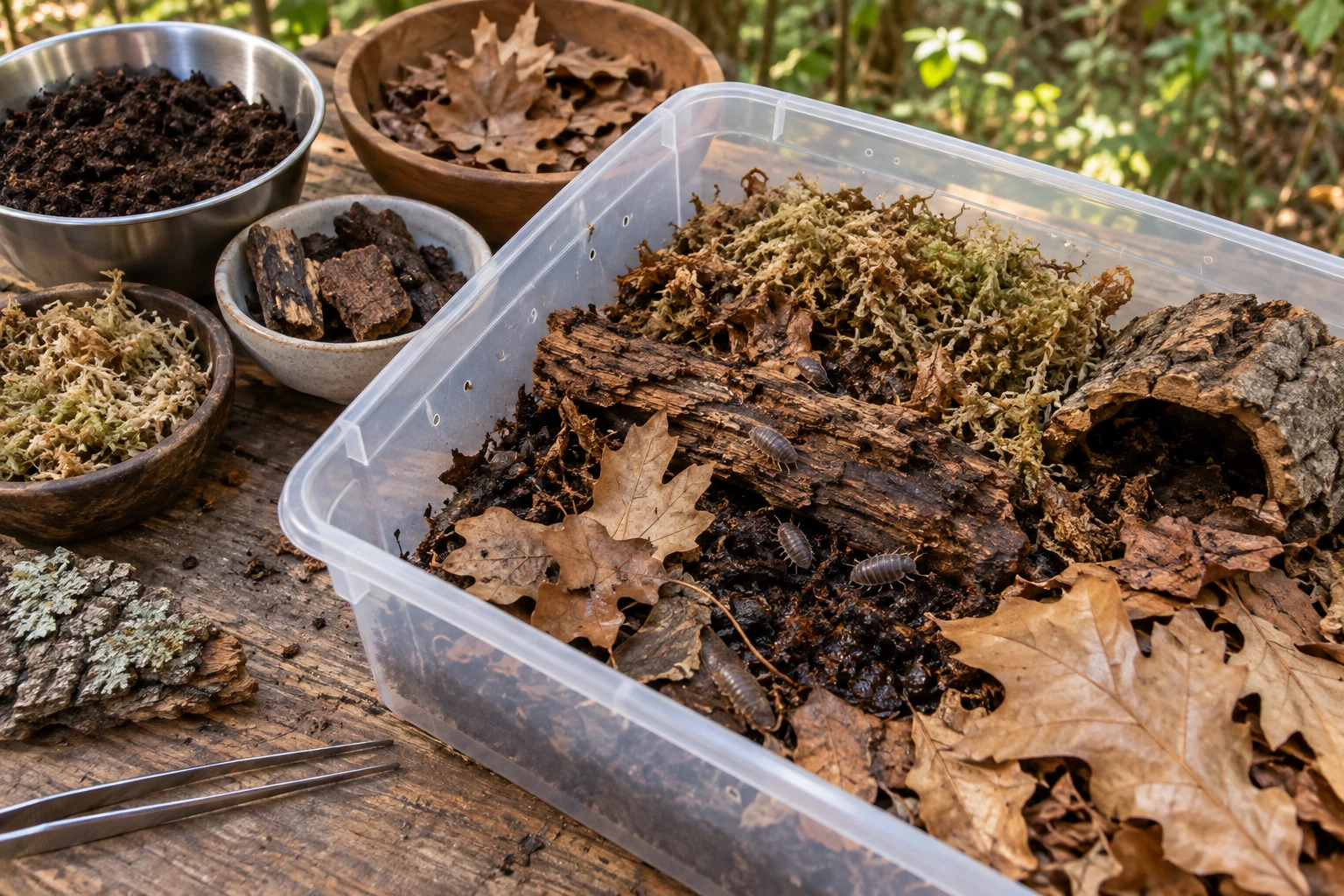
Premium Isopod Substrate is built from woodchips, charcoal, New Zealand sphagnum, peat, sand, and limestone calcium, mixed into a working blend rather than a single ingredient. The woodchips and charcoal hold structure and moderate moisture, the sphagnum and peat keep a steady damp base, the sand keeps the mix from packing solid, and the limestone calcium is there for molting. TC INSECTS describes it as a leaner formulation than the enriched Ultra blend, which is exactly the point: it is meant to be the bulk of your depth, not the whole diet.
This is the layer that does the physical job of a substrate: it holds the bin's shape, drains without staying waterlogged, and gives a colony room to burrow. Most of your 2 to 3 inches should be Premium, because it is the cheaper, leaner of the two bags and is built to carry the depth. Think of it as the foundation you build everything else on top of, including the topper below.
What the Topper Adds That the Base Doesn't
Ultra Isopod Substrate is a different recipe: flake soil, rotten softwood, leaf litter, New Zealand moss, worm castings, and limestone calcium. TC INSECTS is direct about the intended use on the product page itself, that Ultra is meant to be layered on top of a base like Premium rather than used as a sole substrate. The flake soil and worm castings in particular are the kind of slow-release, microfauna-heavy ingredients that reward a colony over months, not days.
Buying only Ultra and skipping Premium is the most common mistake here. Ultra is nutritionally heavier and pricier per quart, and it is designed to sit as a thinner enrichment layer over a proper base, not to fill a whole bin on its own. Used that way it is genuinely worth the extra cost. Used as your only substrate, you are paying enriched-topper prices for base-layer depth. If you would rather build a substrate from raw ingredients instead of two bagged products, our ABG-style substrate recipe is the from-scratch version of the same base-plus-topper idea.
How the Mix Should Lean by Isopod Type
The 2 to 3 inch depth itself does not change much by species, but how rich a topper you actually need does.
Dwarf species (Dwarf White, Dwarf Purple)
Dwarf White isopods (Trichorhina tomentosa) and similar dwarf species are small, tolerant, and easy on substrate. A standard Premium base with a light Ultra topper and a generous leaf litter layer covers them comfortably. They do not need a heavy hand with the enriched topper to thrive.
Armadillidium species (rollers)
Armadillidium tolerate a range of substrate richness well and do fine on the standard base-plus-topper split described above. If anything, a slightly drier lean with less Ultra and more leaf litter on top suits most Armadillidium lines.
Large, protein-driven Porcellio and Cubaris
Fast, hungry species like Dairy Cow isopods (Porcellio laevis) do fine on a lean Premium base with little or no Ultra, since they are not picky about substrate richness. Cubaris are the opposite case in more than one way: they want more depth than the 2 to 3 inch standard, closer to 3 to 4 inches, plus our house guidance of the low to mid 70s and roughly two thirds of the bin damp. The moisture-holding ingredients in Ultra genuinely help hold that humidity across the extra depth, so this is the group most worth the extra topper, and worth sizing up a bag to cover that extra inch. See our Cubaris humidity and substrate guide for the full temperature and moisture picture.
How Much to Actually Buy, by Bin Size
Both bags come in the same five sizes: 1 quart, 2 quarts, 3 quarts, 4 quarts (a gallon), and 2 gallons in our substrate and culturing supplies. That shared size ladder is what makes base-plus-topper math workable at checkout. As a rule of thumb, multiply your bin's floor area by your target depth to estimate volume, then round up to the next bag size rather than under-buying. The combinations below are a practical starting point, not an exact science, since bin shapes vary.
Small bin (a 6-quart shoebox tub)
A standard 6-quart shoebox tub runs roughly 13 to 14 inches by 7 to 8 inches of floor space. A 2-quart bag of Premium plus a 1-quart bag of Ultra gets you close to a full 2 inch fill, with room to size up to the 3-quart bags if you want the fuller 3 inches.
Medium bin (a 5 to 10-gallon tank)
A 10-gallon tank footprint runs about 20 by 10 inches. The 4-quart (gallon) bag of Premium plus a 1 to 2-quart bag of Ultra is a comfortable 2 to 3 inch fill for a tank this size, with a little Premium left over for future top-offs.
Large bin (a 20-gallon long or bigger)
Step up to the 2-gallon bag of Premium as your base for a 20-gallon long or larger enclosure, and add a 2-quart or 2-gallon bag of Ultra depending on how enriched you want the whole footprint. Multi-culture shelves running several large bins are exactly who the largest bag sizes are built for.
Leaf Litter and Sphagnum Moss Are Not Substrate
Neither bagged substrate replaces leaf litter. Leaf litter is the staple food layer that sits on top of the substrate, and it is a separate ingredient, not a substitute for the base or topper underneath. Our leaf litter guide covers the magnolia-and-oak mix and how often to refresh it, roughly every 4 to 8 weeks depending on how humid and heavily stocked the bin is.
Standalone New Zealand sphagnum moss is a moisture-retention component, not a substrate either, even though both Premium and Ultra already contain sphagnum or NZ moss blended in. Extra loose moss is worth adding when you want one visibly damper corner of the bin, a humid retreat zone, rather than a uniformly damp footprint. It is a nice-to-have for a moisture gradient, not a required third bag.
When You Can Skip the Topper Entirely
A new starter colony of an easy, tolerant species under about 50 animals, in a 6-quart shoebox, genuinely does fine on Premium plus leaf litter alone while it establishes. Spending on Ultra before the colony is settled is money that would do more good on livestock or on a calcium source.
Ultra earns its cost once a colony is breeding steadily and you want to push growth, for slow-breeding collector species, or for a humidity-hungry group like Cubaris where the enrichment genuinely changes outcomes. If your current bin is not smelling stale, is not compacting, and the colony is growing, that is a sign your existing substrate is working and does not need a topper added just because one exists.
The Layered Substrate Kit
Base layer, enrichment topper, and the leaf litter staple that goes on top of both
Frequently Asked Questions
Written by the TC INSECTS breeding team · Porter, Texas · Live Arrival Guarantee on every order
Have a care question? Ask our community.
Join Reptile Keepers USA, our free Facebook group for reptile, amphibian and invert keepers. Share your setups, get care help and swap feeder tips.
Join the free group