
- Bearded dragons can get nibbled by uneaten crickets left in the enclosure overnight, usually on the toes, tail tip, or the soft skin around the eyes.
- Crickets are the riskiest overnight feeder because they roam the whole enclosure, chew on soft surfaces, and keep moving after the lights go out.
- Removing uneaten crickets within 10 to 15 minutes of feeding time eliminates almost all of the risk.
- Dubia roaches are a safer overnight staple because they do not climb a sleeping dragon, do not chirp, and rarely bother a resting animal.
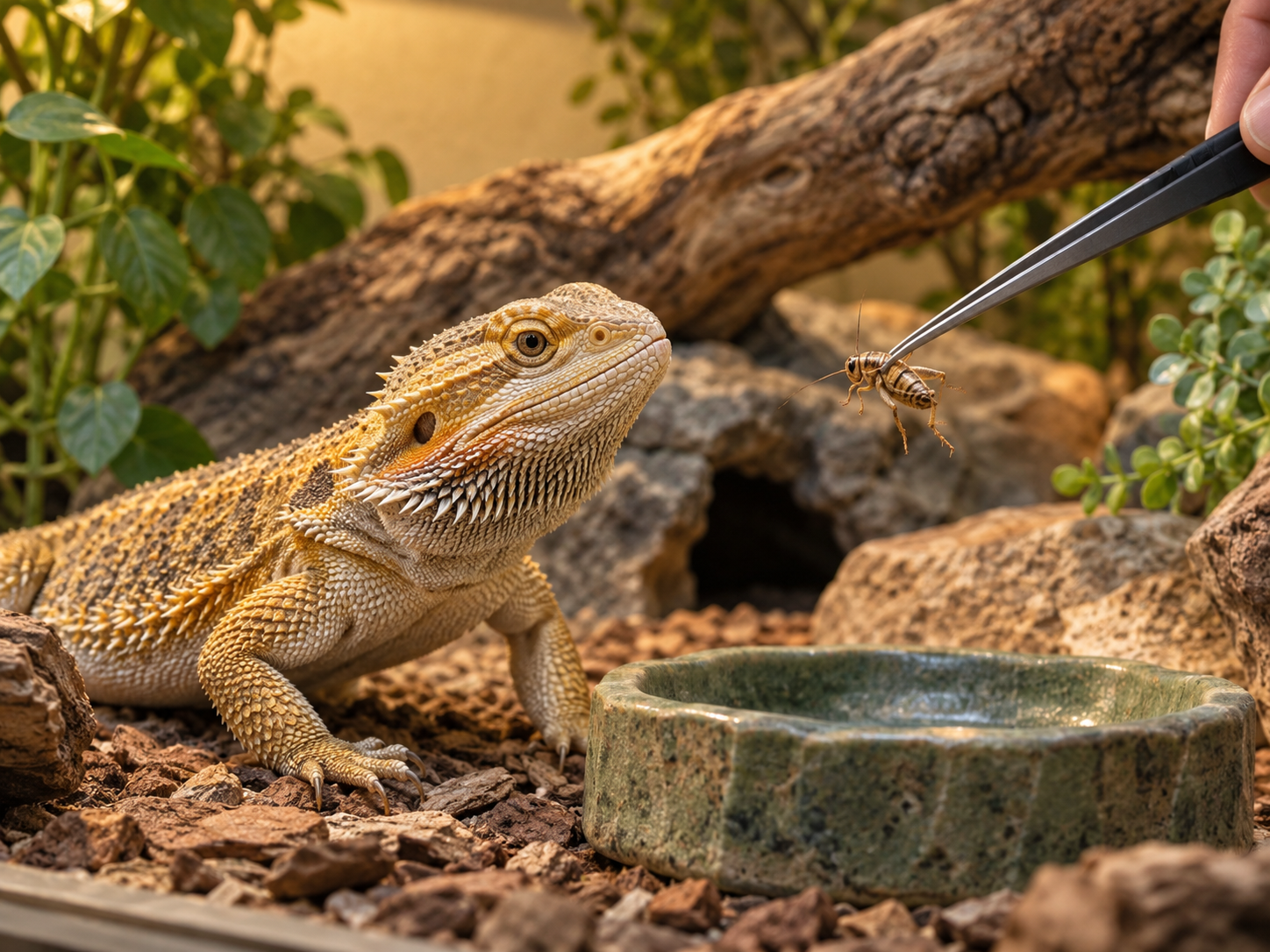
- Feeding in a shallow dish instead of scattering crickets loose in the tank makes leftovers easy to spot and remove.
Why Crickets Nibble Sleeping Dragons
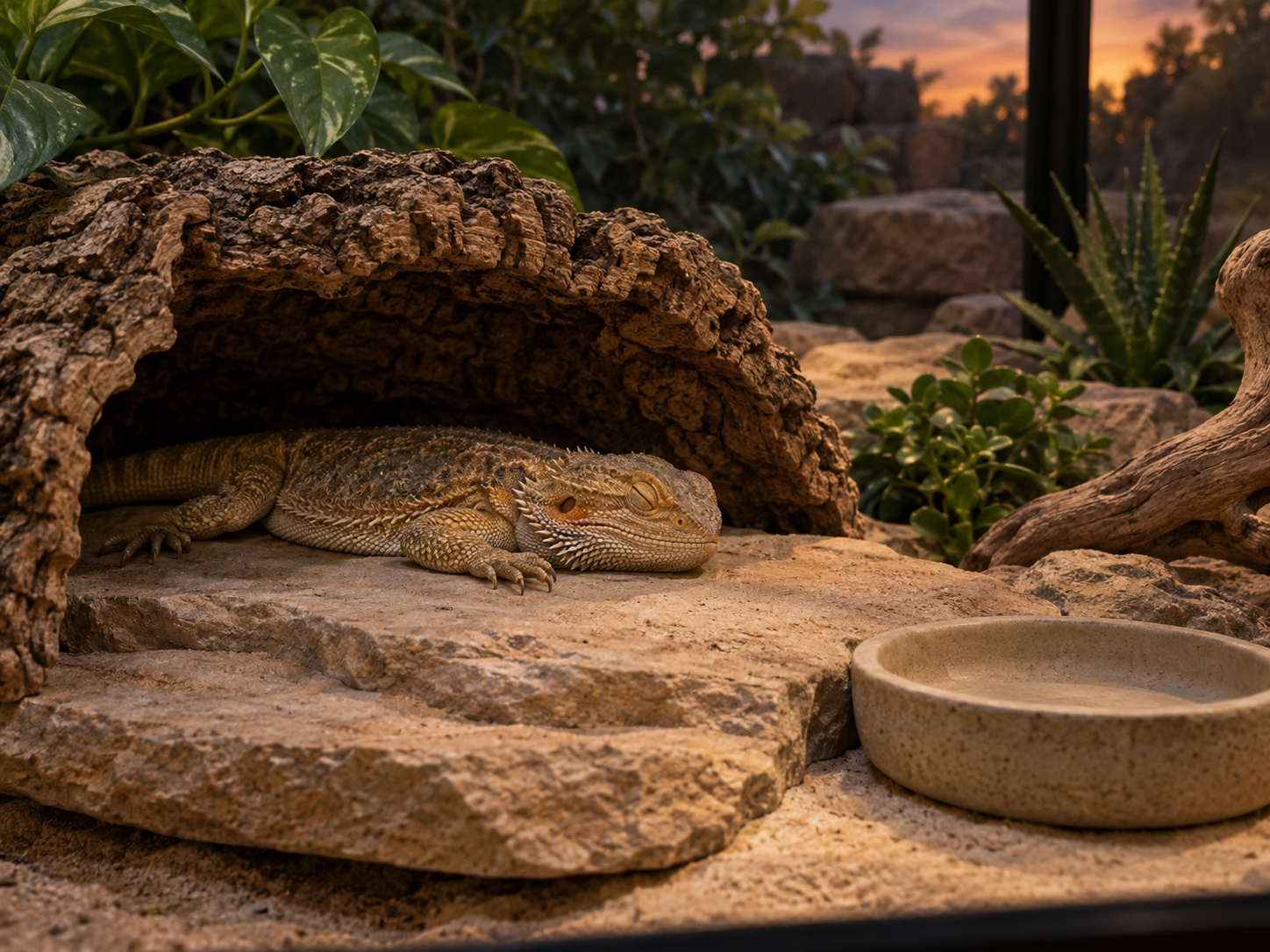
Crickets (Acheta domesticus) are not hunting your dragon. They are opportunistic omnivores, and a cricket left hungry overnight will chew on whatever soft, warm, or moist surface it can find. A sleeping bearded dragon does not react the way it would while awake and hunting, so a stray cricket can walk right up onto a toe, the tip of the tail, or the soft skin near an eye and start chewing without being noticed or shaken off.
This is more likely to happen the longer crickets are left in the enclosure, the more crickets are loose at once, and the hungrier those crickets are. A single cricket dropped in right before lights-out and forgotten overnight is a completely different situation than a quick, supervised feeding that gets cleared out.
What the Damage Actually Looks Like
Cricket nibbling usually shows up as small nicks, redness, or a bit of missing skin on the toes, the tip of the tail, or around the eyelids, the places most exposed while a dragon sleeps flat and still. It is rarely severe on its own, but any open skin is a doorway for infection, and it is genuinely uncomfortable for the animal.
If you notice swelling, a wound that will not close, or a dragon that seems to be favoring a toe or avoiding light on one eye, that is worth a call to a reptile-experienced vet. This guide is about prevention, not treatment, and a vet is always the right call for an actual injury.
The Fix: Never Leave Uneaten Crickets in the Tank
The single most effective habit is also the simplest one. Only offer as many crickets as your dragon will eat in one sitting, watch the feeding, and pull out anything left after 10 to 15 minutes. If a cricket is still hopping around the tank after that window, catch it and remove it rather than leaving it for later.
Feeding in a shallow dish instead of scattering insects loose across the substrate makes this dramatically easier. Crickets tend to stay near the dish, leftovers are easy to see at a glance, and cleanup takes seconds instead of a hunt through decor and substrate.
Why Dubia Roaches Are the Safer Overnight Staple
This is the main reason so many keepers move their staple feeder over to dubia roaches. Dubia are calm, ground-dwelling, and cannot climb smooth glass or plastic, so a stray dubia is not going to end up on a sleeping dragon's back or tail the way a jumping cricket can. They are also silent, do not smell, and move far less at night once the lights and heat drop.
None of this means dubia are risk-free if you leave a pile of them loose for days, but their calmer, non-climbing nature makes an accidental overnight nibble far less likely. See the full breakdown in our Dubia vs Crickets comparison if you are weighing the switch.
A Simple Nightly Routine to Cricket-Proof the Enclosure
A few small habits make overnight nibbling a non-issue no matter which feeder you use.
- Feed earlier in the evening, not right at lights-out, so you have time to check on leftovers before bed.
- Use a shallow feeding dish so uneaten insects do not scatter into hides and substrate.
- Do a 10 to 15 minute check after every feeding and remove anything still loose.
- Count what you offer rather than dumping in a whole cup, so you know exactly how many need to come back out.
- Consider dubia roaches as your staple if overnight escapees keep happening despite your routine.
Frequently Asked Questions
Do crickets bite bearded dragons at night?
Yes, uneaten crickets left loose in the enclosure overnight can nibble a sleeping dragon's toes, tail tip, or the soft skin around the eyes. It is not aggression, it is a hungry cricket chewing on the nearest warm, soft surface once the lights are off.
Can feeder crickets hurt my reptile?
Yes, if they are left in the tank unsupervised, especially overnight. The damage is usually minor nicks or missing bits of skin, but any open wound can lead to infection, so prevention matters more than treatment here.
How long should I leave crickets in the tank?
No more than 10 to 15 minutes past the feeding itself. Watch the feeding, then remove anything your dragon did not eat rather than letting it roam the enclosure overnight.
Are dubia roaches safer than crickets?
For overnight safety, yes. Dubia roaches cannot climb smooth glass or plastic, stay calmer at night, and do not chirp, which makes an accidental nibble on a sleeping dragon far less likely than with crickets.
Why do keepers switch from crickets to dubia?
The most common reasons are fewer overnight nibbling incidents, no noise, no smell, and a colony that lives for months instead of weeks. Crickets still win on triggering a strong feeding response for some picky eaters, which is why some keepers rotate both.
Keep comparing: Dubia vs Crickets· Best Feeders for Bearded Dragons· How to Keep Feeder Crickets Alive Longer· How Many Crickets to Feed a Bearded Dragon
