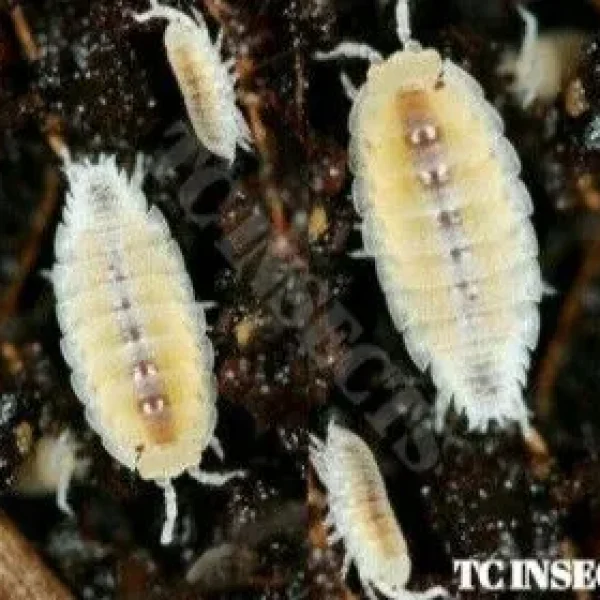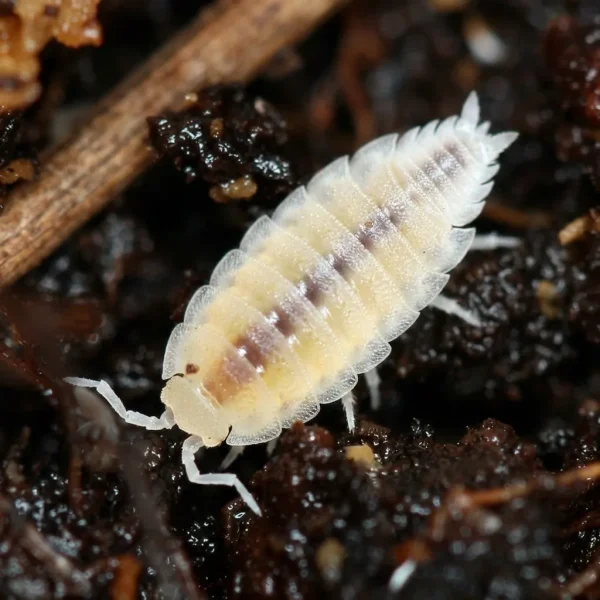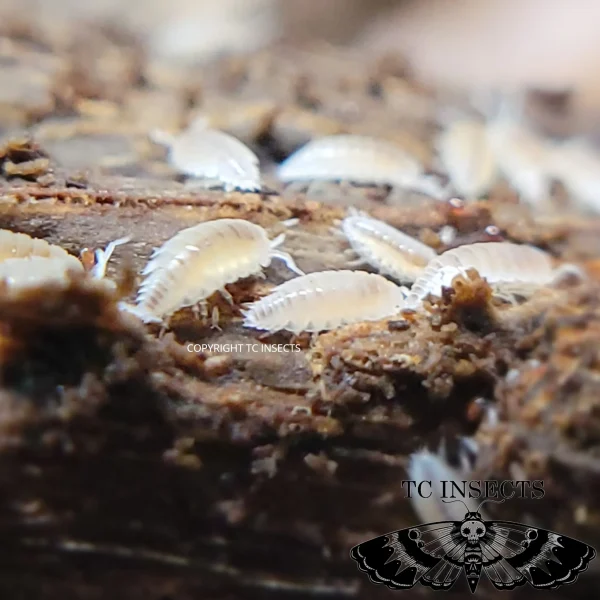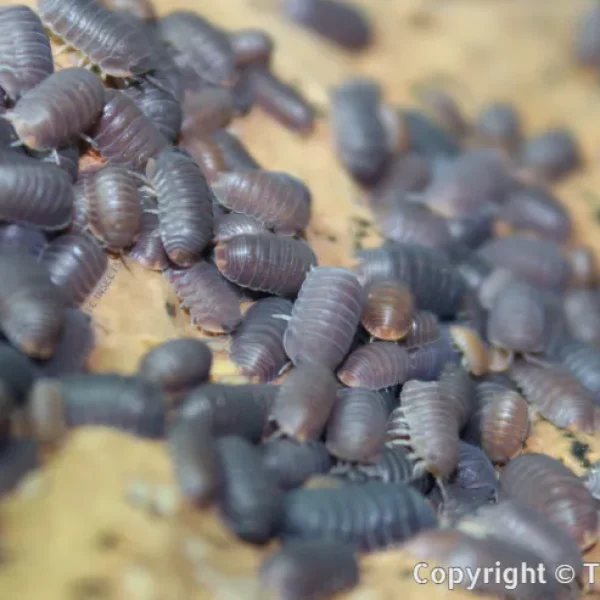
Montenegro Isopods for Sale
Montenegro is the classic original line of Armadillidium klugii, the famous Clown Isopod. This listing is a live culture from TC INSECTS. Specifically, the morph name “Montenegro” refers to the Balkan country where wild
populations were originally documented. The species was described by Johann Friedrich von Brandt in 1833 from the Balkan Adriatic coast. Today, the wild range extends across Croatia, Montenegro, southern Albania, and
western Greece. Notably, Wikipedia records that hobbyists most commonly encounter A. klugii sold as Montenegro or variations thereof. As a result, Montenegro is the foundational reference line for the entire Clown
Isopod morph cluster.
Overview
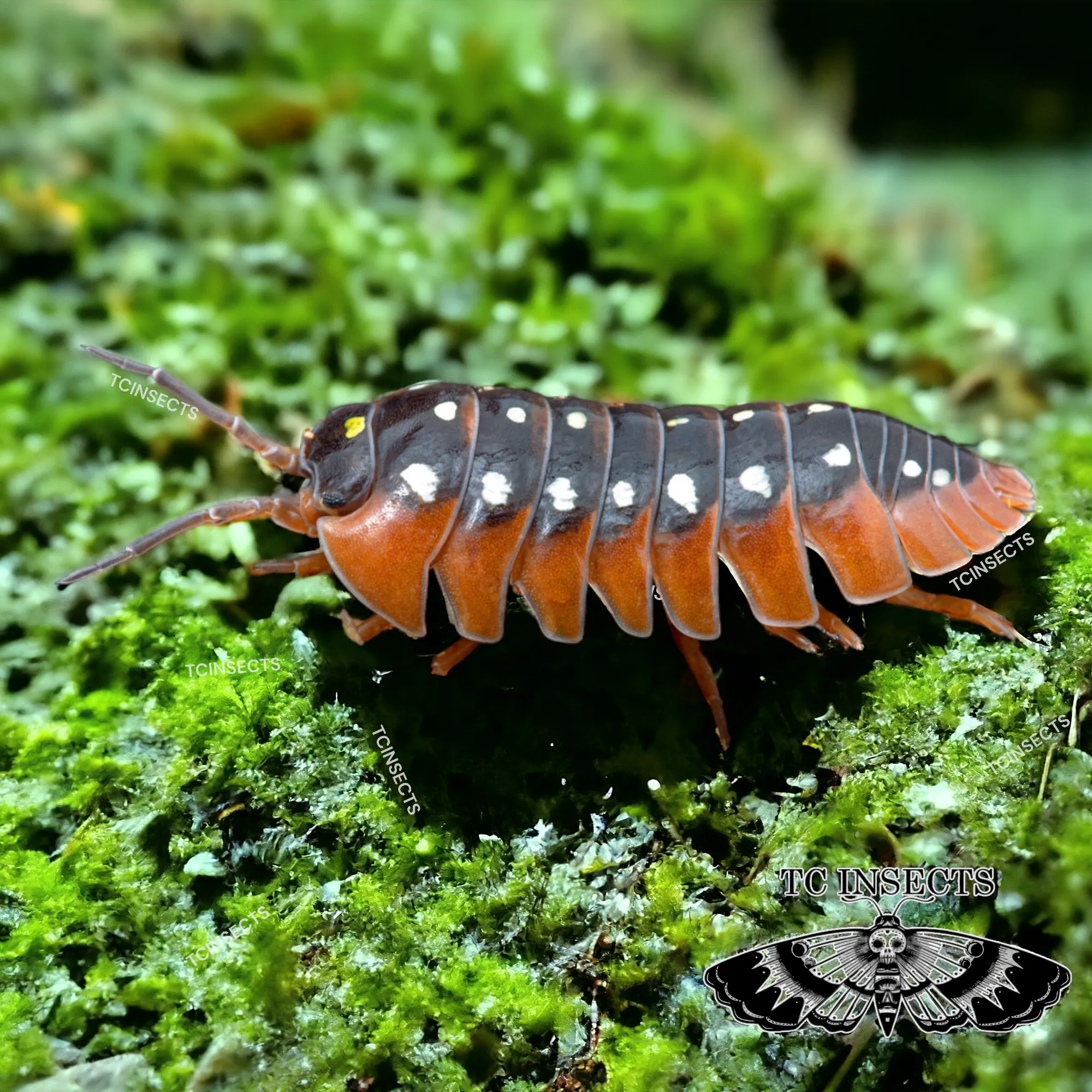
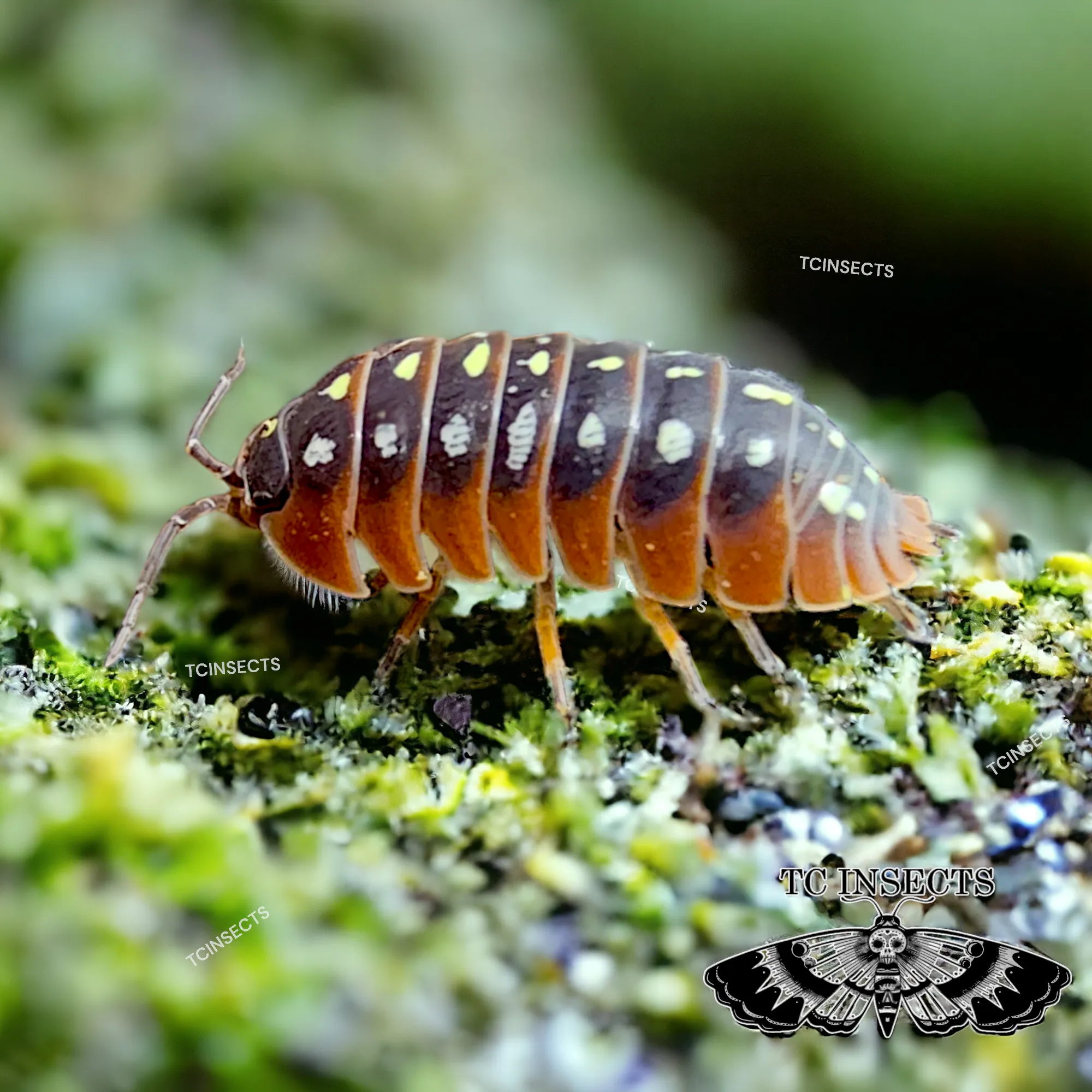
Adults reach about 15 to 21 mm. Generally, they have a rounded, compact, pillbug-style body. As with all Armadillidium, they conglobate into a tight ball when disturbed. Specifically, the dorsal surface shows yellow spot
s running down the center of the back, often arranged in three loose rows. In addition, lateral edges show moderate red skirting that gives the morph its classic Clown look.
Importantly, Montenegro sits between the other two TC INSECTS A. klugii morphs in terms of red coloration. For example, Dubrovnik has white spots and more vivid red skirts. Meanwhile, Pudding drops the red entirely.
In contrast, Montenegro keeps the moderate red and adds yellow dorsal spotting.
Why Keep Montenegro?
- Classic Clown pattern: The yellow spots and moderate red skirts create the most authentic wild-type Clown look in the TC INSECTS lineup.
- Foundational reference line: First, Wikipedia notes hobbyists most commonly encounter A. klugii as Montenegro. In addition, the other morphs were selectively bred from this foundational stock.
- Strongest mimicry display: Notably, Montenegro retains the red-yellow-black pattern that documents the Batesian mimicry of the Mediterranean black widow.
- Multi-morph collector potential: Specifically, A. klugii has several established morphs including Montenegro, Pudding, Dubrovnik, and Mercato.
- Drier-tolerant: Generally, this species handles drier setups better than most Armadillidium.
Honest Note on Batesian Mimicry of the Mediterranean Black Widow
Wild-type A. klugii displays red, yellow, and white spotting on a dark body. Specifically, this pattern is documented as Batesian mimicry of the Mediterranean black widow, Latrodectus tredecimguttatus. Importantly, the
venomous spider shares the same Adriatic coast range as A. klugii. As a result, predators that learn to avoid the spider may also avoid the harmless isopod with similar coloration. Notably, the Montenegro morph displays
this mimicry pattern most faithfully among the TC INSECTS Clown morphs. In contrast, Pudding drops the red and weakens the mimicry signal. Meanwhile, Dubrovnik intensifies the red beyond the wild-type pattern.
Honest Note on the “Montenegro” Locality Name
“Montenegro” is the name of an actual Balkan country on the Adriatic coast. Specifically, the country sits between Croatia, Bosnia and Herzegovina, Serbia, Kosovo, and Albania. Notably, this is also the documented heart of
the wild A. klugii range. As a result, the morph name reflects real locality rather than purely descriptive trade naming. Importantly, captive-bred Montenegro stock may not trace to a specific Montenegrin collection site.
Therefore, manage the colony as a captive Balkan Armadillidium line with documented husbandry needs.
Honest Note on Reproductive Rate
Hobby breeders document A. klugii as slow to establish. Specifically, new cultures often take weeks to months to begin producing visible juveniles. However, once a colony is stable, reproduction becomes moderately
prolific. As a result, expect a settling period before colony growth becomes obvious. Notably, sub-adults may begin breeding before reaching full size if conditions are stable. Some elder adults may also be lost during the
early establishment period, which is normal. Importantly, larger starter counts establish more reliably because they include more breeding-age adults from the start.
Honest Note on Sister Products in the TC INSECTS A. klugii Lineup
TC INSECTS sells three A. klugii Clown morphs. Importantly, each has a distinct visual signature. Specifically, this Montenegro listing has yellow spots and moderate red skirts. In contrast, the Dubrovnik morph has
white spots and more vivid red skirts. Meanwhile, the Pudding morph lacks the red entirely. In addition, TC INSECTS sells Armadillidium flavoscutatum “Red Head”, a different species in the same klugii-group per
published taxonomic literature.
Care and Setup
Montenegro care is built around four things: stable warmth, a moisture gradient that leans drier, steady airflow, and reliable calcium availability. Importantly, this species suits a semi-arid Mediterranean care style rather than tropical humidity.
Temperature
Aim for 70 to 85°F as the everyday range. Specifically, slightly elevated temperatures of 74 to 79°F often improve activity and reproduction. Generally, room temperature works for most keepers. However, avoid sustained heat above the mid-80s. Also, avoid cold drafts. Notably, cooler temperatures may cause the colony to slow or go dormant.
Humidity
Keep one side of the enclosure damp with moss and substrate. Meanwhile, let the other side stay noticeably drier. Importantly, the substrate should not be uniformly wet. Specifically, this species handles drier conditions (25 to 50% humidity) better than most Armadillidium. Still, a moist retreat is essential for molting. As a target, aim for moderate humidity in the moist zone and a clearly drier opposite side.
Substrate
Use an isopod substrate blend that holds light moisture without compacting. For example, a coco fiber base mixed with decomposed hardwood, sphagnum, and a small amount of crushed limestone works well. In addition, calcium support matters here. Specifically, the heavy conglobating exoskeleton requires ongoing calcium turnover. Notably, magnolia leaves and magnolia seed pods are a documented favorite of A. klugii.
Food
Leaf litter and decaying hardwood should always be available. Notably, magnolia pods and magnolia leaves are a favorite for this species. In addition, supplement with TC INSECTS Isopod Food, calcium, and small portions of vegetables. For example, sweet potato, carrot, and squash are common picks. Importantly, this species benefits from somewhat higher protein than many Armadillidium. As a result, occasional dried shrimp or fish-based foods help colony growth.
Ventilation
Generally, cross-ventilation works best. For example, two side vents or a vented lid beats a single small airhole. As a result, good airflow keeps the substrate from souring. Meanwhile, the moist retreat handles hydration needs. Notably, stagnant overly humid conditions are a documented cause of culture crashes for this species.
Bioactive Use
Overall, Montenegro suits bioactive enclosures with moderate humidity and a clear moisture gradient. For example, it works in Mediterranean-themed setups, reptile vivariums, and amphibian habitats with proper ventilation. However, avoid wet tropical setups. This is because the species needs the drier side to thrive.
Breeding Notes
Mature females carry developing young in a brood pouch called a marsupium. Specifically, gravid females show a pale cavity between the legs that holds the developing mancae. Notably, males lack this white cavity. In
addition, females tend to be slightly larger than males.
Importantly, A. klugii Montenegro is slow to establish in new cultures. Specifically, expect weeks to months before visible juveniles appear. However, once the colony stabilizes, growth becomes moderately prolific. Notably,
juveniles often take several molts to develop the full adult color intensity. Therefore, be patient with young animals that look less defined than their parents.
Best For
- Display vivariums featuring the classic red-yellow Clown pattern
- Multi-morph A. klugii collector shelves featuring the foundational reference line
- Semi-arid bioactive setups with a moist refuge
- Intermediate keepers interested in Batesian mimicry as a documented evolutionary phenomenon
- Collectors who want the morph closest to wild-type A. klugii
Not Best For
- Fully wet tropical setups (instead, use Cubaris murina “Little Sea”)
- Heavily planted vivariums with delicate new growth (the colony may graze tender plant tissue)
- Sole feeder cultures (the conglobating body and tough exoskeleton work against feeder use)
- First-time isopod keepers wanting the easiest possible starter (instead, try Dwarf Whites)
- Sterile or completely freshly built enclosures with no leaf litter or decaying wood
Origin and Hobby Line Notes
The species A. klugii was described by Brandt in 1833 from the Balkan Adriatic coast. Specifically, the documented wild range extends across Croatia, Montenegro, southern Albania, and western Greece. Notably, the species
belongs to the klugii-group of Armadillidium, which also includes A. flavoscutatum (the Red Head morph) and several other species. The Montenegro morph itself represents the foundational reference line from whic
h other Clown morphs were selectively bred. As a result, manage the culture as a captive Balkan Armadillidium line with documented husbandry needs.
Receiving and Acclimation
First, bring the package indoors as soon as it arrives. Then, open it in a calm area away from direct sun, heat, or cold drafts. Importantly, prepare the enclosure before opening the cup. Specifically, the setup should already
have substrate, leaf litter (including magnolia leaves if available), bark hides, a moist moss retreat, calcium, and a drier feeding zone.
Next, gently tip the cup contents, including shipping material, into the prepared enclosure near the moist side. Often, some animals will stay curled or hidden during the first few days. This is because conglobating species
often roll up when stressed. Therefore, feed lightly during the first week. Then, increase feeding once the colony becomes more active. Finally, avoid digging through the culture during this settling period.
Recommended Add-Ons
- TC INSECTS Premium Isopod Habitat Kit for a straightforward starter setup matched to the moisture-gradient approach
- TC INSECTS Assorted Hardwood Leaf Litter for food, cover, and the natural grazing layer
- TC INSECTS Isopod Food for protein-rich supplementation that suits this species
- TC Calcium Ultra Fine for healthy molts on a conglobating pill bug
- Springtails to complement the Montenegro culture in bioactive setups
Frequently Asked Questions
Why is this morph called “Montenegro”?
The name refers to the Balkan country of Montenegro, located on the Adriatic coast. Specifically, this is also the documented heart of the wild A. klugii range. Notably, hobby breeders typically use the locality name as the foundational morph identifier. In contrast, Pudding and Dubrovnik are derivative trade names rather than locality references.
What makes Montenegro different from other Clown morphs?
Montenegro displays yellow spots running down the center of the back paired with moderate red lateral skirting. Specifically, this is the wild-type Clown pattern. In contrast, Dubrovnik has white spots and more vivid red skirts. Meanwhile, Pudding lacks the red entirely. As a result, Montenegro sits between Dubrovnik and Pudding in terms of red intensity.
Is the black widow mimicry real?
Yes, the mimicry hypothesis is documented in published taxonomic literature. Specifically, wild-type A. klugii shares the same Adriatic coast range as the Mediterranean black widow (Latrodectus tredecimguttatus). In addition, both species show similar red-and-black warning coloration. As a result, predators that learn to avoid the venomous spider may also avoid the harmless isopod. Notably, Montenegro displays this mimicry pattern most faithfully in the TC INSECTS lineup.
Are Montenegro isopods beginner-friendly?
Generally intermediate. Specifically, the species needs careful moisture-gradient management and drier conditions than most Armadillidium. In addition, new cultures take weeks to months to establish. Therefore, first-time keepers may prefer an easier starter like Dwarf Whites before moving up to A. klugii.
How does Montenegro compare to the other TC INSECTS Klugii morphs?
All three A. klugii morphs share the same care needs and biology. Specifically, only the visual signature differs. For example, this Montenegro listing has yellow spots and moderate red skirts. In contrast, Dubrovnik has white spots and more vivid red. Meanwhile, Pudding has yellow and white spots with no red. In addition, A. flavoscutatum “Red Head” is a different species in the same klugii-group.
Why is my Montenegro colony slow to grow?
This is normal. Specifically, A. klugii is documented to take weeks to months to establish in new cultures. In addition, some elder adults may be lost during the early period. However, once the colony stabilizes, reproduction becomes moderately prolific. Notably, larger starter counts establish more reliably than smaller ones.
Learn More About Armadillidium klugii and Clown Isopods
The following references offer useful background on the species, its mimicry behavior, and the broader pill bug family.
- World Register of Marine Species: Armadillidium Brandt, 1831.
Specifically, the authoritative genus record for Armadillidium. In addition, it confirms the family placement in Armadillidiidae and lists accepted species in the genus.
-
British Myriapod and Isopod Group: Woodlouse and Waterlouse Recording Scheme. Specifically, background on the wider terrestrial isopod group from a long-running scientific recording body. In addition, it is helpful for understanding how pill bugs and other woodlice live, feed, and reproduce.
-
Natural History Museum: Giant isopods, curious crustaceans on the ocean floor. Specifically, a short, plain-language overview from the NHM. In addition, it puts the woodlouse family in context with their marine relatives.