

Ukraine Pied Isopods for Sale
Overview
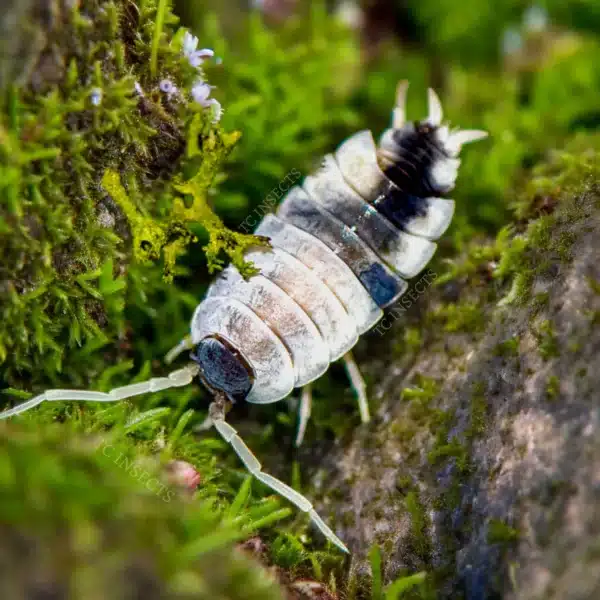
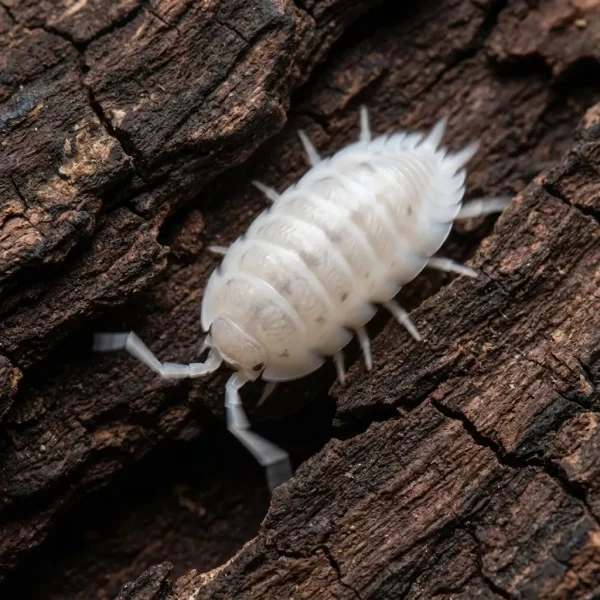
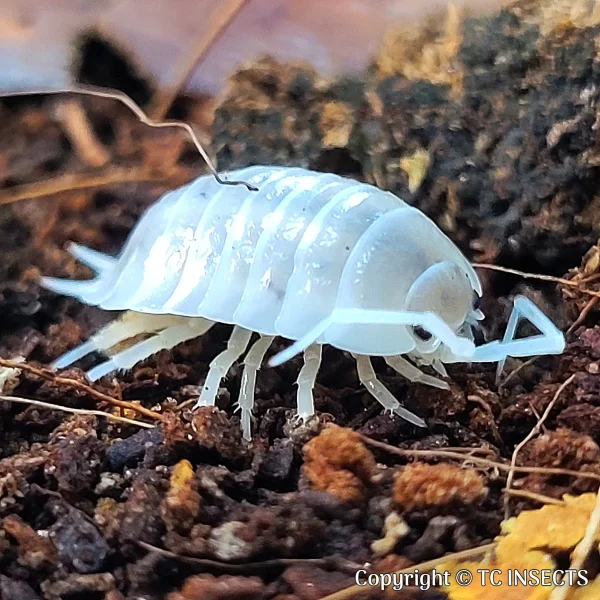
Ukraine Pied Isopods are a hobby trade morph of Cylisticus convexus, commonly called the curl-up woodlouse. The “Pied” designation refers to a piebald color pattern with irregular lighter and darker patches across the body, and the “Ukraine” tag marks the hobby trade origin region for this color line. The species itself is well known across Europe and North America, with a slightly arched body shape and a partial conglobation response when disturbed.
Additionally, this is one of the more cold-tolerant species in the hobby. Where many tropical lines slow down or struggle below 70°F, Cylisticus convexus handles cooler indoor rooms reasonably well, which makes it a useful option for keepers who do not run supplemental heating across their isopod shelf.
Why Keep Ukraine Pied Isopods?
- Piebald pattern: The mottled color expression sets this morph apart from the standard wild-type Cylisticus convexus and adds collector value to a shelf running Powder and roller lines.
- Partial roller behavior: The species curls defensively without fully sealing into a ball, which gives it a distinct behavior between full rollers and surface-active Porcellionides.
- Cooler tolerance: The species handles temperatures in the mid-60s better than most tropical hobby lines, which suits unheated indoor rooms.
- Bioactive support: Established colonies process leaf litter, frass, and small organic debris on a moderate scale in humid setups.
- Collector variety: A piebald curl-up morph complements existing Powder Blue and Powder Orange lines on a varied isopod shelf.
Honest Note on the Pied Pattern and Curl Behavior
Two honest points are worth flagging before purchase. First, piebald color expression varies between individuals. Some animals show strong, bold patches while others sit closer to the wild-type base color with only subtle pied markings. As a result, a starter culture will contain a mix of stronger and weaker pattern expression rather than a uniform population of dramatically marked individuals.
Second, the curl behavior is not the tight, sealed conglobation of Armadillidium or Venezillo. Cylisticus convexus partially tucks the body when disturbed but generally does not seal into a complete ball. Buyers who specifically want a full-roller display species will likely be happier with a dedicated roller line like Silent Hill Isopods or a true Armadillidium morph.
Care and Setup
Care follows a humid, stable framework with more cool tolerance than most tropical hobby lines. Stable moisture, leaf-litter cover, and steady food rotation matter more than tight temperature control.
Temperature
Aim for 65 to 78°F. The species tolerates cooler conditions better than many tropical lines, which means an unheated indoor room in temperate climates often works without supplemental heat. Avoid sustained heat above 80°F, since prolonged warmth tends to stress the colony and slow reproduction.
Humidity
Keep humidity reliably moderate to high. The substrate should hold moisture throughout, with a slightly drier strip near the ventilation. Although the species is more flexible than tropical lines, fully dry conditions still slow reproduction and reduce juvenile survival.
Substrate
Use a mix of coco fiber, sphagnum moss, decomposed hardwood, and crushed leaf litter. TC INSECTS Assorted Hardwood Leaf Litter provides cover and a slow-release food source. Add cork bark slabs and small wood pieces on the surface, since this species often shelters under solid cover rather than burrowing deeply.
Food
Rotate TC INSECTS Isopod Food with small portions of fresh vegetables. Supplement with TC Calcium Ultra Fine to support molting and reproduction. Pull uneaten fresh food before mold sets in.
Ventilation
Use moderate ventilation. Cylisticus convexus handles slightly drier air better than tropical species, so a vented lid panel or mesh-covered holes works well. Stale, fully sealed enclosures invite mite issues, so a small amount of airflow is genuinely helpful here.
Bioactive Use
Ukraine Pied Isopods work well in humid bioactive enclosures with stable moisture. They contribute to leaf-litter processing and small organic debris cleanup on a moderate scale, and they pair well with Springtails for stronger fine cleanup.
Breeding Notes
Breeding pace is moderate. Once a colony establishes, expect a steady supply of juveniles over the following months, faster than slow species like Reductoniscus but slower than the most prolific Porcellionides lines. To support reproduction, maintain stable moisture, offer protein and calcium consistently, and avoid heavy disturbance during the first several weeks. Pied pattern expression in juveniles often becomes clearer as they grow through successive molts.
Best For
- Collectors building a varied curl-up and roller shelf alongside Armadillidium and Venezillo lines.
- Intermediate keepers comfortable managing a humid, leaf-litter-based culture.
- Cooler indoor rooms in the mid-60s to mid-70s, where many tropical species slow down.
- Humid bioactive enclosures with stable moisture and moderate ventilation.
- Buyers who want a less common morph rather than the wild-type Cylisticus convexus.
Not Best For
- Buyers who specifically want a full, sealed roller. A true Armadillidium line or Silent Hill Isopods will fit better.
- Heavy cleanup duty in large reptile enclosures. Dwarf White Isopods are a stronger fit there.
- Feeder rotations, since adults are too large and slow-breeding for routine feeder use.
- Hot, dry desert setups without any humid retreat.
- Buyers expecting every animal to show dramatic pied patterning, since pattern expression varies across individuals.
Origin and Locality Notes
Cylisticus convexus is widely distributed across Europe and naturalized across much of North America, so the species itself is well-documented in published sources. The “Ukraine Pied” designation specifically refers to a hobby trade color line, with the “Ukraine” tag marking the hobby-trade origin region for this morph. The precise breeding history of the pied color form is not formally documented outside the hobby, so this product is sold as a hobby trade morph rather than a confirmed wild locality form. Care guidance follows standard temperate-humid Cylisticus husbandry.
Receiving and Acclimation
Cultures ship in a deli cup with moist substrate, leaf litter, and a piece of bark or cork. On arrival, open the cup in a calm area, check moisture, and transfer the contents directly into a prepared humid enclosure. Keep animals with their shipping substrate, since that material carries microfauna and helps the colony settle. Many curl-up species tuck defensively during transit and stay tucked briefly after unpacking, which is normal. Mist lightly if the substrate looks dry, then leave the culture undisturbed for at least a week before evaluating activity or pattern expression.
Recommended Add-Ons
- TC INSECTS Isopod Food for a consistent protein and calcium rotation tailored to isopod cultures.
- TC INSECTS Assorted Hardwood Leaf Litter for cover, microfauna support, and a slow-release food source.
- TC Calcium Ultra Fine to support molting and juvenile development.
- TC INSECTS Ultra Isopod Habitat Kit for a complete humid starter setup ready for a curl-up morph.
- Springtails as a microfauna partner that handles fine cleanup work alongside the isopods.
Frequently Asked Questions
Do Ukraine Pied Isopods fully roll into a ball?
Not fully. Cylisticus convexus partially curls when disturbed but generally does not seal into the tight ball that Armadillidium and Venezillo produce. Buyers who specifically want a complete roller will likely be happier with Silent Hill Isopods or a true Armadillidium morph.
Will every animal show strong pied pattern?
No. Piebald expression varies between individuals, so a starter culture contains a mix of stronger and weaker pattern animals. The trait holds and stabilizes over generations when bred selectively, but a baseline culture will not look uniform.
Are they beginner-friendly?
Generally intermediate. The species itself is forgiving, including its tolerance for cooler rooms. However, the morph-collector framing and the variable pied expression tend to attract keepers who already have some isopod experience. First-time buyers often do better with Powder Orange Isopods or Dwarf White Isopods before stepping into a morph line.
Can they handle cooler rooms?
Yes, better than most tropical hobby lines. The species tolerates indoor rooms in the mid-60s without major slowdowns, which suits unheated keeping setups. Sustained temperatures above the low 80s tend to stress the colony, so the species fits cooler conditions better than warmer ones.
Can these be used in a bioactive terrarium?
Yes, in humid bioactive setups with stable moisture and moderate ventilation. They contribute to leaf-litter processing on a moderate scale and pair well with Springtails for stronger fine cleanup.
How does this compare to the standard wild-type Cylisticus convexus?
Behavior, size, and care framework are essentially the same. The difference sits in coloration. The wild-type animal carries a uniform brown to grayish color, while Ukraine Pied shows the irregular lighter and darker patches that define the morph. Collectors typically pick Ukraine Pied for visual variety on the shelf rather than for any behavior difference.
Learn More About Cylisticus convexus and Curl-Up Woodlice
For background on the species and the biology of curl-up woodlice, the following non-commercial sources are useful starting points.
-
World Register of Marine Species: Cylisticus convexus (De Geer, 1778). A taxonomy reference for the species, useful for keepers who want a baseline on its naming history and placement within terrestrial isopods.
-
British Myriapod and Isopod Group: Cylisticus convexus. A species-specific field reference covering identification, habitat, and behavior in the UK, including the partial conglobation response that defines the genus.
-
GBIF: Cylisticus convexus. A global biodiversity database showing distribution records across Europe, North America, and other regions, useful for understanding how widespread the species is in the wild.

Reviews
There are no reviews yet.