
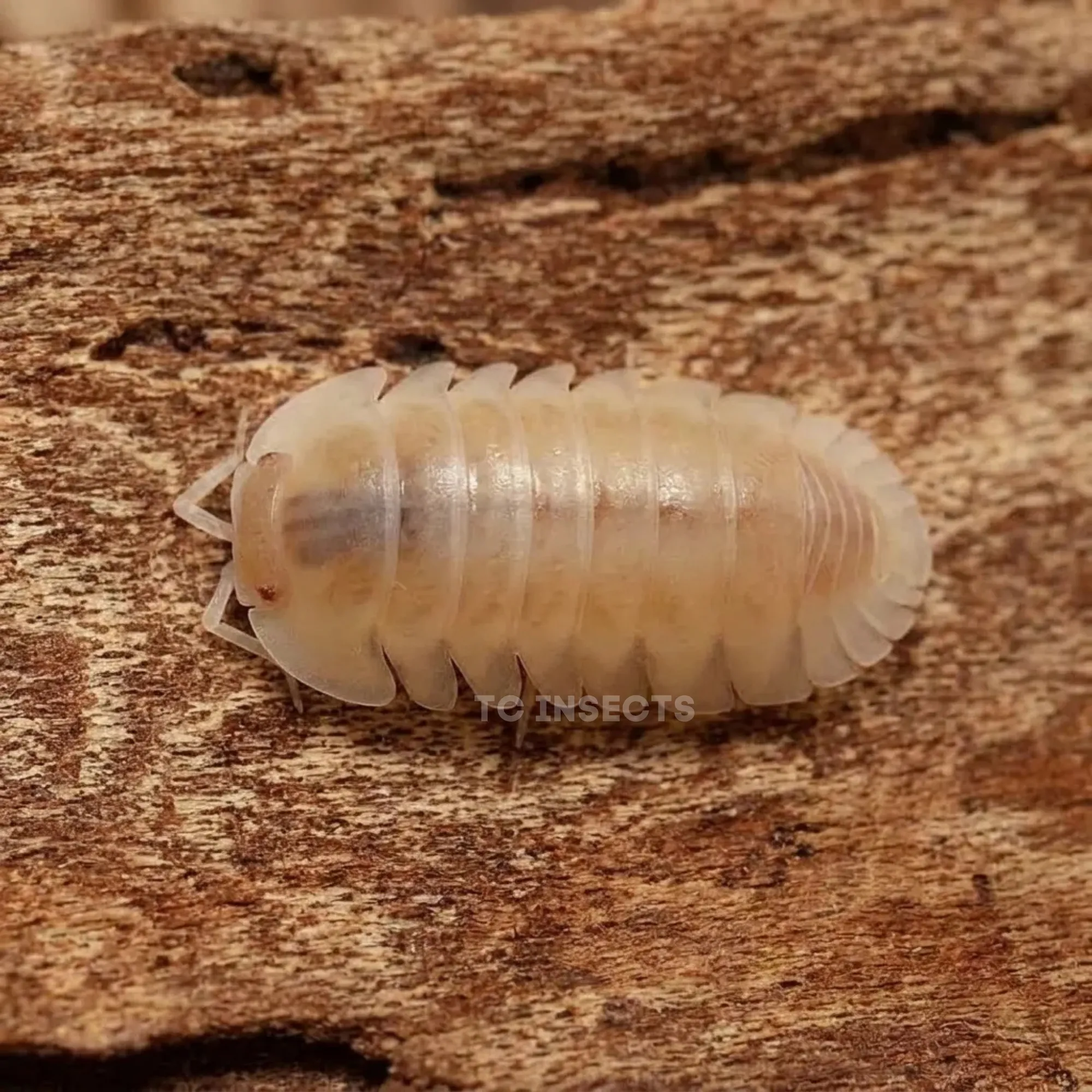
Red Edge Albino Isopods for Sale
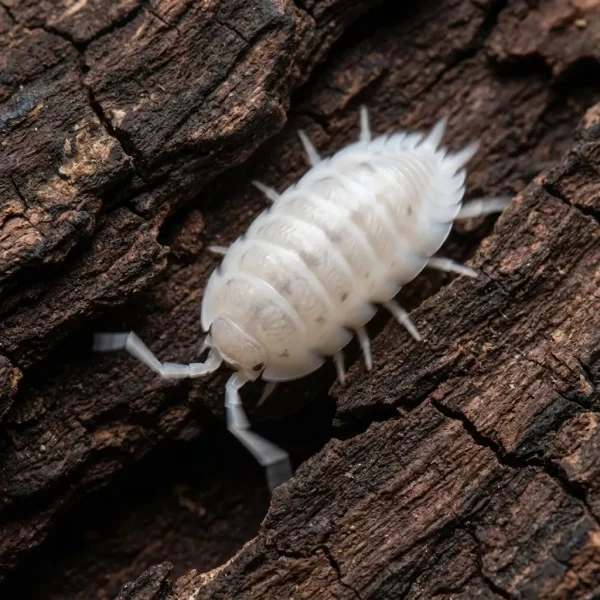
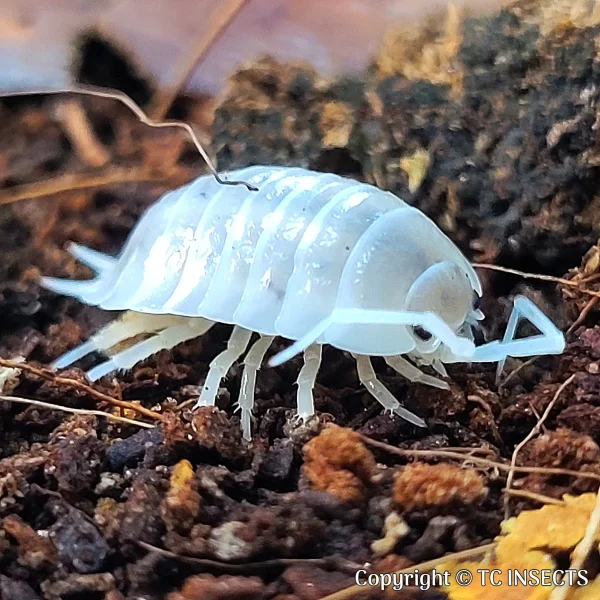
Cubaris sp. “Red Edge Albino” is a captive-isolated albino morph of the Cubaris sp. “Red Edge” line. The body shows a pale white to creamy color with red eyes that are characteristic of the albino phenotype. Adults reach
roughly 1.5 to 2 cm and breed at a moderate pace once a culture settles. This morph emerged through selective breeding from captive Red Edge stock rather than wild collection, which makes it one of the few true designer
morphs in the Cubaris hobby trade.
Overview
Red Edge Albino sits in the upper-mid pricing tier of true Cubaris collector morphs. The pale body and red eyes give the line strong display value, especially against dark substrate, oak leaf litter, and cork bark. Compared to
the harder Cubaris collector species, Red Edge Albino is reported as a steadier breeder, which puts it in a useful middle ground between fast workhorse pods and slow collector-tier morphs.
This is a display and breeding morph first. While established colonies will help process leaf litter and decaying wood, the captive-morph value and slower-than-workhorse pace make Red Edge Albino a poor fit for high-
traffic cleanup duty.
Why Keep Red Edge Albino Isopods?
- Captive designer morph. Red Edge Albino was developed through selective breeding rather than wild collection, which makes it one of the few true designer lines in the Cubaris trade.
- Distinctive albino appearance. The pale body and red eyes give the morph immediate visual recognition that standard Red Edge does not have.
- Moderate breeding pace. Once established, colonies produce broods at a steadier rate than many slow collector Cubaris, which makes line maintenance more practical.
- Pairs cleanly with Springtails. A shared springtail population helps manage surface mold during the slow startup phase.
- Strong display contrast. The pale body reads cleanly against dark substrate and natural cork bark, which suits display vivariums and dedicated culture bins alike.
Honest Note on Albino Line Management
This morph carries a recessive albino trait, and that has practical consequences buyers should understand before purchase. Three points worth flagging.
First, do not co-house Red Edge Albino with standard Red Edge or other Red Edge variants. Mixing the two will produce F1 offspring that mostly look like standard Red Edge while carrying the albino gene, and the albino
phenotype will only reappear sporadically in later generations. Within a few breeding cycles, the visible albino line can effectively disappear from a mixed bin. Run Red Edge Albino in a dedicated tub from day one.
Second, the line is sold under several trade names across the hobby. Red Edge Albino, Albino Red Edge, Red Edge White Phase, and Red Edge Blonde all appear to describe the same or very similar captive morph. Label the
culture clearly when you receive it so you can match up paperwork from different breeders later.
Third, albino animals lack the dark pigment that helps shield darker isopods from bright light. As a result, Red Edge Albino cultures tend to do best in a low-light or shaded location rather than under a strong terrarium
light. This is a small adjustment, not a special-needs setup, but it is worth knowing.
Care and Setup
Red Edge Albino responds well to a stable humid Cubaris setup. The goal is steady moisture, soft cover, calcium access, and a low-disturbance routine.
Temperature
Aim for 72 to 78 F. Room temperature in most homes is fine. However, avoid sustained heat above the low 80s, sudden cold drops below the mid-60s, and any heat source in direct contact with the bin.
Humidity
Keep humidity high overall with a clear moisture gradient. One side of the bin should stay consistently moist with sphagnum moss or hydrated substrate. The opposite side should run slightly drier with leaf litter cover. Some keepers run Red Edge cultures with minimal dry side, while others run a clear gradient. Both approaches can work, but a waterlogged bin will cause molt failure, so stable moisture beats chasing high humidity numbers.
Substrate
Use a deep organic mix with coconut fiber, flake soil, sphagnum moss pockets, and broken-down hardwood. Substrate depth around 2 to 3 inches works well. Additionally, scattered limestone or cuttlebone pieces give the colony a direct calcium-grazing surface that supports the albino line’s moderate breeding pace.
Food
Leaf litter and decaying hardwood form the dietary base. Supplement with TC INSECTS Isopod Food a couple of times per week, plus small portions of vegetables and a light protein item such as fish flake or dried shrimp. Feed messier foods on the slightly drier side of the bin to reduce spoilage. Remove uneaten food before it molds.
Ventilation
Moderate ventilation works best. Stagnant air encourages mites and sour substrate. Too much airflow dries the bin and stresses the colony.
Lighting
Keep the culture in a low-light or shaded location. Bright terrarium lighting is harder on albino animals than on pigmented morphs, and the colony will tend to stay buried under bright direct light. Ambient room light is fine.
Bioactive Use
Red Edge Albino works as a display population in a humid bioactive enclosure but is not a heavy-duty cleanup crew. Pair them with a faster workhorse species if working cleanup is needed, and keep Red Edge Albino as the visible accent layer.
Breeding Notes
Production is moderate once a culture settles, which is faster than many true Cubaris collector species. Founder groups commonly go through a quiet first month while the colony establishes, then begin producing manca
and small juveniles in the leaf litter and substrate. Calcium access matters during this phase. A pinch of TC Calcium Ultra Fine dusted lightly over a feeding area every couple of weeks supports molting and brood
development. Avoid digging through the substrate to check progress, since repeated disturbance is one of the most common reasons new Cubaris cultures stall.
For long-term line preservation, consider running a backup culture as soon as the founder group is producing well. Albino morphs are valuable, and a separate backup bin protects against a single-bin culture crash.
Best For
- Cubaris collectors filling out the Red Edge family shelf.
- Albino-trait keepers running dedicated pure lines.
- Display vivariums where the pale body and red eyes are meant to be visible against dark substrate.
- Intermediate keepers comfortable with Cubaris husbandry and line management.
Not Best For
- Co-housing with standard Red Edge or other Red Edge variants. The albino trait will be lost in mixed bins.
- Setups under bright direct lighting. Low-light placement suits albino animals better.
- Feeder use. The captive-morph value and moderate breeding pace make them impractical as reptile food.
- Heavy-duty cleanup duty in large bioactive enclosures.
- Beginners without prior isopod experience. Start with Porcellionides pruinosus morphs or Dwarf Whites first.
Origin and Locality Notes
Red Edge Albino is a captive-isolated albino morph rather than a wild-collected species. The albino trait was developed through selective breeding from captive Cubaris sp. “Red Edge” stock, and the morph exists as a hobby
designer line. Standard Red Edge is commonly associated with Thailand or broader Southeast Asia in the hobby trade, although exact wild-collection details vary by source. As a result, this page treats Red Edge Albino as a
captive line and care decisions reflect that, not a precise wild-locality claim. The “Cubaris” genus assignment is hobby shorthand and may be revised as taxonomy in this group continues to be reviewed.
Receiving and Acclimation
Open the package indoors in a calm, temperature-stable area away from direct sun, heat sources, and cold drafts. Pale albino animals can blend into light packing material, so inspect the cup, moss, and shipping paper
slowly. Transfer the animals and any included shipping debris directly into a pre-prepared bin with deep moist substrate, leaf litter, multiple cork bark hides, calcium, and a damp moss retreat already in place.
Plan for a quiet first week to two weeks. New cultures commonly stay hidden under cover while they settle, and frequent digging through the substrate slows recovery rather than speeding it. Hydrate the moist side as
needed, offer only a pinch of food, and let the colony come to the surface on its own schedule. Keep the bin out of direct light during the first week, since recent shipping stress plus bright light tends to push albino animals
deeper into the substrate.
Recommended Add-Ons
- TC INSECTS Ultra Isopod Habitat Kit for a richer starter setup suited to premium Cubaris and long-term colonies.
- TC INSECTS Isopod Food for a balanced supplemental diet that supports molting and steady brood development.
- TC INSECTS Assorted Hardwood Leaf Litter for grazing surface, juvenile cover, and a slow-release organic food source.
- TC Calcium Ultra Fine for steady calcium access during molts and brood development.
- Springtails for shared bin use to help control surface mold during the slow startup phase.
Frequently Asked Questions
What is the difference between Red Edge and Red Edge Albino?
Red Edge Albino is a captive albino morph isolated from Red Edge stock. The albino animals show a pale white to creamy body with red eyes, while standard Red Edge animals show darker body pigmentation with the namesake red edge marking. Both are sold in the hobby as Cubaris species. However, the albino is a recessive trait that requires line isolation to preserve.
Can I keep Red Edge Albino with standard Red Edge?
Not in the same bin. The albino phenotype is recessive, so F1 offspring from mixed pairs will mostly look like standard Red Edge while carrying the albino gene. As a result, the visible albino line tends to disappear from a mixed bin within a few breeding cycles. Run Red Edge Albino in a dedicated tub from day one.
Are Red Edge Albino Isopods light-sensitive?
Somewhat. Albino animals lack the dark pigment that helps shield darker isopods from bright light. As a result, Red Edge Albino cultures tend to do better in low-light or shaded locations than under bright terrarium lighting. Ambient room light is fine.
How fast do Red Edge Albino Isopods breed?
Moderate once established. New colonies often need patience before visible juveniles appear, but once settled, brood production is steadier than many slow Cubaris collector species. Stable conditions and minimal disturbance matter more than any feeding trick.
Are Red Edge Albino Isopods beginner-friendly?
They sit at the intermediate level. Beginners should establish a forgiving culture such as Porcellionides pruinosus “Powder Orange” or Dwarf Whites first, then return to Red Edge Albino once a reliable Cubaris husbandry routine is in place.
Why does my culture have several different trade names?
The same or very similar captive morph is sold across the hobby as Red Edge Albino, Albino Red Edge, Red Edge White Phase, and Red Edge Blonde. Naming varies by breeder and culture line. Label your culture clearly when you receive it so paperwork from different sources can be matched up later.
Learn More About Terrestrial Isopods and Albinism
The following references give keepers useful background on isopod albinism genetics, reproduction, and biology that supports better line management decisions.
-
Proceedings of the National Academy of Sciences: Genetic Basis of Eye and Pigment Loss in the Cave Crustacean Asellus aquaticus. A peer-reviewed paper showing that albinism in isopod crustaceans is a recessive trait controlled by specific gene loci. This explains at a genetic level why Red Edge Albino must be kept in a dedicated line to preserve the visible phenotype across generations.
-
University of Maryland Extension: Pillbugs and Sowbugs. A university extension overview of terrestrial isopod biology, moisture needs, and decomposer role. Useful background for keepers building a husbandry framework that applies to any Cubaris culture, albino or pigmented.
-
Brazilian Journal of Biology: Reproduction of Cubaris murina Under Laboratory Conditions. A peer-reviewed paper documenting Cubaris reproduction with average brood sizes around 25 young and 17-day incubation periods. Useful context for understanding what realistic brood production looks like in any captive Cubaris culture, including albino morphs.

Reviews
There are no reviews yet.