
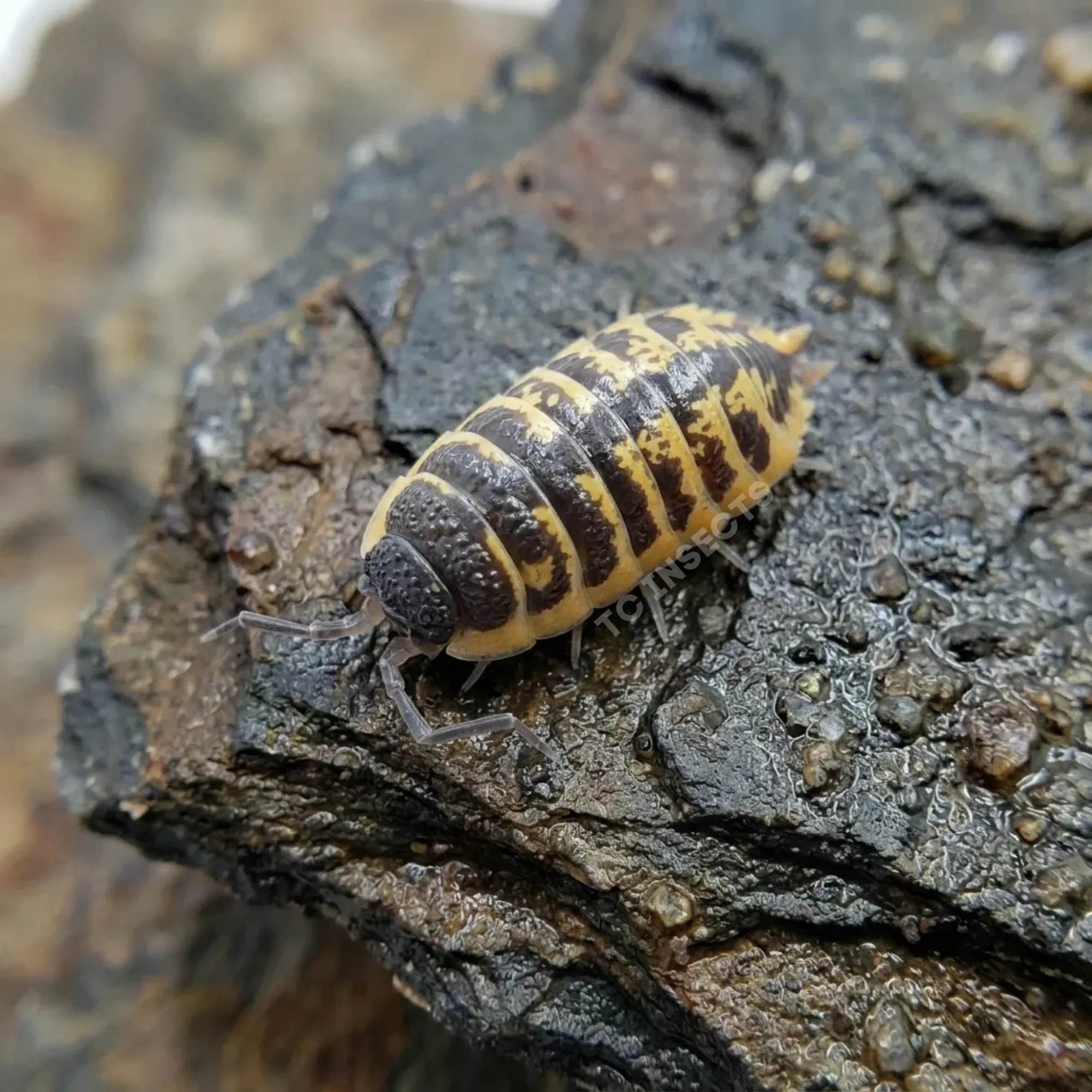
Porcellio ornatus High Yellow Isopods for Sale
TC INSECTS ships live captive-bred Porcellio ornatus “High Yellow” as a mixed-size starter group for display cultures, breeding projects, and dry-leaning bioactive setups. This is a selectively bred color morph of a formally described Spanish species. Therefore, it brings specific breeding history and behavioral traits that make it one of the most rewarding active display isopods in the hobby.
Overview
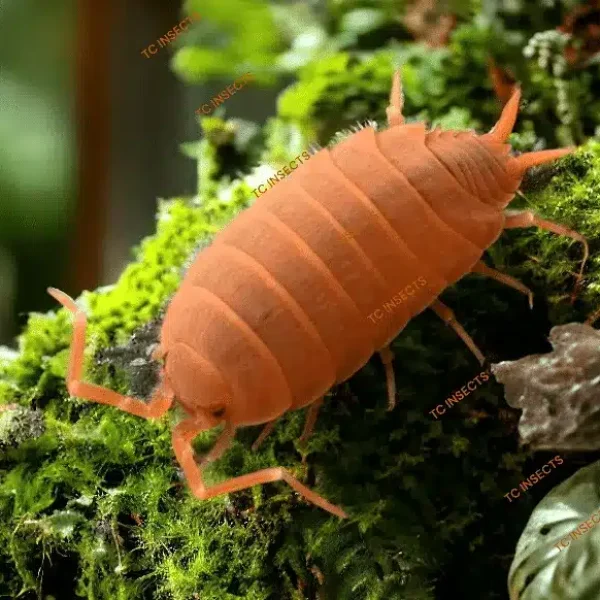
Milne-Edwards originally described Porcellio ornatus in 1840, with Spain as the type locality. WoRMS (World Marine, Freshwater and Terrestrial Isopod Crustaceans database) confirms this record. The wild-type form has a dark body with only scattered small yellow markings. The “High Yellow” line selects for maximum yellow coverage, producing adults with vivid yellow patterning over a dark base.
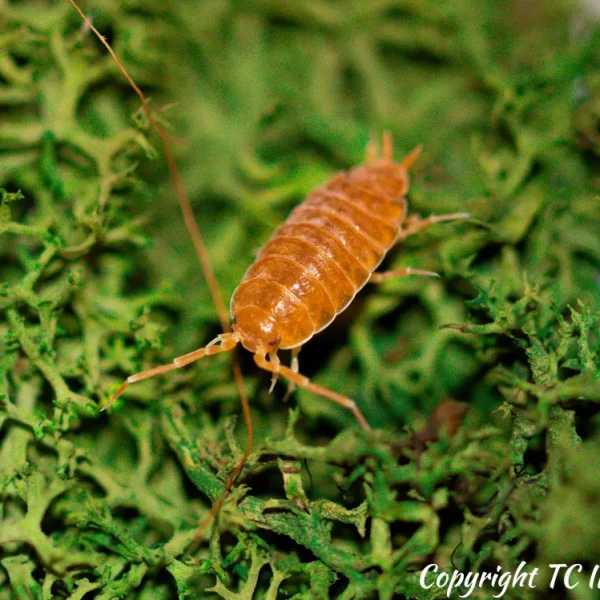
Adults reach roughly 1 inch (about 2.5 cm). However, juveniles start with a pale or faded yellow-white coloration. Color intensifies as the colony matures and individuals receive stable nutrition. As a result, a new culture of young adults may look less yellow than the photos suggest, and that is normal.
This species is notably extroverted. Multiple breeders describe it as one of the most active, surface-visible large Porcellio in the hobby. Unlike haasi “Bright”, which spends most of its time under hides, ornatus High Yellow explores openly, crosses bark in the open, and does not avoid light. Therefore, it suits keepers who want daily visible colony activity rather than a patience-based long-term culture.
Why Keep Porcellio ornatus “High Yellow”?
- Selectively bred for vivid color. The “High Yellow” morph produces adults with strong yellow coverage that intensifies over time. Additionally, some individuals can reach near fully-yellow coloration under good nutrition.
- Most extroverted Spanish Porcellio in the catalog. Furthermore, the colony explores the surface regularly, does not hide constantly, and provides genuine daily display value.
- Formally described species with verified history. Specifically, Milne-Edwards described P. ornatus in 1840 from Spain, giving this culture a clear taxonomic identity unlike locality-label products.
- One of the more accessible Spanish Porcellio. However, it still needs calcium and protein managed carefully. With that in place, it breeds readily and establishes well.
- Pairs with haasi “Bright” as a display contrast. As a result, collectors building a Spanish Porcellio collection often keep both: haasi for patience-based size display, ornatus for active daily color display.
Honest Note on Juvenile Color Development
Juvenile Porcellio ornatus “High Yellow” start with pale or faded yellow-white coloration. The vivid yellow develops gradually as individuals grow and receive adequate nutrition. Therefore, buyers who expect the full bold yellow pattern immediately after receiving a starter culture will likely be surprised by how pale young individuals look.
This is normal and expected. Color deepens steadily with age, proper calcium, and a protein-supported diet. Within several months under good conditions, the colony typically shows the vivid yellow adults the morph is known for.
Honest Note on Cannibalism Risk
This is the most important care fact specific to Porcellio ornatus. Multiple experienced breeders note that this active, large species requires a diet rich in both calcium and protein to prevent cannibalistic behaviors within the colony.
Without adequate calcium and protein, individuals can attack and eat each other, particularly during molts when freshly molted animals are vulnerable. Consequently, calcium must stay available at all times, and protein should rotate in regularly rather than occasionally.
This is not a reason to avoid the species. However, it does mean that the casual “feed leaf litter and that’s it” approach that works for slower tropical isopods will not work here. Keep calcium and protein in the rotation consistently and the colony thrives.
Care and Setup
Setup Framework
Care for Porcellio ornatus “High Yellow” follows a dry-leaning Spanish framework with a critical protein and calcium requirement layered on top. Below, each section explains what that part of the setup provides for the colony.
Temperature
Hold the culture between 68 and 78°F. Room temperature works well for most homes. Avoid direct sun, heat lamps pointed at the container, and drafts. Generally, stable warmth matters more than a precise number. This species tolerates slightly warmer conditions than some other Spanish Porcellio.
Humidity
Keep roughly one-quarter of the enclosure moist. Use sphagnum moss or a damp substrate corner on one side. Allow the rest of the enclosure to stay dry with cork bark, leaf litter, and good airflow.
Do not soak the whole enclosure. Additionally, avoid stagnant air over the moist corner. This species is active and moves regularly, so a clear moist retreat and a larger dry zone give it the gradient it needs.
Substrate
Use a substrate with organic matter built in. Coco fiber, decaying hardwood, and leaf litter mixed together work well. Two to four inches suits most starter cultures. The dry zone should feel dry to the touch, not merely “less wet.”
Food and the Calcium-Protein Rule
Keep dried hardwood leaves and decaying wood available at all times. These form the base of the diet. On top of that, offer small amounts of vegetables two to three times per week. Carrot, squash, sweet potato, and zucchini all work.
Additionally, rotate protein in regularly. TC INSECTS Isopod Food, fish flakes, dried shrimp, and dried minnows all work well in small portions. Remove uneaten fresh food within one to two days.
Furthermore, keep calcium available at all times without exception. TC Calcium Ultra Fine, cuttlebone, or crushed eggshell placed in the enclosure permanently supports molting and prevents the cannibalism risk. This step is non-negotiable for this species.
Ventilation
Use a fully ventilated lid and side vents if possible. Medium-to-high airflow suits this species well. A larger bin with cross-ventilation outperforms a small sealed container. Stagnant air over the moist corner is one of the easier ways to stress the colony and cause food fouling.
Bioactive Use
Ornatus High Yellow works in dry to moderately humid bioactive setups with strong ventilation. It does not suit constantly wet tropical vivariums. For bioactive use, add TC INSECTS Assorted Hardwood Leaf Litter as a base layer before introducing the colony. Pair with Springtails to manage the moist corner and any fine debris the isopods are too large to process efficiently.
Breeding Notes
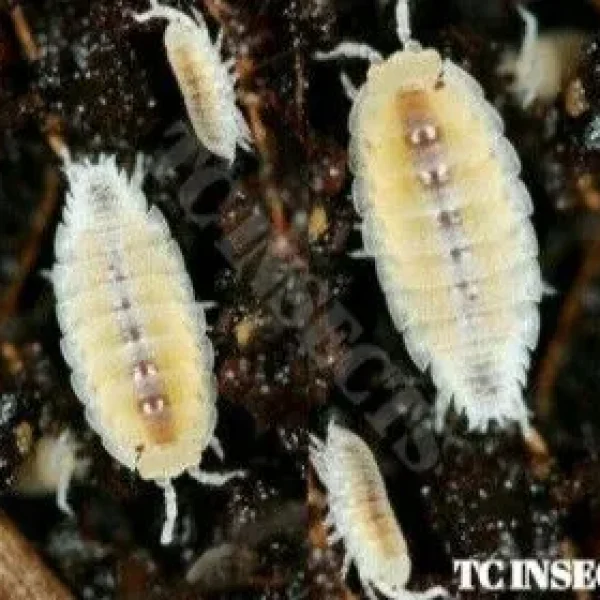
Females carry developing young in a brood pouch called a marsupium and release pale mancae once ready. With proper calcium and protein in rotation, breeding is moderate and fairly reliable once the colony establishes. Some sources describe medium to large broods under stable conditions.
To support breeding, keep calcium available continuously, maintain the moist retreat, provide leaf litter at all times, and offer protein two to three times per week. Additionally, sub-adults can begin breeding before reaching full adult size under good conditions, which helps the colony build more quickly than some other Spanish Porcellio lines.
As the colony grows, ensure enough floor space and hides so juveniles can shelter away from adults during vulnerable molting periods. This also helps reduce cannibalism risk as the culture densifies.
Best For
- Display cultures where active daily surface movement is the priority
- Spanish Porcellio collections pairing this species with the more reclusive haasi “Bright”
- Dry-to-moderate bioactive terrariums with strong ventilation
- Intermediate keepers comfortable managing consistent calcium and protein rotation
- Breeding projects where color-morph development over generations is the goal
- Educational displays where visible active behavior matters
Not Best For
- Keepers who plan to skip protein rotation. Without it, cannibalism can collapse a culture.
- First-time isopod keepers. Start with Dwarf Whites, Powder species, or Giant Canyons first.
- Wet amphibian vivariums or constantly humid tropical setups.
- Buyers expecting vivid yellow coloration in young juveniles. Color deepens with age and nutrition.
- Sealed containers with poor airflow.
- Feeder use. Color, breeding pace, and price point all make them a poor reptile food option.
Origin and Locality Notes
Milne-Edwards originally described Porcellio ornatus in 1840, with Spain as the confirmed type locality per WoRMS. The “High Yellow” line originated from Spanish stock and represents a selectively bred morph rather than a distinct locality form. TC INSECTS does not claim a specific wild collection point for this culture beyond the documented Spanish origin of the species.
The Spanish origin points to a Mediterranean-style care framework: dry open areas, strong airflow, bark cover, mineral access, and a small reliable moist retreat. However, unlike the wild type with minimal yellow, the High Yellow line reflects generations of selective breeding for color intensity in captivity.
Receiving and Acclimation
Open your package soon after delivery in a calm indoor area. Inspect the culture carefully. Some isopods may hide under moss or packing material after shipping. Move the packing material directly into the prepared enclosure rather than picking out individuals, since juveniles are easy to miss.
Prepare the enclosure before opening the culture. The dry zone should feel dry to the touch. Place leaf litter, bark hides, and a calcium source before adding the isopods. Set them near the moist retreat under cover, then leave them mostly undisturbed for several days.
Initial hiding after shipping is normal even for an extroverted species. Activity typically picks up once the colony settles. Furthermore, do not add heavy protein immediately after arrival. Let the colony adjust for two to three days before starting the protein rotation.
Recommended Add-Ons
- TC INSECTS Isopod Food for the regular protein rotation this species requires.
- TC INSECTS Assorted Hardwood Leaf Litter as the foundation grazing and cover layer.
- TC INSECTS Ultra Isopod Habitat Kit for a richer, better-ventilated starter setup.
- TC Calcium Ultra Fine for continuous calcium availability, which is non-negotiable for this species.
- Springtails to manage the moist corner and fine debris alongside the ornatus colony.
Frequently Asked Questions
Why do my Porcellio ornatus “High Yellow” juveniles look pale, not yellow?
Juvenile color is normal and expected. The vivid yellow pattern of the High Yellow morph develops gradually as individuals grow. Young animals start with a pale or faded yellow-white color. As a result, a fresh starter culture of mixed ages may look significantly less yellow than adult photos suggest.
Color deepens steadily with age, stable temperatures, and consistent calcium and protein in the diet. Within several months of good care, the colony typically shows the bold adult coloration the morph is known for.
What is the cannibalism risk and how do I prevent it?
Without adequate calcium and protein, this active large species can cannibalize each other, particularly during molts. Fresh molts leave individuals temporarily soft and vulnerable. Therefore, calcium must stay in the enclosure at all times, not just occasionally.
Rotate protein in two to three times per week using TC INSECTS Isopod Food, fish flakes, or dried shrimp. Additionally, ensure enough hides so juveniles and freshly molted adults can shelter away from other colony members.
How does ornatus “High Yellow” compare to haasi “Bright”?
These two products sit at opposite ends of the Spanish Porcellio activity spectrum. Haasi “Bright” is reclusive, locale-based, and spends most of its time under hides. Ornatus “High Yellow” is extroverted, morph-based, and explores the surface regularly.
Furthermore, haasi is a locale; ornatus High Yellow is a selectively bred color morph. Collectors building a Spanish Porcellio collection often keep both, since the behavioral contrast makes them ideal companion species in separate display cultures.
Is “High Yellow” different from regular Porcellio ornatus?
Yes. The wild-type P. ornatus has a dark body with only scattered small yellow markings. The “High Yellow” line selects specifically for maximum yellow coverage over generations. Additionally, it differs from the plain “Yellow” pedigree, which has somewhat less intense coloration than High Yellow. TC INSECTS sells the High Yellow line for its stronger, deeper yellow development in adults.
Can Porcellio ornatus “High Yellow” live in a reptile enclosure?
They can work in dry to semi-dry ventilated reptile enclosures where the reptile does not actively hunt and eat isopods faster than the colony breeds. However, the cannibalism risk also means the colony needs its own stable conditions rather than being constantly disrupted by reptile activity. For high-predation reptile bioactive use, Giant Canyon isopods or Dwarf Whites work much better.
How fast does the colony grow?
With consistent calcium, rotating protein, stable temperatures, and a proper dry-to-moist gradient, ornatus breeds at a moderate pace and can establish fairly quickly compared to more reclusive Spanish species. Additionally, sub-adults can begin breeding before reaching full size, which helps build colony numbers faster. However, without protein and calcium in rotation, growth slows and cannibalism can trim the colony as fast as it builds.
Learn More About Porcellio ornatus
For keepers who want to verify the taxonomy and read more about this species, the following sources are worth a look.
- WoRMS: Porcellio ornatus Milne Edwards, 1840. The World Marine, Freshwater and Terrestrial Isopod Crustaceans database entry confirming Spain as the type locality and referencing the original 1840 description by Milne-Edwards. Useful for verifying the species name and distinguishing the formally described species from hobby locality-label products.
- iNaturalist: Porcellio ornatus. Community observation records and photos from the species’ native Spanish range. Habitat images show the dry, Mediterranean-style environments that explain why this species needs strong ventilation and a mostly dry enclosure in captivity.
- PMC / NCBI: Conglobation and water conservation in terrestrial isopods. Peer-reviewed research on how isopod pleopodal structures interact with humidity and water loss. This paper explains in biological terms why a dry-leaning enclosure with a small moist retreat suits Porcellio ornatus better than constant humidity.

Reviews
There are no reviews yet.