
Castle Black Isopods for Sale
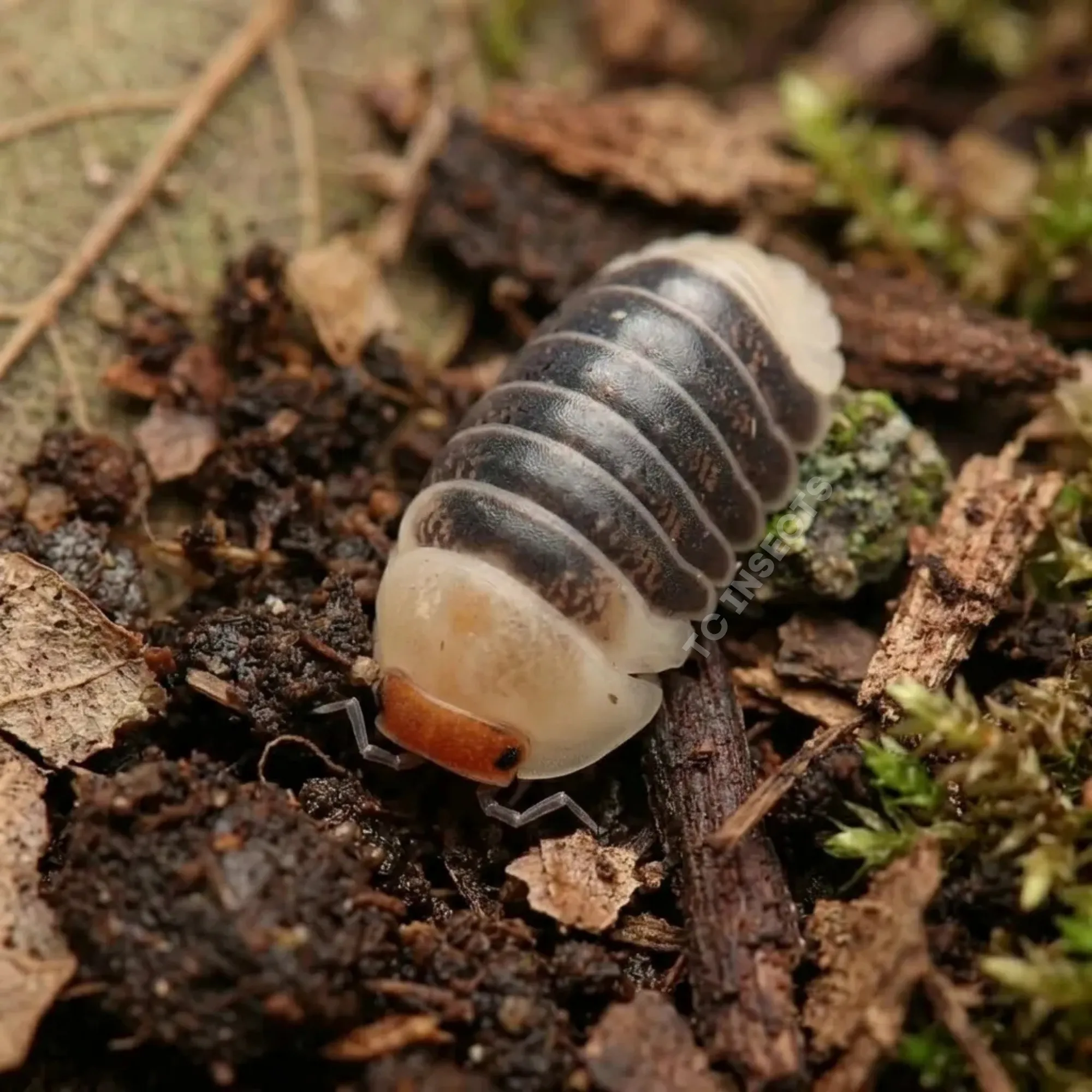
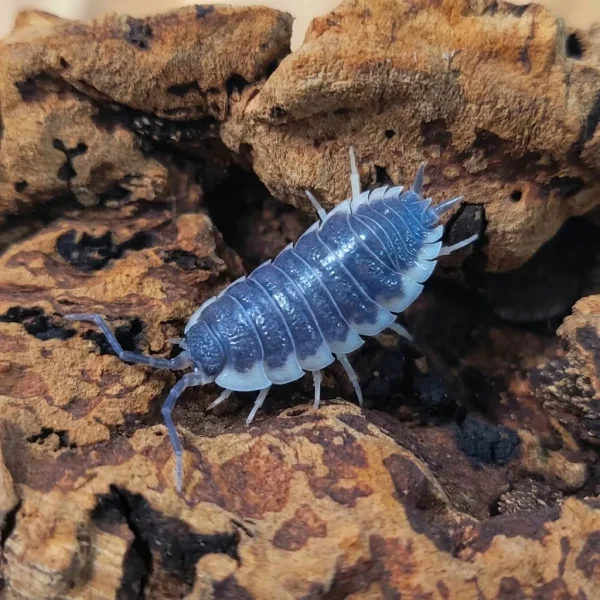
Castle Black Isopods, sold under the hobby name Venezillo sp. “Castle Black,” are valued mainly for dark coloration. The “Castle Black” name describes the deep, often near-black base tone that runs across the dorsal surface. Like other Venezillo, this species rolls into a ball when disturbed, so the visual interest comes from the combination of dark color and clean pill-rolling behavior.
Overview
This is a collector-focused rolling isopod, not a heavy cleanup workhorse. The colony moves along leaf litter and the upper substrate where the dark tone reads clearly against lighter wood, leaves, and soil. As a result, the species often looks stronger in displays with lighter substrate components, since a fully dark substrate can wash out the contrast.
Care follows general humid Venezillo practice: warm, humid, with a clear moisture gradient, deep leaf litter, and steady calcium support. Accordingly, it fits humid Neotropical-style setups better than cool temperate or dry desert enclosures.
Why Keep Castle Black Isopods?
- Dark, distinctive color. Deep brown-black to near-black tones make this culture read clearly on lighter substrates and leaf litter.
- Pill-rolling behavior. The species rolls into a ball when disturbed, which is part of the appeal for rolling-isopod collectors.
- Humid bioactive fit. Works well in planted humid displays where the substrate stays consistently moist.
- Collector value. The “Castle Black” name is recognized among isopod hobbyists tracking darker Venezillo lines.
- Visual contrast. The dark color pairs well with lighter morphs in adjacent culture tubs for keepers building a varied lineup.
Honest Note on Long-Term Color
Color in dark rolling isopods can shift somewhat across individuals, generations, and enclosure conditions. Diet, substrate color, lighting, and humidity all influence how dark a given individual appears, so the population may not look uniformly jet-black across every animal. Generally, the line stays clearly dark, but buyers expecting an absolutely uniform near-black color across every adult should set that expectation aside. A consistent diet, a varied substrate, and stable moisture help the dark tone hold well over time.
Care and Setup
Care follows standard humid rolling isopod practice: stable warmth, consistent moisture with a clear gradient, deep leaf litter, and calcium-supported diet.
Temperature
Aim for roughly 70 to 78 F. Stable warmth supports steadier molting and breeding, since rolling isopods rely on clean cuticle development to seal cleanly when rolled.
Humidity
Keep humid conditions with at least one consistently moist zone that never fully dries. A slightly drier zone on the opposite side helps the colony self-regulate, especially around feeding spots.
Substrate
Use a coco fiber and topsoil base mixed with crushed leaf litter and a small amount of decaying hardwood. Additionally, a light sprinkle of crushed limestone or cuttlebone supports cuticle development, which matters for any pill-rolling species since the dorsal plates need to seal cleanly during conglobation.
Food
Feed leaf litter, decaying wood, and protein and calcium top-ups. TC INSECTS Isopod Food works well as a base supplement, and TC Calcium Ultra Fine can be dusted lightly across feeding spots to help support clean molting and consistent dark coloration.
Ventilation
Use moderate ventilation that holds humidity without trapping stagnant air. Cross-vented lids generally work better than mostly sealed tubs for humid rolling species.
Bioactive Use
This species works well in humid bioactive displays where the dark color reads clearly against lighter substrate elements. It is less suited to setups where the substrate is fully dark, since the contrast that makes Castle Black visually interesting can get washed out.
Breeding Notes
Breeding picks up once the colony settles into a deep leaf litter layer with stable humidity. Mancae are small and easiest to spot under bark, leaves, and along the moist substrate surface. Generally, consistent diet and calcium help maintain the dark color across new generations, so steady feeding matters more here than in some less color-driven cultures.
Best For
- Intermediate to advanced isopod collectors building a color-focused lineup.
- Humid bioactive displays where dark color reads well against lighter substrates.
- Keepers who want a darker rolling species alongside lighter morphs.
- Dedicated culture tubs run for grow-out and trade.
- Hobbyists already running other humid Venezillo or rolling isopod cultures.
Not Best For
- Dry desert-style reptile enclosures with no reliable humid zone.
- Cool temperate setups held consistently below standard warm room temperature.
- Buyers expecting an absolutely uniform jet-black color across every individual.
- Displays with fully dark substrates where the color contrast disappears.
- Mixed tubs with much faster-breeding dwarf species that would outcompete the colony at feeding stations.
Origin and Locality Notes
The genus Venezillo is broadly associated with Neotropical regions in the hobby trade. However, “Castle Black” is a hobby trade name rather than a locality or species designation, and the exact wild origin for this specific line is not confirmed. As a result, this page treats Castle Black as a dark Venezillo hobby line and builds care around general humid Venezillo practice rather than a precise wild-origin claim. Buyers should treat the trade name as a descriptive culture name, not a locality label.
Receiving and Acclimation
Cultures ship in a moisture-stable container with substrate, leaf litter, and protein. On arrival, open the container in a dim, draft-free area and transfer the contents into a prepared tub. Mist one side lightly rather than soaking the entire substrate. Then leave the colony undisturbed for several days while it settles. Additionally, give the colony a few generations under stable conditions before judging final color expression, since recently shipped animals may not show their best color right away.
Recommended Add-Ons
- TC INSECTS Isopod Food for steady protein and supplement coverage.
- TC INSECTS Assorted Hardwood Leaf Litter for cover, food, and breeding pinch points.
- TC INSECTS Ultra Isopod Habitat Kit for a ready-to-run humid culture base.
- TC Calcium Ultra Fine for cuticle and molting support, important for clean rolling and consistent dark color.
- Springtails to handle mold and small organic debris alongside the isopod colony.
Frequently Asked Questions
How dark is “Castle Black” really?
The line is clearly dark, generally ranging from deep brown-black to near-black across most adults. However, individual color intensity can vary with diet, substrate, lighting, and humidity, so the population does not always look uniformly jet-black. Stable conditions and a consistent diet help maintain the dark tone over time.
What does the “Castle Black” name mean?
“Castle Black” is a hobby trade name describing the dark color, not a species, subspecies, or locality designation. The product is sold as Venezillo sp. with genus-only identification, so the trade name is a descriptive culture label rather than a scientific one.
How does this compare to Venezillo parvus “264”?
Both sit within Venezillo and roll into a ball, but the main difference is the visual angle. Venezillo parvus “264” is tracked under a numeric line code with a smaller-bodied pill-rolling focus, while Castle Black is sold for the dark color expression. Collectors often keep both in separate culture tubs to track the different visual traits.
Can I use them as a cleanup crew in a reptile enclosure?
They can help with leaf litter and small organic debris in humid bioactive setups, but they are not a heavy-duty cleanup workhorse. For active mold and small debris control, pairing with springtails usually gives a stronger result, while Castle Black runs in a display tank or a dedicated culture tub where the color can be appreciated.
Will the substrate I use affect how dark they look?
Yes, indirectly. Substrate color, lighting, and contrast all change how dark an isopod reads visually. Castle Black often looks strongest against lighter substrate components like pale wood, dried leaves, and lighter soil mixes. Against a fully dark substrate, the contrast can flatten out and the color becomes harder to appreciate.
Can I mix them with other isopods?
Mixing is possible in larger humid setups with plenty of leaf litter and multiple feeding spots. However, faster-breeding dwarf species can crowd feeding stations and outcompete a moderate-paced collector culture over time. A dedicated tub usually produces stronger long-term color tracking and grow-out results.
Learn More About Rolling Isopods and Neotropical Venezillo
These references give helpful background for keepers researching rolling isopod biology and humid invertebrate care beyond a single product page.
- World Register of Marine Species: Isopoda taxonomy resources. Useful for checking current accepted scientific names and genus placement when researching Venezillo and related Neotropical isopods.
- British Myriapod and Isopod Group: Isopod biology and identification resources. A non-commercial reference for general isopod biology, conglobation behavior, and life history, useful for understanding rolling species in captivity.
- iNaturalist: Venezillo observations and species pages. Lets keepers view field photos and observations of Venezillo species, which helps with understanding habitat context and appearance variation.



Reviews
There are no reviews yet.