Porcellio ornatus Witch’s Brew for Sale
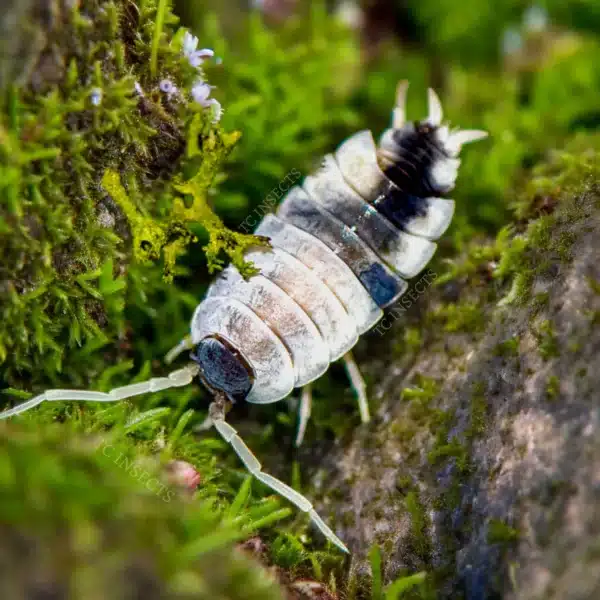
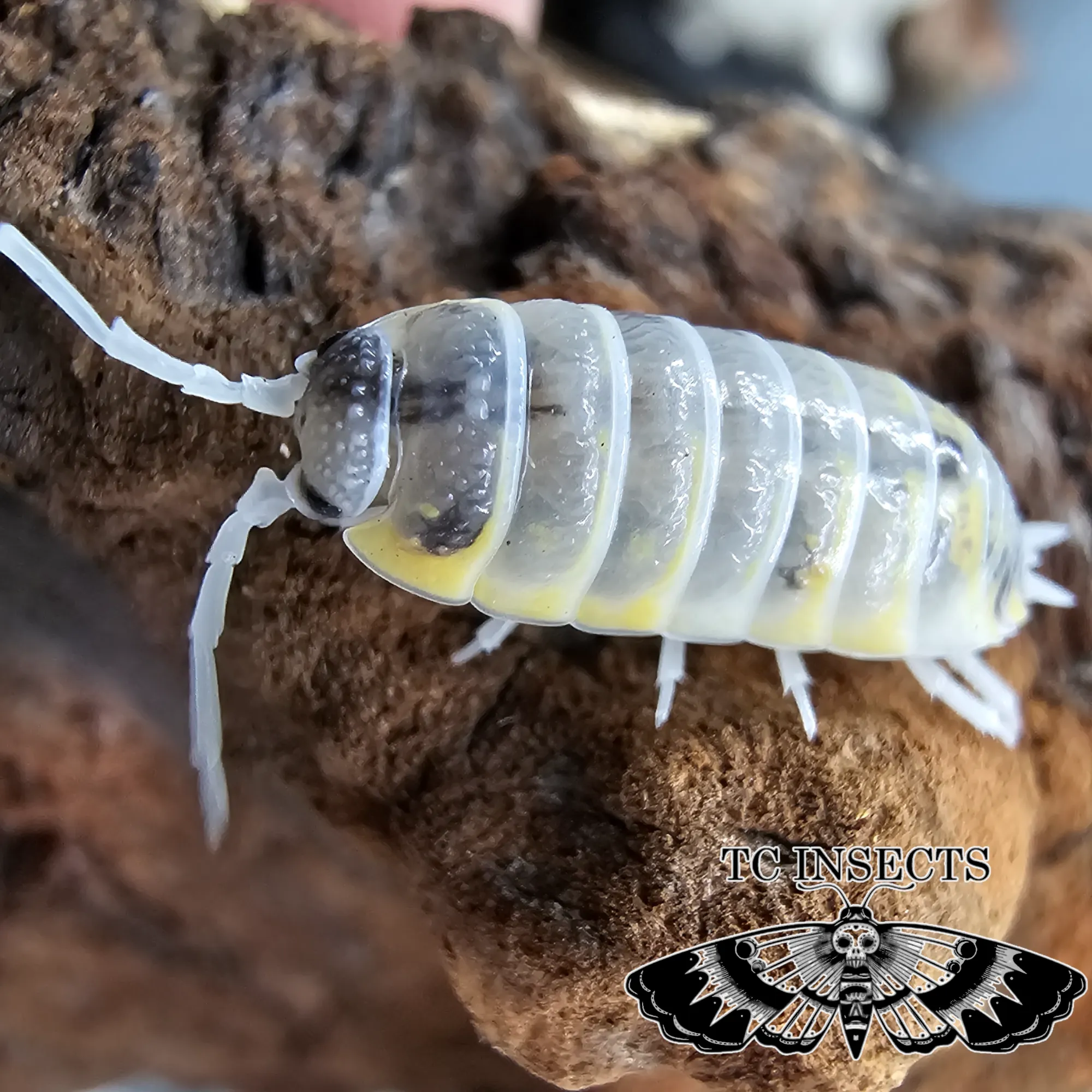
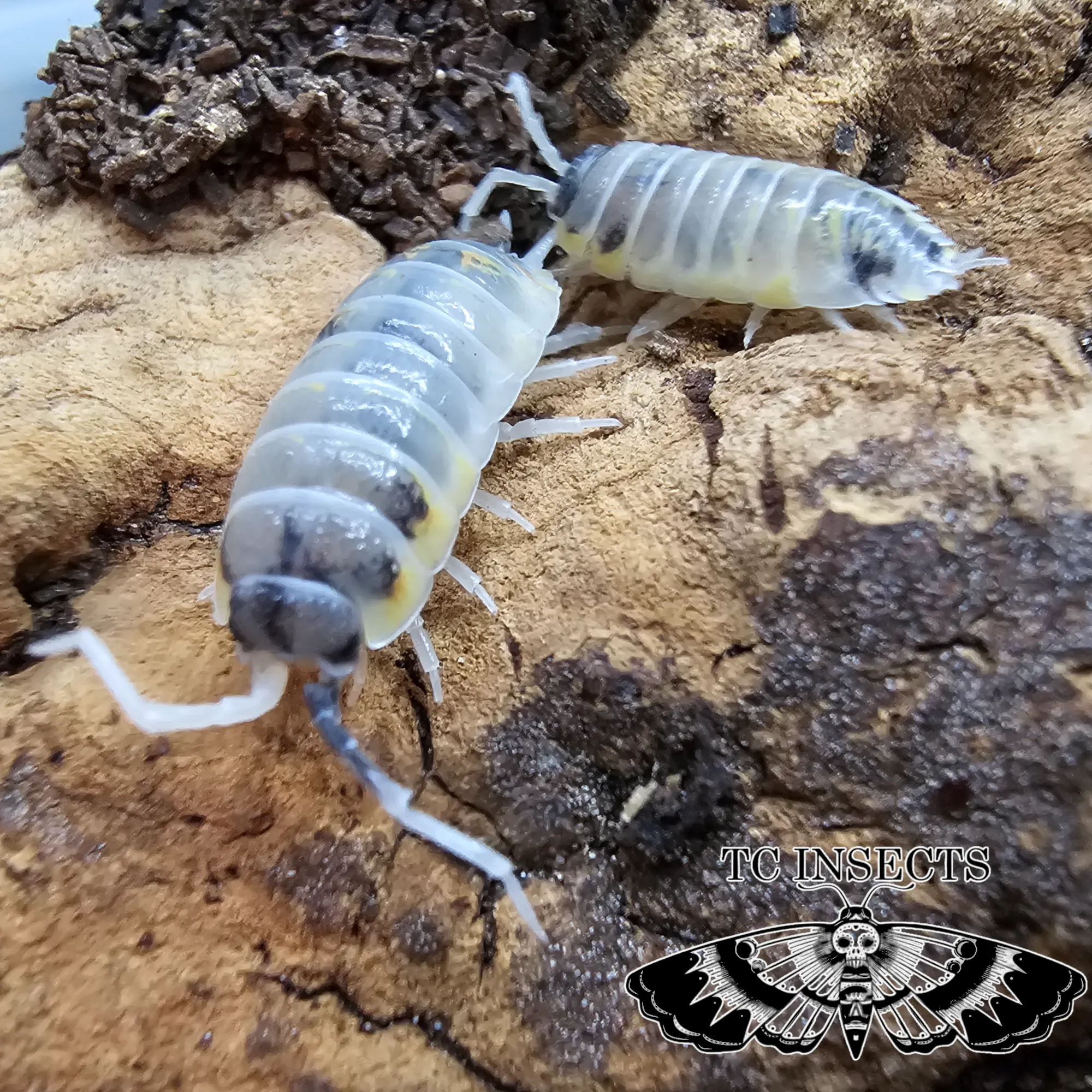
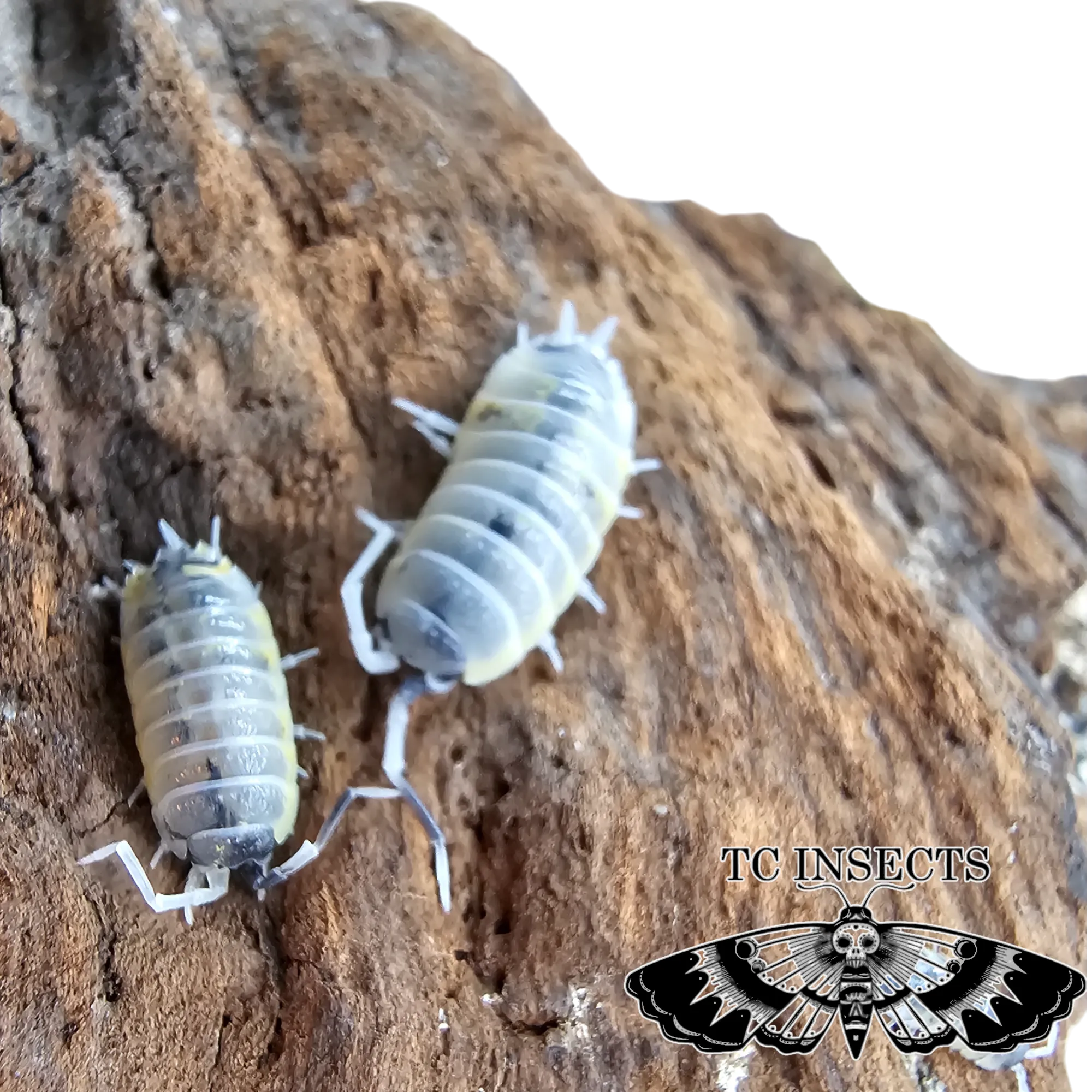
Porcellio ornatus “Witch’s Brew” is one of the most visually distinctive large isopods available in the hobby. It is the dalmatian morph of the “High Yellow” form of Porcellio ornatus. Each adult carries a unique splotchy mix of white, yellow, and grey across its exoskeleton. No two individuals pattern identically.
The base species, P. ornatus, is a confirmed Spanish isopod known for bold yellow color and active surface behavior. The “Witch’s Brew” morph layers unpredictable pied patterning on top of that yellow base. Beyond the appearance, these are genuinely active cleanup crew animals for dry-to-moderate enclosures. However, they require more specific care than entry-level isopods.
Overview
Species Background
Porcellio ornatus is a Spanish isopod described by H. Milne Edwards in 1840. In the hobby, several forms have been developed from captive stock, including “High Yellow,” “High Orange,” and “Witch’s Brew.” “Witch’s Brew” is the dalmatian morph of the High Yellow line. It produces variable white splotching over the yellow base color and is still relatively rare compared to more established large Porcellio species.
Who Is This For?
This is not a species to buy purely for cleanup function at a budget price. The appeal is the combination of large size, variable patterning, bold activity, and collector rarity. Keepers who want the fastest-establishing cleanup crew are better served by more moisture-tolerant options. Alternatively, keepers who want something visually engaging and are comfortable with dry-leaning care will find Witch’s Brew worth the additional attention.
Why Keep Porcellio ornatus Witch’s Brew?
- Variable collector patterning: The dalmatian morph produces a unique splotchy pattern on every individual. As a result, keepers who enjoy photographing or displaying their cultures find Witch’s Brew reliably interesting to observe.
- Large and surface-active: Adults reach up to 2.5 cm and are active during both day and night. They explore the enclosure in the open rather than staying buried, which is a core appeal of the P. ornatus group generally.
- Cleanup function in dry builds: In dry-to-moderate bioactive setups, Witch’s Brew handles leaf litter, fungi, waste, and small organic debris at a solid rate once the colony is settled. However, it will not perform well in high-moisture enclosures.
- Rare and collectible: “Witch’s Brew” remains less common in the hobby than standard P. ornatus forms. For collectors building a diverse morph catalog, it is a meaningful addition at this size class.
- Rewarding breeding project: The unpredictable offspring patterning makes Witch’s Brew an engaging species to breed. Specifically, each new generation produces individuals with different splotch layouts, which keeps the culture visually fresh over time.
Honest Note on Witch’s Brew Patterning
Because this is a dalmatian morph, patterning is not guaranteed to be dramatic on every individual. Some animals will show bold, high-contrast white splotching over bright yellow. Others in the same culture may show lighter or minimal splotching. This is normal for dalmatian morphs across species.
In addition, if you pair Witch’s Brew animals with non-Witch’s Brew P. ornatus, the dalmatian pattern in offspring will dilute over generations. Therefore, keep this culture separate from other P. ornatus morphs if maintaining the dalmatian trait matters to you.
Care and Setup
Porcellio ornatus “Witch’s Brew” follows a dry-leaning care approach similar to other large Spanish Porcellio. The core needs are a clear moisture gradient, good airflow, and enough space for males to avoid constant conflict.
Temperature
Keep between 20 and 26°C (68 to 79°F) for stable activity and breeding. Temperatures in the mid-20s°C support the best breeding output. A slight drop at night is tolerable and mimics the natural variation these animals experience in Spain. Avoid sustained temperatures above 28°C.
Humidity
Keep one-quarter to one-third of the enclosure consistently moist, with the rest staying dry. A clear dry zone is not optional for this species. Place the moist zone at one end with sphagnum moss or slightly deeper substrate. Uniform moisture across the full enclosure causes rapid colony decline.
Substrate
Use a base of organic topsoil and coco coir at a minimum depth of 6 to 8 cm. Layer TC INSECTS Assorted Hardwood Leaf Litter on top as both a food source and cover. Cork bark and rotten wood pieces on both the moist and dry sides provide hides and separate zones for territorial males.
Food
Leaf litter and soft rotting hardwood form the main diet. Supplement with vegetables such as cucumber, carrot, squash, and sweet potato. Offer a protein source one to two times per week, placed on the dry side to reduce spoilage risk. Remove uneaten food within 24 hours. TC INSECTS Isopod Food works as a balanced supplement for this species.
Calcium
Calcium is especially important for large-bodied morphs like Witch’s Brew. It supports clean molts, healthy exoskeleton growth, and productive breeding. Keep TC Calcium Ultra Fine or cuttlebone available at all times. Replace it when depleted, and do not let calcium run out in an active breeding culture.
Ventilation
P. ornatus naturally comes from well-aired cliffside areas in Spain. Without good airflow, moisture builds up and the colony declines quickly. Use a container with cross-ventilation or a mesh-screened lid. The TC INSECTS Ultra Isopod Habitat Kit provides the airflow this species needs. Alternatively, the TC INSECTS Isopod Habitat Kit works as a starter option.
Male Spacing
Males are territorial and will chase smaller or weaker males when space is limited. This causes ongoing stress that reduces colony health over time. Provide enough enclosure size and multiple hides across both zones so males can claim separate areas. A 6 to 8 quart container works for a starter colony of 8 to 12 animals. Generally, larger is better as the culture grows.
Bioactive Use
Witch’s Brew can function in dry-to-moderate bioactive builds for arid or semi-arid animals. Pairing with Springtails from TC INSECTS helps with mold control and microfauna balance. However, as with Porcellio sp. “Sevilla”, Witch’s Brew is not suited for humid tropical vivarium builds.
Breeding Notes
Colony Timeline
Porcellio ornatus “Witch’s Brew” breeds at a moderate rate. Colonies generally need one to two months to settle before consistent breeding begins. Slightly warmer temperatures in the 24 to 26°C range support faster brood cycles. Females carry eggs and young in a visible white marsupium (brood pouch) between their legs.
Sexing and Ratios
Sub-adult to adult males have larger, more visible uropods (the paired rear appendages) compared to females of similar size. Maintaining a balanced male-to-female ratio improves colony output. If the ratio shifts too far in one direction, adding animals or temporarily separating surplus males helps. Additionally, keeping calcium stocked consistently speeds up juvenile development to maturity.
Best For
- Collectors adding a rare, large-bodied designer morph to a diverse isopod catalog
- Keepers maintaining dry-to-moderate bioactive builds for arid or semi-arid reptiles and invertebrates
- Experienced isopod keepers comfortable with dry-leaning care, male spacing, and gradient maintenance
- Display cultures where large size, variable patterning, and active surface behavior are priorities
Not Best For
- High-humidity tropical builds where moisture stays consistently elevated
- Keepers who want the fastest-establishing cleanup crew without additional care attention
- Very small enclosures where territorial male spacing is hard to provide
- First-time isopod keepers expecting bold uniform patterning on every individual
- Keepers looking for a budget cleanup crew at beginner prices
Origin and Locality Notes
Porcellio ornatus is a described Spanish species formally named by H. Milne Edwards in 1840. In the wild, it lives under rocks, logs, and leaf litter in well-drained areas of Spain. In the hobby, the “High Yellow” form refers to a captive line with strong yellow color, and “Witch’s Brew” is the dalmatian morph developed from that line.
“Witch’s Brew” is a captive-bred hobby morph, not a wild locality name. The exact geographic source of the “High Yellow” captive line is not clearly recorded in hobby literature. TC INSECTS sells this product as captive-bred stock from an established culture.
Receiving and Acclimation
Open the container carefully on arrival and check for any losses. Some individuals may appear inactive right after shipping. This is normal. Transfer the colony into a prepared enclosure with the moisture gradient already set up before the animals arrive.
Do not overwater during the first week. Allow four to six weeks for the colony to settle before checking breeding activity. Witch’s Brew takes longer to visibly establish than moisture-tolerant species. Keep conditions stable and resist adjusting humidity upward if activity seems slow in the first few weeks.
Recommended Add-Ons
- TC INSECTS Assorted Hardwood Leaf Litter — Primary food fiber and structural cover for dry-leaning Porcellio enclosures.
- TC Calcium Ultra Fine — Supports healthy molting and breeding output in large-bodied morphs.
- TC INSECTS Isopod Food — Balanced supplement suited for active, large-bodied Porcellio species.
- Springtails — Pair with Witch’s Brew in dry bioactive builds for mold control and a balanced microfauna layer.
- TC INSECTS Ultra Isopod Habitat Kit — Well-ventilated display habitat suited to large Porcellio that need a dry-to-moist gradient.
Frequently Asked Questions
What exactly is the “Witch’s Brew” morph?
“Witch’s Brew” is the dalmatian morph of Porcellio ornatus “High Yellow.” The dalmatian trait produces splotchy white marks layered over the yellow base color. The result is variable white, yellow, and grey patterning that differs between individuals. The name references its relationship to the Porcellio “Magic Potion” dalmatian morph, and the name stuck in the hobby.
Will the patterning be the same on every isopod in my culture?
No. Dalmatian morphs are genetically variable, so each individual expresses splotching at a different intensity and arrangement. Some animals will show bold, high-contrast marks. Others will show lighter or minimal patterning. This variation is normal and expected in every generation. It is part of what makes this morph interesting, but uniform patterning is not how dalmatian genetics work.
Can I keep Witch’s Brew with other Porcellio ornatus morphs?
Technically possible in a large enough space, but not recommended if you want to maintain the Dalmatian trait. Mixing Witch’s Brew with other P. ornatus morphsDalmatianduce offspring with diluted or inconsistent patterning over time. If the dalmatian trait matters to you, keep Witch’s Brew in its own separate enclosure.
How does Witch’s Brew compare to Porcellio sp. Sevilla?
Both are large, dry-leaning Spanish Porcellio with similar care needs. The key differences are in identity and purpose. Porcellio sp. “Sevilla” is a trade-name form with unresolved taxonomy and a white-skirted grey-brown appearance. Witch’s Brew is a confirmed captive morph of P. ornatus with variable yellow and white patterning and stronger collector appeal. Witch’s Brew is generally rarer and priced higher. However, both require the same dry gradient care approach.
How do I tell male Witch’s Brew from female?
At sub-adult to adult size, males have larger, more visible uropods (the paired appendages at the rear of the body). Females of similar size have noticeably smaller uropods. Additionally, females carrying young show a visible white marsupium (brood pouch) between their legs. Juveniles and mancae are not reliably sexable by visual inspection.
Learn More About Porcellio ornatus
Taxonomy
The links below give useful background on the formal name and classification of Porcellio ornatus. They help confirm the species name, authorship, and where the described form comes from.
- World Register of Marine Species (WoRMS): Porcellio ornatus H. Milne Edwards, 1840. The main taxonomic record for Porcellio ornatus, confirming the species name, authorship, and type locality in Spain. Useful for keepers who want the formal scientific basis behind this species name.
Field Records
These references show where wild P. ornatus has been observed and how it appears in nature. That context can help keepers compare captive stock with the species’ natural form.
- iNaturalist: Porcellio ornatus Observations. A field observation database with photos and locality records of wild P. ornatus individuals from Spain. Helps keepers understand what the wild base form looks like and where it naturally occurs, which gives useful context for captive care decisions.
Habitat Context
- British Myriapod and Isopod Group (BMIG): Woodlice Collected from Northwest Spain. A peer-reviewed field survey of Spanish isopod species including Porcellio genus members, covering habitat, range, and ecology. Useful background for understanding the natural environment that Spanish Porcellio species, including P. ornatus, evolved in.