


Yellow Zebra Isopods for Sale
Yellow Zebra is a captive-bred color morph of Armadillidium maculatum, the Zebra Isopod. This listing is a live culture from TC INSECTS. Specifically, it is packed for display-focused keepers, collectors building a multi-
morph A. maculatum shelf, and intermediate hobbyists who want a French endemic species. The species was formally described by Joseph Antoine Risso in 1816. Notably, the Latin name maculatum means “spotted” or
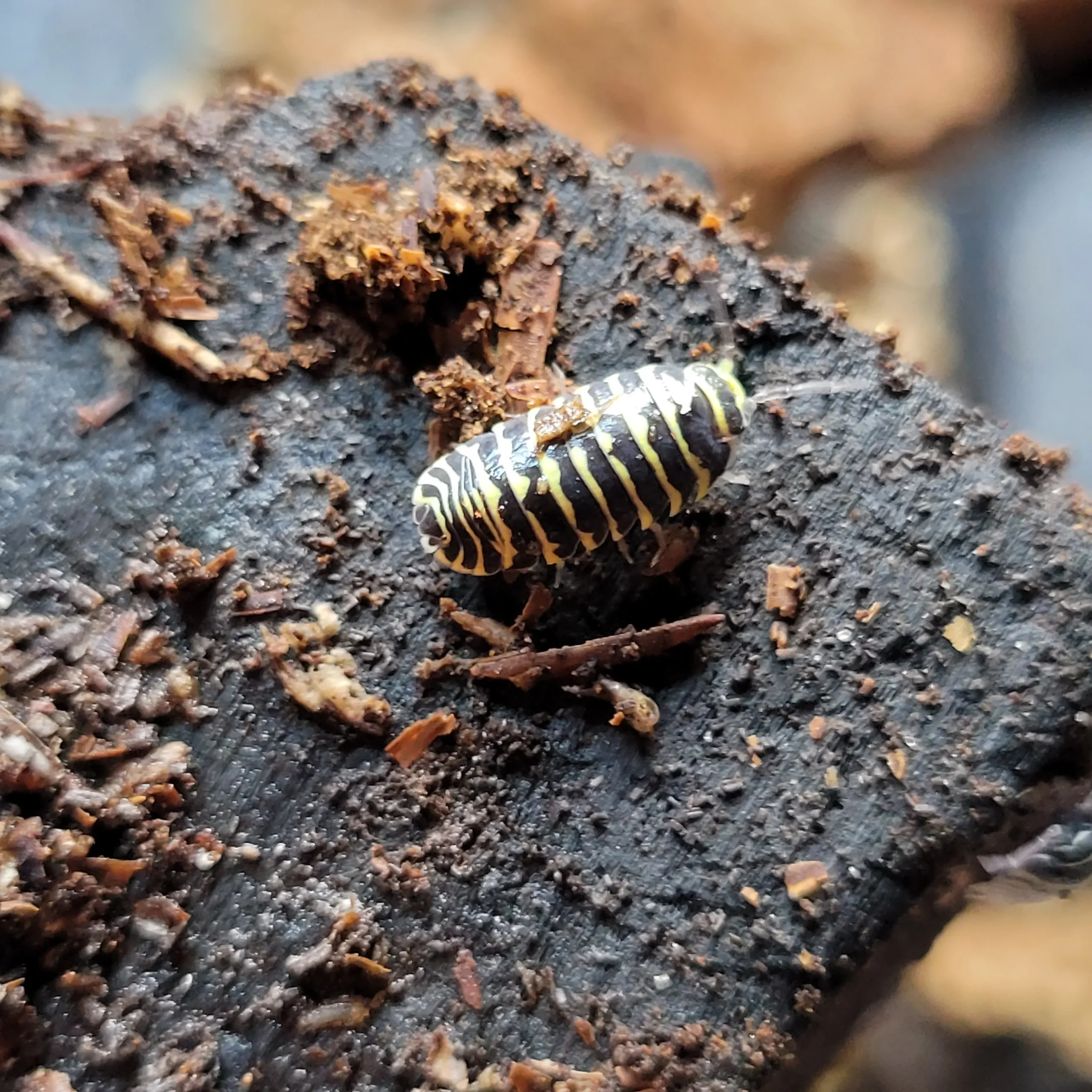
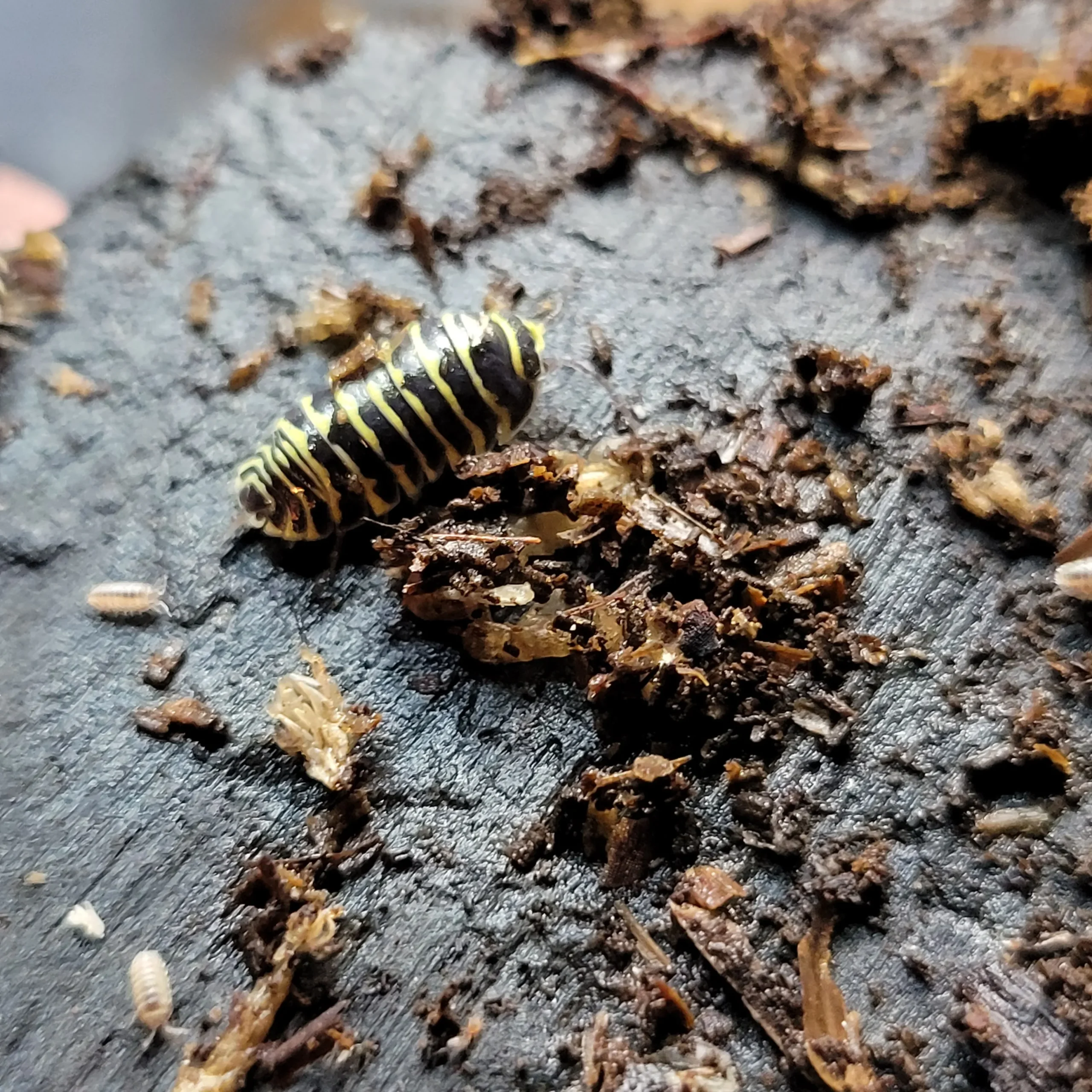
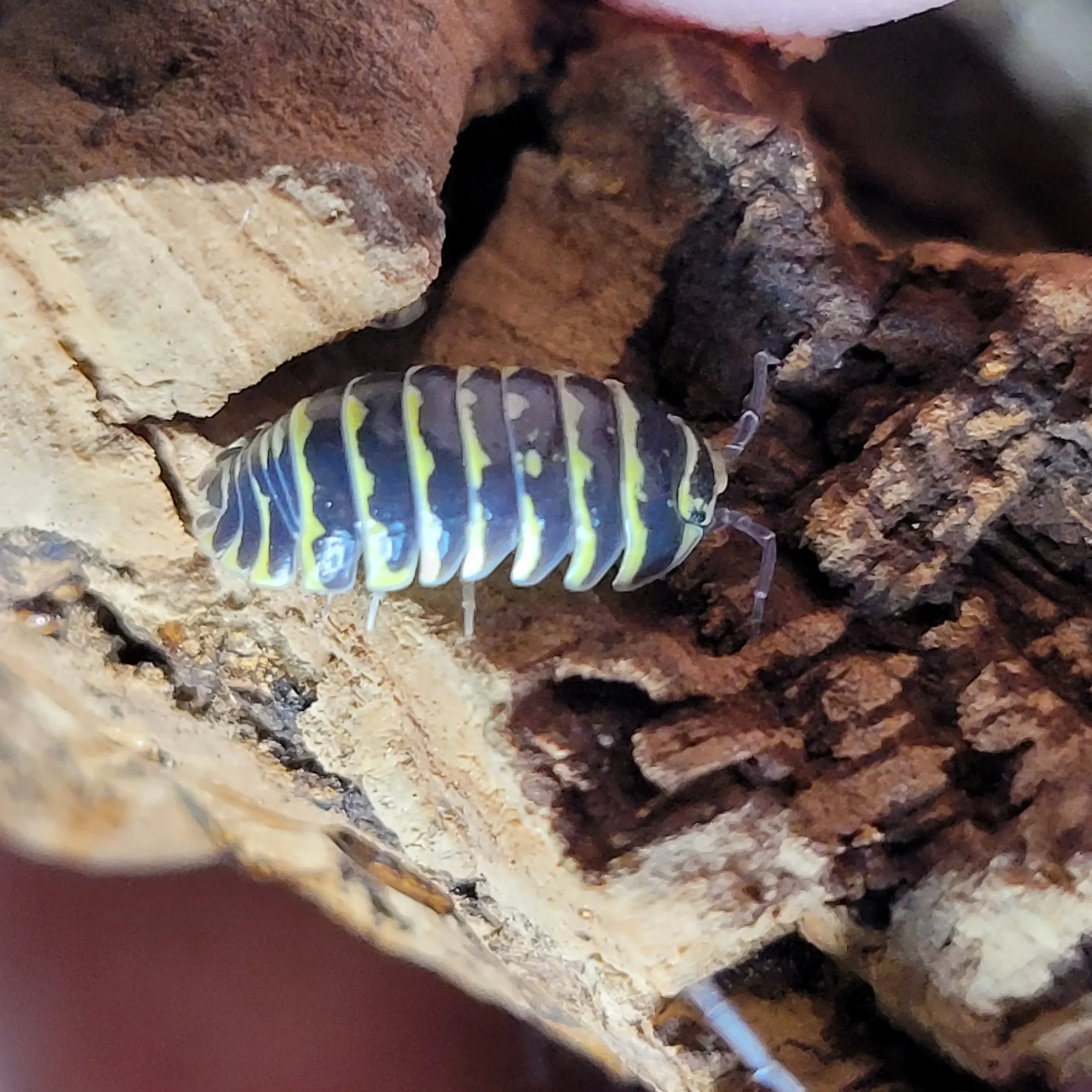
“marked,” which is an interesting naming irony for a species better known for bold striping. Today, the Yellow Zebra morph replaces the typical black-and-white pattern with bold yellow-and-black bands.
Overview
Adults reach about 15 to 18 mm. Generally, they have a smooth, domed pillbug-style body. As with all Armadillidium, they conglobate into a tight ball when disturbed. Specifically, the yellow striping in this morph varies in
intensity. For example, some individuals show pale yellow bands. Meanwhile, others show rich golden-yellow bands with strong contrast against the dark base.
Importantly, A. maculatum is one of the few Armadillidium species that has NOT spread beyond its native range. Specifically, the wild population is restricted to a small area of southeastern France. In contrast, common
species like A. vulgare have naturalized across most of the world. As a result, all hobby stock traces to captive-bred lines originating from limited European source populations.
Why Keep Yellow Zebra?
- Bold high-contrast striping: Yellow-and-black banding is one of the most striking patterns available in the genus.
- Documented French endemic: First, the wild species occurs only in southeastern France. In addition, this gives the species real collector interest.
- Day-active: Notably, A. maculatum is partially diurnal and bold. Therefore, it makes a strong display species.
- Multi-morph collector potential: Specifically, this species has several established morphs including Yellow Zebra, Spotted Zebra, High White, and High Yellow.
- Drought-tolerant: Generally, this species handles slightly drier setups better than most Armadillidium.
Honest Note on European vs American Yellow Zebra Lines
Hobby breeders document a real difference between European-imported and American captive-bred Yellow Zebra stock. Specifically, the European line retains its yellow coloration throughout the animal’s life. However, the
American captive-bred line is reported to fade over time. Notably, this observation comes from established hobby breeders rather than peer-reviewed research. Therefore, treat it as documented hobby experience rather
than confirmed science. Still, if color longevity matters for your project, ask sellers whether their stock traces to European or American lines.
Honest Note on the A. maculatum Species-Group
For collectors who track Armadillidium taxonomy closely, A. maculatum belongs to a documented species-group. Specifically, published references describe an “A. maculatum group” with a Western subgroup distributed
across Italy, France, and the Iberian Peninsula. For example, it includes A. assimile, A. esterelanum, A. quinquepustulatum, and others. Importantly, this is real taxonomic context, not just hobby trade grouping.
Furthermore, none of the other group members are widely available in the US hobby. As a result, A. maculatum is the most accessible representative of the group for US keepers.
Honest Note on Planted Vivarium Use
All Armadillidium species have a documented reputation for eating live plants. Specifically, A. maculatum can graze on tender new plant growth in a vivarium. Therefore, avoid pairing Yellow Zebra with delicate seedlings
or expensive aroids that have soft new leaves. In contrast, established hardier plants with mature foliage usually tolerate the colony without issue. As a general rule, observe the colony before committing them to a high-
value planted setup.
Care and Setup
Yellow Zebra care is built around four things: stable warmth, a moisture gradient, steady airflow, and reliable calcium availability. Importantly, this species suits a semi-arid Mediterranean care style rather than tropical humidity.
Temperature
Aim for 70 to 78°F as the everyday range. Generally, room temperature works for most keepers. The species is adapted to southeastern French Mediterranean conditions. However, avoid sustained heat above the mid-80s. Also, avoid cold drafts.
Humidity
Keep one side of the enclosure damp with moss and substrate. Meanwhile, let the other side stay noticeably drier. Importantly, the substrate should not be uniformly wet. Notably, A. maculatum handles the drier side better than most Armadillidium. Still, a moist retreat is essential for molting.
Substrate
Use an isopod substrate blend that holds light moisture without compacting. For example, a coco fiber base mixed with decomposed hardwood, sphagnum, and a small amount of crushed limestone works well. In addition, calcium support matters here. Specifically, the heavy conglobating exoskeleton requires ongoing calcium turnover.
Food
Leaf litter and decaying hardwood should always be available. In addition, supplement with TC INSECTS Isopod Food, calcium, and small portions of vegetables. For example, carrot, squash, and sweet potato are common picks. Notably, feed lightly. Otherwise, uneaten food can mold quickly in the moist zone.
Ventilation
Generally, cross-ventilation works best. For example, two side vents or a vented lid beats a single small airhole. As a result, good airflow keeps the substrate from souring. Meanwhile, the moist retreat handles hydration needs.
Bioactive Use
Overall, Yellow Zebra suits bioactive enclosures with moderate humidity. For example, it works well in Mediterranean-themed setups, reptile vivariums, and amphibian habitats with proper ventilation. However, avoid heavily planted setups with delicate new growth. This is because Armadillidium may graze on tender plant tissue.
Breeding Notes
Mature females carry developing young in a brood pouch called a marsupium. Then, they release small juveniles that hide in damp substrate and leaf litter. Generally, reproduction is moderate to prolific once the culture
has stable temperature, moisture, and calcium. In addition, larger starter counts establish more reliably. This is because they include more breeding-age adults from the start.
Notably, the yellow morph trait is heritable but may show variation across offspring. For example, some juveniles develop bright yellow bands. Meanwhile, others may show paler bands or partial expression. Importantly,
juveniles often take several molts to develop the full adult color intensity. Therefore, be patient with young animals that look less colorful than their parents.
Best For
- Display vivariums featuring bold high-contrast striping
- Multi-morph A. maculatum collector shelves (Yellow Zebra, Spotted Zebra, High White, High Yellow)
- Naturalistic Mediterranean and French-themed setups
- Intermediate keepers who want a documented French endemic species
- Semi-arid bioactive vivariums with a moist refuge
Not Best For
- Fully wet tropical setups (instead, use Cubaris murina “Little Sea”)
- Heavily planted vivariums with delicate new growth (the colony may graze tender plant tissue)
- Sole feeder cultures (the conglobating body and tough exoskeleton work against feeder use)
- First-time isopod keepers wanting the easiest possible starter (instead, try Dwarf Whites)
- Sterile or completely freshly built enclosures with no leaf litter or decaying wood
Origin and Hobby Line Notes
The species was described by Risso in 1816 from southeastern France. Notably, the wild range remains restricted to that area. Unlike A. vulgare, this species has not naturalized elsewhere. As a result, all US hobby stock
traces to captive-bred lines from European or American breeding programs. Importantly, European-imported lines and American captive-bred lines may differ in color retention. Therefore, manage the culture as a captive
French endemic line with documented husbandry needs.
Receiving and Acclimation
First, bring the package indoors as soon as it arrives. Then, open it in a calm area away from direct sun, heat, or cold drafts. Importantly, prepare the enclosure before opening the cup. Specifically, the setup should already
have substrate, leaf litter, bark hides, a moist moss retreat, calcium, and a drier feeding zone.
Next, gently tip the cup contents, including shipping material, into the prepared enclosure near the moist side. Often, some animals will stay curled or hidden during the first few days. This is because conglobating species
often roll up when stressed. Therefore, feed lightly during the first week. Then, increase feeding once the colony becomes more active. Finally, avoid digging through the culture during this settling period.
Recommended Add-Ons
- TC INSECTS Premium Isopod Habitat Kit for a straightforward starter setup matched to the moisture-gradient approach
- TC INSECTS Assorted Hardwood Leaf Litter for food, cover, and the natural grazing layer
- TC INSECTS Isopod Food to supplement leaf litter
- TC Calcium Ultra Fine for healthy molts on a conglobating pill bug
- Springtails to complement the Yellow Zebra culture in bioactive setups
Frequently Asked Questions
What is the difference between Yellow Zebra and the standard Zebra Isopod?
Both are the same species, Armadillidium maculatum. Specifically, the standard Zebra has black-and-white striping. In contrast, Yellow Zebra is a captive-bred morph with yellow-and-black striping instead. Hobby breeders developed the yellow morph through selective breeding from the standard line.
Are Yellow Zebra isopods beginner-friendly?
Generally yes for intermediate beginners. Specifically, they tolerate a reasonable care window once the moisture gradient is set up correctly. In addition, they handle slightly drier conditions better than most Armadillidium. However, first-time keepers may prefer an easier species like Dwarf Whites as a starter.
What other A. maculatum morphs exist?
Several documented morphs exist in the hobby. For example, Spotted Zebra replaces stripes with white spots. In addition, High White has dominant white striping that covers most of the body. Finally, High Yellow Zebra is a brighter selection of the Yellow Zebra line. Notably, all four morphs are the same species and cross-breed freely.
Will my Yellow Zebra colony eat my plants?
Possibly. Specifically, all Armadillidium species have a documented tendency to graze on tender plant tissue. Therefore, avoid pairing Yellow Zebra with delicate seedlings or expensive aroids. However, established hardier plants with mature foliage usually tolerate the colony without major issue.
Why is this species only from France?
Unlike the cosmopolitan A. vulgare, A. maculatum has not naturalized beyond its native southeastern French range. Specifically, the species belongs to a documented “A. maculatum group” with related species across Italy, France, and the Iberian Peninsula. As a result, the wild range remains regional rather than global.
Will the yellow color last as the animals age?
It depends on the breeding line. Specifically, European-imported stock is documented to retain yellow coloration throughout life. However, American captive-bred lines reportedly fade over time. Therefore, if color longevity matters, ask sellers about line origin before buying.
Learn More About Armadillidium maculatum and Zebra Isopods
The following references offer useful background on the species, its native habitat, and the broader pill bug family.
-
British Myriapod and Isopod Group: Woodlouse and Waterlouse Recording Scheme. Specifically, background on the wider terrestrial isopod group from a long-running scientific recording body. In addition, it is helpful for understanding how pill bugs and other woodlice live, feed, and reproduce.
-
Natural History Museum: Giant isopods, curious crustaceans on the ocean floor. Specifically, a short, plain-language overview from the NHM. In addition, it puts the woodlouse family in context with their marine relatives.

Reviews
There are no reviews yet.