
- Heat is the biggest driver of red runner breeding: keep the colony warm, roughly 85 to 95 F, for fast reproduction.
- Start with a mix of adults and nymphs of a few hundred so you have active breeders now and replacements coming up behind them.
- Escape-proofing is essential because red runners are fast and can climb rough surfaces, so use a smooth-sided bin with a tight, ventilated lid.
- Harvest sustainably by taking mostly nymphs and always leaving your adult breeders and egg cases behind.
- Red runners are the fastest-breeding common feeder roach, which makes them one of the easiest colonies to scale for a steady feeder supply.
Starting Your Colony
You do not need a huge group to begin, but a bigger start reaches self-sustaining faster. Most keepers do well starting with a few hundred roaches in a mix of sizes, from adults down to nymphs, rather than a small handful. The reason is simple: adults are your active breeders right now, while the nymphs are the next wave of breeders maturing behind them, so a mixed group keeps production overlapping instead of arriving in one burst and then stalling.
A rough, keeper-friendly starting ratio is a couple hundred adults with a heavier count of nymphs coming up. Once your setup is dialed in, plan on giving the colony a few months to build before you harvest heavily. Resist the urge to feed off a young colony too soon, since every roach you take early is one that is not yet reproducing.
The Ideal Breeding Setup
If you change one thing to boost breeding, make it heat. Red runners thrive warm, and a colony held around 85 to 95 F breeds noticeably faster than one kept at room temperature. A cool bin does not just slow things down, it can nearly halt reproduction. Most keepers add gentle bottom or side heat, like a heat mat on a thermostat, rather than trying to warm the whole room. Warm one zone, let the roaches choose it, and never let the bin cook: steady warmth beats a hot spike.
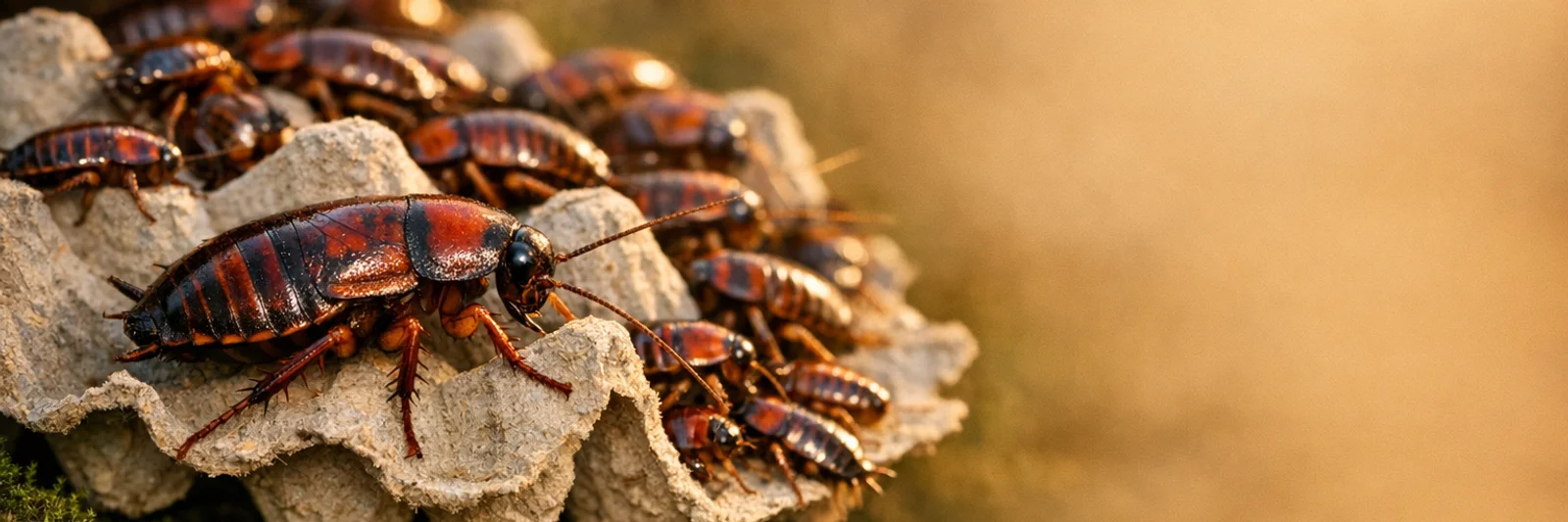
Beyond heat, the setup is straightforward. Stack egg crates or cardboard flats vertically to multiply the surface area the roaches live and climb on, which is what lets a bin hold thousands. Keep ventilation strong with large screened panels so humidity and stale air do not build up, and keep the colony dark and undisturbed, since red runners are shy and breed best when they feel calm and hidden.
- Heat, roughly 85 to 95 F. The single biggest lever on breeding speed. Use a thermostat-controlled heat source on one zone of the bin.
- Stacked egg crates. Vertical cardboard flats give the colony far more usable surface, so the same footprint holds many more roaches.
- Strong ventilation. Large screened openings keep air fresh and prevent the damp, stuffy conditions that invite mold and mites.
- Dark and quiet. A calm, shaded bin lets a naturally skittish roach settle in and reproduce.
How Red Runners Reproduce
Red runners breed the way most feeder roaches do, which is part of why they are so productive. After mating, females produce egg cases called oothecae, each holding a batch of eggs. Unlike some roaches that carry the case internally the whole time, red runner females typically drop or deposit their egg cases in the warm substrate and crevices of the bin, where the eggs finish developing and hatch out as tiny nymphs.
Those nymphs then grow through a series of molts until they mature into breeding adults, and in a warm colony that generation time is fast. That quick turnover, combined with females producing case after case, is exactly why a healthy warm bin can snowball from a starter group into a dense, self-sustaining colony in a matter of months.
Feeding for Productivity
A breeding colony eats more than a maintenance one, and diet directly affects how fast it grows. Give them a steady, protein-forward dry food, such as a quality roach chow or a balanced dry blend, and keep it available so nymphs never go hungry during their fast growth. Well-fed females produce egg cases more consistently than crowded, underfed ones.
Just as important is moisture, offered safely. Red runners need water but should never sit in it. Provide it through fresh produce like carrot, potato, or leafy greens, or a water gel or crystal product, rather than an open dish that can drown nymphs and foul the bin. Replace produce before it molds, and pair the wet food with the dry staple so the colony gets both hydration and protein.
Keeping It Escape-Proof
Red runners are fast, and unlike dubia they can climb rough surfaces like unfinished wood, silicone seams, or textured plastic. That makes containment a real part of breeding them, not an afterthought. Use a bin with smooth, tall interior walls the adults cannot grip, and keep the lid tight.
Because a good breeding bin needs heavy ventilation, cover every screened opening with fine mesh so tiny nymphs cannot slip through. Many keepers add a barrier at the top, a smooth band the roaches cannot climb past, as a second line of defense. Set the whole thing up assuming a few will try to escape, and you will keep them where they belong.
Harvesting Without Crashing the Colony
The goal is a colony that pays you a harvest forever, not one you drain to zero. The rule is simple: always leave your breeders behind. Harvest mostly nymphs and smaller sizes for feeding, and leave the adults, and their egg cases, to keep the next generation coming. If you find yourself taking adults regularly, you are harvesting too hard and the colony will shrink.
The easy way to do this is to sift by size. Sorting the colony through the right screen size lets the larger breeders stay while feeder-sized roaches drop through, so you pull a meal without touching your production. Take a little at a time from a strong colony rather than a lot at once, and the bin stays dense and self-replacing.
Common Mistakes That Stall a Colony
Most stalled red runner colonies come down to a short list of fixable problems. If growth flattens out, start here before anything else.
- Too cold. By far the most common reason a colony will not grow. If the bin is at room temperature, add controlled heat and get it into the warm range.
- Too dry. Without steady safe moisture, nymphs struggle and production slows. Keep fresh produce or a water gel available at all times.
- Harvesting too hard. Taking adults or pulling too many roaches too soon strips out your breeders and shrinks the colony. Feed off mostly nymphs and leave the breeders.
- Poor ventilation. A stuffy, damp bin invites mold and mites and stresses the colony. Use large screened panels and let the air move.
- Starting too small or harvesting too early. A tiny starter group fed off right away never reaches critical mass. Give a new colony a few months to establish first.
Frequently Asked Questions
How do you breed red runner roaches?
Keep a mixed-age group of a few hundred in a smooth-sided, well-ventilated bin held warm, roughly 85 to 95 F, with stacked egg crates for surface area. Feed a protein-based dry food plus fresh moisture, keep the bin dark and calm, and the females will produce and drop egg cases on their own. Once established, harvest mostly nymphs and leave your adult breeders behind.
How long does it take red runners to breed?
In a warm colony, red runners breed quickly and have a fast generation time, so a starter group can become self-sustaining within a few months. Females produce egg cases regularly, and the nymphs mature into new breeders faster than most common feeder roaches. Keeping the bin warm is what keeps that cycle moving; a cool bin slows it dramatically.
What temperature do red runners need to breed?
Red runners breed best when kept warm, roughly 85 to 95 F. Heat is the single biggest factor in how fast a colony grows, so most keepers use a thermostat-controlled heat mat on one zone of the bin. At room temperature reproduction slows sharply or nearly stops, so steady warmth is the first thing to fix if a colony is not growing.
How many red runners should I start a colony with?
Most keepers start with a few hundred roaches in a mix of adults and nymphs rather than a small handful. The adults breed right away while the nymphs mature into the next wave, so a mixed group keeps production overlapping. A larger, mixed start reaches a self-sustaining colony faster than a small one you have to build up slowly.
Why is my red runner colony not growing?
The most common cause is temperature: a bin at room temperature will barely breed, so get it into the warm 85 to 95 F range first. Other frequent causes are too little moisture, poor ventilation, and harvesting too hard, which strips out your breeders. Fix the heat, keep fresh moisture and good airflow available, and feed off mostly nymphs while leaving adults to reproduce.
Can red runners climb out of the bin?
Yes, red runners are fast and can climb rough surfaces like unfinished wood, silicone, or textured plastic, so containment matters. Use a bin with smooth, tall interior walls, cover every ventilation opening with fine mesh so nymphs cannot slip through, and keep the lid tight. Many keepers add a smooth barrier band near the top as a second line of defense.
Keep comparing: Red Runner Care Guide· Why Red Runners Make Great Feeders· Which Pets Eat Red Runners· Dubia vs Red Runners
