
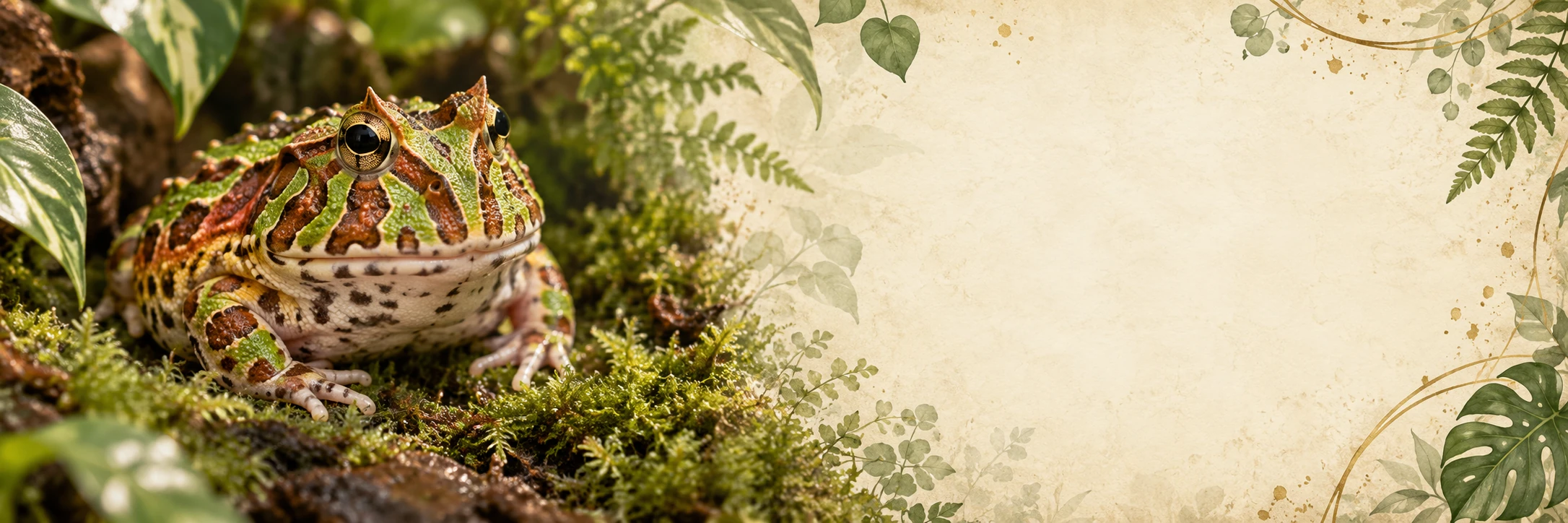
Feeder Insects for Pacman Frogs
TC INSECTS is a family-run insect farm in Porter, Texas, and the largest feeder operation in the state. Pacman frogs are big-appetite ambush predators, and the trick to keeping one healthy is the right staple feeder, the right portion, and enough variety to avoid the obesity that troubles most captive horned frogs. We raise every feeder here and ship them alive.
Sits and waits; will overeat if you let it.
Lean, high-protein, and cannot climb out of the tub.
Anywhere in the lower 48; not Hawaii or Alaska.
Pacman frogs will eat almost anything that moves and fits in their mouth, which makes overfeeding the number one health risk. A dubia-led diet with lean variety and controlled portions keeps a horned frog thriving.
Shop Feeders for Your Pacman Frog
Live Dubia Roaches
The standout staple for Pacman frogs: lean, high in protein, and unable to climb out of the enclosure. Match the size to your frog as it grows.
Live Superworms
A larger, meatier option for juvenile and adult Pacman frogs. Offer in moderation as part of a varied diet.
Live Silkworms
Soft-bodied and very lean, silkworms are a great choice for obesity-prone adult frogs and a gentle source of variety.
Live Hornworms
A soft, high-moisture treat that Pacman frogs strike readily. Offer occasionally rather than as a staple.
Everything a pacman frog keeper needs from this guide. Untick anything you already have, then add the rest in one click.
Feeding Your Pacman Frog
Pacman frogs are sit-and-wait eaters
A Pacman frog (genus Ceratophrys) is an ambush predator that buries into the substrate and waits for prey to wander past. It has an enormous appetite and will attempt to eat almost anything that moves and fits in its mouth. That eagerness is exactly why overfeeding, and the obesity that follows, is the single most common health problem in captive horned frogs. Portion control is not optional with this species.
The best feeders, led by dubia
Dubia roaches are the standout staple: they are lean with a good protein-to-fat balance, cannot climb smooth surfaces, and come in a full range of sizes. Superworms add a meatier option for larger frogs, hornworms make a soft high-moisture treat, and silkworms are the leanest choice of all, ideal for adults you are keeping trim. Rotating these gives a broader nutritional profile than any single feeder.
How often to feed by age
Feeding frequency drops sharply as a Pacman frog matures. Juveniles under about six months are typically fed every other day, frogs from six to twelve months every three days or so, and adults over a year only every five to ten days. Offer prey the frog will strike readily, then stop; a Pacman frog rarely tells you it is full.
Getting the prey size right
A good rule is to keep feeders no larger than the space between the frog's eyes, or the width of its mouth. Oversized prey is a real risk with a species that will try to swallow almost anything, and can lead to choking or impaction. When in doubt, size down.
Calcium and keeping your frog lean
Dust feeders with a calcium supplement at every feeding for juveniles and about weekly for adults to support healthy bones. Just as important, resist the urge to free-feed fatty items: lean on dubia and silkworms, keep treats like hornworms occasional, and let the strict feeding schedule do its job. A lean Pacman frog is a long-lived one.
Pacman Frog Feeding by Age
Under about six months old, still growing fast.
Slowing down as it approaches adult size.
Over a year old; overfeeding is the main risk.
Pacman Frog Feeding FAQ
Fresh Feeders, Straight From Our Farm
Have a question about sizing or a feeding schedule? Email customer.service@tcinsects.com and we will help you dial it in.
TC INSECTS · Farm-raised in Porter, TX · Every order backed by our Live Arrival Guarantee
