
Preventing Impaction from Feeder Insects
- Feeder size and hardness are a bigger impaction risk factor than substrate for most reptiles.
- The eye width rule, never feed an insect wider than the gap between your reptile's eyes, is the single most useful sizing check you can do.
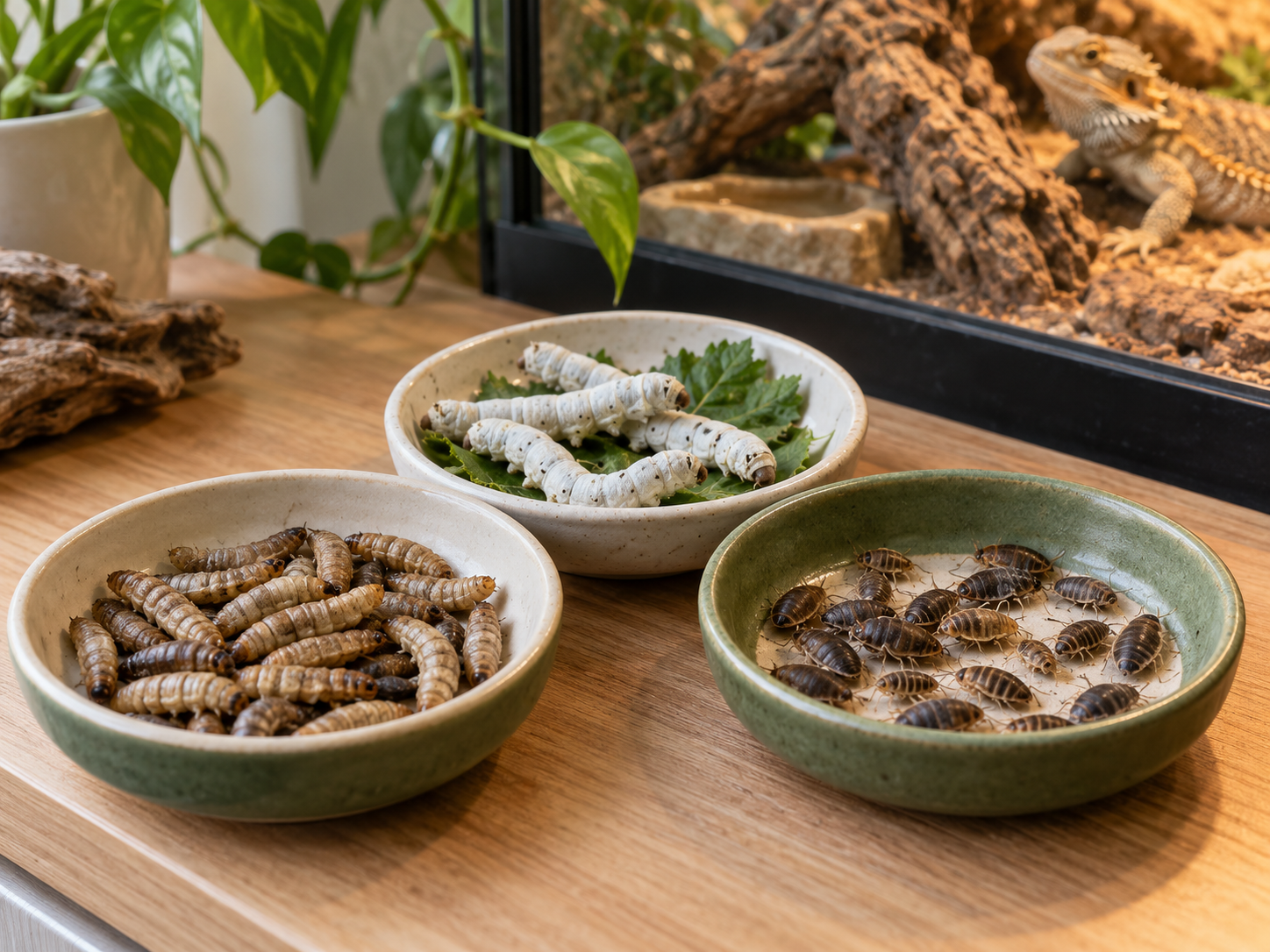
- Soft bodied feeders like black soldier fly larvae, silkworms, and small dubia nymphs are lower risk than hard shelled feeders such as adult mealworms and large superworms.
- A cool enclosure slows digestion and can turn a correctly sized feeder into an impaction risk anyway.
- A swollen belly, straining, or no droppings for over a week is a vet matter, not something to manage at home.
Feeder Choice Matters More Than Substrate
Search around for impaction prevention and you will mostly find warnings about loose sand or bark substrate. That is worth knowing, but it skips over a bigger and more overlooked factor: what you are actually feeding, and how big it is. An oversized, hard shelled insect can cause a blockage on a completely clean paper towel enclosure, while plenty of keepers run sand or soil substrates for years without a single impaction case.
That does not mean substrate never matters, it means feeder choice deserves at least as much attention. If you organize feeding around the right insect, the right size, and the right conditions to digest it, you remove most of the actual risk before substrate ever becomes a factor.
The Eye Width Rule: Getting Size Right
The easiest habit to build is a quick visual check: hold the feeder up next to your reptile's head. If it looks wider or longer than the space between the eyes, it is too big, full stop. This works at every life stage because the rule scales with the animal, a hatchling's safe feeder size is tiny and a full grown adult's is much larger, but the same test applies to both.
This matters more for hard shelled or tough bodied feeders than for soft ones, since a slightly oversized soft insect is far less likely to cause a real problem than a slightly oversized hard one. For a full breakdown by species and life stage, see our feeder insect size chart.
Soft Bodied vs Hard Shelled Feeders
Not all feeders carry the same risk even at the same size. Soft bodied insects break down faster in the gut and are generally the safer default, especially for babies, juveniles, and naturally small mouthed species.
Hard shelled or tough bodied feeders take longer to digest and are the more common feeder related cause of impaction, particularly once an animal is offered one that is too large for its current size.
- Lower risk, soft bodied: black soldier fly larvae, silkworms, and small dubia roach nymphs all have soft exoskeletons that break down quickly.
- Moderate risk: crickets sized correctly for the animal are generally well tolerated, though their legs and jumping motion mean sizing still matters.
- Higher risk for babies: adult mealworms have a noticeably tougher shell than their softer, smaller counterparts, and should generally wait until an animal is closer to adult size.
- Highest risk if oversized: large superworms combine a tough shell with real size, best reserved for adults and offered only occasionally rather than as a daily staple.
Safe Feeder by Size at a Glance
Use this as a quick reference, not a substitute for checking against your own animal's eye gap. Ranges vary a little by species and individual.
- Hatchlings and very young reptiles: black soldier fly larvae, small silkworms, or tiny dubia nymphs, kept soft and small.
- Juveniles: small to medium dubia nymphs, silkworms, or appropriately sized crickets, sized up gradually as the head grows.
- Sub-adults: medium dubia, crickets, and mini or small mealworms, still favoring softer bodied choices when possible.
- Adults: larger dubia, crickets, standard mealworms, and occasional superworms, all checked against the eye width rule before feeding.
Temperature, Hydration, and Digestion
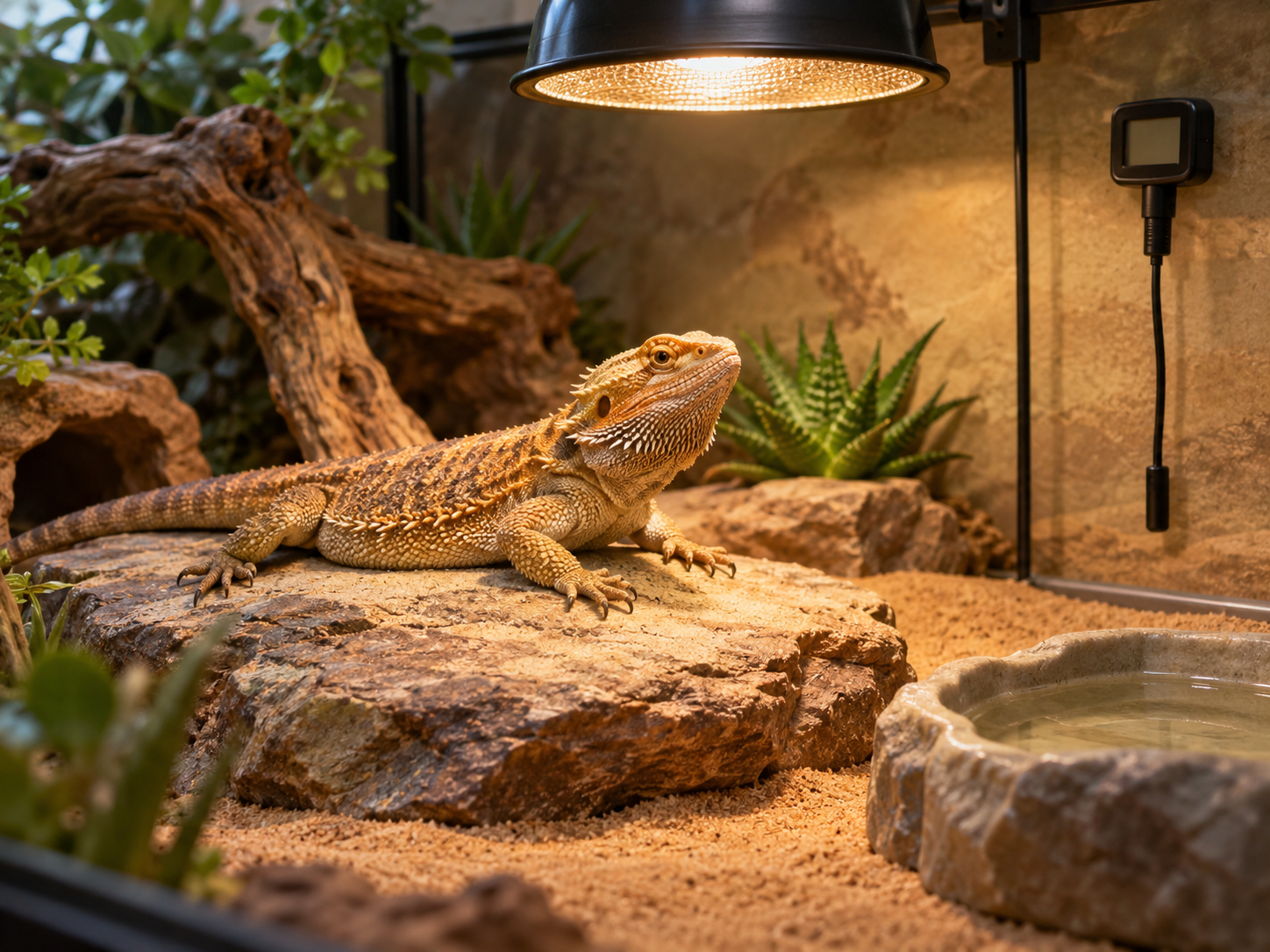
Feeder size only tells half the story. Reptiles are ectotherms, meaning their internal temperature and digestive efficiency depend heavily on the enclosure's warmth. An enclosure that runs too cool slows gut motility, so food, especially anything tougher bodied, can sit longer than it should and raise the odds of a blockage even at a correct size.
Hydration matters just as much. A dehydrated reptile has less moisture available to help move food through the gut, which is part of why proper misting, a water dish, or humidity levels appropriate to the species are part of impaction prevention, not just general care. Dusting feeders with calcium at the recommended schedule for your species also supports healthy gut and bone function, which indirectly helps digestion run smoothly.
When Impaction Is a Vet Matter
Good sizing and feeder choice prevent most problems, but they do not guarantee zero risk, and impaction can still happen. If you notice a visibly swollen or hard belly, straining without producing droppings, lethargy, appetite loss, or no bowel movement for well over a week for your species, treat it as a reason to contact a reptile savvy vet.
Do not try to resolve a suspected impaction at home with laxatives, forced feeding, or pressing on the belly. A vet can confirm what is actually going on and treat it safely, while home remedies can make a real blockage worse.
Frequently Asked Questions
What causes impaction from feeder insects?
Impaction from feeder insects is most often caused by feeding prey that is too large or too hard shelled for the animal to digest easily. Cool enclosure temperatures and poor hydration can make the same feeder more likely to cause a problem by slowing digestion further.
Which feeder insects are safest to prevent impaction?
Soft bodied feeders like black soldier fly larvae, silkworms, and small dubia roach nymphs are generally the safest choices since they break down quickly in the gut. Hard shelled feeders such as adult mealworms and large superworms carry more risk, especially for babies and small mouthed species.
How big should feeder insects be?
A feeder insect should never be wider or longer than the space between your reptile's eyes, a simple visual check often called the eye width rule. This scales with the animal, so the safe size grows as your reptile grows.
Can mealworms cause impaction?
Yes, adult mealworms have a noticeably tougher exoskeleton than many other feeders, which makes them a more common cause of impaction when offered too large or too often to young or small reptiles. Sizing them correctly and reserving them mostly for adult animals lowers that risk considerably.
How do I prevent impaction in my reptile?
Prevent impaction by choosing appropriately sized, softer bodied feeders, following the eye width rule, keeping enclosure temperatures and hydration in the correct range for your species, and dusting feeders with calcium on schedule. If you ever suspect impaction has already happened, contact a reptile savvy vet rather than treating it at home.
Keep comparing: Feeder Insect Size Chart· Best Feeders for Baby Bearded Dragons· How to Dust Feeders with Calcium· Feeder Insects and Reptile Obesity
