
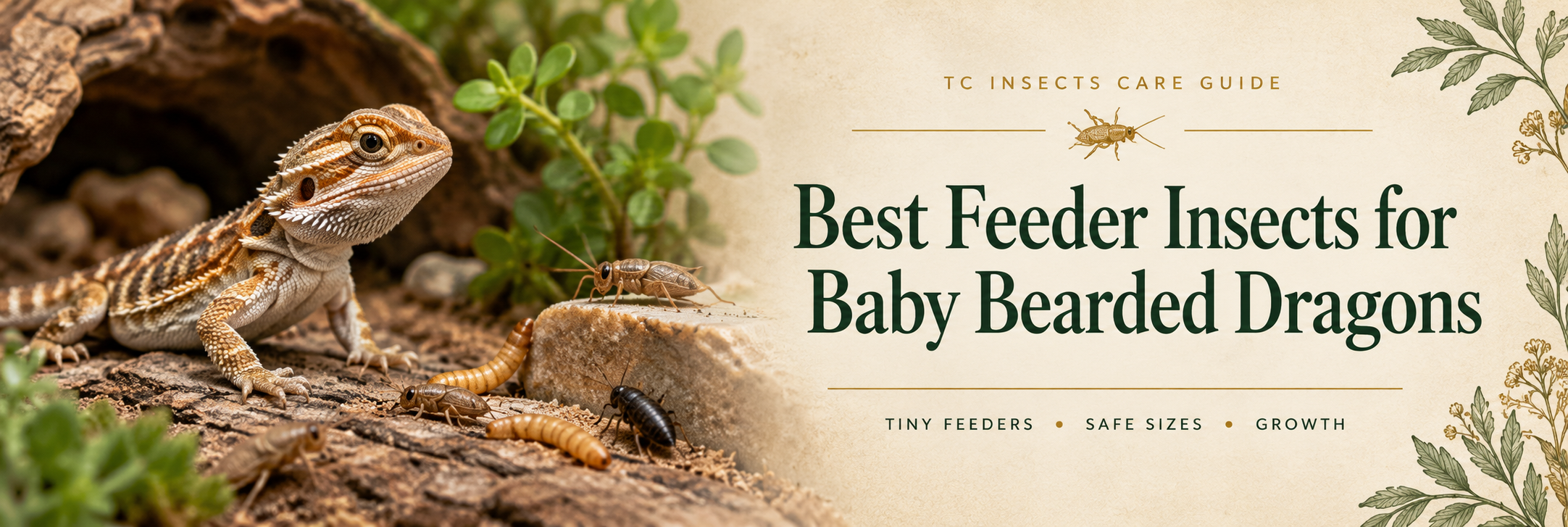
- Baby bearded dragons are insect-heavy, eating roughly 70 to 80 percent insects and the rest leafy greens.
- Never feed an insect wider than the space between your dragon's eyes, the single most important size rule for babies.
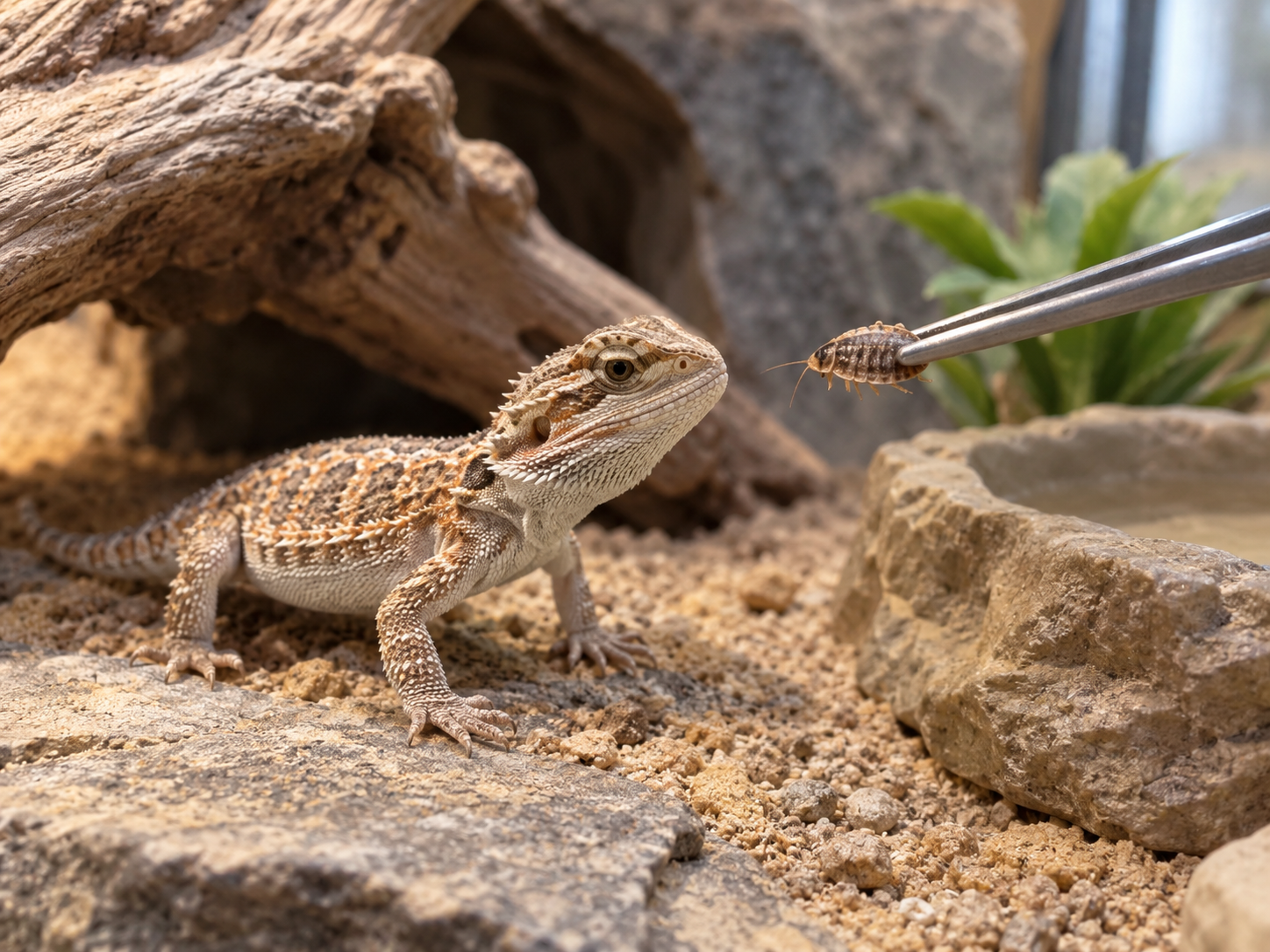
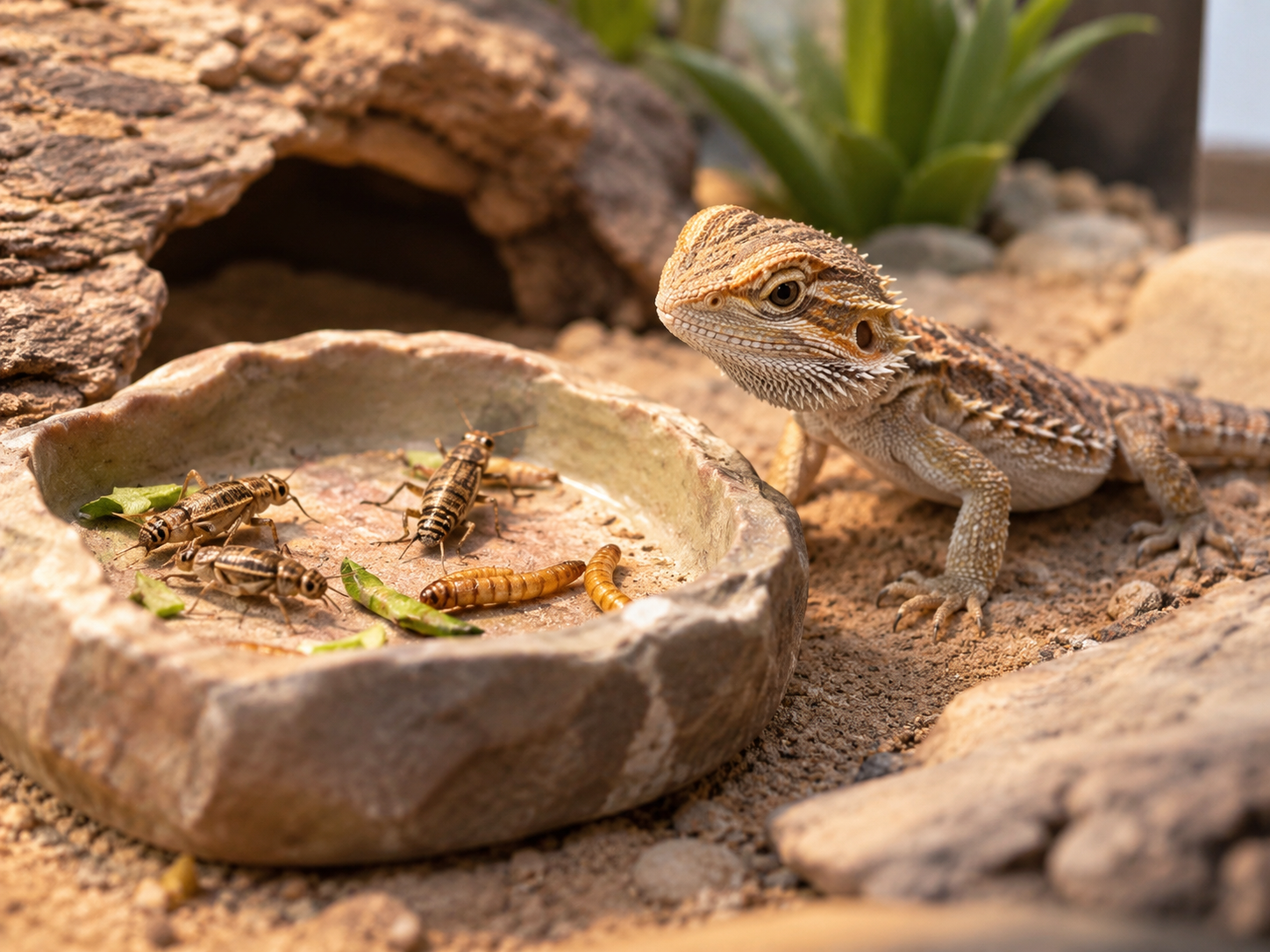
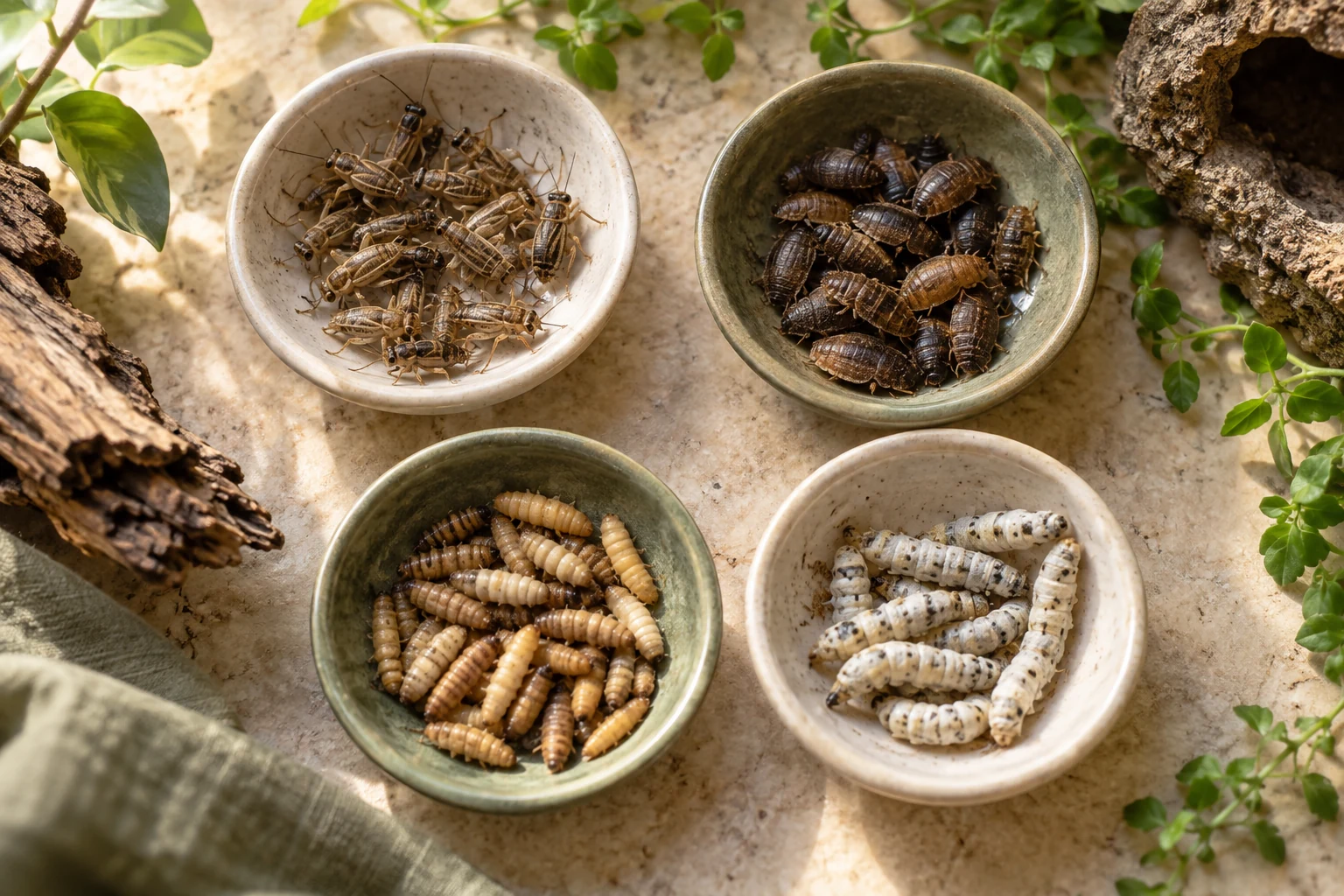
- The best feeders for babies, in order, are small crickets, small or nymph dubia roaches, black soldier fly larvae, and silkworms.
- Dust feeders with calcium at nearly every feeding to support a baby's fast bone growth.
- Avoid superworms and large mealworms for babies; their hard chitin shell is a real impaction risk at this size.
| Crickets | Dubia Roaches | Black Soldier Fly Larvae | Silkworms | |
|---|---|---|---|---|
| Protein | 15 to 21% | 20 to 23% | about 17% | 9 to 10% |
| Fat | 3 to 7% | 6 to 7% | 9 to 14% | 1 to 6% |
| Moisture | 69 to 77% | 65 to 72% | about 61% | 76 to 83% |
| Calcium : Phosphorus | about 0.12:1 | about 0.29:1 | roughly 1.5:1 to 7:1 (varies with diet) | roughly 0.7:1 to 2:1 |
| Calcium | Low (roughly 275 mg/kg); must dust | Low (roughly 700 to 800 mg/kg); still dust | The one naturally calcium-rich feeder, but the amount varies a lot with how they are raised | Moderate; soft and easy to digest |
| Dust with calcium? | Yes | Yes | Usually not | Optional |
| Gut-load? | Yes | Yes | Not required | No |
| Best known for | Balanced, widely available staple that triggers a strong feeding response | High-protein everyday staple; best calcium ratio among feeder roaches | Naturally high calcium with no dusting needed; sold here as Calcium Worms | Soft, highly digestible growth feeder; gentle on young or recovering animals |
The Best Feeders for a Baby Bearded Dragon, Ranked
Here is our honest ranking for the first few months of life, when a bearded dragon is growing fast and needs a mostly-insect diet. Every one of these should be sized to the eye-gap rule below and offered with calcium.
- Small Crickets - Pinhead to quarter-inch crickets are the classic first feeder; their movement triggers a strong feeding response in even the youngest dragons. Shop crickets.
- Small or Nymph Dubia Roaches - Young dubia are soft-bodied, quiet, and carry a strong calcium-to-phosphorus ratio for a feeder roach, and unlike crickets they cannot climb out of a small enclosure. Shop dubia roaches.
- Black Soldier Fly Larvae (Calcium Worms) - The one naturally calcium-rich feeder, so a growing baby gets a calcium boost without extra dusting on that meal. Shop Calcium Worms.
- Silkworms - Soft-bodied, highly digestible, and gentle on a young gut, making them a nice growth feeder in rotation, though pricier and less of an everyday staple. Shop silkworms.
The Eye-Gap Size Rule Comes First
Before anything else, get the size right. The safest rule keepers use is simple: never feed an insect that is wider than the space between your bearded dragon's eyes. This matters even more for babies than adults, because a young dragon's digestive tract is small and still developing. A feeder that is too wide can lodge in the gut, and in the worst cases that impaction can cause paralysis or death.
This means feeder size has to shrink along with your dragon. Pinhead or quarter-inch crickets, small or nymph-stage dubia, and appropriately small BSFL and silkworms are all safe starting points. When in doubt, size down. A slightly small feeder is always the safer mistake to make.
How Much and How Often Babies Eat
Baby bearded dragons are insect-heavy eaters, generally taking in roughly 70 to 80 percent insects, with the rest made up of finely chopped leafy greens. That ratio flips as they grow into adults, who become mostly plant-eaters, but a baby's fast growth calls for protein.
Offer insects multiple times a day, typically several short feeding sessions rather than one big meal. At each sitting, let your baby eat as many appropriately sized insects as it will finish in about 10 to 15 minutes, then remove anything left uneaten so loose feeders do not stress or nip at your dragon later.
Calcium at Nearly Every Feeding
Nearly every feeder insect carries far more phosphorus than calcium, which is exactly backwards from what a growing reptile needs to build strong bones. For a baby bearded dragon, this means dusting with a calcium supplement at nearly every feeding, more often than you would for an adult, since babies are laying down skeletal growth at a rapid pace.
Black soldier fly larvae are a helpful exception since they are naturally calcium-rich on their own, so working them into the rotation gives your baby a calcium-forward meal even on the days you are being careful not to over-dust. Whichever feeder you choose otherwise, dust it before it goes in front of your dragon.

Feeders to Avoid for Babies: Superworms and Large Mealworms
Two common feeders are best kept away from babies entirely: superworms and large mealworms. Both have a noticeably hard chitin shell compared to softer-bodied feeders, and that hard exoskeleton is genuinely harder for a small, developing digestive system to break down. Combined with the fact that both insects tend to run larger, they are a real impaction risk for a young dragon, not just an inconvenience.
Save superworms and standard mealworms for later, once your dragon is bigger and better equipped to handle them, and only ever in appropriately sized portions. For a baby, stick with the softer-bodied, correctly sized lineup above instead.
Frequently Asked Questions
What should baby bearded dragons eat?
Baby bearded dragons should eat mostly insects, roughly 70 to 80 percent of the diet, sized no wider than the space between their eyes. Small crickets and small or nymph dubia roaches make the best everyday staples, with black soldier fly larvae and silkworms in rotation, alongside a small amount of finely chopped leafy greens.
How many crickets should a baby bearded dragon eat?
A baby bearded dragon should be offered as many small, appropriately sized crickets as it will eat in about 10 to 15 minutes, several times a day. Always use pinhead to quarter-inch crickets for very young babies, dust them with calcium, and remove anything left uneaten after the feeding window.
Can baby bearded dragons eat dubia roaches?
Yes. Small or nymph-stage dubia roaches are one of the best staples for baby bearded dragons, since they are soft-bodied, carry a strong calcium-to-phosphorus ratio for a feeder roach, and cannot climb or escape a small enclosure the way crickets can. Just keep the size appropriately small for your baby's mouth.
What size feeders for a baby bearded dragon?
Never feed a baby bearded dragon anything wider than the space between its eyes. For most young babies that means pinhead to quarter-inch crickets, small or nymph dubia roaches, and small black soldier fly larvae or silkworms. Oversized feeders are the leading cause of choking or impaction in young dragons.
How often do baby bearded dragons eat?
Baby bearded dragons eat multiple times a day, generally several short feeding sessions rather than one large meal, taking as many appropriately sized insects as they can finish in about 10 to 15 minutes at each sitting. Feeding frequency drops as they grow into juveniles and then adults.
Keep comparing: Best Feeders for Bearded Dragons· How Many Crickets to Feed a Bearded Dragon· Feeder Insect Size Chart· How to Dust Feeders with Calcium
