
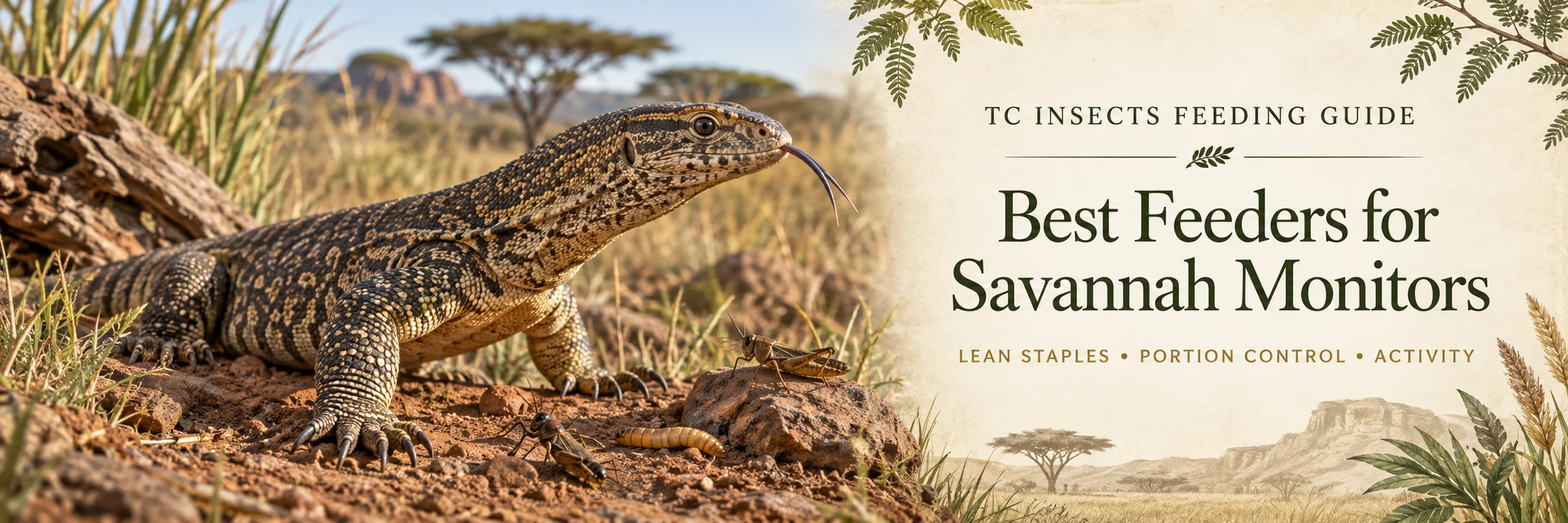
- Obesity is the most common health problem seen in captive savannah monitors, mostly from fatty, rodent-heavy diets and too little activity.
- Dubia roaches and crickets are lean, high-protein staples that keep a savannah monitor's diet insect-first instead of fat-first.
- Black soldier fly larvae add natural calcium to the rotation without the fat load of a fatty treat feeder.
- Superworms are fine as an occasional treat but are too high in fat to feed a savannah monitor every day.
- Portion control and encouraging natural foraging activity matter as much as feeder choice for keeping a savannah monitor lean.
| Dubia Roaches | Crickets | Black Soldier Fly Larvae | Superworms | |
|---|---|---|---|---|
| Protein | 20 to 23% | 15 to 21% | about 17% | 19 to 20% |
| Fat | 6 to 7% | 3 to 7% | 9 to 14% | 17 to 18% |
| Calcium : Phosphorus | about 0.29:1 | about 0.12:1 | roughly 1.5:1 to 7:1 (varies with diet) | about 0.1:1 |
| Calcium | Low (roughly 700 to 800 mg/kg); still dust | Low (roughly 275 mg/kg); must dust | The one naturally calcium-rich feeder, but the amount varies a lot with how they are raised | Very low (roughly 177 mg/kg) |
| Dust with calcium? | Yes | Yes | Usually not | Yes |
| Best known for | High-protein everyday staple; best calcium ratio among feeder roaches | Balanced, widely available staple that triggers a strong feeding response | Naturally high calcium with no dusting needed; sold here as Calcium Worms | Larger, high-fat feeder for bigger appetites; room-temperature storage |
The Number One Health Problem in Captive Savannah Monitors
Ask an experienced monitor keeper what actually shortens a savannah monitor's life in a home enclosure, and the answer is almost never an infection or a parasite. It is obesity. For years, the standard advice for savs leaned heavily on feeder rodents, pinkies and fuzzies fed several times a week, because monitors are enthusiastic, food-driven eaters that will happily take whatever is offered. That approach packed on fat far faster than these animals were built to handle, and it shows up later as an overweight monitor with reduced mobility, joint stress, and a liver working overtime.
The disconnect is that wild savannah monitors are overwhelmingly insect eaters. Field studies on their natural diet found beetles, orthopterans like grasshoppers and crickets, and other invertebrates making up the large majority of what they actually hunt, with vertebrate prey a much smaller and less frequent part of the picture than the old captive care sheets assumed. An insect-first diet is not a compromise, it is closer to what a savannah monitor evolved to eat.
The Best Feeder Insects to Keep a Savannah Monitor Lean, Ranked
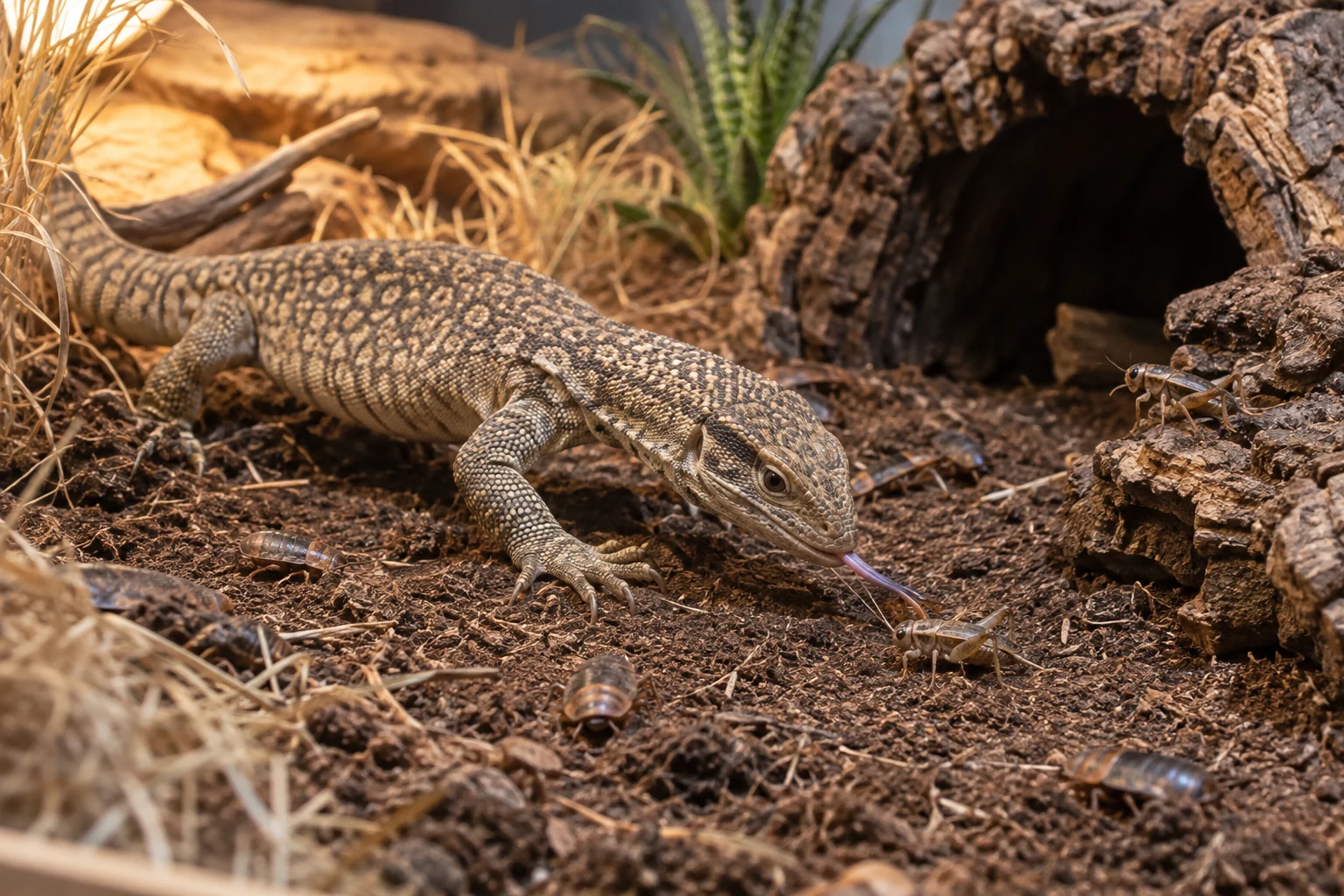
Here is the honest ranking for building a lean, insect-first diet. Gut-load every feeder first and dust it with a calcium supplement before offering it, whichever one you choose.
- Dubia Roaches - The best everyday staple. High in protein and low in fat, dubia give a savannah monitor real nutrition without the fat load of a rodent-heavy diet. Shop dubia roaches.
- Crickets - A lean staple that pulls double duty. Their constant scrambling movement encourages the hunting and foraging behavior that keeps a sav active, which matters just as much as diet for weight control. Shop crickets.
- Black Soldier Fly Larvae - The calcium specialist of the group. Naturally rich in calcium without needing extra dusting, they are a smart addition to the rotation rather than a daily staple on their own. Shop black soldier fly larvae.
- Superworms - An occasional treat only. Superworms run noticeably higher in fat than dubia or crickets, so feeding them regularly is one of the easiest ways to accidentally tip a savannah monitor into obesity. Shop superworms.
Portion Control and Keeping Your Sav Active
Feeder choice only solves half the problem. Portion size matters just as much, and it is easy to overfeed an animal that eats as eagerly as a savannah monitor does. A good rule of thumb many keepers use is to offer an amount of food roughly matched to the size of the monitor's head at a sitting, rather than feeding until it stops eating, since a hungry sav will keep eating well past the point of being full.
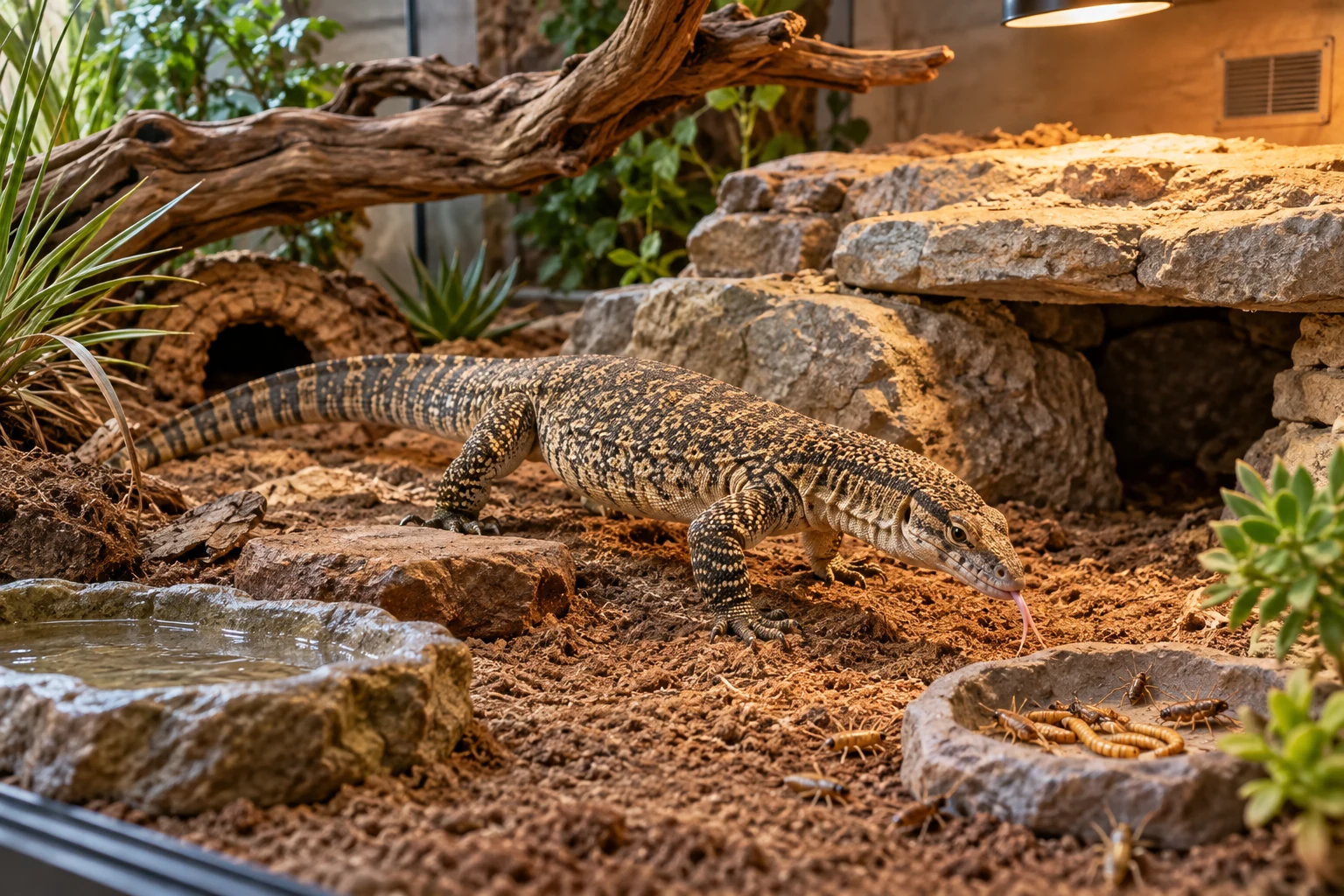
Activity matters too. Scatter-feeding live insects around the enclosure, rather than dropping them straight into a dish, encourages the natural hunting behavior a sav would use in the wild and burns real energy in the process. Give your monitor room to actually move, dig, and climb, since a large, warm enclosure with things to explore does more for weight control than any single feeder choice. Check body condition regularly by looking for fat pads building up near the base of the tail and around the neck, which is an early, honest sign that portions need to come down before real weight gain sets in.
How Often to Feed a Savannah Monitor
Frequency should shift with age. Juvenile savannah monitors are growing quickly and can be offered insects close to daily, since they are burning through energy fast and building the frame they will carry for life. Feeding a growing juvenile a lean, insect-first diet from the start is one of the best things you can do to prevent obesity later.
Adults are a different story. A grown savannah monitor does much better on a lighter schedule, typically just a few feedings a week rather than daily meals, with portions watched closely. If your adult sav is gaining weight, the answer is almost always to cut back on frequency or portion size before reaching for a different feeder.
Feeders and Foods to Avoid
Keep feeder rodents rare rather than routine. An occasional pinky is not a disaster, but a diet built around them, which was once standard advice, is the single biggest driver of obesity in captive savs. The same caution applies to high-fat insects like superworms and waxworms: fine as an occasional treat, risky as a daily staple.
Skip wild-caught insects entirely, since you cannot know what pesticides or parasites they carry. And resist free-feeding or leaving a dish of food available at all times. A savannah monitor with constant access to food, especially a fatty one, will eat far more than it needs, and that steady overfeeding is exactly how a lean juvenile turns into an overweight adult.
Frequently Asked Questions
What can savannah monitors eat?
Savannah monitors do best on an insect-first diet built around lean staples like dubia roaches and crickets, with black soldier fly larvae added for calcium and treats like superworms or an occasional feeder rodent kept rare rather than routine.
Are dubia roaches good for savannah monitors?
Yes, dubia roaches are one of the best staple feeders for savannah monitors. They are high in protein, low in fat, and easy to keep in a home colony, making them a lean everyday foundation instead of a fat-heavy diet.
How do I keep my savannah monitor from getting fat?
Feed a lean, insect-first diet rather than a rodent-heavy one, control portion size instead of feeding to full, and encourage natural foraging activity rather than leaving food available at all times. Watch for fat pads building up near the tail base and neck, which is an early sign to scale portions back.
How often should I feed a savannah monitor?
It depends on age. Juvenile savannah monitors are growing fast and can eat insects close to daily, while adults do much better on a lighter schedule of just a few feedings a week, watched closely for weight gain.
Can savannah monitors eat superworms?
Yes, but only as an occasional treat. Superworms run noticeably higher in fat than dubia roaches or crickets, so feeding them daily is a common way keepers accidentally tip a savannah monitor into obesity.
Keep comparing: Best Feeders for Ackie Monitors· Best Feeders for Tegus· Feeder Insects and Reptile Obesity· How to Gut-Load Feeders
