
Dwarf White Isopods for Sale
Overview
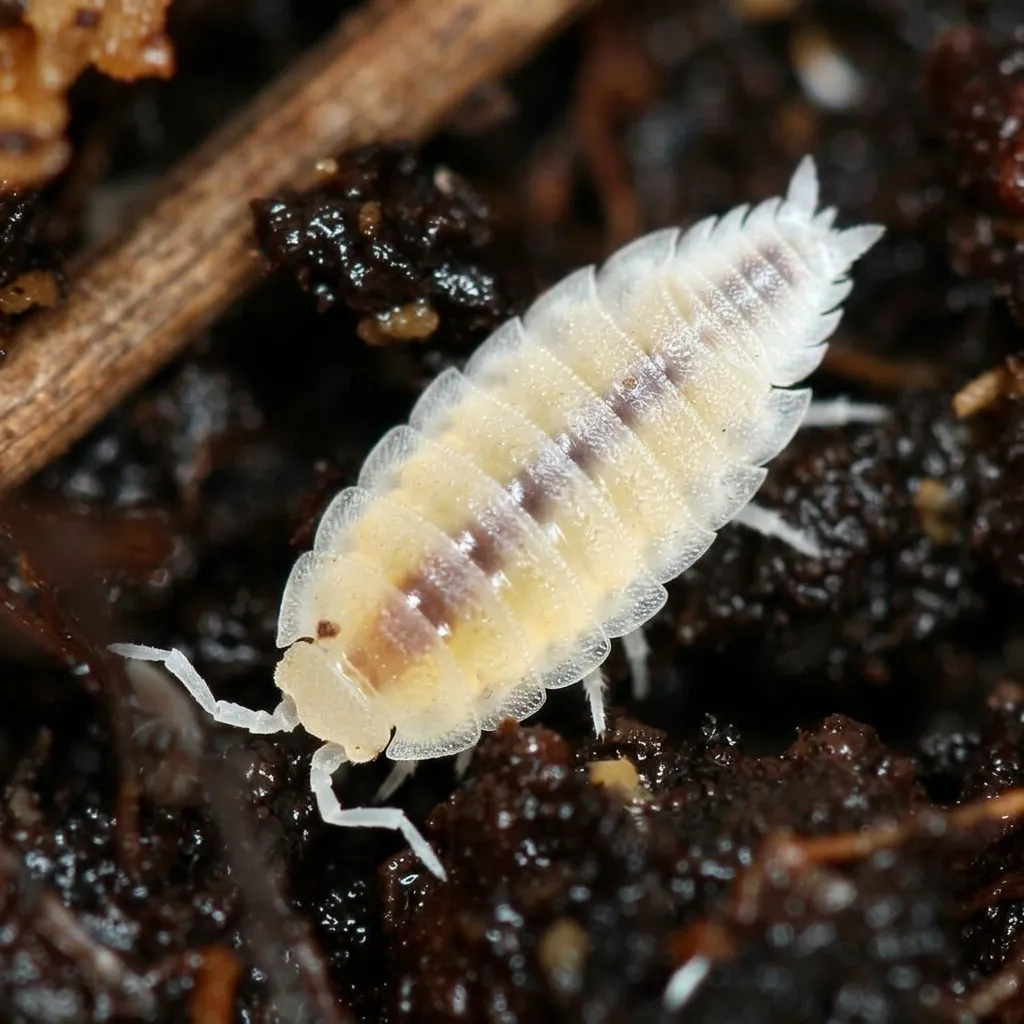
Dwarf White Isopods (Trichorhina tomentosa) are the most widely sold cleanup-crew isopod in the bioactive hobby. The species reproduces parthenogenetically, which means females breed without males. As a result, a starter culture grows faster and more reliably than almost any other isopod species in the trade.
Adults reach only 1 to 5 mm, with a pale white to off-white color. The colony stays mostly in moist substrate, leaf litter, and decaying wood rather than on the surface. Accordingly, this is a working microfauna species first and a display animal a distant second. The combination of fast reproduction, low price, and small feeder-friendly size is why most first-time bioactive builders pick Dwarf Whites before any other isopod.
Why Keep Dwarf White Isopods?
Customers usually pick this species for one or more of these reasons:
- Parthenogenetic reproduction. First, females breed without males. As a result, even a 15-count starter culture establishes faster than any sexual-reproduction isopod, since every adult in the bin can produce young.
- Soft-bodied supplemental feeder. Next, the small size and soft body make Dwarf Whites a usable supplemental feeder for thumbnail dart frogs, mantellas, juvenile small geckos, and similar tiny insectivores. They are one of the few cleanup-crew isopods that doubles as a feeder.
- Lowest entry price. Additionally, this is the cheapest live isopod in the catalog. Therefore, it works well for seeding large bioactive enclosures or running multiple feeder backup cultures without spending much per isopod.
- Wide temperature tolerance. Finally, Dwarf Whites do well from 70 to 85°F, which is a broader range than many other small isopods. Therefore, they fit warmer tropical reptile setups that would stress more temperate species.
Honest Note: They Are Substrate-Bound
Dwarf Whites are not a visible display species. You will see them when you lift bark or stir leaf litter, but most of the colony stays inside the substrate and leaf-litter layer at all times. If you want a cleanup crew you can watch from outside the tank, choose a Powder morph instead. If you want a fast-growing, feeder-friendly microfauna layer that quietly handles cleanup, Dwarf Whites are the right pick.
Care and Setup
Dwarf White care is one of the most beginner-friendly in the isopod hobby. Stable humidity, leaf litter, and a moisture-retaining substrate cover most of what the species needs. Moreover, the parthenogenetic reproduction means a colony can recover from minor setbacks faster than a sexual-reproduction species would.
Temperature
Aim for 70 to 85°F. The species handles the warmer end of that range well, which is part of why it suits tropical reptile setups. However, avoid sustained heat above the mid-80s without strong ventilation, and never place a small culture directly on a heat mat without temperature control.
Humidity
Aim for 80 to 90% with a reliably moist retreat. Keep sphagnum moss, leaf litter, and substrate damp on one side. However, balance the moisture with light ventilation so the container does not turn stagnant. The substrate should feel damp and breathable rather than swampy.
Substrate
Use a moisture-retaining blend like coconut fiber mixed with flake soil or decayed hardwood. Then top it with a generous layer of leaf litter and pieces of cork bark. In addition, add calcium sources such as crushed cuttlebone, eggshell, or limestone. Even small species need calcium for molting.
Food
Leaf litter and decaying hardwood (avoid pine and cedar) form the base diet. Add small portions of vegetables like sweet potato, carrot, squash, mushroom, or freeze-dried peas. For protein, use shrimp meal, fish flakes, insect frass, or nutritional yeast in very small amounts. Alternatively, a prepared balanced diet like TC INSECTS Isopod Food simplifies feeding and adds calcium support. Feed lightly. Dwarf Whites breed fast, but a small pinch is enough for a starter culture.
Ventilation
Light ventilation works best. Sealed bins crash with mite blooms, while heavy ventilation dries out a small-bodied species like Dwarf Whites faster than it does larger isopods. A vented lid with small slots or fine mesh strikes the right balance.
Bioactive Use
Dwarf Whites are an excellent fit for humid bioactive vivariums alongside springtails. They thrive in dart frog tanks, mantella enclosures, mourning gecko setups, and tropical planted terrariums. In drier reptile enclosures (leopard gecko, bearded dragon, ball python with low humidity), they will not persist long-term, even with a humid hide.
Using Dwarf Whites as Supplemental Feeders
Unlike most other cleanup-crew isopods, Dwarf Whites work as occasional feeders for very small insectivores. The 1 to 5 mm size and soft body make them digestible for animals that cannot handle larger isopods. Common feeder targets include thumbnail dart frogs (Ranitomeya), mantella frogs, juvenile small geckos, day gecko hatchlings, and small inverts.
However, this is not a primary staple feeder. Use Dwarf Whites alongside fruit flies, springtails, and other small feeders rather than relying on them alone. Additionally, the colony needs time to build up before you can pull feeders without crashing the culture. Generally, wait a few months after starting before using the colony for feeding.
Breeding Notes
Dwarf Whites breed exceptionally fast because the species is parthenogenetic. Every adult female in the bin can produce young without a male. Therefore, a starter group of 15 to 25 typically shows clear population growth within a few weeks rather than the few months other isopods require. Stable warmth, high humidity, deep leaf litter, calcium, and minimal disturbance support the strongest breeding results. Once established, the colony can outpace most reasonable feeding demand.
Best For
- First-time bioactive enclosure builds where reliability and low cost matter
- Dart frog vivariums, mantella enclosures, and other humid amphibian setups
- Tropical planted terrariums where springtails and isopods both have a substrate role
- Feeder backup cultures for thumbnail dart frogs, juvenile geckos, and small insectivores
- Seeding larger humid bioactive enclosures where higher isopod counts are needed at a lower per-isopod cost
Not Best For
- Keepers expecting a visible display isopod, since Dwarf Whites stay in the substrate
- Dry reptile enclosures (low-humidity leopard gecko, bearded dragon, hognose setups), where the colony will not persist long-term
- Primary staple feeder use, since the size is small enough that they should supplement rather than replace fruit flies or other staples
- Sealed, no-ventilation tubs, which crash mite-prone with this species faster than larger isopods
- Collectors looking for color or pattern, since this species is plain pale white by design
Origin and History
Trichorhina tomentosa was first described by Danish invertebrate zoologist Gustav Budde-Lund in 1893, from specimens collected on the Galápagos Islands during a scientific expedition. The species has since spread worldwide through trade and now occurs widely across tropical and subtropical regions. Accordingly, modern hobby populations are best treated as a tropical-style species rather than tied to a single wild locality. Captive care should reflect the species’ preference for moist, leaf-littered microhabitats.
Receiving and Acclimation
Open the package indoors as soon as possible after delivery. Then inspect the culture carefully, since Dwarf Whites are tiny and hide quickly in moss and substrate. Look closely through the packing material before discarding anything. If the culture looks dry on arrival, lightly mist one side of the receiving container before adding them. Do not soak the whole setup.
Transfer the shipping material into a prepared enclosure with moist sphagnum, leaf litter, bark, and decaying wood. Place the packing near the moist side so the colony moves in naturally. After that, leave the enclosure mostly undisturbed for the first week. Some hiding is normal after shipping and is not a sign of culture failure.
Recommended Add-Ons
- TC INSECTS Isopod Habitat Kit for a ready-to-use setup with substrate, sphagnum, leaf litter, and starter feed
- TC INSECTS Assorted Hardwood Leaf Litter for the deep leaf-litter layer this species relies on
- TC INSECTS Isopod Food for a calcium-supported diet, used in small portions
- TC Calcium Ultra Fine for molting support across a fast-breeding colony
- Springtails to round out the microfauna layer alongside Dwarf Whites in humid setups
Learn More About Isopod Biology
The references below cover background information that helps keepers understand the species over the long term. Each source comes from an academic, museum, or government site rather than a competing retailer.
- World Register of Marine Species: Trichorhina tomentosa. Scientific taxonomy reference for the accepted species name. Useful for confirming the species identification and checking the formal classification of this isopod within the Platyarthridae family.
- British Myriapod and Isopod Group: Trichorhina tomentosa. Species reference noting the small, off-white appearance, size, and parthenogenetic reproduction. Useful for understanding why this species reproduces so fast in captive cultures.
- University of Florida IFAS: Pillbugs and Sowbugs. Practical overview of terrestrial isopod biology, moisture needs, and behavior around organic matter. Useful for understanding why humidity and leaf litter matter so much for small isopod species.
Dwarf White Isopod FAQs
What does parthenogenetic mean for Dwarf Whites?
Females reproduce without males. In practical terms, every adult in your culture can produce young, which is why Dwarf White colonies grow so much faster than sexual-reproduction isopod species. You do not need to worry about pairing animals or culture sex ratios.
Can I feed Dwarf Whites to my reptiles or frogs?
Yes, for very small insectivores. Thumbnail dart frogs, mantellas, juvenile small geckos, and similar tiny species can eat Dwarf Whites. The soft body and 1 to 5 mm size make them digestible. However, this is a supplemental feeder, not a primary staple. Use them alongside fruit flies and springtails rather than alone.
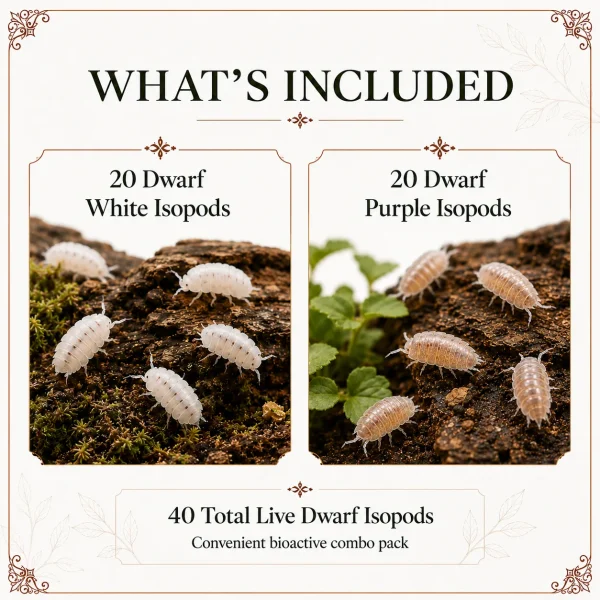
How are Dwarf Whites different from Dwarf Purple Isopods?
Three main differences. First, reproduction: Dwarf Whites are parthenogenetic, so colonies grow faster. Second, temperature tolerance: Dwarf Whites handle up to 85°F, while Dwarf Purple tops out around 78°F. Third, feeder use: Dwarf Whites work as occasional feeders for small insectivores, while Dwarf Purple is generally too small and shy for feeder use. Both are humid-setup specialists, and many keepers run them together.
How fast does a Dwarf White culture grow?
Faster than most isopods, because of parthenogenetic reproduction. A starter group of 15 to 25 typically shows clear population growth within a few weeks. After a few months, the colony usually outpaces most reasonable feeding demand if you are using them as supplemental feeders.
Will Dwarf Whites work in my leopard gecko or bearded dragon tank?
Not well. Dwarf Whites need 80 to 90% humidity with a stable moist retreat. Most dry desert reptile enclosures cannot sustain that even with a humid hide. For drier setups, look at Powder Orange or Powder Blue, which tolerate broader humidity ranges.
Is 15 isopods enough to start a culture?
Yes, more than enough. Because every adult can reproduce parthenogenetically, even a small starter group establishes quickly under good conditions. Generally, 15 to 25 is the standard recommended starter count for this species.