Mold and Mites in Your Feeder Bins? Springtails and Isopods Can Help
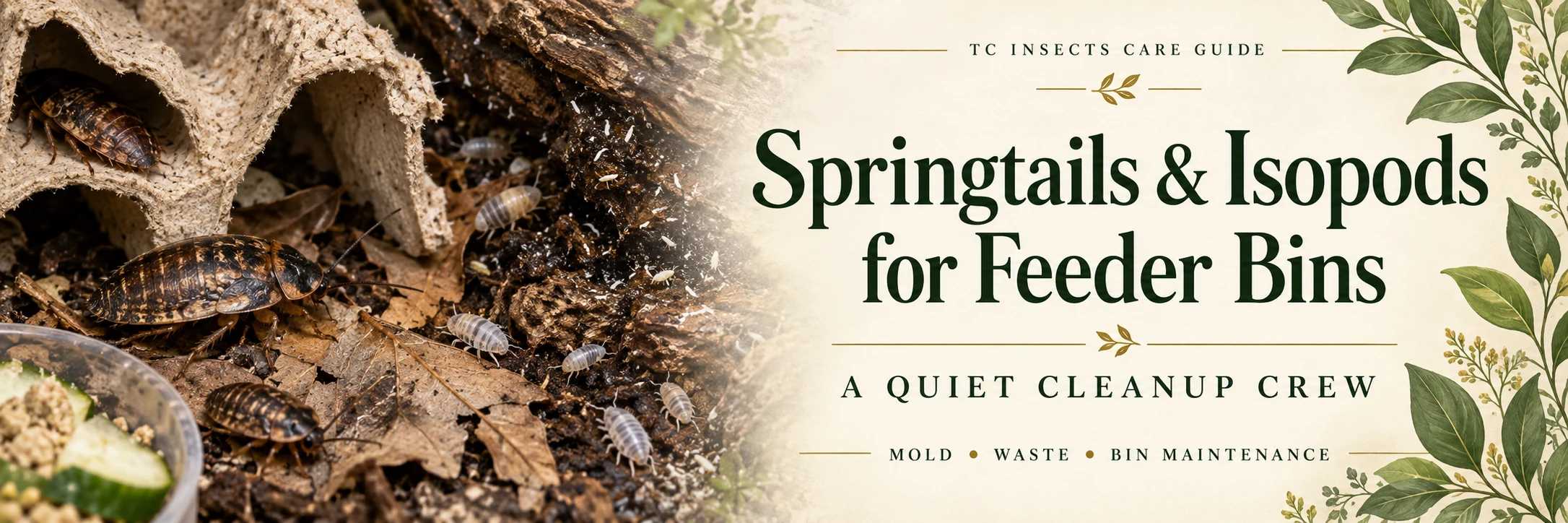
They outcompete grain mites for food and space and eat mold
They break down frass and dead feeders before they rot
A background janitor crew, not a co-colony competing with feeders
Mold and Mites in Your Feeder Bins? Springtails and Isopods Can Help
Yes, springtails and isopods can help keep mold and mites out of your feeder bins, and almost nobody talks about it. Springtails outcompete the grain mites that plague dubia and worm colonies and graze the mold before it spreads, while isopods break down frass and dead feeders that would otherwise rot. The trick is to run them as a quiet maintenance crew, not a second colony sharing the bin, and to pick species that will not bother your feeders. Here is how to seed one in.
A maintenance crew, not a competing colony
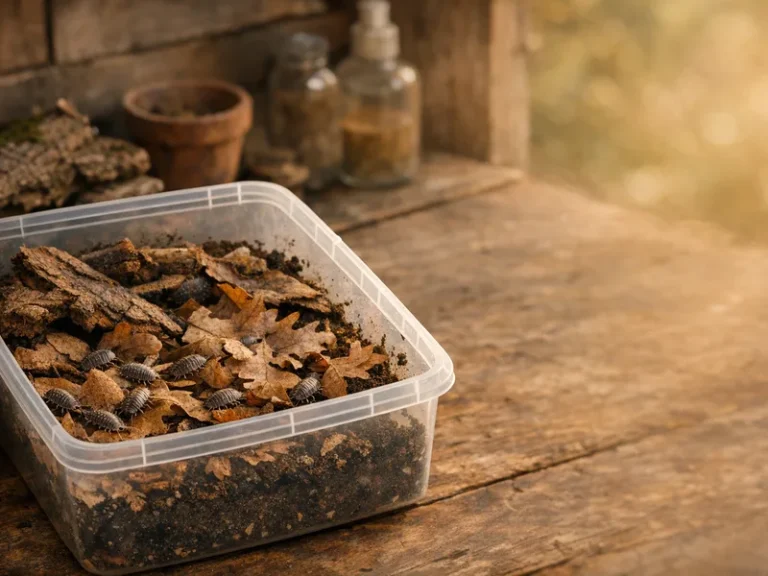
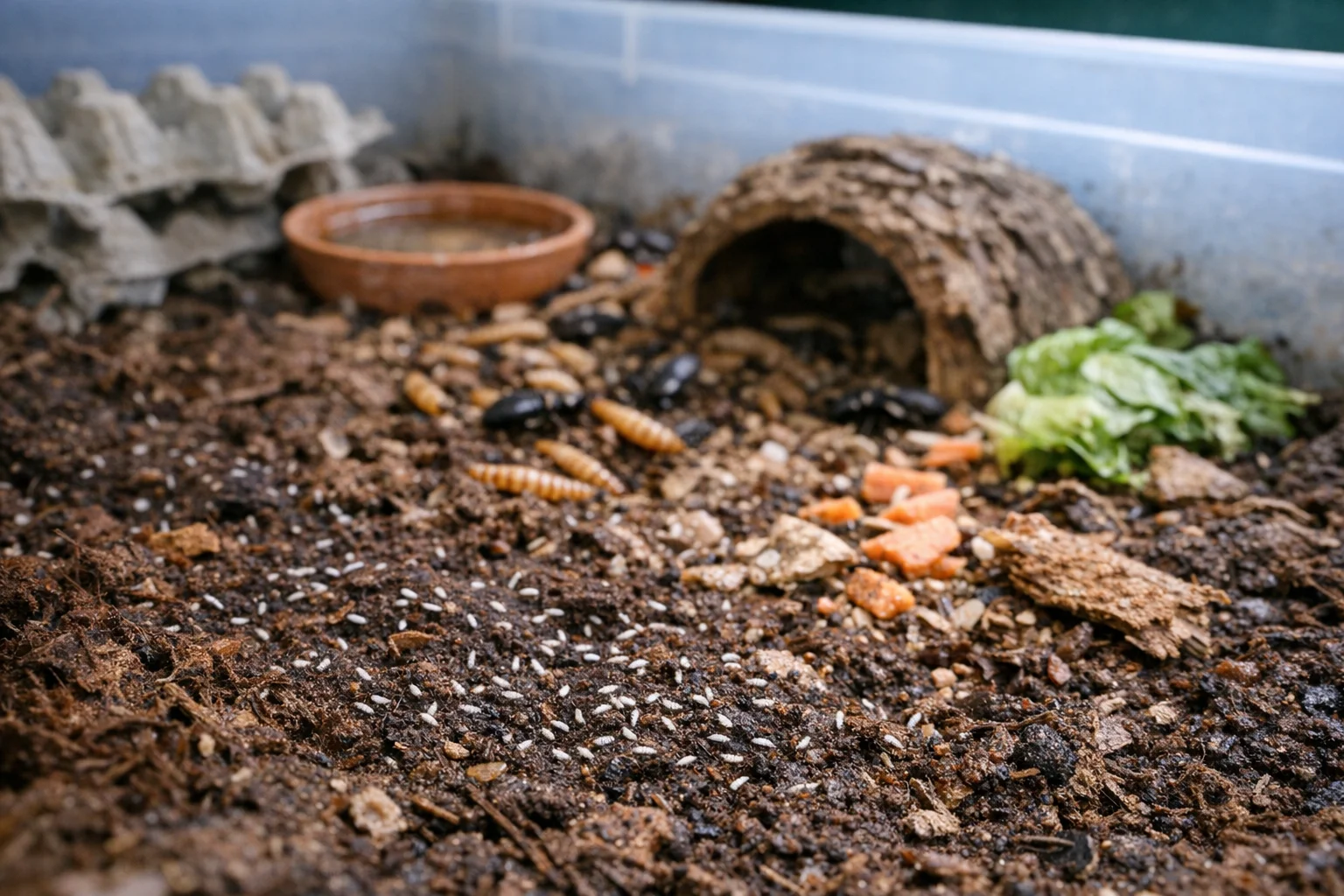
Keep airflow and feeding under control, provide a sheltered moist corner and let the cleanup crew establish gradually.
Why feeder bins grow mold and mites in the first place
A feeder colony is a warm, humid box full of food, frass, and the occasional dead insect, which is a perfect environment for two problems: mold and grain mites. Grain mites ride in on food, especially grain-based or protein-heavy feed, and once a bin is damp and overfed they explode into that telltale fine, shifting dust across the surface and food dishes. Mold follows the same trigger, uneaten food and moisture that never gets cleaned up.
You can fight it with better ventilation, drier feeding, and cleaning out uneaten food, and you should. But a living cleanup crew adds a second line of defense that works around the clock. Springtails and isopods do in a feeder bin exactly what they do in a bioactive enclosure: eat the mold and process the waste before it becomes a problem.
Springtails: the grain-mite answer
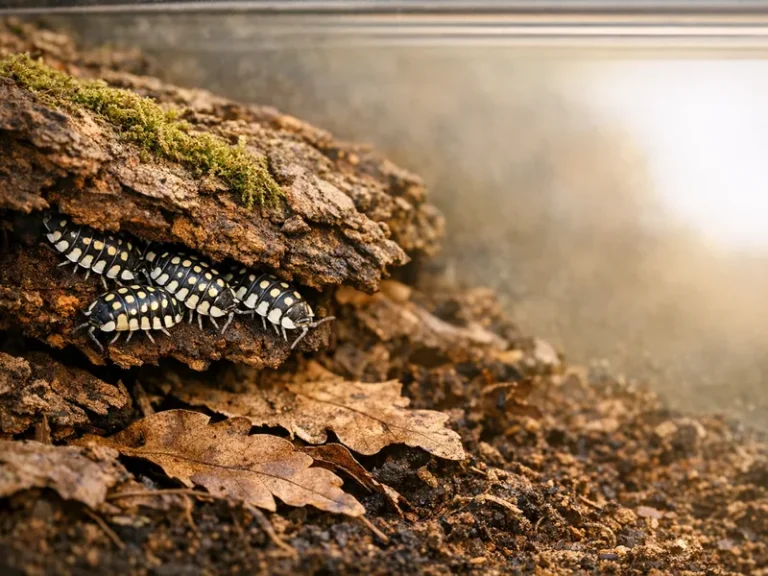
Springtails are the direct counter to grain mites. They compete with mites for the same food and moisture, and a healthy springtail population can outcompete and hold down a mite bloom while grazing any mold that starts. Keepers have used them for years to keep mite levels under control in roach and worm bins, and they eat the mold that escapes your notice on a piece of leftover produce.
Seed a springtail culture onto a slightly damp corner of the bin, near where food sits, and let them work. Temperate white springtails are the forgiving, room-temperature pick and pair well with most feeder setups. Our springtail cultures ship as living, reproducing colonies, so they establish in the bin rather than dying off. One caution: a booming springtail population is a good thing in a bin, but if they overwhelm a small or sensitive setup you can thin them, they are a tool, not a pet.
Isopods: the frass and dead-feeder crew
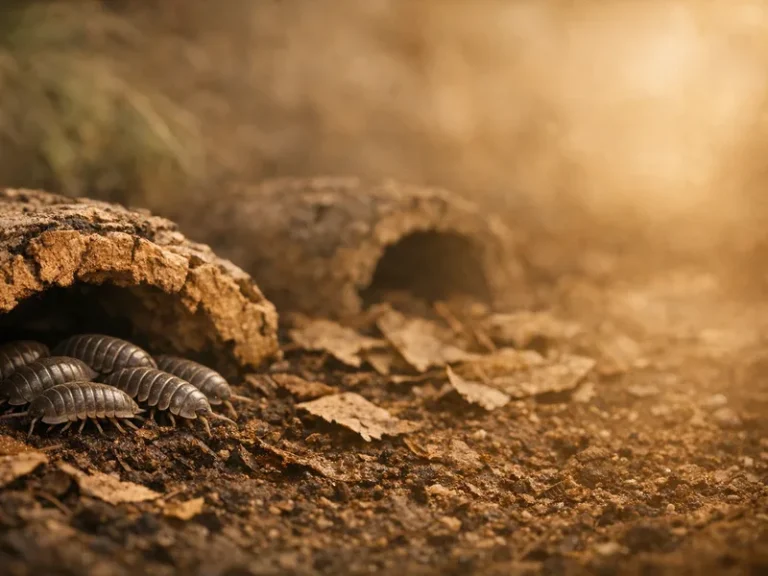
Isopods handle the heavier waste springtails cannot. In a feeder bin they break down accumulated frass, shed exoskeletons, and dead feeders that would otherwise rot and feed mold. Small, fast species are the right pick: Powder Orange or Powder Blue (Porcellionides pruinosus) move quickly, breed fast, and tolerate the drier-then-damp conditions of a feeder bin.
Here is the important caution: do not loose a large, protein-hungry isopod into a bin of soft feeders. A hungry Porcellio laevis Dairy Cow can bother soft-bodied feeders like small worms, so keep the isopod a background janitor and never let it turn into a predator on your feeder stock. Give the crew its own leaf litter to eat so it is not relying on your feeders as food. Our Powder isopods page has the small species that fit this job, and our bioactive combos pair isopods with a springtail culture in one order.
How to seed a cleanup crew into a feeder bin
Keep it simple. Create one slightly damp corner in an otherwise well-ventilated bin, tuck in a little leaf litter for the crew to eat and hide in, and pour a springtail culture and a small starter colony of isopods onto that spot. Give them a couple of weeks with stable conditions to establish before you expect them to keep up with the mess. Do not flood the bin to keep the crew happy: a soggy feeder bin causes more problems than it solves.
This works best in bins that already run a bit humid, like a dubia roach colony, where the crew has the moisture it needs. Match the approach to the feeder: our red runner care guide and dubia care sheet cover the moisture and ventilation each species wants, which is what determines whether a cleanup crew can live in there at all.
When not to add a cleanup crew
A cleanup crew is not a cure for a bin that is set up wrong. If your bin is soaking wet and unventilated, adding bugs will not fix it, you will just have more things dying in a swamp. Sort out airflow and stop overfeeding first, then add the crew as ongoing maintenance.
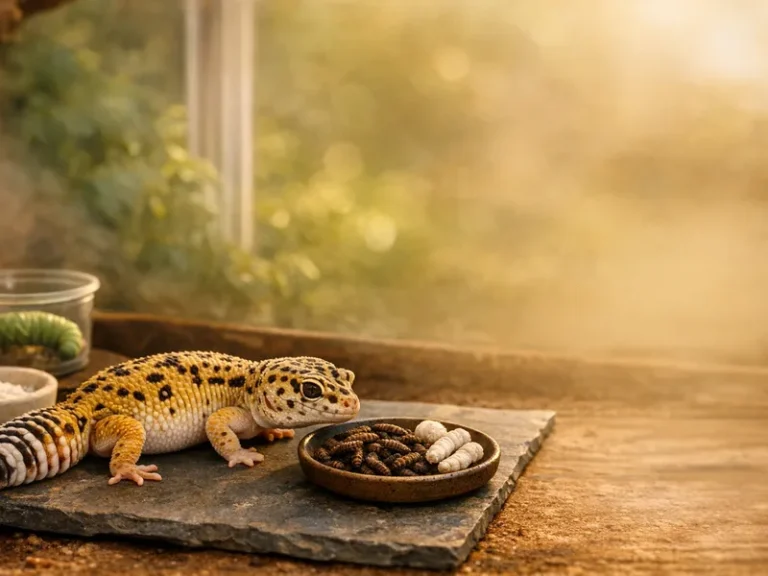
It is also not for every feeder. Dry-kept setups like a superworm or mealworm bin do not offer the moisture springtails and isopods need, so the crew will not establish there. And keep the crew as maintenance, not a co-colony: the goal is a quiet background janitor that keeps mites and mold down, not a competing population that stresses your feeders. When in doubt, keep the crew small and let it scale to the mess.
Frequently asked questions
Can springtails get rid of grain mites in my dubia bin?
They help a lot. Springtails compete with grain mites for the same food and moisture, and a healthy population can outcompete and hold down a mite bloom while also eating mold. Pair that with better ventilation and drier feeding and you keep mites under control without chemicals.
Which isopods should I put in a feeder bin?
Small, fast species like Powder Orange or Powder Blue (Porcellionides pruinosus). They break down frass and dead feeders and tolerate feeder-bin conditions. Avoid large, protein-hungry species like the Dairy Cow, which can bother soft-bodied feeders.
Will the cleanup crew eat my feeder insects?
A properly kept crew of small isopods and springtails with its own leaf litter to eat will not go after healthy feeders. The risk comes from large, hungry isopods like Dairy Cows, which can nip soft feeders. Keep the crew small, well-fed on leaf litter, and treat it as maintenance rather than a co-colony.
How do I add springtails and isopods to a feeder bin?
Make one slightly damp corner in a well-ventilated bin, add a little leaf litter, and pour in a springtail culture and a small starter isopod colony. Give them a couple of weeks to establish. Do not soak the bin to keep them happy, since a wet feeder bin causes more problems than it solves.
Do springtails and isopods work in a dry mealworm or superworm bin?
Not well. Those feeders are kept dry, and springtails and isopods need moisture to survive and reproduce, so the crew will not establish. This approach fits humid setups like dubia or red runner colonies, not dry-kept worm bins.
Can a cleanup crew replace cleaning my feeder colony?
No, it supplements it. A crew processes frass, mold, and dead feeders in the background, but it cannot fix an overcrowded, soggy, or under-ventilated bin. Get airflow and feeding right first, then let the crew handle ongoing maintenance.
Ready to Stock Up?

Have a care question? Ask our community.
Join Reptile Keepers USA, our free Facebook group for reptile, amphibian and invert keepers. Share your setups, get care help and swap feeder tips.
Join the free group