
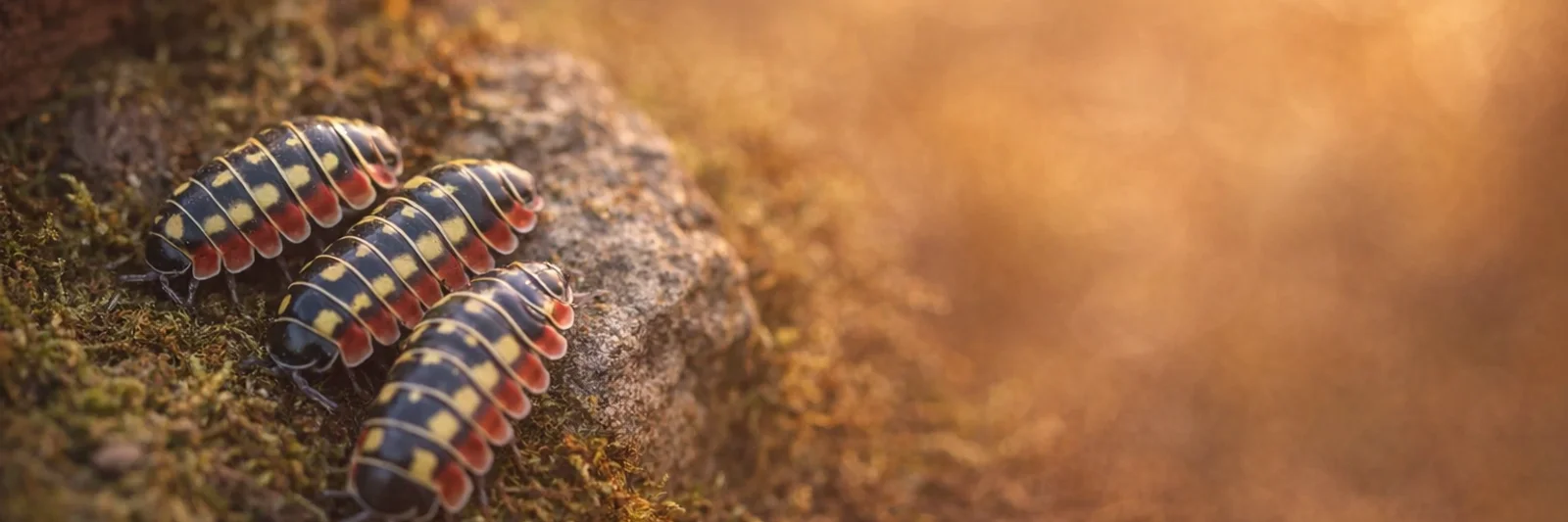
- Isopods are the cleanup crew that breaks down the larger waste in a bioactive terrarium: feces, shed skin, leftover food, and decaying wood and leaf litter.
- Pair isopods with springtails in most bioactive setups, because springtails handle mold and fine debris that isopods leave behind.
- Match the isopod species to your humidity: Dwarf White and Powder Orange like it damp, while Porcellio scaber and Armadillidium handle drier air.
- Dwarf White isopods are the best choice for small, humid setups and for tanks with tiny animals like dart frogs and small geckos.
- Porcellio scaber is a strong pick for a temperate or arid enclosure with a bigger bioload, such as a bearded dragon or larger reptile.
What a Cleanup Crew Actually Does
In a bioactive terrarium, the cleanup crew is the team of tiny invertebrates that eats waste so you do not have to scoop it out. Isopods are the heavy lifters of that crew. They break down the larger messes: animal feces, shed skin, leftover feeder insects, and decaying wood and leaf litter. As they eat, they return nutrients to the soil and help keep the enclosure balanced.
Isopods do not work alone. They handle the bigger stuff, but they leave behind fine debris and they do not chase down mold. That job belongs to springtails, the second half of a good cleanup crew. Together, isopods and springtails keep a bioactive tank self-cleaning, which is the whole point of going bioactive in the first place.
Choosing by Enclosure Type
The right isopod depends less on the animal and more on the environment you are building. Start with your humidity and the size of the tank, then think about who lives above the substrate.
For a small or humid setup, like a dart frog viv or a small planted cube, pick a small, moisture-loving species that will not overwhelm the space. For an arid or temperate setup, choose a species that tolerates a dry side and good airflow. For a heavily planted tank, lean toward gentler isopods that are less likely to nibble tender roots and seedlings. And when the tank holds a reptile or invertebrate, size matters: pair a big lizard with a hardier isopod that can handle the bioload, but keep small or delicate animals with small, harmless species.
The Best Cleanup Crew Isopods, Ranked
Here are the isopods we reach for most often, with honest notes on where each one shines and where it falls short. Any of these can anchor a cleanup crew when matched to the right tank.
- Dwarf White (Trichorhina tomentosa) - The go-to for small, humid enclosures and for tanks with tiny animals like dart frogs and small geckos. They stay small, breed readily in damp substrate, and are harmless to delicate residents. They do want it consistently moist, so they are less suited to dry setups. Shop isopods.
- Powder Orange and Powder Blue (Porcellionides pruinosus) - The best all-around choice for general bioactive tanks. They are fast breeders, fast eaters, and tolerant of a wide range of conditions, so they establish quickly and keep up with everyday waste. A reliable first colony for most keepers. Shop isopods.
- Porcellio scaber - A workhorse for temperate to arid setups and heavier bioloads, such as a bearded dragon or a larger reptile. They are hardy, larger-bodied, and process a lot of waste. They prefer a bit more airflow and a proper dry side to a damp swamp.
- Armadillidium (Armadillidium species) - A great pick for drier setups. These are the classic roly-poly pill isopods that curl into a ball, and many varieties handle lower humidity better than most cleanup crews. They come in a range of colors and sizes, so there is one for nearly any drier tank. Shop Armadillidium.
- Dairy Cow (Porcellio laevis "Dairy Cow") - A powerhouse for a big bioload, since they grow large and eat aggressively. That appetite is the catch: they can bother live plants and pester very small or slow animals, so use them in sturdier planted tanks or with larger residents, not delicate vivs.
Do You Need Both Isopods and Springtails?
For most bioactive tanks, yes, you want both. Isopods and springtails do different jobs, so they complement each other rather than compete. Isopods break down the larger waste, while springtails swarm the fine debris and, crucially, graze on mold before it can take over a new setup.
Skipping springtails is the most common cleanup-crew mistake, especially in humid tanks where mold appears first. If you are weighing the two, our isopods vs springtails guide breaks down what each one handles, and do isopods need springtails covers why the pair works better than either alone.
How Many Isopods, and Seeding a New Tank
Start modestly. A starter culture of isopods, seeded into a fresh tank with plenty of leaf litter and a piece of decaying wood, is enough to get going. You do not need a crowd on day one, because a healthy colony grows into the space on its own.
Give them time to establish before the tank carries a full bioload. Let the isopods settle in, reproduce, and build a population over a few weeks while you keep one side of the substrate damp and provide constant leaf litter and rotting wood to eat and hide in. A single culture is genuinely enough to seed an entire vivarium, so the smarter move is patience, not overstocking. If your tank ever produces more waste than the crew can keep up with, add another culture rather than starting over.
Frequently Asked Questions
What are the best isopods for a bioactive terrarium?
The best all-around isopods for most bioactive terrariums are Powder Orange or Powder Blue (Porcellionides pruinosus), because they breed fast and tolerate a wide range of conditions. For small or very humid tanks, choose Dwarf White isopods; for arid setups or a heavy bioload, choose Porcellio scaber or Armadillidium. Match the species to your humidity and the animal you keep.
Do I need isopods and springtails?
For most bioactive setups, yes, you want both. Isopods break down the larger waste like feces, shed skin, and decaying wood, while springtails handle mold and fine debris that isopods leave behind. The two crews do different jobs, so together they keep a tank self-cleaning. See our do isopods need springtails guide for more.
How many isopods do I need for a cleanup crew?
You can start with a single starter culture. Seed it into a fresh tank with leaf litter and decaying wood, then let the colony establish and grow over a few weeks before the tank carries a full bioload. One culture is enough to seed an entire vivarium, so there is no need to overstock. Add another culture later only if waste outpaces the crew.
Which isopods are best for a bearded dragon bioactive?
Porcellio scaber is a strong choice for a bearded dragon bioactive, because it is hardy, handles the drier temperate conditions beardies need, and processes a heavier bioload. Armadillidium also does well in drier setups. Pair whichever you choose with springtails to cover mold and fine debris.
Can isopods hurt my plants or animals?
Most cleanup-crew isopods are harmless to plants and animals, but a few large, aggressive species can cause trouble. Dairy Cow isopods, for example, grow big and eat aggressively, so they can nibble live plants and bother very small or slow-moving animals. Stick to smaller species like Dwarf White in delicate planted tanks or with tiny residents.
What is the difference between isopods and springtails in a cleanup crew?
Isopods handle the larger waste in a bioactive tank, including feces, shed skin, leftover food, and decaying wood and leaf litter. Springtails are much smaller and focus on mold and fine debris. Because they cover different jobs, most keepers run both. Our isopods vs springtails guide compares them in detail.
Keep comparing: Isopods vs Springtails· Best Isopods for Beginners· Do Isopods Need Springtails· Isopod Care Guide
