

Best Isopods for Crested Geckos
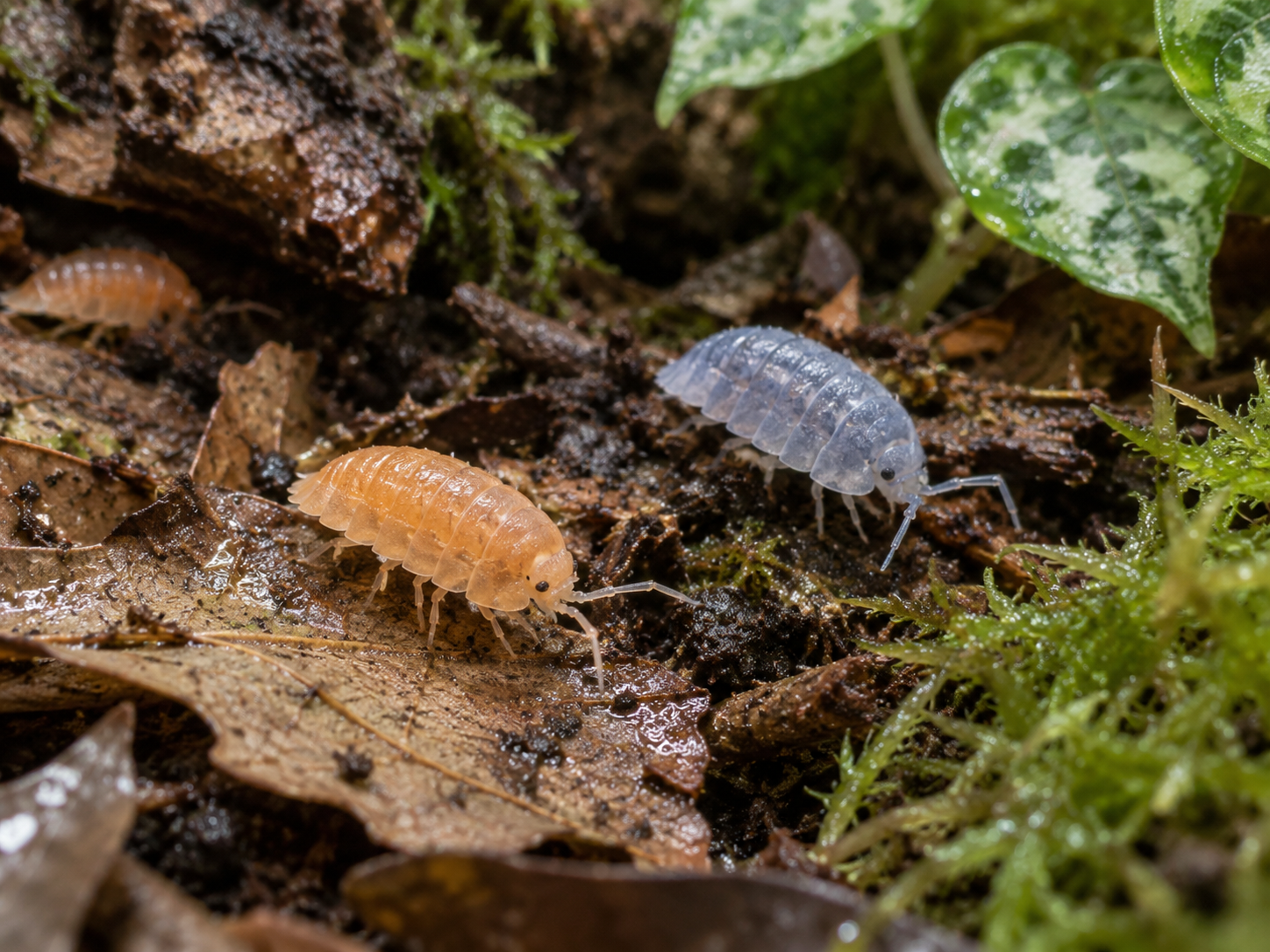
- Powder Orange and Powder Blue isopods are the best all-round cleanup crew for a crested gecko bioactive: fast, humidity-tolerant, and forgiving.
- Always pair isopods with springtails, because springtails graze the mold and fine debris that thrive in a humid crestie tank.
- Cubaris like Panda King add a beautiful display on top of cleanup, though they breed and work more slowly than the Powder species.
- Avoid large, aggressive Porcellio such as Dairy Cow in a small planted crestie tank, because they can nibble tender plants and seedlings.
- Crested geckos will not be harmed by a proper cleanup crew, and most cresties simply ignore the isopods living in their substrate.

Why a Crested Gecko Bioactive Needs a Cleanup Crew
A crested gecko lives in a humid, tropical, planted tank, and that warm dampness is exactly the kind of place where waste and mold pile up fast. The cleanup crew is the team of tiny invertebrates that eats that mess for you. Isopods are the heavy lifters: they break down gecko droppings, shed skin, leftover feeder insects, and decaying wood and leaf litter, then return those nutrients to the soil so your plants can use them.
Isopods do not do it all alone. They handle the larger waste, but they leave behind fine debris and they will not chase down mold, which is the number one problem in a humid crestie viv. That job belongs to springtails, the other half of a good cleanup crew. Together, isopods and springtails keep the tank self-cleaning, which is the whole reason to go bioactive in the first place.
The Best Isopods for Crested Geckos, Ranked
Crested geckos want a humid, planted setup with a smaller bioload than a big lizard, so the best isopods here are the humidity-loving species that stay gentle on plants. Here is the order we reach for most, with honest notes on where each one shines and where it falls short.
- Powder Orange and Powder Blue (Porcellionides pruinosus). The top all-rounder for a crested gecko tank. They are fast, humidity-tolerant, and forgiving, so they establish quickly in a warm, damp, planted viv and keep up with everyday waste without fuss. A reliable first colony for nearly any crestie keeper. Shop Powder isopods.
- Dwarf White (Trichorhina tomentosa). Tiny, humid-loving, and completely safe micro-cleanup under a gecko. They stay small, breed readily in damp substrate, and slip into the soil to clear fine waste, making them a perfect partner alongside the Powder species. They do want it consistently moist, which suits a crestie tank well. Shop isopods.
- Cubaris such as Panda King (Cubaris sp.). A humid-loving display isopod that adds real beauty on top of cleanup. Their bold black-and-white shells stand out against a planted background, so they earn their keep as living decoration as well as janitors. The catch is speed: Cubaris breed and work more slowly, so run them for looks and pair them with a faster crew for the actual heavy lifting. Shop Cubaris isopods.
- Avoid large Porcellio like Dairy Cow (Porcellio laevis). These grow big and eat aggressively, which is a mismatch for a small planted crestie tank. They can nibble tender plants and seedlings and disturb a delicate viv, so save the big Porcellio for sturdier, larger setups and keep your crested gecko tank to the gentler humid species above.
Do You Need Springtails Too?
Yes. In a crested gecko bioactive you want springtails right alongside your isopods, because the two crews do different jobs. Isopods break down the larger waste, while springtails swarm the fine debris and, most importantly, graze on mold before it can take over. In a warm, humid crestie tank, mold is the first thing that appears in a new setup, so springtails are not optional if you want the viv to stay clean.
Skipping springtails is the most common cleanup-crew mistake, especially in humid tanks. The good news is they are easy to add and cheap to keep, and they thrive in the same damp conditions your isopods and gecko already enjoy. Our do isopods need springtails guide covers why the pair works better than either crew alone. Shop springtails.
How Many Isopods to Seed
Start modestly. A single starter culture of isopods, seeded into your crested gecko tank with plenty of leaf litter and a piece of decaying wood, is enough to get a cleanup crew going. You do not need a crowd on day one, because a healthy colony grows into the space on its own over a few weeks.
Give the crew time to establish before the tank carries a full bioload. Set up the viv, add your isopods and springtails, and let them settle in and reproduce for a few weeks while you keep the substrate humid and provide constant leaf litter and rotting wood for them to eat and hide in. One culture is genuinely enough to seed an entire crestie enclosure, so patience beats overstocking. If the tank ever produces more waste than the crew can keep up with, add another culture rather than starting over.
Frequently Asked Questions
What isopods are best for crested geckos?
The best isopods for crested geckos are Powder Orange or Powder Blue (Porcellionides pruinosus), because they are fast, humidity-tolerant, and forgiving in a warm, planted tank. Dwarf White isopods are ideal safe micro-cleanup under a gecko, and Cubaris like Panda King add display color. Avoid large, aggressive Porcellio such as Dairy Cow in a small planted crestie viv.
Can you put isopods in a crested gecko tank?
Yes, isopods are a great addition to a crested gecko tank and are the backbone of a bioactive setup. They break down droppings, shed skin, leftover feeders, and decaying plant matter, which keeps the enclosure clean for you. Choose humid-loving species like Powder and Dwarf White, and pair them with springtails for the best results.
How many isopods for a crested gecko bioactive?
A single starter culture is enough for a crested gecko bioactive. Seed it into the tank with leaf litter and decaying wood, then let the colony establish and grow over a few weeks before the enclosure carries a full bioload. One culture will populate an entire crestie viv, so there is no need to overstock. Add another culture later only if waste outpaces the crew.
Do crested geckos eat isopods?
Some crested geckos will snap up an isopod now and then, but most largely ignore them, and isopods are not a staple feeder for a crestie. Treat the isopods as your cleanup crew rather than a food source. Your crested gecko still needs its normal diet of a quality crested gecko meal replacement powder and appropriate feeder insects.
Will isopods hurt a crested gecko?
No, a proper cleanup crew will not hurt a crested gecko. The humid-loving species recommended here, Powder, Dwarf White, and Cubaris, are harmless to your gecko and simply live in the substrate doing their job. The only caution is avoiding large, aggressive Porcellio like Dairy Cow in a small planted tank, more for the sake of your plants than the gecko.
Do you need springtails too for a crested gecko?
Yes, you should pair springtails with your isopods in a crested gecko bioactive. Springtails handle the mold and fine debris that isopods leave behind, and mold is the first problem to appear in a warm, humid crestie tank. The two crews cover different jobs, so together they keep the enclosure self-cleaning. See our do isopods need springtails guide for more.
Keep comparing: Best Cleanup Crew Isopods· Isopod Care Guide· Do Isopods Need Springtails· Best Isopods for Beginners
