
Do Dubia Roaches Smell?
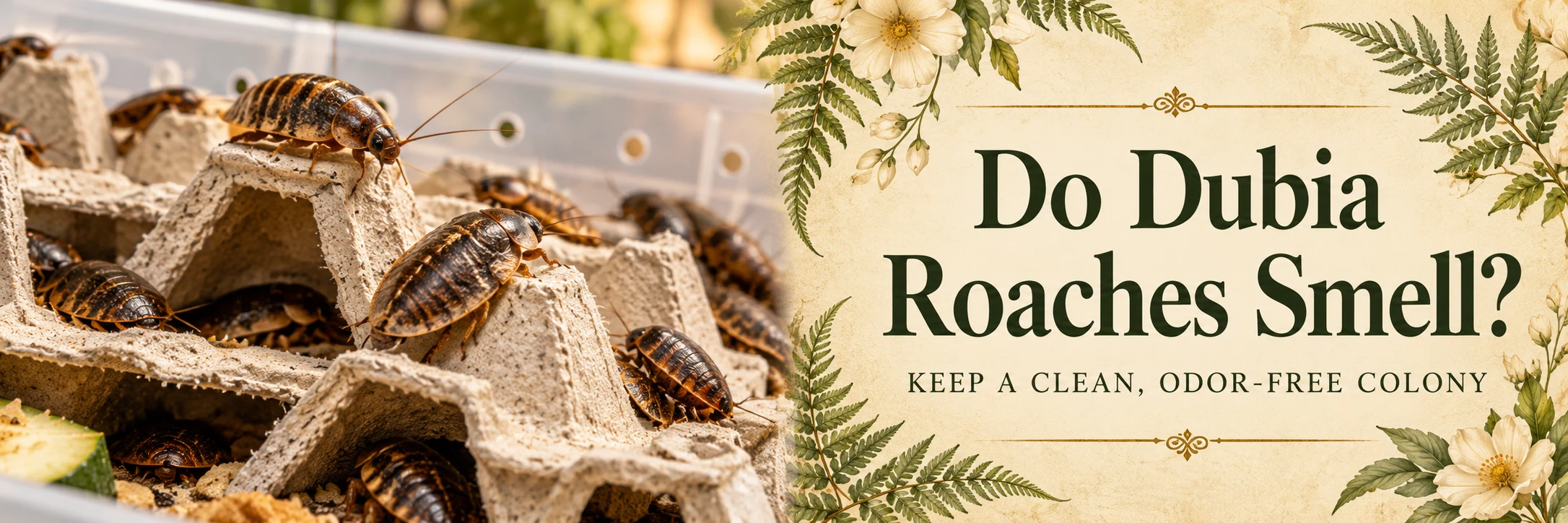
- A healthy dubia roach colony is nearly odorless under normal household conditions.
- Bin odor almost always comes from too little airflow, too much moisture, or leftover wet food, not from the roaches themselves.
- Dubia roaches smell far less than crickets, which are known for a musty odor even when kept clean.
- Removing uneaten wet food and clearing frass every one to two weeks prevents most odor problems before they start.
- Overcrowding traps moisture and waste faster than a colony can handle, so more bin space usually means less smell.
Why This Is the #1 Question Before Buying
Smell is the top hesitation we hear from people considering a bulk dubia colony, and it is a fair question. Nobody wants a smelly bin sitting in a closet or garage. The honest answer is reassuring: dubia roaches themselves do not produce much odor at all. Unlike crickets, which give off a distinct musty smell from their own bodies and waste even in a tidy enclosure, dubia are about as close to a no-smell feeder insect as you can keep.
That said, any bin holding a few hundred or a few thousand live insects, food scraps, and droppings can develop an odor if it is not managed well. The difference is that dubia odor is almost always a sign of something specific and fixable, not a trait of the animal. Once you know what causes it, keeping a colony smell-free is simple maintenance.
The Ranked Fix List: What Actually Causes Smell
Here is the real cause list, ordered by how much impact each one has on bin odor. Start at the top and work down.
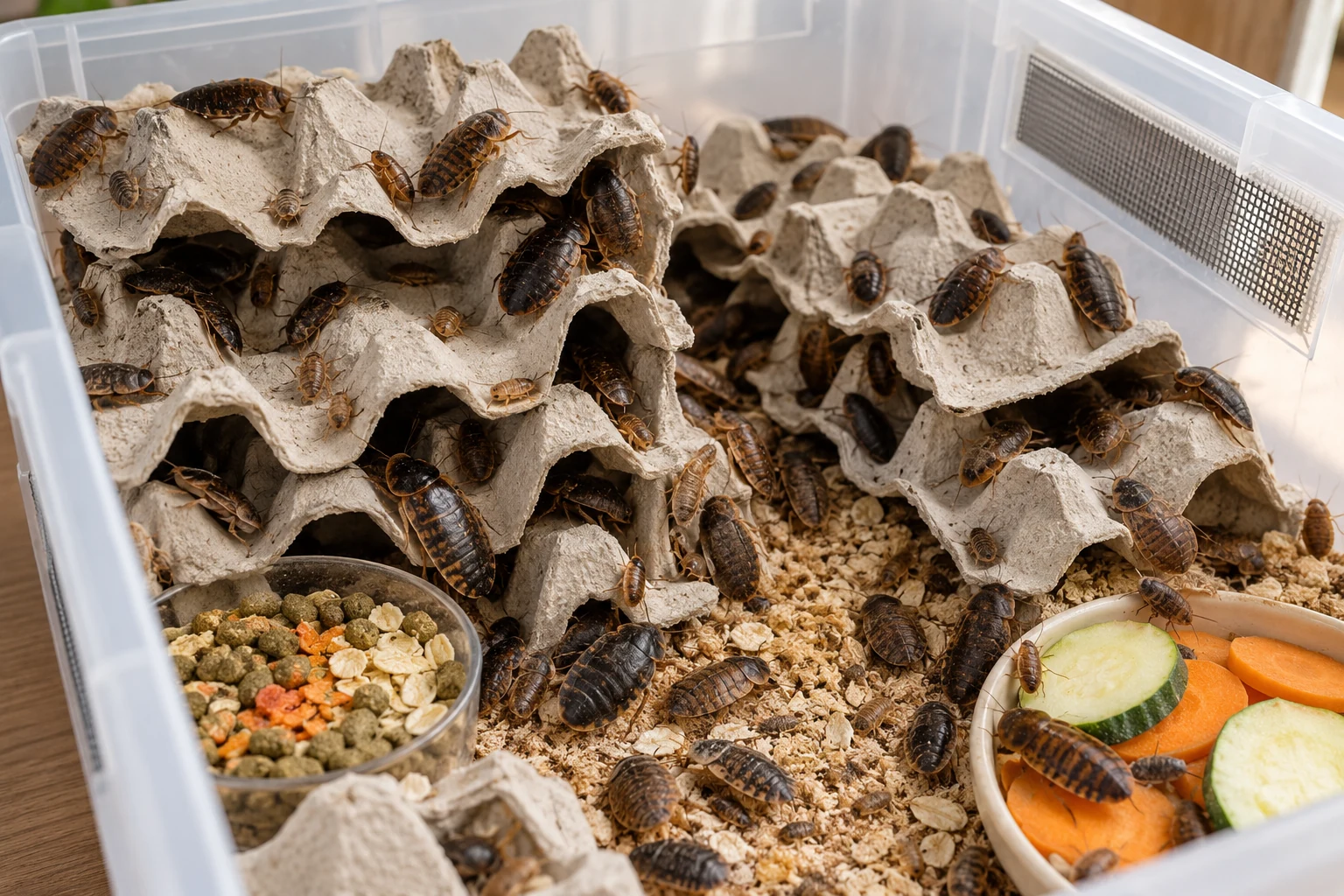
- Ventilation. A sealed or under-vented bin traps humidity and stale air, and that trapped air is the single biggest driver of bin odor. Cross-ventilation and mesh-covered vent holes let moisture and smell escape instead of building up.
- Moisture control. An over-wet bin is the second-biggest cause. Water crystals, damp fruit, or an overflowing water dish keep the substrate soggy, and soggy bedding breeds the bacteria and mold that actually cause bad smells. Bedding should stay dry to the touch with just a little dampness in one corner, never wet throughout.
- Uneaten wet food. Fresh fruits and vegetables left in the bin too long start to rot, and rotting produce is one of the fastest ways to make a bin smell. Pull anything wet or fresh that has not been eaten within about a day or two.
- Frass buildup. Frass (droppings) and shed exoskeletons build up in the substrate over time, and left unmanaged past a normal cleanout cadence they start to smell musty. Clearing it on a regular schedule keeps waste from piling up past what your ventilation can handle.
- Overcrowding. Too many roaches in too small a bin means more waste and moisture packed into less space and less airflow per insect. Give the colony enough floor space and egg-crate surface area, and the same cleaning habits work far better.
Dubia vs Crickets: Not Even Close
If smell is your main worry, dubia roaches are the easier choice by a wide margin. Crickets carry a natural musty odor from their own bodies that shows up even in a freshly cleaned enclosure, on top of any smell from waste or die-off. Dubia do not have that built-in odor. A dubia colony that smells is telling you something about its environment. A cricket container that smells might just be crickets being crickets.
This is genuinely one of the biggest quality-of-life differences between the two feeders for anyone keeping a colony inside the house, and it is a major reason keepers who start with crickets and switch to dubia rarely go back.
How Often You Should Clean the Bin
Cleaning cadence depends on colony size and bin setup, but a general rule works for most home colonies: a light check every few days and a fuller cleanout every one to two weeks.
- Every few days: Remove any uneaten fresh food and refill dry food and water sources.
- Weekly to every two weeks: Sift or scoop out visible frass and shed skins from the substrate, especially in corners where it collects.
- Monthly, or sooner if it smells: Do a deeper substrate check and replace bedding that has gotten damp, compacted, or dark from waste buildup.
Signs Your Colony Needs Attention
A faint, earthy smell from a healthy colony is normal and nothing to worry about. What you are watching for is a shift: a sudden ammonia-like sharpness, a moldy or sour smell, or a persistent dampness you can notice before you even open the lid. Those are signs that moisture, food, or waste has gotten ahead of your cleaning schedule, not signs that something is wrong with the roaches.
Catching it early is easy. Open the bin, check for wet spots or rotting food, and increase airflow or cleaning frequency until the smell settles back down. Most odor issues clear up within a day or two of the fix.

Frequently Asked Questions
Do dubia roaches smell?
No, not when the colony is healthy and well-kept. A properly managed dubia colony is close to odorless, and any bad smell almost always points to too little ventilation, too much moisture, or leftover food rather than the roaches themselves.
Why does my dubia roach bin smell bad?
The most common causes are poor ventilation, an over-wet bin, uneaten wet food left too long, or frass that has built up past your last cleanout. Overcrowding makes all of these worse by packing more moisture and waste into less space. Work through those causes in order and the smell usually clears up fast.
Do dubia roaches smell worse than crickets?
No, it is the opposite. Crickets carry a natural musty odor even in a clean container, while dubia roaches are close to odorless when kept properly. Smell is one of the main reasons keepers switch from crickets to dubia.
How do I stop my dubia colony from smelling?
Improve airflow with a well-ventilated lid, keep the substrate damp in only one small area rather than throughout the bin, and remove any uneaten fresh food within a day or two. Clear out frass and shed skins on a regular schedule and avoid overcrowding, and the smell should settle within a couple of days.
How often should I clean a dubia roach bin?
Do a light check every few days to remove uneaten fresh food, then a fuller cleanout of frass and old bedding every one to two weeks. Larger, well-ventilated bins can often go longer between deep cleans, while smaller or more crowded setups need more frequent attention.
Keep comparing: Why Is My Dubia Colony Dying?· How to Store Dubia Roaches Long-Term· Dubia vs Crickets· How to Stop Dubia Roaches Escaping
