
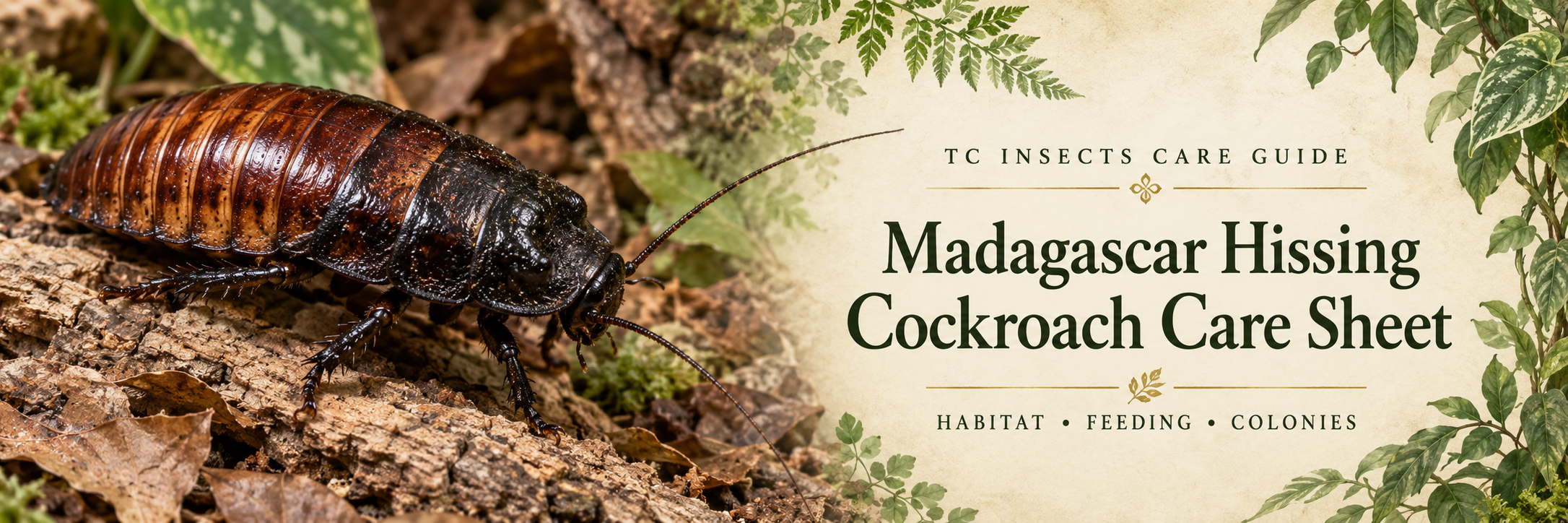
Madagascar Hissing Cockroach Care Sheet
Complete care for the Madagascar hissing cockroach (Gromphadorhina portentosa): an enclosure they cannot climb out of, heat and humidity, a simple fresh-food diet, water without drowned nymphs, how colonies breed, why they hiss, the mites that help rather than harm, the Florida rules, and a troubleshooting chart.
Two to three is typical; five is documented.
Wingless, heavy and slow. Males carry horns.
A classroom favourite. The one real trick is escape-proofing.
Meet the Hissing Cockroach
The Madagascar hissing cockroach is the pet roach, and a long-standing classroom and zoo favourite. Adults are two to three inches long, glossy dark brown with chestnut edges on each segment, completely wingless, and slow and docile enough to hold. They come from the forest floor of Madagascar, where they live in rotting logs and leaf litter.
The hiss is what makes them famous. Crickets make sound by rubbing body parts together; a hisser instead forces air out through breathing pores on its abdomen. Keepers can hear at least three kinds: a startled hiss when disturbed, an aggressive hiss between rival males, and a quieter courtship hiss.
They are harmless to people, with no bite or sting to worry about, and unlike most pet invertebrates they live happily in a group. We sell them as pets and as large feeders, so this sheet is about keeping a colony that thrives.
What You Will Need
Everything here is inexpensive. The item that makes or breaks a hisser setup is the escape barrier.
Conditions at a Glance
The whole environment on one card.
| Parameter | Target | Notes |
|---|---|---|
| Enclosure | 10 to 20 gallons for a small colony | Floor space and hides matter most |
| Temperature | 75 to 90 F | A cool room usually needs a heat source |
| Humidity | About 60 to 70 percent | Enough for clean molts, never soggy |
| Water | Water crystals or a damp sponge | Nymphs drown in open dishes |
| Diet | Fresh produce plus dry protein | No citrus |
| Escape-proofing | Barrier band plus a secure lid | They climb smooth glass |
| Colony | Groups are natural | Males spar, rarely with injury |
An Enclosure They Cannot Climb Out Of
The most common mistake with hissers is assuming a smooth glass tank will hold them. It will not. Hissing cockroaches have adhesive pads on their feet and walk straight up glass and plastic. Wipe a two to three inch band of petroleum jelly, mineral oil or a purpose-made insect barrier around the inside of the rim, refresh it when it dulls, and keep a secure, ventilated lid on top as a backup.
A 10 to 20 gallon tank suits a small colony. Give them a few inches of coco fiber or a coco and soil mix, plus plenty of hiding places: cork bark, egg crate, or pieces of rotting wood that echo the logs they live in. Aim for moderate ventilation that lets stale, damp air out without drying the colony.
Heat, Humidity and Water
Keep the colony warm, roughly 75 to 90 degrees, with humidity around 60 to 70 percent. In a cool room that usually means a heat source on a thermostat along one side, which also gives the roaches a choice of temperatures. Enough humidity matters for molting; a nymph in a dry tank can get stuck partway out of its old skin.
Skip the open water dish. Newborn nymphs drown in even shallow standing water. Use water crystals, or a sponge or cotton ball soaked in water in a shallow dish, and remember that fresh produce supplies a lot of their water too.
Feeding
Hissers are omnivorous scavengers and easy to feed. Fresh fruit and vegetables such as carrot, apple, leafy greens and squash make up most of the diet, with a dry protein source alongside; a commercial roach chow works well. Avoid citrus, which is too acidic for the colony.
Offer fresh food in amounts the colony finishes in a day or two, and remove leftovers before they mould. Overfeeding is the root of most hisser problems: uneaten produce feeds mould, raises humidity, and lets mite numbers climb. Our Madagascar hissing cockroach listing covers sizes from single nymphs to groups of 250.
| Routine | How Often | Why It Matters |
|---|---|---|
| Fresh produce | What the colony finishes in 1 to 2 days | Leftovers mould and feed mites |
| Dry protein food | Keep a little available | Balances a produce-based diet |
| Water crystals | Top up before they run out | No open water for nymphs |
| Barrier band | Refresh when it looks dull or dusty | Stops glass climbing |
| Old food and waste | Clear out regularly | The main source of smell, mould and mites |
Everything a hissing cockroach keeper needs from this guide. Untick anything you already have, then add the rest in one click.
Colonies, Breeding and the Hiss
Hissers are naturally gregarious, and a colony has real social structure. A dominant male will often hold a favourite piece of bark as his territory for months, defending it with hissing and horn-butting contests. It looks dramatic, but these fights are largely ritual and rarely cause injury, so no action is needed.
Telling the sexes apart is easy on adults. Males have two raised horn-like bumps on the shield behind the head and thicker, hairier antennae; females have a smooth shield and smoother antennae.
Breeding is unusual too. A female forms her egg case, then pulls it back inside her body, so the eggs hatch internally and she appears to give birth to live young, commonly around 20 to 60 nymphs at a time. Mother and nymphs often stay close together for a while afterward. A well-kept mixed colony will grow steadily without any help from you.
The Mites Are Friends
Small tan mites clustered around the legs of hissers alarm a lot of new keepers. They are Gromphadorholaelaps schaeferi, a mite that lives only on hissing cockroaches, and they do not harm the roaches or live on or bite people. Studies showed they do not drink the roach's blood, as was once believed; they share its food, and published research suggests they benefit the roach by cleaning up mould-prone debris.
Mite numbers follow food and moisture. If they explode, the fix is not a pesticide but better housekeeping: feed a little less at a time, remove old produce sooner, and clean out waste more often.
Florida and Other Rules
Within the continental US, hissing cockroaches are widely kept and sold as pets. Florida is the important exception. Its agriculture department names this species in its import guidelines: ordinary keepers may be approved for adult males only under a conditional permit with a security plan, groups of both sexes, meaning breeding colonies, are restricted to institutions such as zoos, and commercial distribution is not approved.
You will often read that hissers are simply banned in Florida. The actual rule is more specific than that, but for a Florida hobbyist the practical result is similar: no breeding colony, and a permit before any hissers at all, so check with FDACS first. We do not ship hissing cockroaches to Florida at all. Hawaii restricts live insects broadly, and we do not ship live animals to Hawaii or Alaska.
Health and Troubleshooting
Hissers are tough. Nearly every problem below comes from escapes, standing water, or too much food.
| What You See | Most Likely Cause | What To Do |
|---|---|---|
| Roaches found outside the tank | They climbed the glass | Refresh the barrier band; secure the lid |
| Drowned nymphs | An open water dish | Switch to water crystals or a damp sponge |
| Mould on food or substrate | Leftover produce and excess moisture | Remove old food sooner; feed less at a time |
| Mites multiplying fast | Excess food and moisture | Clean more often; feed smaller amounts |
| Pale, soft, inactive roach | Freshly molted | Normal; leave it undisturbed for a day or two |
| Nymph stuck in its old skin | Enclosure too dry | Raise humidity slightly; never pull the skin |
| One male chasing and hissing at others | Normal territorial behaviour | No action unless you see real injury |
| Strong smell | Old food and waste building up | Clear out waste and refresh the substrate |
Madagascar Hissing Cockroach FAQ
Keep reading: whether they suit a child.
Starting a Hisser Colony?
Tell us whether you want pets, a breeding colony or large feeders, and we will help you pick the right mix. Real keepers answer our email.
TC INSECTS · Husbandry guidance from the people who raise the feeders · Porter, Texas
