
Red Pak Chong Isopods for Sale
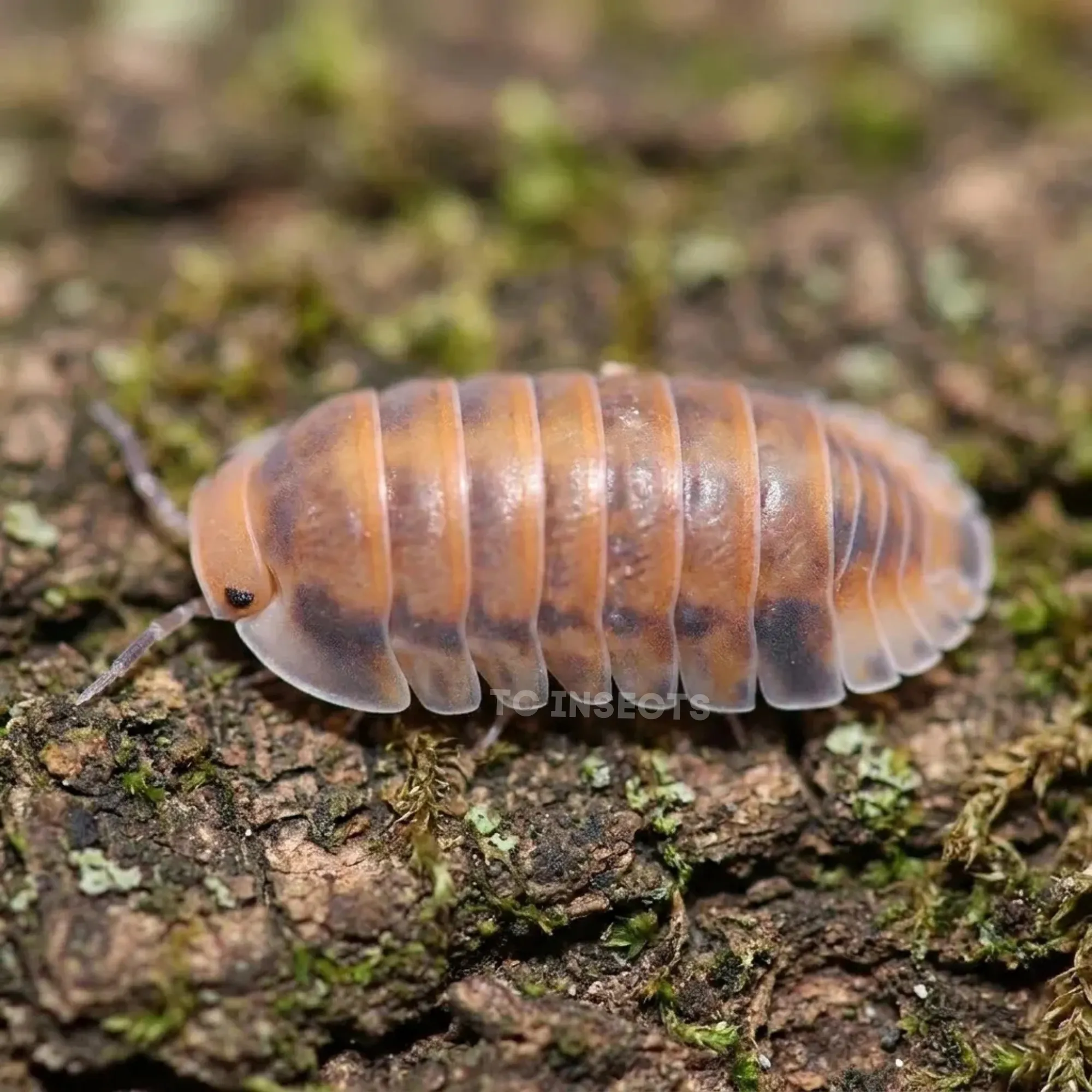
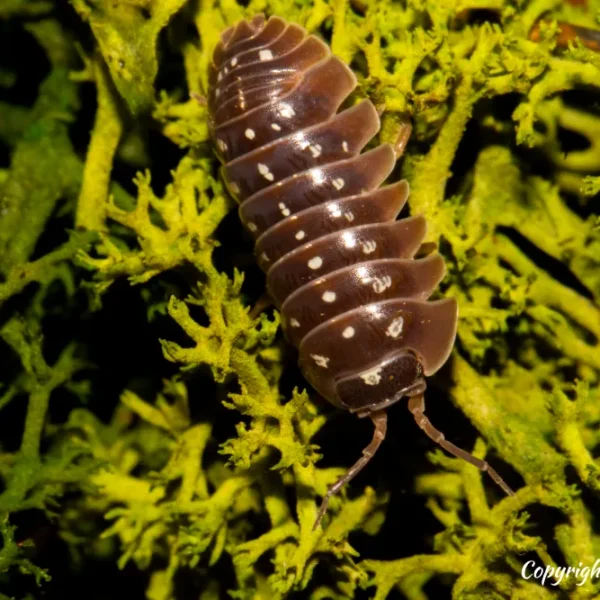
Cubaris sp. “Red Pak Chong” is a tricolor Thai Cubaris sold for its dark body, pale side frills, and red-orange face and rear markings. The contrast is the entire reason hobbyists buy this culture, so the page below treats it as a display and breeding animal rather than a cleanup workhorse.
Each starter culture ships as a mixed-age group so the colony can establish at its own pace. Because the species is sold under an unconfirmed designation tied to a real Thai locality, the page covers practical captive care alongside what is and is not documented about the hobby line.
Overview
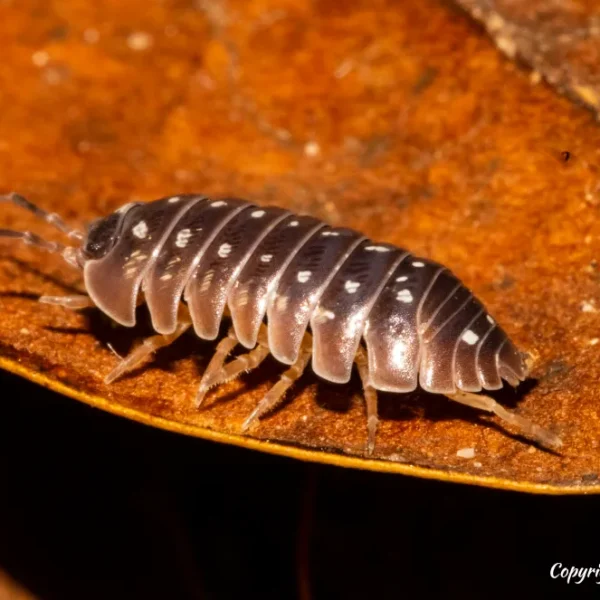
Red Pak Chong carries three visible color zones on each adult: a dark blue-gray body, pale lateral frills along the side plates, and red-to-orange markings on the face and rear segments. As a result, individuals photograph well against cork bark, dark substrate, and moss.
However, the colony is not a fast cleanup crew. Expect a slow first stretch after arrival, followed by steady growth once humidity and airflow are dialed in. Treat them as a display and breeding project rather than a bioactive seed culture.
Why Keep Red Pak Chong Isopods?
- Tricolor contrast: Dark body, pale side frills, and red-orange face and rear markings on the same animal.
- Display value: Reads well in clear culture jars and photographs cleanly against cork bark.
- Thai Cubaris collection: Adds a Pak Chong-region line to a regionally focused isopod lineup.
- Moderate breeding: Colony grows at a steady pace once humidity and ventilation are balanced.
- Curl response: Tight conglobation makes them easy to photograph in their classic rolled pose.
Honest Note on Humidity and Ventilation
This is the single most common care failure with Red Pak Chong. The species needs medium-high to high humidity, but it also needs strong ventilation. Sealed soggy bins cause sour substrate, mold blooms, and colony collapse faster than dry conditions do. Therefore, plan the setup around a mesh-lid or large-vent-area enclosure with a moist moss retreat on one side, not a sealed shoebox with damp substrate everywhere.
A Springtail co-culture helps stabilize the airflow-plus-humidity balance by managing mold before it spreads.
Honest Note on the “Red Pak Chong” vs “Pak Chong” Name
The “Red Pak Chong” name is a hobby trade designation describing the red-orange marked form within Pak Chong-region Cubaris stock. It is not a separate species from Cubaris sp. “Pak Chong”. Naming varies between sellers and culture lines, so keep your own culture labels consistent and treat both as Pak Chong-type Thai Cubaris in care.
Honest Note on Species Identification
This isopod is sold as Cubaris sp. “Red Pak Chong” because the exact species is not formally described. The name should be treated as a hobby trade designation linked to a real Thai region rather than a confirmed species name. Because of this, the page below focuses on practical captive care rather than detailed wild-locality claims.
Care and Setup
Red Pak Chong does best in a humid, well-ventilated enclosure with a clear moisture gradient. The subsections below cover the core requirements.
Temperature
Hold the enclosure between 72 and 78°F. Cold drafts and heat spikes both stall the colony, so steady room-temperature conditions usually work best. Avoid heat lamps directly on the bin and sunlit windows.
Humidity
Aim for medium-high to high humidity overall. However, the moisture should come from a damp moss retreat and lightly moist substrate, not from a sealed environment with no airflow. Heavy condensation that never clears is a warning sign.
Ventilation
This is the husbandry pivot for Red Pak Chong. Use a partial mesh lid or large vent area so air moves through the enclosure without drying the moist side. As a result, the culture can hold high humidity without souring. Sealed bins are the most common reason hobby Pak Chong colonies fail.
Substrate
Use a deep organic substrate at least 2 to 3 inches thick. Mix in decaying hardwood, leaf litter, and a small amount of sphagnum. In addition, calcium-rich additions like crushed cuttlebone work into the substrate well for Pak Chong-type Cubaris.
Food
Offer leaf litter and decaying wood as the base diet. Add small portions of TC INSECTS Isopod Food, occasional vegetables like squash or carrot, and light protein. Remove uneaten wet food before it molds because the humid setup will fail it fast.
Calcium
Keep calcium available at all times. A small dish of TC Calcium Ultra Fine or crushed cuttlebone supports healthy molts. Pak Chong-type Cubaris are known for benefiting from steady calcium access, which shows up in cleaner molts and better juvenile survival.
Bioactive Use
Red Pak Chong can support a humid bioactive enclosure once the colony is established. However, give the culture at least a few weeks before introducing it to a larger reptile or amphibian setup, and keep a backup bin running on the side.
Breeding Notes
Red Pak Chong breeds at a moderate pace once stable. Females carry developing young in a marsupium, and mancae stay tucked under bark and leaf litter for weeks after release. Therefore, deep substrate digs are the fastest way to stall a colony.
For steady output, hold humidity and ventilation balanced together, keep TC INSECTS Assorted Hardwood Leaf Litter available year-round, and refresh decaying wood as it breaks down. In addition, start a backup culture as soon as the main bin is producing juveniles. This is a smart habit for any Pak Chong-line Cubaris.
Best For
- Cubaris collectors building a Thai or Pak Chong-region lineup
- Display cultures kept in clear bins or jars
- Photographed culture content where contrast matters
- Intermediate keepers who can manage humidity and ventilation together
- Long-term breeding projects focused on Pak Chong-type lines
Not Best For
- New keepers who want a fast, forgiving starter culture
- Sealed soggy bins with no airflow
- Dry desert-style enclosures with no humid retreat
- Use as a feeder insect
- Heavy cleanup crew duty in large reptile enclosures
Origin and Locality Notes
Cubaris sp. “Red Pak Chong” is commonly associated with Pak Chong, a district in Nakhon Ratchasima Province, Thailand. Hobby sources describe Pak Chong-type Cubaris as Thai isopods connected with limestone karst, caves, and protected humid microhabitats. As a result, captive care leans on stable warmth, humidity, calcium access, and secure cover.
However, “Red Pak Chong” remains a hobby trade name, so the exact wild collection details and taxonomy should be treated carefully. The captive care above is based on general Pak Chong-style Cubaris husbandry rather than any specific verified collection point.
Receiving and Acclimation
Open the package promptly when it arrives. Many isopods will tuck into moss, paper, or substrate during shipping, so check the packing material carefully before assuming any are missing. Curled or slow-moving isopods after transit are normal and usually recover within a day.
Prepare the enclosure ahead of delivery, with the moist moss retreat, leaf litter, cork bark, calcium, and vented lid already in place. Place the shipping cup or packing material directly into the prepared bin near the moist side and let the isopods walk out on their own. Feed lightly for the first few days and avoid digging through the culture while it settles.
Recommended Add-Ons
- TC INSECTS Ultra Isopod Habitat Kit for a richer, more stable Pak Chong-tier setup from day one.
- TC INSECTS Assorted Hardwood Leaf Litter for cover, food, and humidity buffering.
- TC INSECTS Isopod Food for varied nutrition beyond leaf litter alone.
- TC Calcium Ultra Fine for cleaner molts and stronger juvenile survival.
- Springtails for mold control, which is critical in the high-humidity plus high-airflow setup Red Pak Chong needs.
Frequently Asked Questions
Are Red Pak Chong isopods beginner-friendly?
They sit at intermediate care. The species is not extremely difficult, but the humidity-plus-ventilation balance trips up most new keepers. For a more forgiving starter Cubaris, Cubaris murina “Anemone” is a better fit.
Are Red Pak Chong the same as Pak Chong isopods?
They are the same Pak Chong-region line, but “Red Pak Chong” refers to the red-orange marked form within Pak Chong-type Cubaris stock. Care is broadly identical to other Cubaris sp. “Pak Chong” lines. Naming varies between sellers, so keep your own culture labels consistent.
Why is ventilation so important for this species?
High humidity in a sealed bin causes sour substrate, mold, and colony collapse. Pak Chong-type Cubaris are linked to humid but breathable karst microhabitats, so the captive setup should mirror that with a vented lid and a moist retreat on one side. This balance is harder to dial in than humidity alone, which is the real reason this species sits at intermediate care.
How fast do Red Pak Chong isopods breed?
Reproduction is moderate once stable. Expect a slow first month while the colony settles, then steady growth. Frequent substrate digs and the wrong humidity-plus-ventilation balance are the most common reasons hobby colonies stall.
How does Red Pak Chong compare to other Cubaris in the catalog?
Red Pak Chong is the tricolor Thai option. Cubaris Amber trades that for warm honey-tan single color, Cubaris White Panda trades it for sharp white-and-dark contrast with slower breeding, and Cubaris murina “Anemone” trades it for a mottled color spread with faster, more beginner-friendly care.
Can Red Pak Chong live with reptiles or amphibians?
Yes, if the host enclosure holds stable tropical humidity with real airflow and includes leaf litter and bark cover. However, give the Pak Chong colony several weeks in its own culture first, and keep a backup bin so the cleanup population can be refreshed if a hungry herp clears them out.
Learn More About Thai Cubaris and Karst Isopods
The following non-commercial references give helpful background on the karst and cave-associated terrestrial isopod ecology that the Pak Chong-type hobby lines are tied to.
- U.S. National Park Service: Crustaceans at Carlsbad Caverns. Background on cave-associated terrestrial isopods and the humid, protected microhabitats they depend on, which is directly relevant to the karst microhabitats Pak Chong-type Cubaris are linked to.



Reviews
There are no reviews yet.