

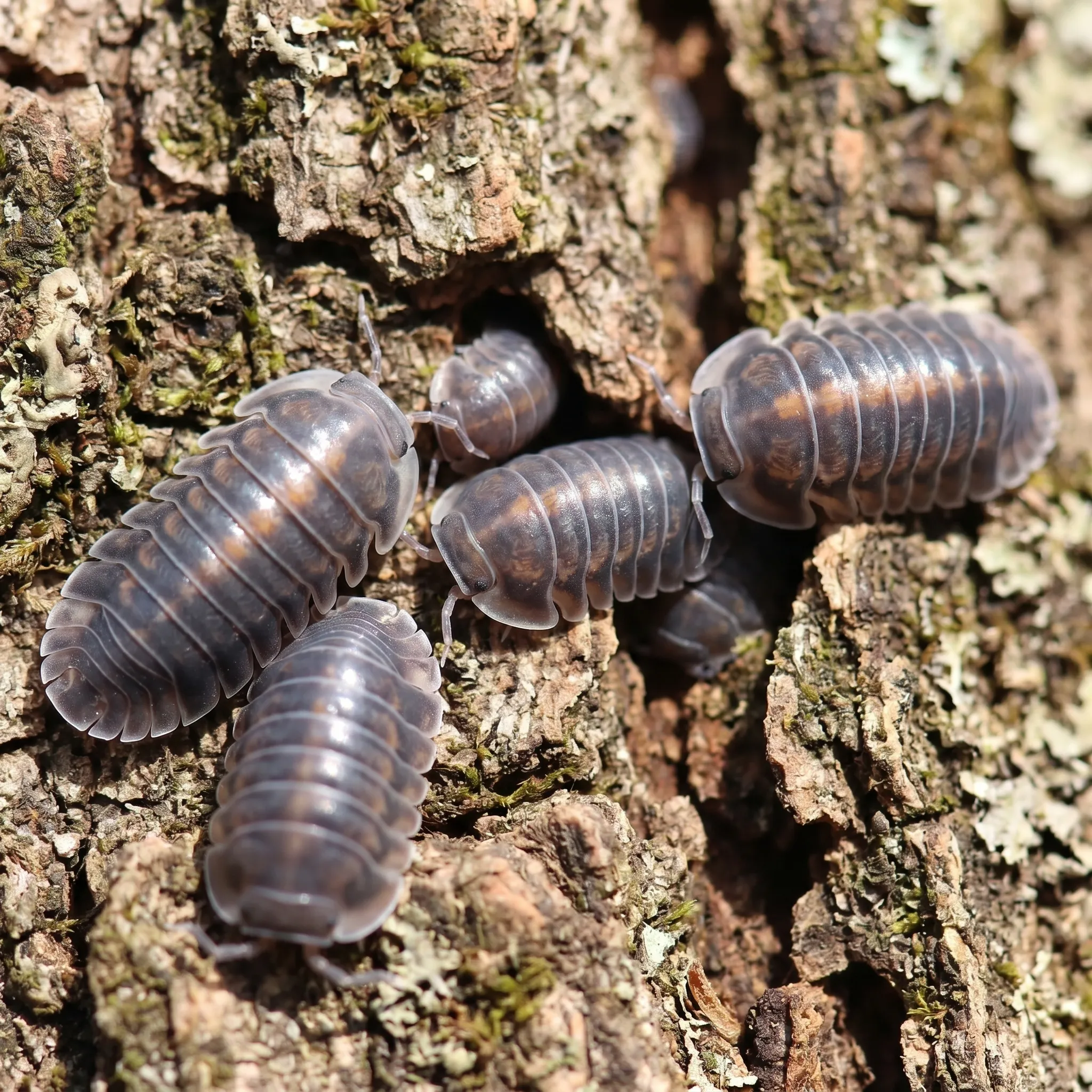
Happy Nun Isopods for Sale
Cubaris sp. “Happy Nun” is a Thai Cubaris with a dark gray to black base, white cheek patches, and white skirt around the body edge. The morph name comes from the white facial markings, which evoke the look of a nun’s
habit on a round Cubaris face. Individual animals show variable bronze and copper translucent markings between the dark plates, which creates real visual variation across a single culture. Adults reach 10 to 15 mm and roll
into a ball when disturbed. Compared to most Cubaris, Happy Nun is more active and visible during daytime and evening hours.
Overview
Happy Nun sits in the mid-low pricing tier of Cubaris collector morphs. The combination of an uncommon coloration pattern (dark base with white face markings), variable bronze accents that differ between individuals,
and a more day-active behavior profile makes this a useful display Cubaris for keepers who want their pods visible rather than hidden under cork bark.
This is a display and breeding species first. However, Happy Nun is one of the more capable Cubaris for gentle bioactive support since the higher activity level means more visible grazing on leaf litter and detritus. Like most
collector Cubaris, the breeding pace and price keep them out of working cleanup duty in busy reptile enclosures.
Why Keep Happy Nun Isopods?
- Distinctive nun-pattern coloration. The dark gray to black base combined with white cheek patches and white skirt is uncommon in the Cubaris hobby and creates immediate visual recognition.
- Variable bronze and copper accents. Individual animals show different amounts of translucent bronze marking between the dark plates, which gives each culture genuine visual variety.
- Higher day activity. Hobby reports describe Happy Nun as more active and visible than most Cubaris, with substantial activity during twilight and night hours. This is one of the few Cubaris where regular surface sightings are normal.
- Manageable intermediate care. Happy Nun handles parameter swings better than advanced-tier Cubaris like Emperor Bee, which makes it a useful step up from Mamey or the Ducky family.
- Pairs cleanly with Springtails. A shared springtail population helps manage surface mold and supports a steadier humid microclimate.
Honest Note on Coloration Variability and Care Difficulty
Three things buyers should know up front. First, the bronze and copper translucent markings vary significantly between individual Happy Nun animals. Some animals will show heavy bronze patterning that nearl
y outshines the dark base color, while others show almost no bronze and read as predominantly dark gray with the white cheeks and skirt. The skirt color itself can range from matching the dark base to a light tan tone. This
variation is normal for the morph and is not a quality issue. A mixed culture will produce animals across the full range.
Second, the name “Happy Nun” comes from the white cheek patches and white skirt, which together evoke the look of a nun’s habit framing a face. The “happy” part references the typical rounded Cubaris face that many
keepers describe as a duck-like or smiling shape. Once you see the markings in person, the name makes immediate sense.
Third, care difficulty reporting varies across sources. Most US breeders describe Happy Nun as easier than typical Thai Cubaris, with Isopod Factory specifically calling them “great for the sub-tropical to tropical terrarium”
thanks to their variable color patterns and overall ease of care. UK breeder Richards Inverts is the outlier and rates them at “high” difficulty. The honest middle ground is intermediate. Treat Happy Nun as more
approachable than Emperor Bee or Orange Freezy but not as forgiving as Mamey or Porcellionides pruinosus workhorse species.
Care and Setup
Happy Nun responds well to a stable humid Cubaris setup. The goal is steady moisture, soft cover, reliable calcium access, and a moisture gradient that supports the higher activity level.
Temperature
Aim for 72 to 78 F. Room temperature in most homes is fine. However, avoid sustained heat above the low 80s, sudden cold drops below the upper 60s, and any heat source in direct contact with the bin.
Humidity
Keep humidity moderate to high with a clear moisture gradient. One side of the bin should stay consistently moist with sphagnum moss or hydrated substrate. The opposite side should run slightly drier with leaf litter cover and a small dry feeding area. Stagnant wet air encourages mold and mites, so balanced airflow matters as much as moisture itself.
Substrate
Use a deep organic mix with coconut fiber, flake soil, sphagnum moss pockets, and broken-down hardwood. Substrate depth around 2 to 3 inches works well. Additionally, scattered limestone or cuttlebone pieces give the colony a direct calcium-grazing surface. Hobby sources report Happy Nun as particularly fond of limestone, which mirrors the rocky areas they reportedly occupy in the wild.
Food
Leaf litter and decaying hardwood form the dietary base. Supplement with TC INSECTS Isopod Food a couple of times per week, plus small portions of vegetables and a light protein item such as fish flake or freeze-dried shrimp. Feed messier foods on the drier side of the bin to reduce spoilage. Remove uneaten food before it molds.
Ventilation
Moderate ventilation works best. Stagnant air encourages mites and sour substrate. Too much airflow dries the bin and stresses the colony. The higher activity level of Happy Nun means you may see them on the surface more often, so a clean visible bin matters more for display purposes than with reclusive Cubaris.
Bioactive Use
Happy Nun performs reasonably well as a gentle bioactive participant thanks to the higher activity level. However, the moderate breeding pace and collector-tier price still place Happy Nun below workhorse species like Powder Orange or Dwarf Whites for heavy cleanup duty. Use them as a visible accent layer in display vivariums.
Breeding Notes
Production is moderate once a culture settles. Founder groups commonly go through a quieter first month while the colony establishes, then begin producing manca and small juveniles in the leaf litter and substrate. Hobby
sources describe Happy Nun as producing medium-sized broods on a fairly regular basis once established, which is faster than slow collector Cubaris but well below workhorse pod rates.
Calcium access matters during this phase. A pinch of TC Calcium Ultra Fine dusted lightly over a feeding area every couple of weeks supports molting and brood development. For long-term line preservation, consider
running a backup culture as soon as the founder group is producing well.
Best For
- Intermediate Cubaris keepers stepping up from beginner morphs like Mamey or the Ducky family.
- Display vivariums where day activity and a visible Cubaris are valued.
- Collectors who want a Thai Cubaris with truly unique coloration not represented by the bee-pattern or Ducky-family morphs.
- Keepers who enjoy individual color variation within a culture rather than uniform-looking animals.
Not Best For
- Buyers wanting identical-looking animals. Bronze marking variability is normal.
- Buyers without prior isopod experience. Start with Porcellionides pruinosus morphs or Mamey first.
- Co-housing with other Cubaris morphs. Mixed bins make line preservation impossible.
- Feeder use. The collector-tier price makes them impractical as reptile food.
- Heavy-duty cleanup duty in large bioactive enclosures.
Origin and Locality Notes
Happy Nun is consistently associated with Thailand in the hobby trade. Cross-source reporting (Pangea Reptile, Richards Inverts, Holy-Poly Isopods, Isopod Factory, Tropical Isopods, isopod.com, and several other
breeders) all agree on Thailand as the origin, though exact wild collection locality is not formally documented. Hobby sources also note that Happy Nun reportedly occupies cave and rocky-area microhabitats in the wild,
which aligns with the species’ strong calcium preference in captivity. The “Cubaris” genus assignment is hobby shorthand and may be revised as taxonomy in this group continues to be reviewed.
Receiving and Acclimation
Open the package indoors in a calm, temperature-stable area away from direct sun, heat sources, and cold drafts. Animals may stay still or roll into a defensive ball when stressed after shipping. This is normal stress
response and does not indicate the animals are dead. Transfer the animals and any included moss or shipping debris directly into a pre-prepared bin with deep moist substrate, leaf litter, multiple cork bark hides, calcium,
and a damp moss retreat already in place.
Plan for a quiet first week to two weeks. Even though Happy Nun is more day-active than most Cubaris once settled, new cultures stay hidden under cover during the establishment period. Hydrate the moist side as needed,
offer only a pinch of food, and let the colony come to the surface on its own schedule. Once they begin surface-grazing regularly, you can shift to a normal feeding routine.
Recommended Add-Ons
- TC INSECTS Isopod Habitat Kit for a balanced starter setup suited to intermediate Cubaris cultures.
- TC INSECTS Isopod Food for a balanced supplemental diet that supports molting and the moderate breeding pace.
- TC INSECTS Assorted Hardwood Leaf Litter for grazing surface, juvenile cover, and a slow-release organic food source.
- TC Calcium Ultra Fine for steady calcium access during molts and brood development.
- Springtails for shared bin use to help control surface mold during the slow startup phase.
Frequently Asked Questions
Where does the “Happy Nun” name come from?
The name comes from the white cheek patches and white skirt around the body edge, which together evoke the look of a nun’s habit framing a face. The “happy” part references the typical rounded Cubaris face that many keepers describe as a duck-like or smiling shape. The name is one of the more visually accurate hobby trade names in the Cubaris world.
Why do Happy Nun Isopods look different from each other within the same culture?
Individual color expression varies significantly across the morph. Some animals show heavy bronze and copper translucent markings between the dark plates, while others show almost no bronze and read as predominantly dark gray with the white markings. The skirt color can range from matching the dark base to a light tan tone. This variation is normal and is part of what gives Happy Nun cultures genuine visual interest. Mature adults usually show stronger markings than juveniles.
Are Happy Nun Isopods beginner-friendly?
They sit at the intermediate level. Most US hobby sources describe Happy Nun as easier than typical Cubaris collector morphs, while some UK sources rate the difficulty higher. The honest middle ground: easier than Emperor Bee or Orange Freezy, but still requires a working knowledge of humid-Cubaris husbandry. Beginners should establish a forgiving culture such as Porcellionides pruinosus morphs or Mamey first.
Will I see Happy Nun Isopods during the day?
Probably yes, once they settle. Hobby sources consistently describe Happy Nun as more active and visible than most Cubaris, with substantial activity during twilight and night hours. Daytime grazing on leaf litter and surface activity around feeding zones are normal. However, expect more hiding during the first one to two weeks after shipping while the colony establishes.
How fast do Happy Nun Isopods breed?
Moderate once established. Founder groups often need a month or two before producing visible juveniles, then build toward producing medium-sized broods on a fairly regular basis. The breeding rate is faster than slower collector Cubaris like Emperor Bee but well below workhorse species like Powder Orange.
Why do Happy Nun Isopods roll into a ball?
The rolling behavior is called conglobation. It serves as a defensive response to disturbance and may also help reduce water loss in dry conditions. Peer-reviewed research on related conglobating pillbugs has shown that the rolled posture can decrease water loss rates by roughly a third in low-humidity conditions, alongside its better-known role in predator defense.
Learn More About Cubaris and Terrestrial Isopod Behavior
The following references give keepers useful background on the Cubaris genus taxonomy, terrestrial isopod biology, and the conglobation defense behavior that defines pillbug-style isopods like Happy Nun.
-
ITIS: Cubaris Brandt, 1833 Genus Report. The Integrated Taxonomic Information System record for the Cubaris genus that Happy Nun belongs to, maintained by an international consortium of taxonomic authorities. Useful background for keepers who want to confirm the genus placement and access linked species records.
-
Clemson University Home and Garden Information Center: Sowbugs and Pillbugs. A university extension factsheet covering basic terrestrial isopod biology, moisture dependence, and natural habitat structure. Useful background for keepers building a baseline husbandry framework that applies to any Cubaris culture.
-
Journal of Insect Science (NCBI PMC): Conglobation in Armadillidium vulgare as a Water Conservation Mechanism. A peer-reviewed paper documenting how the rolling-into-a-ball behavior (conglobation) helps terrestrial pillbug isopods conserve water in low-humidity conditions, alongside its better-known role in predator defense. Useful biological context for understanding why Happy Nun rolls up when handled or stressed.

Reviews
There are no reviews yet.