
Springtail All-Star Collector Pack for Sale
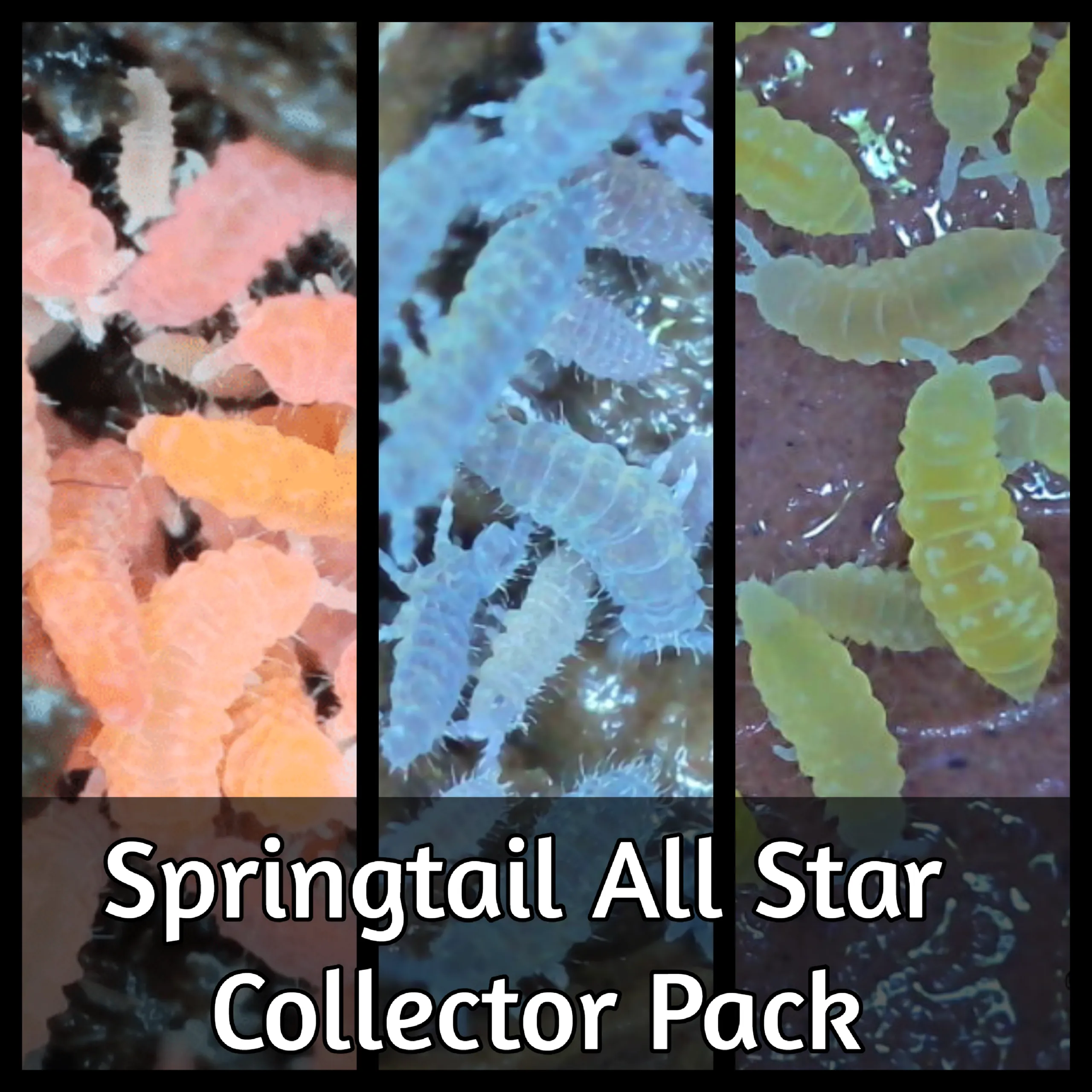
The All-Star Collector Pack is the TC INSECTS bundle for keepers who want three colorful springtail cultures at a discounted bundle price. Unlike the mixed-cup combos that blend two species in one culture, this pack ships three separate live cultures so each color line stays preserved and identifiable. The pack includes Purple springtails, Florida Orange springtails (Yuukianura aphoruroides), and Yellow Albino springtails (Ceratophysella sp.). As a result, customers get genuine collector variety without paying full retail for each culture individually.
TC INSECTS sells this pack for hobbyists building a colorful springtail rack, expanding existing collections, or starting multiple bioactive cultures from one purchase. One honest note up front: this is a collector pack, not a high-production cleanup bundle. The three species are bought for variety, color, and culture diversity rather than for raw cleanup output.
What You Get
- Three separate live springtail cultures, one of each color line
- Purple springtails, Florida Orange springtails, and Yellow Albino springtails
- Quantity options: 10, 20, 40, or 100 of each species
- Each color line is shipped in its own culture, so lines stay preserved
Why Buy the Collector Pack Instead of Three Separate Cultures
Three real reasons:
- Discounted bundle pricing. The All Star Pack costs less than buying Florida Orange springtails and Yellow Albino springtails at full price as separate orders, plus the Purple culture, which sells primarily through this pack.
- Three color lines in one purchase. Customers get purple, orange, and yellow springtails in one order. As a result, this is the fastest way to build a colorful collector culture rack.
- Each culture stays separate. Unlike mixed-cup combos, the All-Star Pack ships three distinct cultures. Color lines stay identifiable for breeding, harvesting, and display purposes.
About the Three Species
Purple Springtails
A colorful collector springtail with a purple, lilac, or dark violet body tone depending on lighting, culture density, and age. The visual color reads stronger against pale culture media or dark substrate backgrounds. Useful in bioactive setups and as a dedicated collector culture.
Florida Orange Springtails (Yuukianura aphoruroides)
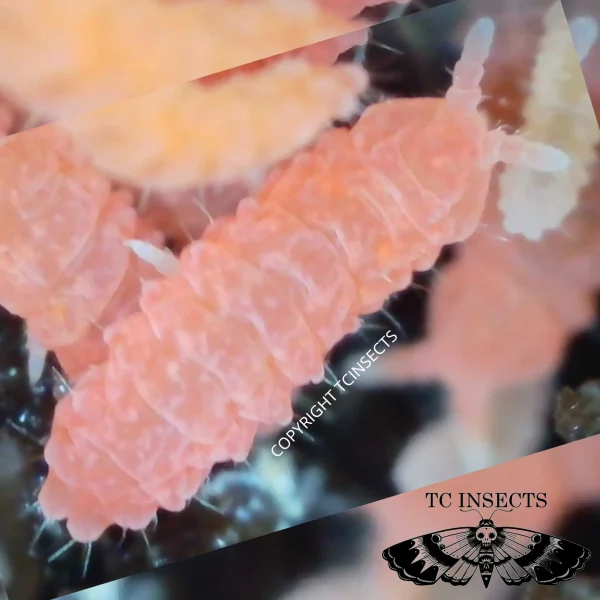
Bright orange, red-orange, or warm-toned body, significantly more vivid than standard white springtails. Yuukianura aphoruroides is a tropical-climate species suited to humid bioactive setups, dart frog vivariums, and warm planted enclosures.
Yellow Albino Springtails (Ceratophysella sp.)
Pale yellow, cream, or soft golden-yellow body tone. The lighter coloration gives this species a visually distinct look against darker substrates and complements both the purple and orange cultures in the pack. Ceratophysella species are typically high-reproducing in stable moist cultures.
Culture Care
Care Level
Easy to intermediate. The pack is best for keepers who understand basic springtail husbandry and want to maintain multiple collector cultures. As a result, this is not a first-springtail purchase for complete beginners. However, anyone who has successfully kept a tropical white culture can handle the All Star Pack.
Temperature
69 to 85°F general range. A practical target around 72 to 78°F works for all three species. Avoid heat lamps, sunny windows, basking zones, and sudden swings. Stable room temperature serves the pack well.
Humidity
Moist to semi-dry depending on species. All three need moisture access at all times. However, individual humidity preferences vary slightly: Florida Orange prefers consistent tropical moisture, Yellow Albino tolerates a slightly wider range, and Purple sits in the middle. Furthermore, keeping each culture separate lets you tune moisture per species rather than compromising for one shared culture.
Adult Size
Small, commonly 1 to 4 mm depending on species. Look closely at culture surfaces, food spots, and damp areas for movement.
Reproductive Rate
Moderate to high once established. Reproduction rates vary between the three species. Yellow Albino (Ceratophysella sp.) typically produces the highest visible population growth, while Purple and Florida Orange establish more steadily.
Should You Keep the Three Color Lines Separate?
Yes, for most collectors. The All Star Pack ships three separate cultures specifically so customers can preserve each color line as a standalone culture. By contrast, mixing them into one cup means one species typically becomes more visible over time, which makes harvesting and identification harder.
However, some keepers seed all three into a single bioactive enclosure for visual variety in a display setup. This works, but the populations will compete and balance shifts over time. For long-term color preservation, maintain separate culture cups and seed enclosures from each as needed.
Diet and Feeding
All three species feed on mold, fungi, biofilm, bacteria, algae, decaying organic matter, and prepared springtail foods. Feed light pinches of a measured springtail food like TC INSECTS Springtail Culture Booster in each culture cup. A prepared diet keeps the cultures cleaner than raw food scraps and reduces souring risk across all three species at once.
Feeding Notes
- Feed each culture lightly and independently.
- Wait until previous food is mostly gone before adding more.
- Remove visibly moldy chunks before they sour the medium.
- Spot mist if any culture surface starts looking dry.
Culture Setup for Each Color Line
Each species in the pack can be maintained in separate culture cups using clay, charcoal, plaster, or substrate-based media. Useful materials include:
- EuroClay for clean clay culture format with high visibility
- Culture Charcoal for the classic hobby format
- Ultra Springtail Substrate for bioactive-style cultures
- Leaf litter, bark, and moss as grazing and humidity refuge
Most collectors use the same medium across all three cultures for simplicity. As a result, picking one preferred medium (EuroClay for high visibility, or charcoal for tradition) and using it across all three works well.
Best Uses
- Collector springtail racks with three colorful species in one purchase.
- Bioactive display setups where visual variety in microfauna matters.
- Culture preservation projects for keepers building long-term color lines.
- Backup cultures across multiple bioactive enclosures.
- Supplemental feeder use for dart frogs, froglets, and small insectivores that take springtail-sized prey.
- Gifts for established bioactive keepers who already have basic cultures.
Not Best For
- First-time springtail keepers. Start with a single hardy species like Temperate White or Tropical White before scaling to three cultures.
- Customers wanting maximum cleanup volume per dollar. High-production tropical workhorse species cost less and produce faster.
- Bone-dry desert enclosures. All three species need moisture access.
- Setups where the keeper does not want to maintain three separate cultures.
Receiving and Acclimation Guidance
Open the package indoors in a draft-free area away from pets and direct sun. Inspect each of the three cultures carefully. Springtails are tiny, so look for movement on each culture surface, the cup walls, and food spots. If any culture looks shipping-dry, lightly mist or add a small amount of clean water. Do not flood any cup.
Set each culture in a temperature-stable area and allow several days for the colonies to settle before judging activity. Most collectors keep all three cultures together in one rack but maintain them as separate cups for color preservation. Keep at least part of each culture as a backup colony before seeding any into enclosures.
How the All Star Pack Compares to the Other TC INSECTS Combos
TC INSECTS sells multiple springtail combos with different positioning. The All Star Collector Pack is the three-species variety bundle for collectors. By contrast, the Silver and Tropical Pink EuroClay Combo focuses on visual contrast in a single mixed cup, and the Temperate White and Tropical Pink Charcoal Combo is the beginner-friendly workhorse pairing. As a result, customers should pick the All Star Pack when variety and color preservation matter most, not when they want a single starter culture.
Frequently Asked Questions
What species are in the pack?
Purple springtails, Florida Orange springtails (Yuukianura aphoruroides), and Yellow Albino springtails (Ceratophysella sp.). Each species ships in its own separate culture, not as a mixed cup.
Is this pack good for beginners?
It can work for beginners with basic springtail experience, but it is not a first-springtail purchase. New keepers should start with one hardy species like Temperate White before maintaining three cultures simultaneously.
Should I mix the three species in one enclosure?
You can, but the populations will compete and balance shifts over time. For long-term color preservation, keep each species in its own culture cup and seed enclosures from those as needed.
How does the All Star Pack compare to the mixed-cup combos?
The mixed-cup combos (Silver + Tropical Pink, Temperate White + Tropical Pink) blend two species in one cup. The All Star Pack ships three separate cultures so color lines stay preserved. As a result, the All Star Pack works better for collectors, while the mixed combos work better for simple starter setups.
Can I keep these springtails with isopods?
Yes. In bioactive enclosures all three species coexist with most common isopods. For dedicated breeding cultures, keep each springtail culture separate so colonies stay trackable.
Can these springtails be used as feeders?
Yes, as tiny supplemental feeders for dart frogs, froglets, and other small insectivores that take springtail-sized prey. However, the pack is mainly sold for collector culture variety rather than feeder volume.
Learn More About Springtails and Bioactive Care
- TC INSECTS Springtail Care Guide: In-house TC INSECTS guide covering springtail care, culture setup, feeding, and troubleshooting.
- GBIF: Ceratophysella: Biodiversity database record for the genus Ceratophysella, the family containing the Yellow Albino species in this pack.
- GBIF: Yuukianura aphoruroides: Biodiversity database record for the Florida Orange springtail species in this pack.
Final Notes
The Springtail All Star Collector Pack is the TC INSECTS bundle for keepers who want serious color variety and culture preservation in one purchase. Keep each color line in its own culture cup, feed lightly, maintain stable moisture and ventilation, and pick a culture medium that suits your collecting style. As a result, you get three preserved color lines ready to seed enclosures, expand collections, or anchor a colorful microfauna rack.




Reviews
There are no reviews yet.