TC INSECTS Original Zebra Springtails for Sale
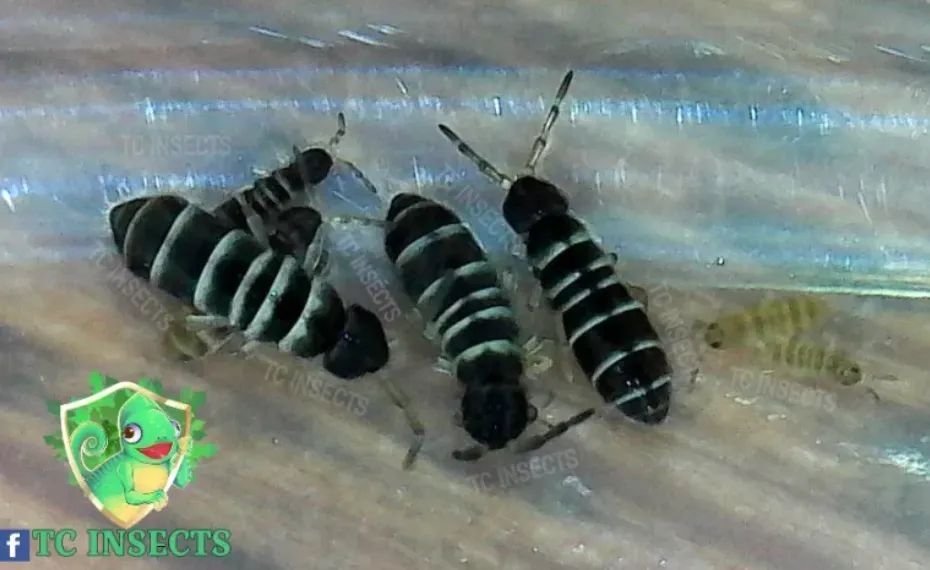
The Zebra Springtail is a genuinely undescribed species discovered and introduced to the hobby by TC INSECTS. The original culture was collected by head biologist Tommy Matranga in the United States at an undisclosed location, and the species has not yet been formally identified at the genus or species level. As a result, TC INSECTS remains the original source and only verified seller of the true Zebra Springtail. The bold black body with crisp white striping is where the common name comes from.
This is not a beginner culture. The Zebra reproduces aggressively under correct conditions, but it crashes fast under incorrect ones. Because of this fragility, there is no live arrival guarantee on this species and one-day shipping is required. Most importantly, customers should treat this as a collector and breeder culture, not as a standard cleanup crew species for general bioactive use.
Overview
Most live springtails sold in the hobby are well-established species with documented care histories. The Zebra Springtail is the opposite. This species was first observed and cultured by TC INSECTS, and the care knowledge has been built from scratch through years of breeding work in our springtail laboratory. As a result, every customer who keeps a Zebra culture successfully contributes to the broader understanding of this species.
If you are building a collector rack, this culture sits alongside other rare and exotic live springtails as a top-tier specialty pick. However, customers new to springtail keeping should start with hardier species before attempting a Zebra culture.
Pronunciation
Common name only. No genus or species assignment yet, so no scientific pronunciation applies.
Care Level
Advanced. Despite the simple feeding requirements, this species crashes quickly under suboptimal conditions. Furthermore, the exact triggers for culture crashes are not fully documented yet, so even experienced keepers should expect a learning curve.
Appearance and Size
The Zebra Springtail has a distinctive black body with crisp white striping, which is the visual basis for the trade name. The body shape is elongated, typical of surface-active springtails. However, the bold contrast pattern sets this species apart from any other springtail currently available in the hobby. Most importantly, the pattern stays consistent across individuals at adult size, which is unusual for newly cultured species.
Adult Size
1 to 4 mm at full adult size. Individuals are visible to the naked eye, especially against light substrate where the black-and-white pattern stands out.
Reproductive Rate
Extremely high under correct conditions. Cultures can build noticeable populations quickly when temperature, humidity, food, and ventilation align. However, the same culture can crash within days under incorrect conditions, which is why this species is rated for advanced keepers only.
Zebra Springtail Care
Temperature
Stable room temperature works best, ideally between 65 and 80°F. Avoid temperature swings, heat lamps, sunny windows, and cold drafts. Furthermore, shipping temperatures outside 45 to 85°F require hold-for-pickup arrangements, since extreme transit conditions can crash the culture before it reaches you.
Humidity
Keep the substrate consistently moist with good airflow. The Zebra is moisture-dependent, like most tropical springtails. However, stagnant or flooded substrate appears to be one of the documented crash triggers. As a result, the balance between consistent moisture and active ventilation matters more on this species than on hardier cultures.
Culture Setup
- Container with a tight lid and breathable ventilation. Loose lids invite escape and stagnant lids invite crashes.
- Substrate of moist soil, a soil and charcoal mix, or coco-based culture medium.
- Leaf litter or bark on top for grazing surface and humidity refuge.
- Keep the culture container in a temperature-stable area away from direct sun and heating vents.
Diet and Feeding
Biofilm, Mold, and Organic Matter
The Zebra consumes mold, fungi, biofilm, and small organic debris, similar to other surface-active springtails. However, this species is not bought for cleanup duty. Treat the Zebra as a collector and breeder culture. As a result, feeding choices should support culture stability and reproduction rather than maximize cleanup output.
Supplemental Food
In a dedicated culture, feed light pinches of a measured springtail food like TC INSECTS Springtail Culture Booster. Consistent light feeding outperforms occasional heavy drops. Furthermore, prepared food keeps the culture cleaner than raw scraps, which matters more on a fragile species where mold spikes can trigger crashes.
Feeding Notes
- Feed sparingly. Overfeeding is one of the documented crash triggers on this species.
- Wait until previous food is mostly gone before adding the next pinch.
- Remove visibly moldy food immediately, before it sours the substrate.
- Spot mist if the surface starts looking dry.
Breeding and Culture Growth
Zebra cultures reproduce aggressively when conditions stay stable. Most keepers see clear population growth within weeks of starting a culture, provided no crash event has occurred. However, because crash conditions are not fully mapped, keeping at least one backup culture in a separate container is strongly recommended for this species.
Culture Maintenance
- Maintain at least one backup culture. This is more critical on Zebra than on any other springtail species TC INSECTS sells.
- Refresh substrate when it becomes packed, sour, or fouled.
- Keep ventilation active. Dead-air cultures crash faster on this species.
- Do not mix Zebra cultures with other springtail species, which complicates crash diagnosis and harvesting.
Discovery and Natural Habitat Background
The Zebra Springtail was discovered by Tommy Matranga, head biologist at TC INSECTS, during field collection work in the United States. The exact locality is undisclosed to protect the wild population and the integrity of the captive line. Furthermore, the species has not yet been formally identified to genus or species, since the taxonomic work required is significant and ongoing.
The original interest in this morph was sparked by a sexually dimorphic red-and-white South American springtail that resembled the Zebra pattern but crashed in culture before sustained breeding could be established. When the US-collected Zebra was found years later, the culture work began with no reference material, no published care notes, and no existing hobby history. Most of what is known about Zebra care today comes directly from TC INSECTS laboratory observations.
Best Uses
- Advanced collector cultures for keepers with proven springtail breeding experience.
- Breeders interested in working with a genuinely new species in the hobby trade.
- Display setups for hobbyists who want a visually striking black-and-white patterned springtail.
- Specialty culture racks alongside other rare and exotic springtail species.
- Photography and macro-video projects, since the contrast pattern photographs cleanly.
Not Best For
- Beginner keepers. Start with hardier species before attempting Zebra.
- General cleanup crew duty. Pair the Zebra with a high-production species for actual cleanup.
- Setups subject to temperature swings, drafts, or inconsistent humidity.
- Keepers who require a live arrival guarantee. Zebra ships without LAG for the reasons above.
- Bone-dry or flooded setups. Both crash this species.
Receiving and Acclimation Guidance
Open the package indoors immediately upon arrival, away from heat, pets, and direct sun. Inspect the culture for visible movement. If transit temperatures were extreme, open carefully and assess condition. Let the culture sit at room temperature for several hours before disturbing it. If the substrate looks shipping-dry, mist lightly. Do not flood the culture trying to rehydrate it. Place the container in a temperature-stable location and allow several days before judging culture activity.
A Note on Other Sellers Using the Zebra Name
Since TC INSECTS introduced the Zebra Springtail, other sellers have used the same common name to market unrelated species with banded patterns. Two examples customers may encounter elsewhere:
- Willowsia platani, commonly called the Banded Springtail, first described by H. Nicolet in 1842. This is a well-known and long-established species in the hobby, but it is not the TC INSECTS Zebra.
- Orchesella hexfasciata, commonly called the 6 Banded Springtail, originally described in Canada in 1951 and later documented in New Hampshire in 2006. Also a legitimate species, but not the TC INSECTS Zebra.
The TC INSECTS Zebra Springtail is a genuinely undescribed species sourced from a US locality and cultured in-house. As a result, customers looking for the real Zebra should order directly from TC INSECTS to confirm authenticity.
Shipping Requirements
This species is more sensitive in transit than typical springtail cultures. Because of this, the Zebra Springtail ships without a live arrival guarantee. One-day shipping is required. Furthermore, if temperatures along the shipping route fall below 45°F or rise above 85°F, customers must select a hold-for-pickup option to prevent transit losses. Orders not held for pickup in extreme temperatures will be canceled.
Frequently Asked Questions
Is the Zebra Springtail a real new species?
Yes. The Zebra is a genuinely undescribed species, discovered by TC INSECTS in the United States and not yet formally identified at the genus or species level. The taxonomic work is ongoing.
Why is there no live arrival guarantee?
The Zebra crashes faster than typical springtails under shipping stress. Because the exact crash triggers are not fully documented, TC INSECTS cannot guarantee survival in transit. As a result, one-day shipping is required and hold-for-pickup is mandatory in extreme temperatures.
Why is the collection location undisclosed?
To protect both the wild population and the integrity of the captive line. Disclosing the exact locality could lead to unregulated collection by other parties, which would damage both the natural population and the credibility of the hobby trade.
Can I find the Zebra Springtail from other sellers?
No. Other sellers may use the “Zebra” name for unrelated banded species like Willowsia platani or Orchesella hexfasciata, but those are different species. TC INSECTS is the original source and only verified seller of the true Zebra Springtail.
How fast do they reproduce?
Extremely quickly under correct conditions. However, the same culture can crash in days under incorrect conditions, which is why this species is rated for advanced keepers and why backup cultures are critical.
Can the Zebra coexist with isopods or other springtails?
In a bioactive enclosure, the Zebra can technically coexist with most common isopods. However, for breeding and culture maintenance, keep Zebra in its own dedicated culture so crash events can be diagnosed cleanly and the colony stays identifiable.
Learn More About Springtails and Bioactive Care
- TC INSECTS Springtail Care Guide: In-house TC INSECTS guide covering springtail care, culture setup, feeding, and troubleshooting.
- American Museum of Natural History: Springtails Overview: Background reading on springtails and their place in the arthropod world.
- ITIS: Collembola Classification: Integrated Taxonomic Information System reference for the order Collembola.
Final Notes
The Zebra Springtail is the rarest culture in the TC INSECTS catalog and one of the few genuinely undescribed species in the live insect trade. Customers buying this culture are participating in early-stage breeding work for a species that has no published care reference. Keep conditions stable, feed lightly, ventilate actively, and maintain a backup culture. Most importantly, treat this as a collector and breeder species, not a cleanup crew.