Temperate White and Tropical Pink Springtails Charcoal Mixed Culture for Sale
This combo pairs the two most practical workhorse springtails in the TC INSECTS catalog into one charcoal culture cup. Each 8oz culture contains Temperate White springtails (Folsomia candida), the most widely used springtail in both soil biology and bioactive hobby, alongside Tropical Pink springtails (Coecobrya cf. tenebricosa), a warm-loving species for tropical setups. As a result, customers cover both temperate and tropical climate preferences in one purchase, which works well for keepers running mixed enclosure types or hedging against climate shifts in their setups.
TC INSECTS sells this combo specifically for beginner and intermediate bioactive keepers who want classic charcoal-culture format with broad climate coverage. One honest note up front: in any mixed culture, one species usually becomes more visible over time as conditions favor one or the other. The Temperate White typically reproduces faster, so it may dominate the visible population. Both species stay present and continue contributing.
What You Get
- 8oz charcoal mixed culture
- Temperate White springtails (Folsomia candida) and Tropical Pink springtails (Coecobrya cf. tenebricosa) in one cup
- Classic charcoal culture medium, the most common springtail husbandry format in the hobby
- Beginner-friendly culture style with broad climate coverage
Why Buy the Combo Instead of Two Separate Cultures
Three real reasons:
- Lower starting cost. The combo runs less than buying both Temperate White springtails and Tropical Pink springtails as separate cultures.
- Climate range coverage. Temperate White handles cooler room temperatures and humidity ranges that tropical species struggle with. Tropical Pink covers the warmer humid setups. As a result, this combo seeds enclosures across a wider climate spectrum than any single-species starter.
- One container to maintain. Light feeding, one moisture check, one cup. Compared to managing two separate cultures, the combo simplifies setup for new keepers.
However, customers who want to harvest each species cleanly for breeding projects, separate enclosures, or feeder use should buy them individually instead. Once mixed in one cup, isolating either species cleanly becomes difficult.
About the Two Species
Temperate White Springtails (Folsomia candida)
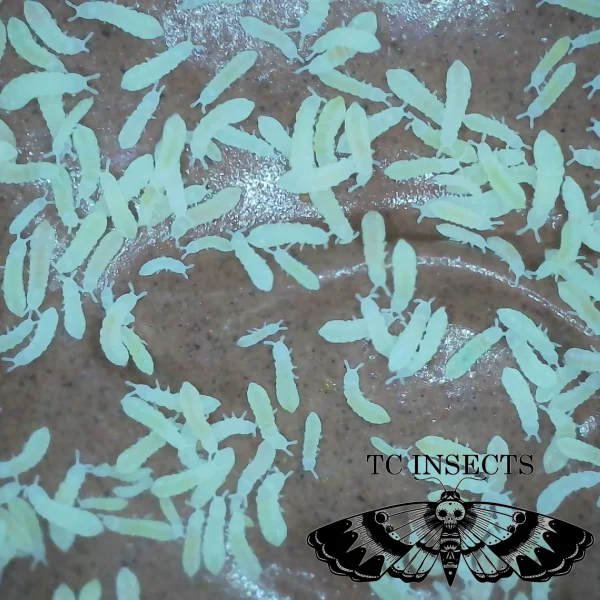
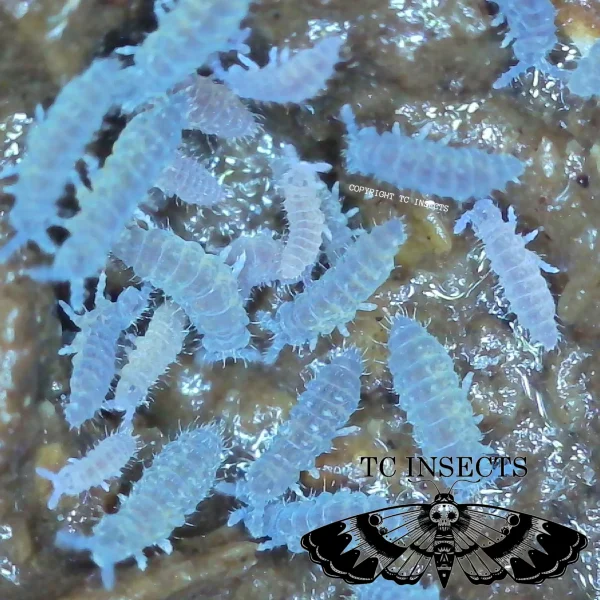
The most widely used springtail in both soil biology research and bioactive hobby keeping. Small white to translucent body, fast reproduction, hardy across a wide moisture range, and forgiving for beginners. Easy to spot against dark charcoal because of the high contrast. This species is the cleanup workhorse of the springtail world.
Tropical Pink Springtails (Coecobrya cf. tenebricosa)
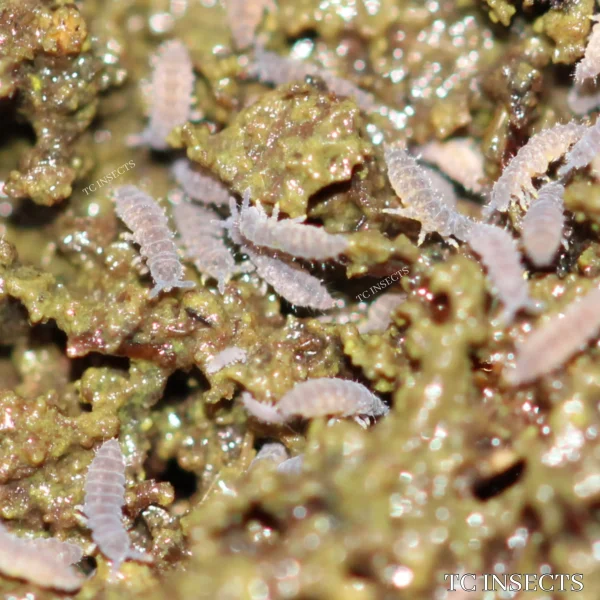
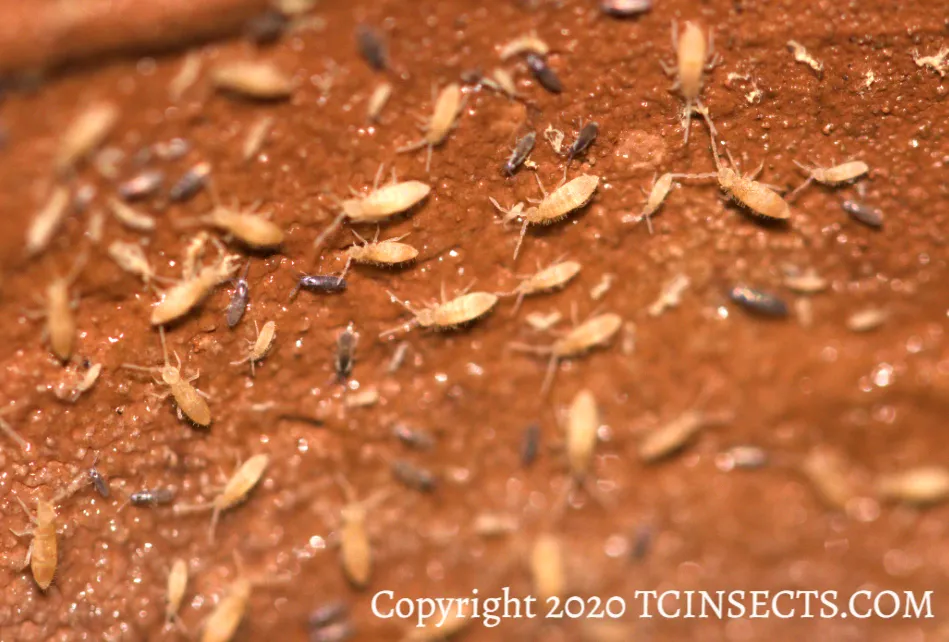
Soft pink, peach, salmon, or pale off-white body tone depending on lighting, density, and culture age. Not bright neon pink, so customers should expect a subtle natural color. The tropical climate preference suits warm humid setups like dart frog vivariums, planted tropical terrariums, and humid reptile enclosures.
Why Charcoal Works for This Combo
Charcoal is the most common springtail culture medium in the hobby for good reason. The dark surface gives white springtails maximum visual contrast, which makes Temperate White populations easy to see. The chunky surface holds moisture without compacting, gives springtails plenty of grazing real estate, and stays clean longer than loose substrate.
For this combo specifically, charcoal pairs well with both species: the Temperate White shows up sharply against the dark background, and the Tropical Pink’s subtle color tone reads cleanly without competing with substrate color noise.
Culture Care
Care Level
Easy to intermediate. This combo is beginner-friendly when kept moist, lightly fed, and protected from heat extremes. However, the culture should never dry out completely. As a result, customers new to live springtail keeping can succeed with basic stable husbandry.
Temperature
70 to 80°F preferred. A practical target around 72 to 78°F works for both species. Furthermore, because Temperate White tolerates cooler conditions better than tropical species, the combo handles room-temperature swings more gracefully than a pure tropical pairing.
Humidity
Moderate to high with consistent moisture. The charcoal should stay damp but never flooded. Springtails need moisture access at all times. Gentle airflow prevents stagnant cultures and off-odors.
Adult Size
Small, commonly 1 to 4 mm depending on species and individual. Look closely at charcoal pieces, food spots, and moist areas to see movement.
Reproductive Rate
Moderate to high once established. Temperate White typically reproduces faster than Tropical Pink, so the population balance may shift toward more visible whites over time. Both species continue contributing to cleanup function.
Diet and Feeding
Both species feed on mold, fungi, biofilm, bacteria, algae, decaying organic matter, and prepared springtail foods. In culture, feed light pinches of a measured springtail food like TC INSECTS Springtail Culture Booster. A prepared diet keeps the charcoal cleaner than raw scraps and reduces souring risk.
Feeding Notes
- Feed lightly. A small pinch is usually enough for an 8oz culture.
- Wait until the previous feeding is mostly gone before adding more.
- Remove visibly moldy chunks before they sour the charcoal medium.
- Light mist the surface if the charcoal looks dry.
Best Uses
- Beginner bioactive starter cultures across temperate and tropical enclosure types.
- Dart frog vivariums and warm humid amphibian habitats.
- Mixed-climate reptile enclosures where temperature varies through the day.
- Isopod cultures where cleanup crew diversity matters.
- Backup cultures for keepers running multiple enclosures.
- Soil biology and science projects where Folsomia candida is the standard reference species.
Not Best For
- Bone-dry desert enclosures. Both species need consistent moisture.
- Customers who want to harvest one species individually for breeding or feeder work. Buy single-species cultures instead.
- Sealed dead-air setups. Charcoal cultures crash faster when ventilation fails.
- Display-focused setups where visual color contrast matters most. The Silver and Tropical Pink EuroClay combo handles that role better.
Receiving and Acclimation Guidance
Open the package indoors in a draft-free area away from pets and direct sun. Inspect the charcoal pieces, cup walls, food spots, and moist areas for movement. Both species are tiny, so look closely. If the charcoal looks shipping-dry, lightly mist or add a small amount of clean water. Do not flood the cup.
To seed an enclosure, scoop part of the charcoal and place it near moist substrate, leaf litter, bark, or moss. Then cover lightly so the springtails can move into protected humid pockets. Keep part of the original culture as a backup colony.
How This Combo Compares to Other TC INSECTS Springtail Combos
TC INSECTS sells multiple springtail combos. The Temperate White and Tropical Pink Charcoal combo focuses on broad climate coverage and beginner-friendly charcoal culture style. By contrast, the Silver and Tropical Pink EuroClay Combo focuses on visual contrast (metallic silver paired with soft pink) on a cleaner clay medium. As a result, customers should pick based on priority: this combo for practical workhorse value across enclosure types, or the EuroClay combo for visual variety in display-focused setups.
Frequently Asked Questions
What species are in this combo?
Two species: Temperate White springtails (Folsomia candida) and Tropical Pink springtails (Coecobrya cf. tenebricosa). Both are mixed together in one 8oz charcoal culture cup.
Will the Temperate White take over the culture?
It may visually dominate. Folsomia candida typically reproduces faster than Coecobrya cf. tenebricosa, so the white population can become more visible over time. Both species stay present and continue contributing to cleanup. This balance shift is normal for any multi-species culture.
Why charcoal instead of EuroClay or coco?
Charcoal is the most common springtail culture medium in the hobby, well-suited to both Temperate White and Tropical Pink species, and gives strong visual contrast for white springtail populations. For a different culture medium with the same Tropical Pink species, see the Silver and Tropical Pink EuroClay combo.
Is this combo good for beginners?
Yes. Temperate White (Folsomia candida) is the most beginner-friendly springtail in the hobby because of its hardiness and forgiveness across moisture ranges. The combo gives beginners both a hardy white workhorse and a tropical species in one purchase.
Can I keep this combo with isopods?
Yes. In bioactive enclosures both species coexist with most common isopods. For dedicated breeding cultures, keep them separate so each colony stays trackable.
Can these springtails be used as feeders?
Yes, as supplemental feeders for small frogs, micro geckos, and other small insectivores that take springtail-sized prey. However, the combo is mainly sold for cleanup crew use, not for high-volume feeder production.
Learn More About Springtails and Bioactive Care
- TC INSECTS Springtail Care Guide: In-house TC INSECTS guide covering springtail care, culture setup, feeding, and troubleshooting.
- NCBI Taxonomy: Folsomia candida: Reference for Folsomia candida, the most widely used springtail in soil biology research.
- University of Missouri Extension: Springtails: Educational resource on springtail biology, moisture sensitivity, and their role in soil environments.
Final Notes
The Temperate White and Tropical Pink Charcoal Mixed Culture is the practical workhorse combo in the TC INSECTS catalog. Keep the charcoal moist, feed lightly, ventilate well, and expect the Temperate White to become the visually dominant species over time. As a result, you get a beginner-friendly cleanup crew that covers both temperate and tropical enclosure ranges from one starter cup.