
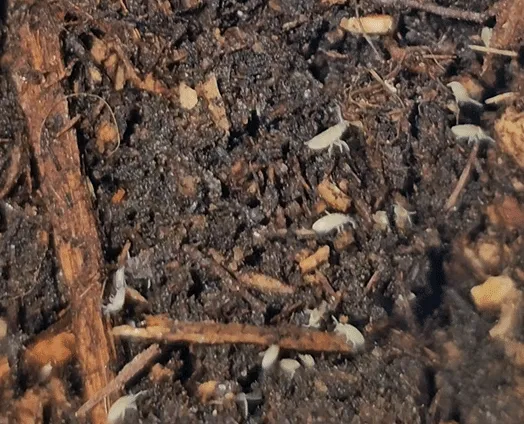
Pseudosinella violenta Bylas Ant Springtails for Sale
The Bylas Ant springtail is the production workhorse of the drier-tolerant springtail world. Pseudosinella violenta is tiny, pale, and so quick across substrate that customers often mistake it for an ant at first glance. However, despite the visual nickname, this is a true springtail and a strong cleanup crew choice for setups that run on the drier side of the moisture scale. Most importantly, this species reproduces fast once established, which separates it from slower drier-tolerant springtails sold for novelty value.
TC INSECTS sells Bylas Ant springtails specifically for keepers who need a high-production culture that still tolerates semi-arid bioactive conditions. One honest note up front: they are small and fast, so expect them to scatter and disappear under cover within seconds of being added. That hiding behavior is normal, not a culture failure.
Overview
Most semi-arid-tolerant springtails are sold as collector novelties. The Bylas Ant flips that pattern. It tolerates drier surface conditions like other runner-type species, but it also reproduces at high rates once a culture establishes. As a result, this is the species to choose when you need both dry-tolerance and real cleanup volume in the same culture.
If you are building a multi-species rack, this culture pairs well with other live springtails covering wetter conditions, so you have full moisture-range coverage across your enclosures.
Pronunciation
soo-doh-sih-NELL-uh vye-oh-LEN-tuh, BY-lass
Care Level
Easy to intermediate. The Bylas Ant is adaptable and forgiving, so beginners can succeed with basic moisture gradient setup. However, customers must still avoid completely dry containers, since this species needs moisture access to reproduce.
Appearance and Size
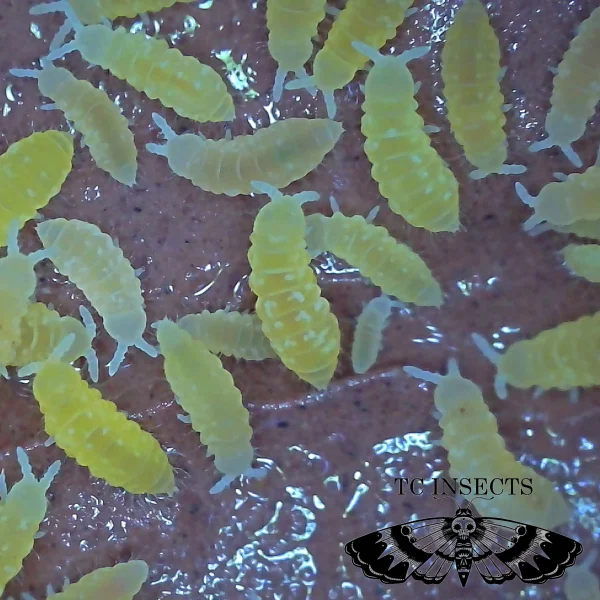
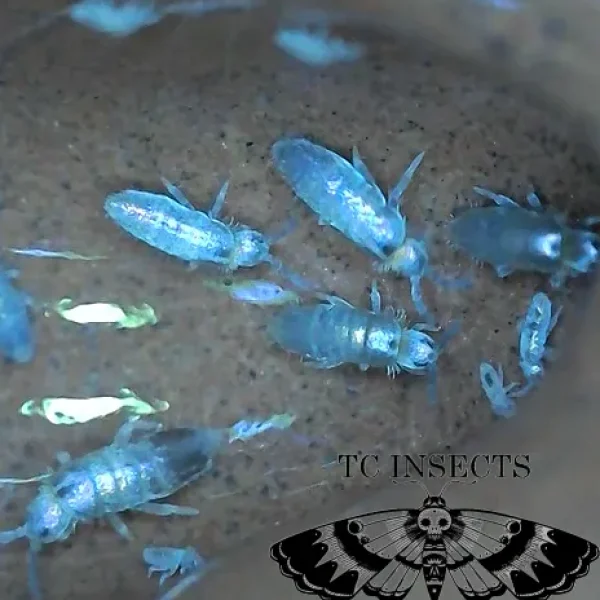
Bylas Ant springtails are slender, pale white to cream colored, sometimes lightly translucent or with a faint metallic sheen. Their tiny body combined with quick darting movement gives them an ant-like impression, which is where the trade name comes from.
You will usually see them moving across soil, bark, leaf litter, clay, plaster, or charcoal surfaces. Because of their small size and speed, they may vanish into substrate pockets or under cover almost immediately after being added to an enclosure.
Adult Size
Very small, commonly around 1 to 3 mm. This compact size lets them move through tight substrate crevices, bark cracks, leaf litter, and moss, which makes them especially useful in detailed bioactive setups.
Reproductive Rate
High once established. Bylas Ant cultures build numbers quickly under stable temperatures, light feeding, and moisture access. As a result, this is one of the stronger production options for keepers who want a culture that can seed multiple enclosures over time.
Bylas Ant Springtail Care
Temperature
70 to 85°F preferred. In practice, a target around 72 to 80°F works for most cultures and bioactive setups. Bylas Ant springtails handle warm terrarium conditions better than many delicate species. Still, overheating remains dangerous, so avoid placing the culture directly under basking lamps, heat mats, hot windows, or direct sun.
Humidity
Semi-arid to humid, with a reliable moist pocket. Unlike most tropical springtails, this species tolerates a wider moisture range. However, it is not a moisture-free animal. The safest setup uses a dry-to-moist gradient: dry surface areas combined with a hidden humid retreat under bark, leaf litter, or in a deeper substrate pocket.
The enclosure should never become bone dry, and standing water is also bad. Instead, aim for a dry surface with a protected moist zone so the springtails always have a hydration option nearby.
Culture Setup
- Container with a secure lid and breathable ventilation.
- Substrate options include springtail clay, plaster, organic soil, or a charcoal base.
- Cover materials such as cork bark, hardwood bark, and leaf litter for grazing and hiding.
- A protected moist pocket under cover, not exposed to airflow directly.
- Good airflow across the rest of the culture to prevent stagnant humidity.
Diet and Feeding
Biofilm, Mold, and Organic Matter
Bylas Ant springtails help consume mold, fungi, biofilm, bacteria, algae, and decaying organic material. As a result, they contribute meaningfully to bioactive cleanup, especially in setups with moderate organic load. However, springtails do not replace enclosure maintenance. If mold becomes heavy, fix airflow and feeding first, then let the cleanup crew support the cleanup.
Supplemental Food
In a dedicated culture, feed light pinches of a measured springtail food like TC INSECTS Springtail Culture Booster. A prepared diet keeps the culture cleaner than raw food scraps, with fewer mite issues and less smell. Place food near the moist retreat so springtails can graze without you wetting the dry surface.
Feeding Notes
- Feed lightly. Overfeeding is the most common reason cultures crash.
- Wait until previous food is mostly gone before adding more.
- Remove visibly moldy food, especially if it has soured the substrate.
- Place food near the humid pocket, not on the dry surface.
Breeding and Culture Growth
Bylas Ant springtails breed quickly when temperature, moisture, food, and cover stay stable. Because of this strong reproductive rate, cultures often build noticeable populations within a few weeks. For long-term success, keep one backup culture in a separate container so a crashed main culture does not force a reorder.
Culture Maintenance
- Check moisture weekly. The humid pocket must stay damp even if the surface dries.
- Refresh substrate if it becomes packed, sour-smelling, or fouled with old food.
- Maintain ventilation. Stagnant cultures crash faster than ventilated ones.
- Keep a backup culture ready, especially before seeding new enclosures.
Natural Habitat Background
The Bylas Ant springtail is associated in the hobby trade with arid and semi-arid microhabitats, which explains its surface drought tolerance. In captivity, treat it as an adaptable terrestrial springtail that still requires moisture access. A setup with bark cover, leaf litter, ventilation, and a protected humid retreat gives this species the best chance to establish and produce.
Best Uses
- Semi-arid bioactive terrariums where standard tropical springtails struggle.
- Reptile enclosures with hidden moisture pockets, including many gecko and skink setups.
- Isopod cultures running on appropriate medium for both species.
- High-production backup cultures that can seed multiple enclosures over time.
- Supplemental tiny feeder use for small reptiles, amphibians, and invertebrates.
- Cleanup crew for keepers who want strong reproduction in a drier-tolerant species.
Not Best For
- Bone-dry desert enclosures with zero moisture refuge.
- Heavily sealed setups with no ventilation. Stagnant humidity weakens this species.
- Standing-water swampy cultures. The gradient matters more than total moisture.
- Keepers who want a visible display species. Bylas Ants are tiny, fast, and stay hidden.
Receiving and Acclimation Guidance
When the package arrives, open it indoors away from heat, pets, and direct sun. Inspect the culture for movement on the medium, walls, and food surface. Because Bylas Ants are tiny and fast, look closely to spot them.
Before adding the springtails, prepare the receiving enclosure with bark, leaf litter, substrate, and a protected moist pocket. Then place the springtails near cover so they can scatter into safe humid zones. After release, expect them to disappear under bark or leaf litter almost immediately. This hiding behavior is normal.
How Bylas Ant Compares to Rutabaga Runner Springtails
Both species belong to the genus Pseudosinella, and both tolerate drier setups than typical tropical white springtails. However, they fill different roles. The Bylas Ant is the higher-production option, ideal when you need real cleanup volume in a semi-arid setup. By contrast, the Rutabaga Runner sits more on the collector side, prized for surface speed and visual novelty. As a result, customers building bioactive cleanup crews usually pick Bylas Ant, while collector keepers often pick Rutabaga Runner. Keepers running both add full Pseudosinella variety to their rack.
Frequently Asked Questions
Are Bylas Ant springtails actually ants?
No. They are true springtails in the family Entomobryidae. The name comes from their tiny pale body and ant-like quick movement.
Will they work in a dry reptile enclosure?
Yes, as long as a hidden moist pocket exists under cover. They tolerate dry surface conditions, but they still need moisture access to reproduce and survive long-term.
Can I keep Bylas Ant springtails with isopods?
Yes. In bioactive setups, they coexist with most common isopods. For dedicated cultures, keep them separate so harvesting stays clean.
Where did they go after I added them?
Under bark, leaf litter, substrate pockets, or decor crevices. Small fast springtails always scatter and hide right after release. This is normal and not a sign of culture failure.
Can Bylas Ant springtails be used as feeders?
Yes, as tiny supplemental feeders for small reptiles, amphibians, and invertebrates that can take 1 to 3 mm prey. However, their main job is cleanup crew support, not high-volume feeder production.
How do Bylas Ant springtails compare to Rutabaga Runner springtails?
Both are dry-tolerant Pseudosinella species. The Bylas Ant reproduces faster, which makes it the better choice for cleanup volume. The Rutabaga Runner is sold more as a collector novelty for its speed and visual appeal.
Learn More About Springtails and Bioactive Care
- TC INSECTS Springtail Care Guide: In-house TC INSECTS guide covering springtail care, culture setup, feeding, and troubleshooting.
- University of Minnesota Extension: Springtails: Educational overview of springtails, moisture needs, fungi, and decaying organic matter.
- Colorado State University Extension: Springtails: Background on springtail biology, semi-arid behavior, and organic material connections.
Final Notes
The Bylas Ant earns its place as the production workhorse of dry-tolerant springtails. Give it a moisture gradient, light feeding, bark or leaf litter cover, and a backup culture. As a result, you get a fast-reproducing cleanup crew that fits enclosures most tropical springtails cannot handle.


Reviews
There are no reviews yet.