


Red Edge Isopods for Sale
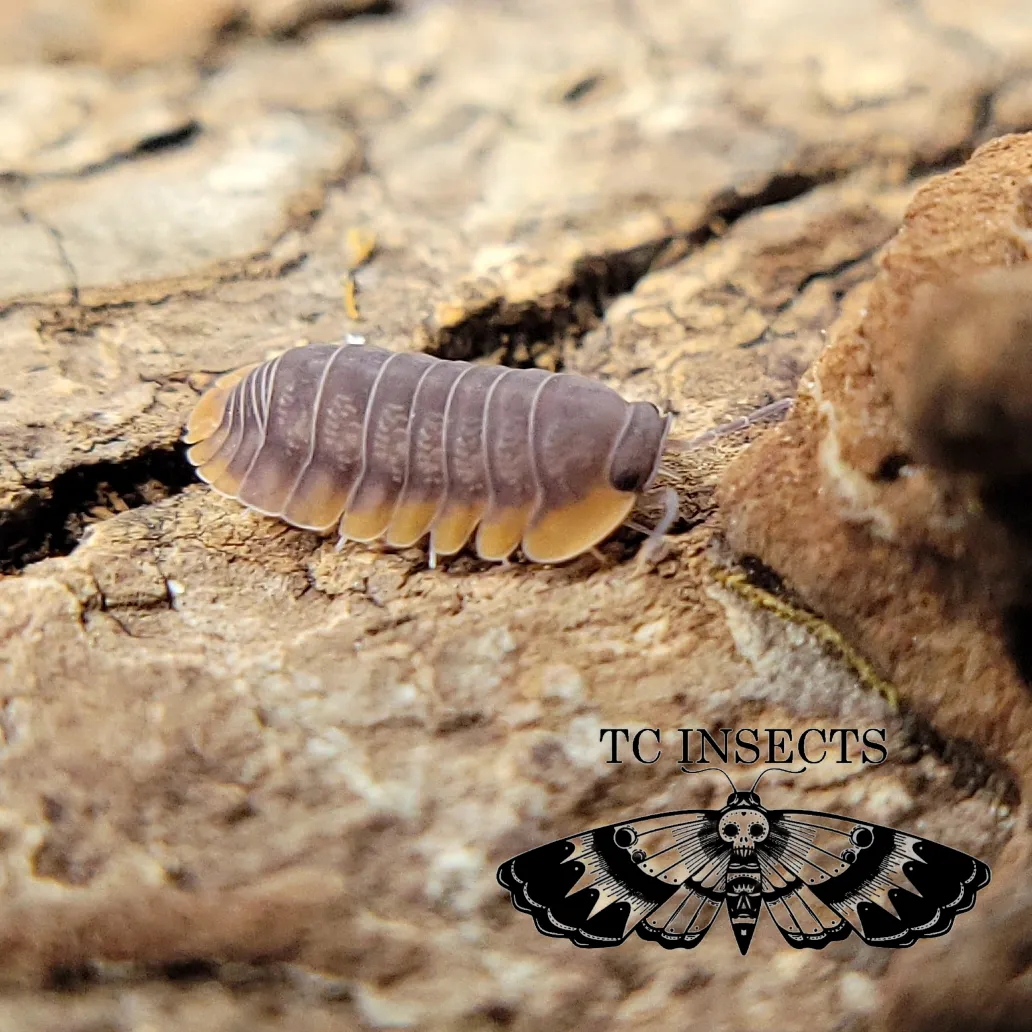
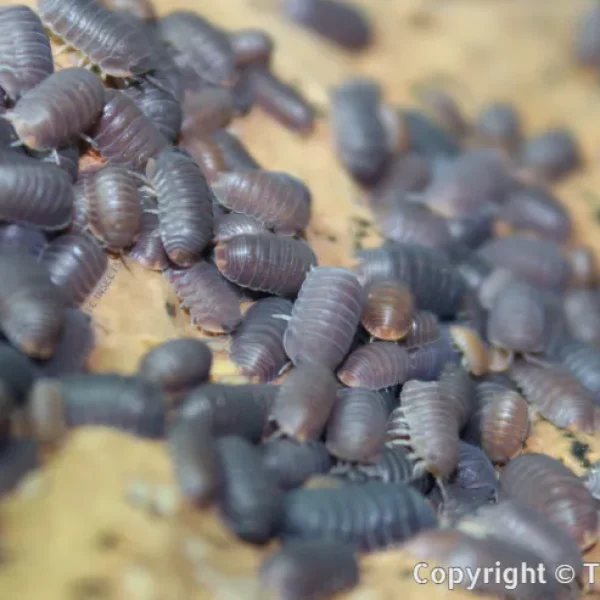
Cubaris sp. “Red Edge” is a Thai Cubaris also known in the hobby as “Red Skirts.” The animal shows a blue-gray to gray-brown body with a bold red-orange skirt running around the outer body plates. Adults reach roughly
15 to 19 mm. Red Edge is widely recommended in the hobby as a gateway Cubaris because it tolerates beginner-level care variability better than most rare collector morphs while still showing the full Cubaris display appeal.
The behavior is also more active and visible than typical Cubaris, which makes Red Edge useful for desktop or display vivariums.
Overview
Red Edge holds an important spot in the Cubaris hobby. Multiple breeders specifically recommend Red Edge as the first true Cubaris for keepers stepping up from Porcellionides pruinosus or Dwarf Whites. The
combination of distinctive coloration, beginner-tolerant care framework, visible day activity, and moderate breeding pace makes Red Edge unusually well-suited to new Cubaris keepers compared with collector-tier morphs
that demand precise humidity, dim conditions, and patient long establishment times.
This is a display and breeding species first. However, the active behavior and moderate breeding pace mean established Red Edge colonies can also contribute meaningfully to humid bioactive setups, which is less common
among collector Cubaris.
Why Keep Red Edge Isopods?
- Bold red skirt on a contrasting body. The bright red-orange edging around the outer body plates against the blue-gray to gray-brown body reads clearly even at a distance and gives Red Edge instant visual identity in a display enclosure.
- Genuinely beginner-friendly Cubaris. Cross-source hobby reporting consistently positions Red Edge as the gateway Cubaris. Less delicate than typical Thai collector morphs and more forgiving of beginner-level care variability.
- Active visible behavior. Hobby reports describe Red Edge as more active than typical Cubaris, with notable surface activity in established colonies. This makes Red Edge useful as a desktop or display Cubaris where visibility matters.
- Pairs cleanly with Springtails. A shared springtail population helps manage surface mold and supports a steadier humid microclimate.
- Gateway to the Red Edge color-line family. Pairs naturally with the Red Edge Albino (also called Red Edge White Phase or Red Edge Blonde) for collectors building out the color-line shelf.
Honest Note on Care Difficulty, Color Phases, and the Red Edge Family
Three things buyers should know up front. First, Red Edge is genuinely beginner-friendly by Cubaris standards. Multiple hobby sources explicitly recommend Red Edge as a starter Cubaris for keepers who want to step up
from Porcellionides pruinosus or Dwarf Whites before tackling advanced morphs like Rubber Ducky, Lemon Blue, or Emperor Bee. Richard’s Inverts UK rates the difficulty as “easy” and positions Red Edge as the ideal first
Cubaris. This is meaningfully different from the typical Cubaris difficulty profile. However, “beginner-friendly Cubaris” still means stable humidity, calcium access, leaf litter, and ventilation are needed. Total beginners with
no isopod experience should start with Porcellionides morphs or Dwarf Whites first.
Second, Red Edge comes in three known color phases in the hobby. The standard wild-type Red Edge shows the blue-gray to gray-brown body with the bold red-orange skirt. A Red Edge Orange Phase (also called “Oxide”
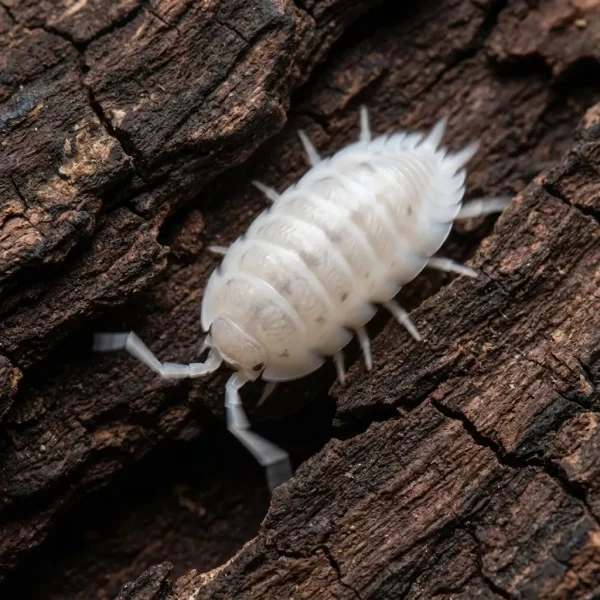
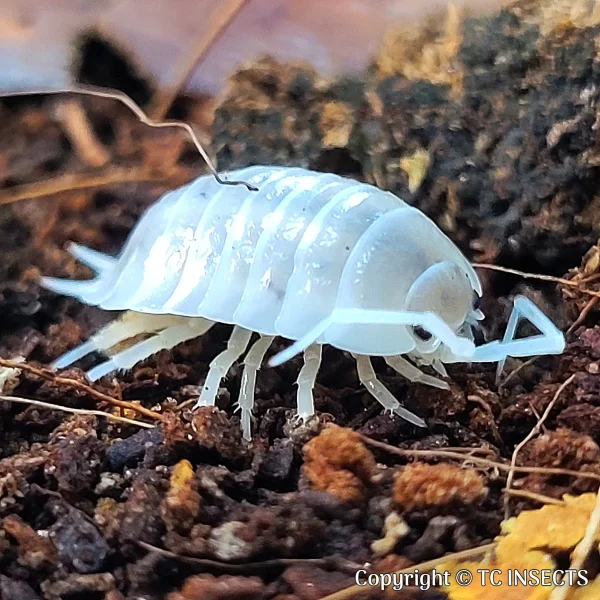
when isolated by Tropical Isopods) leans more orange overall. The Red Edge White Phase, also sold as Red Edge Albino or Red Edge Blonde, is a true albino isolation with white-blonde body and red eyes. These are not
interchangeable. If you want the classic red-skirt-on-gray-body look, buy Red Edge. If you want the pale albino phenotype with red eyes, look for Red Edge Albino specifically. Mixed bins across phases will produce hybrid
offspring and dilute each line.
Third, Red Edge is more active than typical Cubaris. Reptanicals describes Red Edge as “active compared to many other cubaris” and notes they make good desktop terrarium occupants. This is a real selling point for buyers
who want a Cubaris they can actually watch, but it also means new keepers should expect surface activity from the start rather than long periods of total hiding. If a culture shows zero surface activity after the first two to
three weeks of acclimation, double-check humidity and food.
Care and Setup
Red Edge responds well to a stable humid setup with reasonable beginner tolerance. The goal is steady moisture, soft cover, reliable calcium access, and a moisture gradient that supports the moderate breeding pace.
Temperature
Aim for 73 to 80 F. Room temperature in most homes is fine. However, avoid sustained heat above the low 80s, sudden cold drops below the upper 60s, and any heat source in direct contact with the bin. Red Edge handles minor temperature swings better than collector-tier Cubaris.
Humidity
Keep humidity medium-high to high with a clear moisture gradient. One side of the bin should stay consistently moist with sphagnum moss or hydrated substrate. The opposite side should run slightly drier with leaf litter cover. Red Edge tolerates humidity-level variation better than collector Cubaris, so the gradient is a working buffer rather than a precise target.
Substrate
Use a deep organic mix with coconut fiber, flake soil, sphagnum moss pockets, and broken-down hardwood. Substrate depth around 2 to 3 inches works well. Additionally, scattered limestone or cuttlebone pieces give the colony a direct calcium-grazing surface that supports molting and the active red-skirt pigmentation.
Food
Leaf litter and decaying hardwood form the dietary base. Supplement with TC INSECTS Isopod Food a couple of times per week, plus small portions of vegetables and a light protein item such as fish flake or freeze-dried shrimp. Hobby sources note Red Edge benefits from slightly higher protein content than typical Cubaris. Remove uneaten food before it molds.
Ventilation
Moderate ventilation works best. Stagnant air encourages mites and sour substrate. Too much airflow dries the bin and stresses the colony. The active behavior of Red Edge means you will likely see them on the surface more often, so a clean visible bin matters for display purposes.
Bioactive Use
Red Edge performs reasonably well as a bioactive participant thanks to the active behavior and moderate breeding pace. However, the collector-tier value still places Red Edge in display-pod territory rather than working heavy-duty cleanup duty. For larger bioactive setups, pair Red Edge with Porcellionides pruinosus “Powder Orange” or Dwarf Whites for stronger workhorse cleanup support.
Breeding Notes
Production is moderate once a culture settles. Founder groups commonly go through a quieter first month while the colony establishes, then begin producing manca and small juveniles in the leaf litter and substrate. Female Cubaris carry developing young in a marsupium (a brood pouch on the underside of the body), where the eggs and embryos develop until release as small white manca. This extended parental care is a hallmark of terrestrial isopod reproduction and is supported by structural adaptations in the marsupium of conglobating species like Red Edge.
Calcium access matters during the active breeding phase. A pinch of TC Calcium Ultra Fine dusted lightly over a feeding area every couple of weeks supports molting and brood development. For long-term line preservation, consider running a backup culture as soon as the founder group is producing well.
Best For
- Late-beginner keepers starting their Cubaris journey after success with Porcellionides pruinosus or Dwarf Whites.
- Display vivariums where an active visible Cubaris is more valuable than a hidden collector morph.
- Collectors building out the Red Edge color-line shelf alongside Red Edge Albino and Orange Phase variants.
- Desktop or smaller display setups where Cubaris that disappear under cork bark are frustrating.
- Bioactive vivariums where moderate-breeding Cubaris can provide gentle cleanup support.
Not Best For
- Total beginners with no isopod experience. Start with Porcellionides pruinosus morphs or Dwarf Whites first.
- Co-housing with other Red Edge color phases. Mixed bins make line preservation impossible.
- Dry-tolerant setups or desert vivariums. Red Edge needs humid conditions.
- Feeder use at scale. The display value and moderate breeding pace make them impractical as reptile food.
- Heavy-duty cleanup duty in large bioactive enclosures.
Origin and Locality Notes
Red Edge is consistently associated with Thailand in the hobby trade across multiple breeders (Reptanicals, Richard’s Inverts, isopod.com, Tropical Isopods, and others). Exact wild collection locality within Thailand is not
consistently documented, so the safe framing is “Thai-origin Cubaris” rather than a specific named locality. The “Cubaris” genus assignment is hobby shorthand and may be revised as taxonomy in this group continues to be
reviewed.
Notable to the Red Edge family: the Red Edge Albino (also called Red Edge White Phase or Red Edge Blonde) is a captive-isolated true albino morph descended from Red Edge starter cultures. Tropical Isopods specifically
credits the original isolation work to a starter Cubaris “Red Edge” culture from breeder Dave Abeleen. The Red Edge Orange Phase, marketed as “Oxide” by Tropical Isopods, is another isolation from the same parent line.
All three phases share Thai Cubaris ancestry but should be kept in separate dedicated bins to preserve each color line.
Receiving and Acclimation
Open the package indoors in a calm, temperature-stable area away from direct sun, heat sources, and cold drafts. Animals may stay still or roll into a defensive ball when stressed after shipping. This is normal stress
response and does not indicate the animals are dead. Transfer the animals and any included moss or shipping debris directly into a pre-prepared bin with moist substrate, leaf litter, multiple cork bark hides, calcium, and a
damp moss retreat already in place.
Plan for a quiet first week to two weeks. Red Edge settles faster than most collector Cubaris and surface activity returns quickly once the colony establishes. Hydrate the moist side as needed, offer only a pinch of food, and
let the colony come to the surface on its own schedule. Once you start seeing the active Red Edge behavior pattern, you can shift to a normal feeding routine.
Recommended Add-Ons
- TC INSECTS Isopod Habitat Kit for a balanced starter setup well-suited to a beginner-tier Cubaris culture.
- TC INSECTS Isopod Food for a balanced supplemental diet that supports the moderate breeding pace and slightly higher protein needs of Red Edge.
- TC INSECTS Assorted Hardwood Leaf Litter for grazing surface, juvenile cover, and a slow-release organic food source.
- TC Calcium Ultra Fine for steady calcium access during molts and brood development.
- Springtails for shared bin use to help control surface mold and process small debris.
Frequently Asked Questions
Are Red Edge Isopods really beginner-friendly?
Yes, by Cubaris standards. Multiple hobby sources including Richard’s Inverts UK, Reptanicals, and Tropical Isopods explicitly recommend Red Edge as a starter or beginner Cubaris. Red Edge tolerates beginner-level care
variability better than typical Thai collector morphs. However, “beginner-friendly Cubaris” still requires stable humidity, calcium access, leaf litter, and ventilation. If you have never kept any isopods before, start with
Porcellionides pruinosus morphs or Dwarf Whites first. If you have kept those successfully and are ready for your first Cubaris, Red Edge is the standard recommendation across the hobby.
What is the difference between Red Edge and Red Edge Albino?
Red Edge is the wild-type Thai Cubaris with a blue-gray to gray-brown body and bold red-orange skirt. Red Edge Albino (also called Red Edge White Phase or Red Edge Blonde) is a captive-isolated true albino morph
descended from Red Edge starter cultures. The Albino phase has a pale white to blonde body and red eyes due to absence of pigment. The two are the same parent stock but display very different phenotypes. Keep them in
separate dedicated bins if you collect both.
Why is my Red Edge culture so active compared to other Cubaris?
This is normal and expected for the morph. Hobby reports consistently describe Red Edge as more active and surface-visible than typical Cubaris. The behavior makes Red Edge useful for desktop or display vivariums where you actually want to watch the animals. Other Cubaris like Emperor Bee or Orange Freezy stay hidden under cork bark for most of the day, but Red Edge typically maintains visible activity during evening hours and around feeding times.
Is “Red Skirts” the same as Red Edge?
Yes. “Red Skirts” is an alternate hobby name for the same Cubaris morph, used by some US breeders. The name refers to the bold red-orange edging around the outer body plates, which gives the appearance of a red skirt running along the perimeter of the animal. Red Edge and Red Skirts are interchangeable hobby names for Cubaris sp. “Red Edge.”
How fast do Red Edge Isopods breed?
Moderate once established. Founder groups commonly need a few weeks to a month before producing visible juveniles, then build toward steady production. Female Cubaris carry developing young in a marsupium under the body, where embryos develop before release as small white manca. The breeding rate is well below workhorse species like Powder Orange but reliable enough that beginner keepers can build a working colony within the first few months.
Can I mix Red Edge with other Cubaris morphs in the same bin?
Not if you want to preserve any of the lines. Mixed bins across Red Edge color phases (wild-type, Orange Phase, Albino) will produce hybrid offspring and dilute each line over generations. Mixed bins with unrelated Cubaris morphs cause the same problem. Run each line in its own dedicated tub. This is especially important if you keep both Red Edge and Red Edge Albino, since the two phases come from the same parent stock and interbreed readily.
Learn More About Cubaris Reproduction and Isopod Biology
The following references give keepers useful background on terrestrial isopod reproduction, basic anatomy, and the husbandry framework that applies to humid Cubaris cultures.
-
NCBI PubMed Central: Histological Studies on the Marsupium of Terrestrial Isopods. A peer-reviewed paper documenting the structure of the marsupium (brood pouch) in conglobating versus non-conglobating terrestrial isopods, with histological detail on the oostegites and cotyledons that support extended parental care. Useful biological context for Cubaris keepers wanting to understand how their gravid females carry developing young.
-
Virginia Tech Cooperative Extension: Nuisance Insects of House and Yard (Pub 456-018). A university extension publication covering basic terrestrial isopod biology, moisture requirements, and habitat preferences. Useful baseline biology for keepers building a husbandry framework that applies to any humid Cubaris culture.
-
UC ANR Bug Squad / Bohart Museum of Entomology UC Davis: How Many Legs Does an Isopod Have? An accessible institutional educational article on terrestrial isopod anatomy and crustacean classification from one of the largest entomology collections in North America. Useful background for new isopod keepers learning the basics of what their animals actually are.


Reviews
There are no reviews yet.