
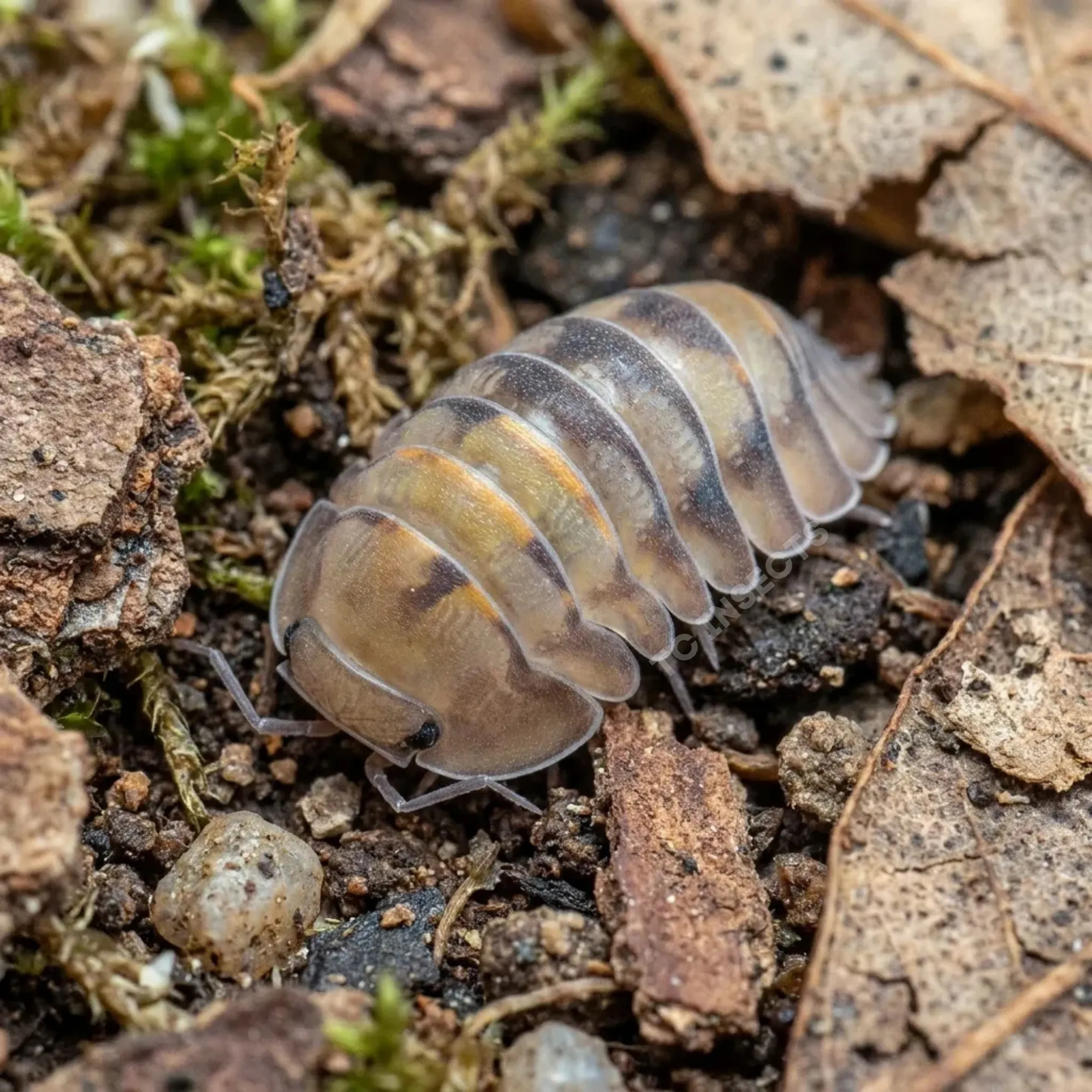
Cubaris Opal Isopods for Sale
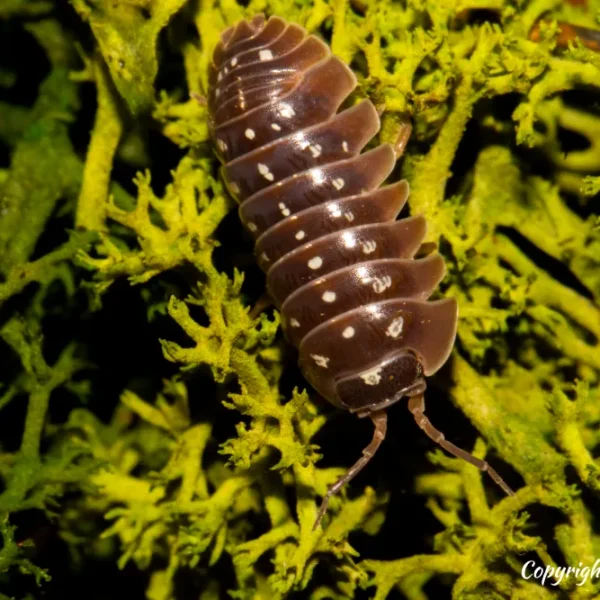
Cubaris sp. “Opal” is a pale, opalescent collector morph that entered the hobby through Thailand and remains one of the harder true Cubaris projects to maintain. Adults reach roughly 0.4 to 0.5 inches and carry a soft pearl-toned body with subtle color variation between individuals. This is not a fast cleanup crew or a beginner species. Instead, it is a patient collector culture for keepers who are ready to invest months of stable care before seeing strong numbers.
Overview
Opal isopods sit toward the upper end of the true Cubaris pricing curve. They breed slowly, settle slowly, and react badly to swings in moisture or temperature. As a result, this morph rewards careful keepers and frustrates impatient ones. The opalescent appearance is the main draw, especially against dark substrate, oak leaf litter, and cork bark.
This morph is best treated as a display and breeding project rather than a working cleanup crew. While established colonies do break down organic matter, the slow growth rate makes them a poor fit for any high-traffic enclosure.
Why Keep Cubaris Opal Isopods?
- Subtle but striking color. The opalescent body reads cleanly against dark substrate and natural cork, especially under top-down lighting.
- True Cubaris collector status. They fill out the rare Cubaris shelf for keepers building beyond common Powder series and Dwarf series pods.
- Low colony density. Smaller numbers in a culture mean less mess, less feed, and a quieter display bin than fast-breeding workhorses.
- Patient breeding project. Keepers who enjoy long-game cultures find this morph more rewarding than fast-cycle species.
- Pairs cleanly with Springtails. A shared springtail population helps manage surface mold while the Opal colony settles.
Honest Note on Species Identification and Color
Two things are worth flagging before purchase. First, the species identity is not confirmed. “Opal” is a hobby trade name, the genus assignment is uncertain, and several “Cubaris” species in the hobby have already been moved to other genera in recent years. As a result, this page focuses on practical captive care for the established hobby line rather than a precise wild-origin or species claim.
Second, the opalescent coloration is subtle, not vivid. Color reads strongest under specific lighting and against dark substrate. Buyers expecting a saturated, photo-perfect color across every individual will find that natural cultures show real variation between animals and across the molt cycle.
Care and Setup
Opal isopods respond best to a stable humid setup with a clear moisture gradient. Specifically, the goal is steady conditions, soft cover, and a low-disturbance schedule.
Temperature
Aim for 70 to 78 F. Room temperature in most homes is fine. However, avoid heat mats placed directly under the bin, sustained heat above the low 80s, and sudden cold drops below the mid-60s.
Humidity
Hobby advice on Opal humidity varies. Some keepers run them on the drier side with a moist moss station, while others maintain high overall humidity with a slightly drier corner. Both approaches can work. The common thread is a real gradient, so the colony can choose its preferred zone. Avoid a wet, swampy bin in all cases because Cubaris in waterlogged conditions are prone to molt failure and sudden die-off.
Substrate
Use a deep organic mix with coconut fiber, flake soil, sphagnum moss pockets, and broken-down hardwood. Additionally, a few pieces of soft rotting wood help with both grazing and shelter. Substrate depth of 2 to 3 inches gives them room to burrow.
Food
Offer TC INSECTS Isopod Food in small amounts a few times a week, plus occasional vegetable scraps and a light protein item such as fish flake or dried shrimp. Remove uneaten food before it molds. In humid Cubaris setups, food management matters more than total food volume.
Ventilation
Moderate ventilation works best. Stagnant air encourages mites and sour substrate. Too much airflow dries the bin and stresses a slow-breeding culture.
Bioactive Use
Opal isopods are not the right choice as a primary cleanup crew in any bioactive setup with active predation. Instead, run them as a display layer in a low-traffic vivarium, or keep them in a dedicated culture and seed a fast workhorse species into the working enclosure.
Breeding Notes
Production is slow. A new bin often goes through several weeks of quiet activity while the founder group settles, and visible juveniles can take longer to appear than with Powder series or Dairy Cow Isopods. Calcium access matters during this phase. A pinch of TC Calcium Ultra Fine dusted lightly over a feeding area every couple of weeks supports molting and exoskeletal development. Avoid digging through the bin to “check progress.” Repeated disturbance is one of the most common reasons new Cubaris cultures stall.
Best For
- Serious collectors filling out the true Cubaris shelf.
- Patient breeders comfortable with low-yield, long-game cultures.
- Display cultures and quiet vivariums with stable humidity.
- Intermediate-to-advanced keepers with established isopod husbandry routines.
Not Best For
- Beginners. Start with Porcellionides pruinosus morphs or Dwarf Whites before investing in this culture.
- Feeder use. Slow growth and unit cost make them impractical as reptile food.
- Heavy cleanup crew duty in large reptile enclosures.
- Bioactive enclosures with active isopod predators such as small frogs or hungry geckos. The colony will not keep up with predation.
- Buyers expecting vivid, saturated color. The opal sheen is subtle and varies between individuals.
Origin and Locality Notes
This morph is commonly associated with Thailand in the hobby trade, but the exact wild origin is not confirmed and the species identity remains undescribed. As a result, this page treats Opal as an established hobby line rather than a documented wild population. The “Cubaris” designation is hobby shorthand, and the morph may eventually be reassigned to a different genus as taxonomy in this group continues to be revised.
Receiving and Acclimation
Open the package indoors in a calm, temperature-stable area. Avoid direct sun, heat sources, and cold drafts. Move the animals and any included shipping material directly into a pre-prepared bin with moist substrate, leaf litter, and cork bark already in place. Place the shipping material under cover so any hidden mancae can crawl out on their own.
Expect a quiet first week or two. Opal isopods often hide deep in substrate or under bark after shipping, which is normal for slow-breeding Cubaris. Avoid overfeeding, frequent checks, or repeated digging through the bin during this settling period.
Recommended Add-Ons
- TC INSECTS Ultra Isopod Habitat Kit for a richer starter setup suited to premium Cubaris species and long-term colonies.
- TC INSECTS Isopod Food for a balanced supplemental diet that supports molting and slow steady growth.
- TC INSECTS Assorted Hardwood Leaf Litter for grazing surface, cover, and a slow-release organic food source.
- TC Calcium Ultra Fine for steady calcium support during molts and brood development.
- Springtails for shared bin use to help control surface mold during the slow startup phase.
Frequently Asked Questions
Are Cubaris Opal Isopods beginner-friendly?
No. They are an intermediate-to-advanced project. Beginners should establish a forgiving species first, such as Porcellionides pruinosus “Powder Orange” or Dwarf Whites, before investing in this culture.
How fast do Opal Isopods breed?
Slowly. As a result, new keepers should expect several weeks of quiet activity before visible juveniles appear, followed by gradual rather than explosive colony growth. Stable conditions and minimal disturbance matter more than any feeding trick.
Should the culture be wet or dry?
Neither extreme. The most reliable approach is a moisture gradient, with one consistently moist zone and a slightly drier opposite side. Waterlogged bins commonly cause molt failure in true Cubaris species, while bone-dry conditions stall the colony.
Can Cubaris Opal go into a bioactive vivarium?
Only in a low-traffic, stable, humid enclosure without active isopod predators. For working cleanup duty, pair Opal with a faster species such as Powder Orange or Dwarf Whites and keep the Opal colony as a quiet display layer.
How are these different from other Cubaris species?
Opal carries a paler, more polished color than most popular Cubaris morphs. However, it breeds more slowly than common Cubaris like Murina and costs more per animal. As a result, it suits collector display rather than working cleanup.
Why are my Opal isopods hiding after shipping?
Hiding is normal for slow Cubaris species, especially after the temperature swings and movement of transit. Give them stable conditions, leaf litter cover, and roughly a week of quiet before assessing the colony. Frequent digging through the bin is one of the most common reasons new cultures stall.
Learn More About Terrestrial Isopods
The following references give keepers useful background on isopod biology, husbandry, and ecology that supports better Cubaris culture decisions.
-
UC IPM: Pillbugs and Sowbugs. A University of California overview of isopod biology, feeding habits, and moisture needs. This helps explain why a moisture gradient and stable substrate matter so much in captive cultures.
-
MSD Veterinary Manual: Reptile Management and Husbandry. Useful background for keepers running Opal in or alongside reptile and amphibian enclosures. Specifically, it covers temperature, humidity, and ventilation principles that affect any microfauna sharing the setup.
-
University at Buffalo Soil Ecology Wiki: Isopods. An academic summary of isopod ecology, leaf-litter decomposition, and predator relationships. As a result, it gives keepers a clearer picture of why leaf litter and decaying hardwood are core husbandry materials, not optional extras.

Reviews
There are no reviews yet.