
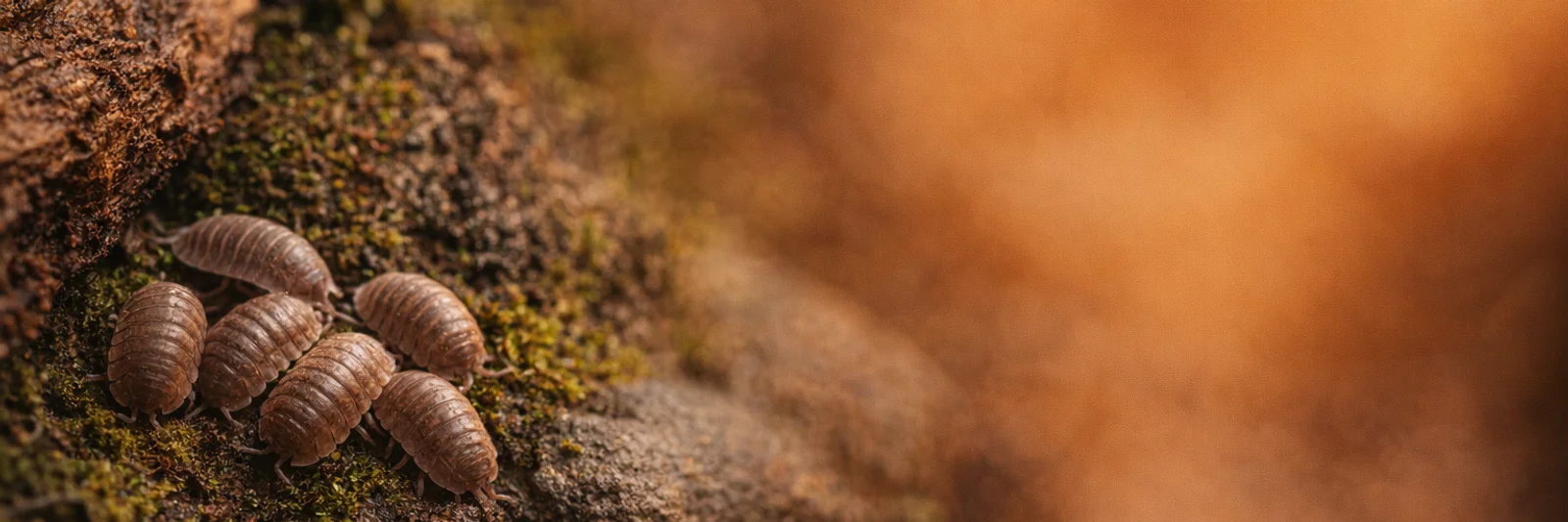
- Under-seeding is the number one reason bioactive cleanup crews fail, so start with more than you think.
- Seed a full starter culture, not a handful: roughly 25 or more for a small tank and 50 or more for a standard one.
- You cannot really have too many isopods, because they self-regulate to available food and moisture and will not overpopulate a healthy enclosure.
- Always pair isopods with springtails so your crew handles both large waste and fine mold.
- A bigger starting colony establishes faster and begins cleaning your enclosure sooner.
The Real Answer: Start With More Than You Think
Almost every failed cleanup crew traces back to the same mistake: too few isopods to begin with. Keepers drop ten or twenty isopods into a big, freshly planted vivarium, the colony spends months just trying to establish, and in the meantime waste and mold pile up faster than a tiny population can handle. The fix is simple and it is the honest heart of this whole question: seed a full starter culture, not a handful.
There is no downside to starting generous. A larger founding population settles in faster, breeds sooner, and starts visibly cleaning your enclosure within weeks instead of months. Think of the numbers below as starter cultures, not exact headcounts to measure out, because you never need to count isopods one by one.
Rough Guidance by Enclosure Size
Use enclosure size as your guide, and lean toward the higher end if the tank is heavily planted, holds a messy animal, or you simply want faster results. These are ranges, not precise quotas:
- Small enclosure, roughly 10 gallons: start with a culture of about 25 or more isopods. A full starter culture gets a small tank cycling quickly.
- Standard enclosure, 20 to 40 gallons: start with roughly 50 or more. This is the most common bioactive size, and a healthy starter culture here establishes a self-sustaining colony.
- Large or high-waste enclosure: start with more still. Big tanks, dense plantings, and animals that produce a lot of waste all ask for a bigger founding population so the crew can keep up from day one.
Can You Have Too Many Isopods?
No. This is the reassuring part: isopods self-regulate. Their population naturally rises and falls to match the food and moisture available in the enclosure, so they will not overpopulate a healthy, balanced tank. When waste and leaf litter are plentiful the colony grows, and when food is scarce the numbers level off on their own.
That means you cannot really over-seed by starting with a generous culture. The worst case of buying plenty is simply a faster-establishing crew, which is exactly what you want. Under-seeding, on the other hand, has a real failure mode, so if you are going to err in either direction, err toward more.
How Many Springtails to Add Alongside
Isopods are only half of a good cleanup crew, so plan to add springtails at the same time. Springtails are tiny and go after mold and fine debris, while isopods break down the larger waste, leaf litter, and droppings. Together they cover the whole job instead of just part of it.
For springtails the guidance is easy: seed generously. They are microscopic, they breed explosively, and a full starter culture spreads through fresh substrate fast to get ahead of the early mold that loves a new, humid, planted tank. You do not count springtails any more than you count isopods, you just start with a healthy culture and let them build.
Why a Bigger Start Pays Off
A larger founding colony is not about crowding the tank, it is about time. A generous starter culture reaches a stable, working population much sooner than a few individuals ever could, which means your enclosure is genuinely being cleaned in weeks rather than half a year.
It also gives you a buffer. Some isopods will not make the transition into a new enclosure, and a bigger start absorbs those losses without stalling the colony. Between faster establishment and a healthy safety margin, starting with a full culture is the single easiest thing you can do to make a bioactive setup succeed.
Frequently Asked Questions
How many isopods per gallon?
There is no strict per-gallon count, and thinking that way usually leads to under-seeding. Instead, seed by enclosure size with a full starter culture: roughly 25 or more isopods for a small 10 gallon tank and about 50 or more for a standard 20 to 40 gallon. Lean higher for heavily planted or high-waste enclosures.
How many isopods for a 20 gallon?
For a 20 gallon bioactive enclosure, start with a culture of roughly 50 or more isopods. That is a full starter culture rather than a handful, which is what lets the colony establish quickly and start cleaning sooner. It is fine to go higher, especially in a densely planted tank.
Can you have too many isopods?
No, you cannot really have too many isopods in a healthy enclosure. They self-regulate to the food and moisture available, so their population rises and falls naturally and will not overpopulate a balanced tank. Under-seeding is the real risk, so if anything, start with more.
How many springtails and isopods together?
Add both at the same time and seed each one generously with a full starter culture. Isopods handle the larger waste and leaf litter while springtails clean up mold and fine debris, so a bioactive setup wants a healthy population of each rather than a few of either. You do not count them individually, you just start generous and let them build.
How many isopods to start a bioactive?
Start a bioactive setup with a full starter culture sized to your enclosure: about 25 or more for a small 10 gallon, roughly 50 or more for a standard 20 to 40 gallon, and more still for large or high-waste tanks. Starting generous is the easiest way to make the crew succeed, since under-seeding is the top cause of failure.
Do isopods overpopulate a terrarium?
No, isopods do not overpopulate a healthy terrarium. Their numbers self-regulate to match the food and moisture in the enclosure, so a stable tank naturally holds the population in balance. This is why you can safely start with a generous culture instead of worrying about too many.
Keep comparing: How to Start an Isopod Culture· Best Cleanup Crew Isopods· Do Isopods Need Springtails· Isopod Care Guide
