
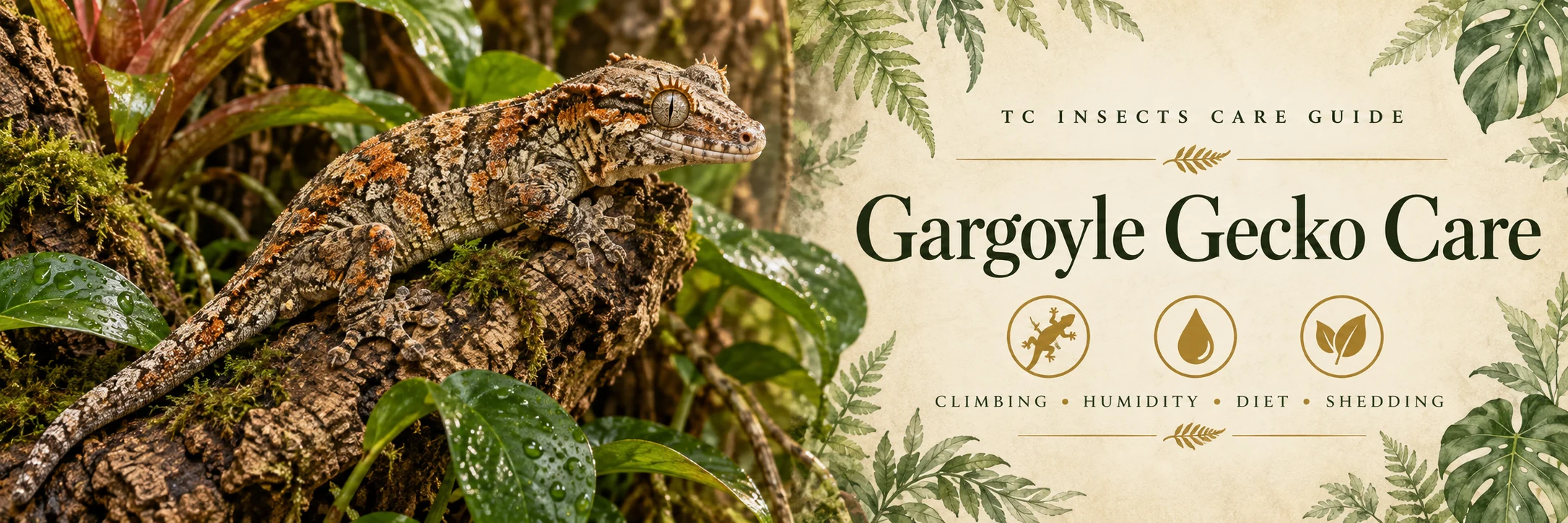
A practical guide to Gargoyle Gecko care: climbing habitat, humidity, prepared diet, feeder insects, and everyday health.
Meet the Gargoyle Gecko
This New Caledonian climber carries two bony bumps above its eyes that resemble horns. Gargoyles range through marbled gray, orange, red and cream, often shifting from a pale daytime phase to a darker, fired-up night phase.
A beginner sweet spot
They are arboreal, calm enough for short handling sessions, comfortable at room temperature and fed mainly on prepared powdered diet rather than a permanent insect culture.
Strictly solo
Gargoyles are more predatory toward tankmates than crested geckos and may bite tails and toes. Solo housing is the safe standard and makes feeding and shedding easy to monitor.
Gargoyle or Crested Gecko?
| Factor | Gargoyle Gecko | Crested Gecko |
|---|---|---|
| Adult size | About 8 inches total | About 8 inches total |
| Dropped tail | Regenerates | Never regrows |
| Temperature | 72–78°F, cool tolerant | 72–78°F, heat sensitive |
| Cohabitation | Solo; more predatory | Solo recommended |
| Diet | Powdered diet plus insects | Powdered diet plus insects |
| Handling | Calm; young animals may jump | Calm; often jumpier |
| Best for | Keepers who want a regenerating tail | Keepers who want the classic crest |
What you will need
Conditions at a glance
| Parameter | Target | Notes |
|---|---|---|
| Enclosure minimum | 18 × 18 × 24 inches | Vertical; juveniles do better smaller |
| Day temperature | 72–78°F | Room temperature in most homes |
| Temperature ceiling | Above 82°F is stressful | Summer heat is the real risk |
| Night | 65–72°F | A natural drop is welcome |
| Humidity | 60–80%, cycling | Mist at night; dry back by day |
| Water | Droplets plus a small dish | Most drinking is from misted surfaces |
| Lighting | 12-hour cycle | UVB optional, not required |
| Housing | One per enclosure | Never cohabit |
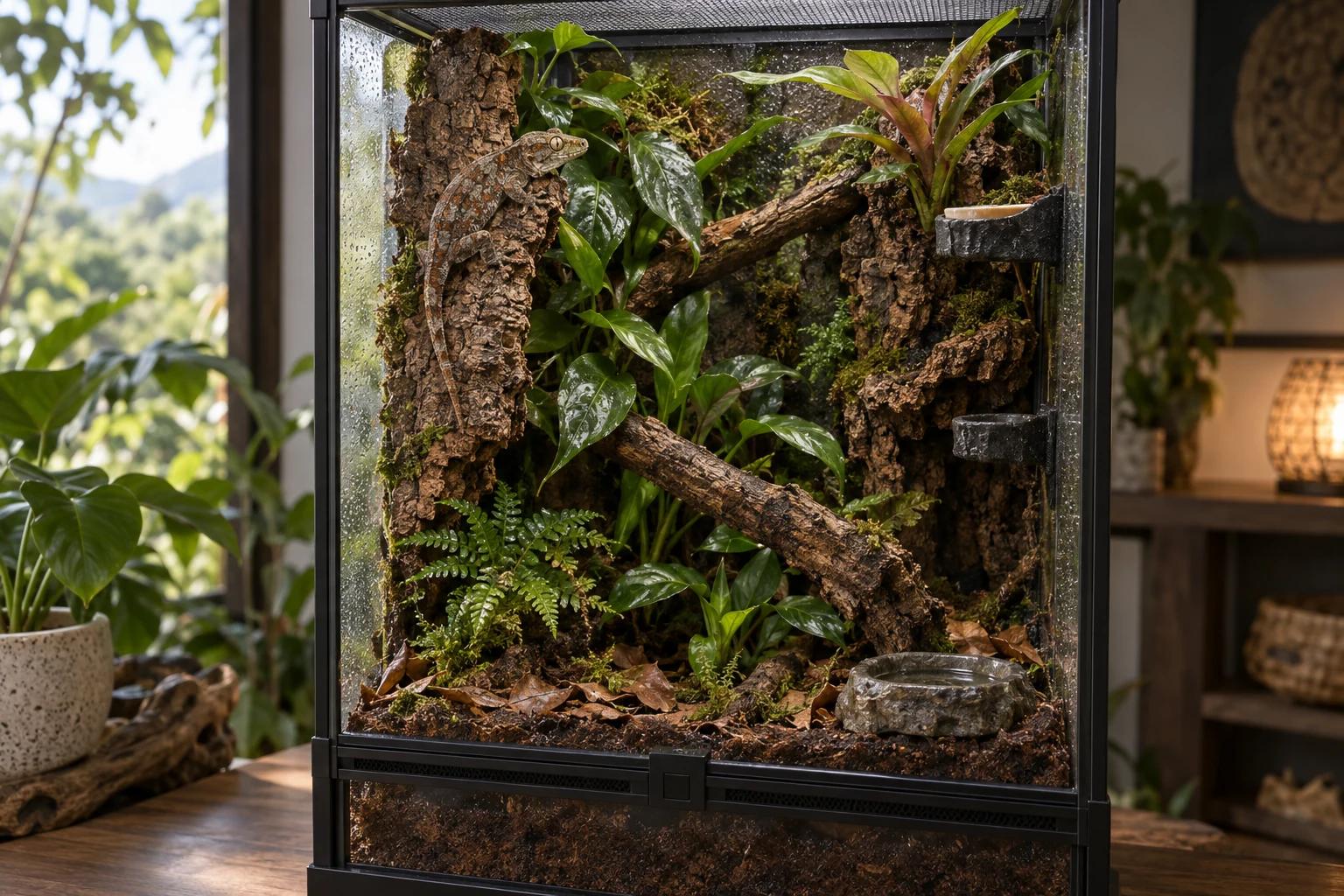
Build upward and keep cover close
Use cork rounds, angled branches and broad leaves, with clear routes to elevated cups so a shy gecko never crosses open space to eat. Juveniles benefit from smaller quarters until they locate food reliably.
House one gecko per enclosure. Solo housing prevents injuries and makes appetite, waste and shedding easy to track.
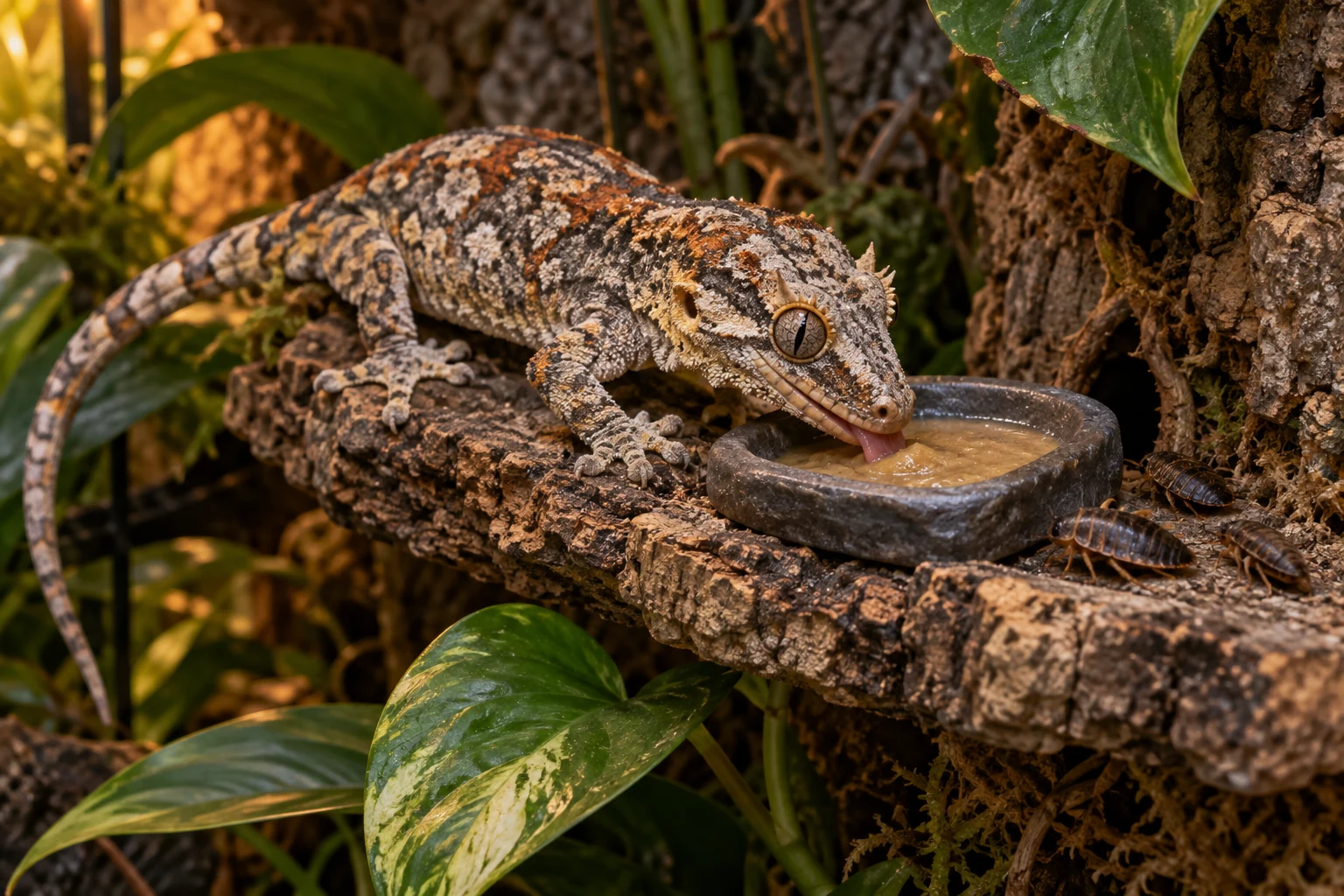
Prepared diet plus insects
Offer fresh, smooth powdered gecko diet in ledge cups several times weekly. Gargoyles are more carnivorous than cresties, so gut-loaded dubia remain important—once or twice weekly for adults and more often for juveniles.
Feed at night, size insects no wider than the space between the eyes and remove uneaten prey.
Cool rooms are an advantage
Keep days at 72–78°F with nights in the mid to upper 60s. Sustained temperatures above the low 80s cause stress, so summer care means cooling the room or moving the enclosure—not adding more heat.
Cycle humidity between roughly 60% and 80% by misting at night and allowing a daytime dry-back. A screen top prevents stagnant air. UVB is optional when the complete diet and dusted insects provide D3.
Diet by life stage
| Stage | Food | Amount | Frequency | Supplements |
|---|---|---|---|---|
| Juvenile | Powdered diet + small dubia | Fresh cup + 3–5 insects | Diet every other day; insects 2–3× weekly | Calcium + D3 on every insect feeding |
| Subadult | Powdered diet + dubia | Fresh cup + 4–6 insects | Diet every other day; insects twice weekly | Calcium + D3 twice weekly; multivitamin every other week |
| Adult | Powdered diet + dubia | Fresh cup + 5–8 insects | Diet 3× weekly; insects 1–2× weekly | Calcium + D3 weekly; multivitamin every other week |
Feeder and cleanup-crew picks from this guide. Untick anything you already have, then add the rest in one click.
The bioactive option
The humidity cycle suits springtails and dwarf white isopods. They process waste and escaped feeders under the leaf litter while the gecko lives above. Build with drainage, suitable soil and an established cleanup crew.
Handling and temperament
Let a new gecko settle and eat for two weeks. Handle low over a soft surface, moving hand over hand rather than gripping. Young gargoyles are jumpier and improve with calm routine. Never restrain one by the tail, even though a lost tail can regenerate.
Health and troubleshooting
| What you see | Most likely cause | What to do |
|---|---|---|
| Lethargy and gaping in warm weather | Overheating above the low 80s | Cool the room; move away from sun and warm walls |
| Stuck shed on toes or tail tip | Humidity dipping too low | Mist consistently; add damp hide; offer shallow soak |
| Ignoring the diet cup | Stale mix, deep cup or warm tank | Use fresh mix, shallow cups and verify temperature |
| Wobbly limbs or soft jaw | Metabolic bone disease | Correct diet and dusting; see a vet |
| Dropped tail | Startle or restraint | Keep the enclosure clean during regrowth |
| Weight loss with normal appetite | Parasites | Exotics vet with a fresh fecal sample |
| Darker color at night | Normal firing up | No action needed |
Gargoyle Gecko FAQ
Gargoyle gecko or crested gecko: which should I get?
Both are excellent. Gargoyles regrow dropped tails, are more strictly solitary and tolerate slightly warmer rooms. Choose the traits and appearance you prefer.
Do gargoyle geckos need UVB?
Not with a complete D3-containing diet, though low-output UVB on a 12-hour cycle is a useful optional safety margin.
Do they need a heat lamp?
Rarely. Most homes already provide 72–78°F. If your home runs cold, use a low-watt thermostat-controlled source; if hot, focus on cooling.
Can two gargoyle geckos live together?
No. They can bite tails and toes, and males fight. Keep each animal alone.
Do I have to feed insects, or is powdered diet enough?
Insects matter. Powdered diet is the base, but adults benefit from dusted gut-loaded dubia once or twice weekly; juveniles need them more often.
Will a gargoyle gecko regrow its tail?
Yes. The replacement is usually shorter and more bulbous. Never restrain a gecko by its tail.
Why is my gecko darker at night?
It is firing up—a normal shift when active, warm or stimulated. Pale by day and vivid at night is common.
How long do gargoyle geckos live?
Fifteen to twenty years with good care, making this a genuinely long-term reptile.
Setting Up a Gargoyle?
Tell us the gecko's age and we will size insect feedings alongside the powdered diet. Real keepers answer our email.
Prepared by the TC INSECTS keeper team for practical, responsible Gargoyle Gecko care.
