
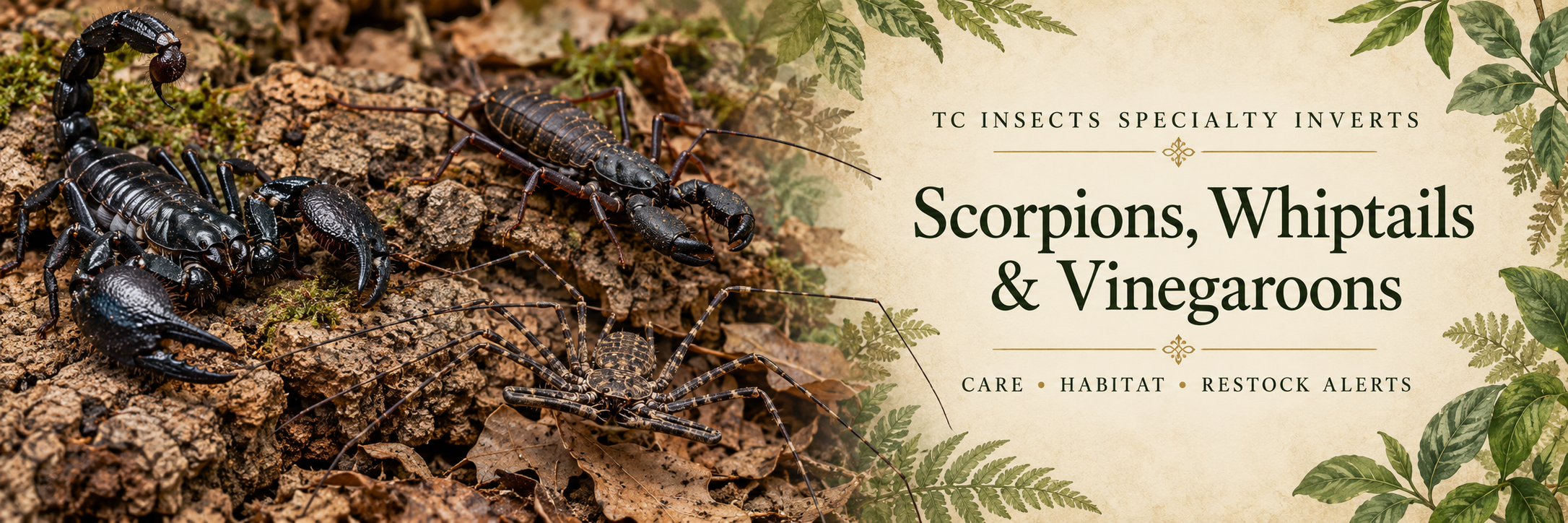
Scorpions, Whiptails & Vinegaroons For Sale
◈ Specialty InvertsScorpions, vinegaroons, and tailless whip spiders (whip scorpions) are hardy, long-lived specialty invertebrates that make striking, low-maintenance pets. This is a care-first page: below you will find honest notes on which of these are actually dangerous (most are not), the enclosure each one needs, and what to feed them. New stock is on the way - in the meantime, the care basics here are exactly what you need to set up before your animal arrives.
Some inverts look like they crawled out of a monster movie and turn out to be gentle, long-lived pets. That is the whole appeal of this shelf. Vinegaroons and tailless whip spiders look alarming and are effectively harmless - no venom, no sting. Scorpions do carry venom, but most pet species sting about like a bee, and we will be honest about the few that are more serious. New stock is restocking soon; until then, use the care notes below to get an enclosure ready so you can add the animal the day it lands.
Coming Soon - Join the List
New scorpions, vinegaroons, and tailless whip spiders are on the way. Use the care notes on this page to get an enclosure dialed in now, and be first to hear when stock lands: join the Colony Notes list at the bottom of this page, or send us a note and we will reply when your animal is available.
Vinegaroons & Whip Spiders: Scary Looks, Gentle Reality
If you want the wow factor of a dangerous-looking invertebrate without the actual danger, this is your aisle. Vinegaroons (Mastigoproctus) are heavy-bodied, whip-tailed burrowers that are famously long-lived and famously docile - their only defense is that harmless vinegar spray. Tailless whip spiders (Amblypygi) are flat, fast, alien-looking climbers with long feeler legs, and despite looking like something from a horror film they have no venom and no sting at all. Both are hardy, quiet, and a favorite of keepers who love the strange end of the hobby.
Scorpions: Keep It Honest
Scorpions are the one group here that genuinely require respect. The good news is the most popular pet species are mild: the Emperor scorpion and Asian Forest scorpion are large, dramatic, and sting about like a bee sting for most people. The caution is that a handful of species - the Arizona Bark Scorpion is the classic example - carry medically significant venom and should be treated as strictly hands-off display animals. Whatever the species, the rule is the same: enjoy them through the glass, keep the enclosure secure, and never handle a scorpion casually.
 Live Arrival Guarantee
↻ details
Every animal arrives alive in any weather - or we make it right with a replacement or credit. Report within 1 hour of delivery.
 Weather-Checked Shipping
↻ details
We scan the 7-day forecast at your ZIP before we ship, and recommend the right protection at checkout.
 Live-Safe Ship Days
↻ details
Live orders ship Monday to Wednesday via FedEx, USPS daily except Thu and Sun. No weekend depot layovers, ever.
 57,000+ Orders Shipped
↻ details
Rated 4.7 stars across 345 Google reviews. Family-owned insect farm in Porter, Texas.
What Keepers Say
[trustindex data-widget-id="bf2ceea75d26876235268f97d9c"]Specialty Inverts FAQ
Keep Your Colony Thriving
Occasional keeper notes: care tips, restock alerts, and colony-raising pointers. No spam, ever.
[mwai_chatbot id="default"]
