
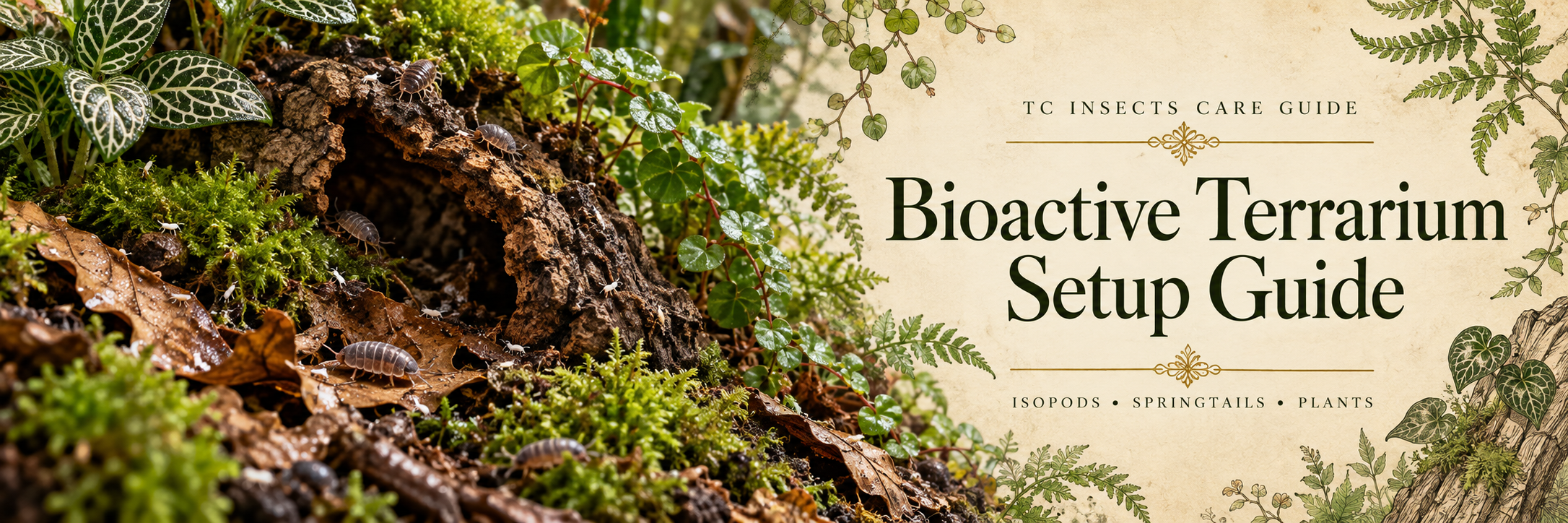
Bioactive Terrarium Setup for Beginners
TC INSECTS is a family-run insect farm in Porter, Texas, and one of the largest isopod and springtail breeders in the country. A bioactive terrarium is a living enclosure where a cleanup crew, plants, and microbes break down waste for you, so you rarely spot-clean. It sounds advanced, but the build is simple once you know the layers. Here is how, plus the cleanup crew to seed it.
A false bottom so the substrate never waterlogs.
Most setups want both, working together.
Across the contiguous US, guaranteed alive; not HI or AK.
A bioactive terrarium is built in layers: a drainage layer at the bottom, a few inches of living substrate above it, and a top layer of leaf litter and wood where the cleanup crew lives. Seed it with isopods and springtails, let it cycle, and it largely maintains itself.
Shop Your Cleanup Crew
Isopod & Springtail Combo
The easiest way to start: dwarf white isopods paired with a springtail culture, the two cleanup-crew workhorses, seeded together. Choose your springtail type and add an optional feed kit.
Springtail Culture
Springtails graze mold and fungus and break down the finest waste. Every bioactive setup benefits from a strong springtail population, and they double as food for small froglets and geckos.
Magnolia Leaf Litter
A top layer of hardwood leaf litter feeds and shelters your cleanup crew and completes the natural look. Slow-decaying magnolia is the finishing layer that makes a bioactive setup work.
Everything a bioactive keeper needs from this guide. Untick anything you already have, then add the rest in one click.
How to Build a Bioactive Terrarium
What "bioactive" actually means
A bioactive terrarium is a small, self-sustaining ecosystem. Instead of tearing the enclosure down to clean it, you build a living system where a cleanup crew of isopods and springtails, live plants, and beneficial microbes break down your animal's waste, shed skin, and leftover food. Done right, it means far less spot-cleaning, a healthier enclosure, and a more natural home for your reptile or amphibian.
Layer 1: the drainage layer
Start at the bottom with a drainage layer, one to two inches of LECA (lightweight clay balls) or gravel, topped with a mesh or screen barrier. This false bottom gives excess water somewhere to go so the substrate above never becomes waterlogged. Waterlogged soil is the number one killer of a new bioactive setup, so this layer is worth doing properly.
Layer 2: the living substrate
On top of the drainage barrier, add at least two to three inches of a bioactive substrate mix, typically organic topsoil blended with coconut coir and sphagnum moss, adjusted for your animal's humidity needs. This is where live plants root and where your cleanup crew lives and burrows. Deeper is better for burrowing species and for giving the crew room to establish.
Layer 3: leaf litter, wood, and the cleanup crew
Finish with a top layer of hardwood leaf litter and a few pieces of cork bark or wood. This feeds and shelters the cleanup crew and gives the enclosure its natural look. Now seed the crew: springtails for mold and fungus control, and isopods for breaking down waste and detritus. Most setups want both, because they handle different jobs, which is why an isopod and springtail combo is the simplest way to start.
Cycle it before adding your animal
The one step beginners skip is patience. Before you introduce your reptile or amphibian, let the terrarium establish for at least four weeks. That gives plants time to root, and, just as importantly, gives the isopods and springtails time to colonize the substrate and start reproducing so there is a working population ready to process waste. Add your animal to an established, cycled system and bioactive genuinely takes care of itself.
Bioactive Build at a Glance
LECA or gravel plus a mesh barrier.
Topsoil, coco coir, and sphagnum moss.
Isopods and springtails, then cycle 4+ weeks.
Bioactive Terrarium FAQ
Seed Your Bioactive Setup From Our Farm
Planning a build and not sure which cleanup crew fits your animal? Email customer.service@tcinsects.com and we will help you choose.
TC INSECTS · Raised on our Porter, Texas farm · Guaranteed to arrive alive
