
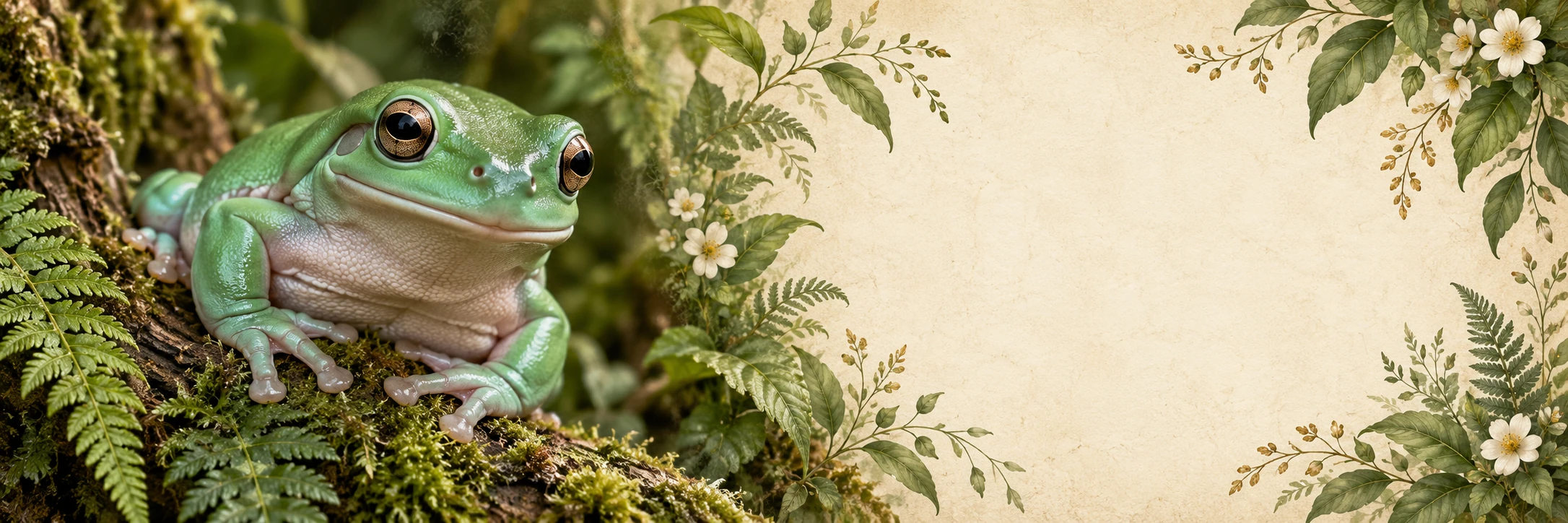
Best Feeder Insects for White's Tree Frogs
A lean, varied feeder rotation for the big-appetite dumpy frog. Choose appropriately sized staples, watch body condition, and keep high-fat treats occasional.
Active, lean prey that encourages a natural feeding response.
A quiet, nutritious second staple.
These frogs can overeat; judge body condition, not appetite.
- White's tree frogs, also called dumpy tree frogs, are big-appetite eaters that will happily beg for food they do not need, so the honest answer starts with a caution: these frogs are prone to obesity, and overfeeding is the most common mistake keepers make.
- For White's Tree Frogs, the ranking starts with Crickets as the top staple.
- Nearly every feeder insect is calcium-deficient with an inverted calcium-to-phosphorus ratio, so dust with a calcium supplement and gut-load before feeding.
- These figures are on an as-fed (live) basis compiled from published feeder-insect composition research, so they are guidance, not guarantees.
| Crickets | Dubia Roaches | Hornworms | Superworms | |
|---|---|---|---|---|
| Protein | 15 to 21% | 20 to 23% | about 9% | 19 to 20% |
| Fat | 3 to 7% | 6 to 7% | 1 to 3% | 17 to 18% |
| Calcium : Phosphorus | about 0.12:1 | about 0.29:1 | about 0.24:1 | about 0.1:1 |
| Dust with calcium? | Yes | Yes | Yes | Yes |
| Best known for | Balanced, widely available staple that triggers a strong feeding response | High-protein everyday staple; best calcium ratio among feeder roaches | Hydration and a soft-bodied treat; very high moisture, low fat | Larger, high-fat feeder for bigger appetites; room-temperature storage |
The Best Feeders for White's Tree Frogs, Ranked
Every feeder below can be part of a healthy diet, but they earn their spots for different reasons. Here is how they stack up for White's tree frogs, from everyday staple to occasional treat.
- Crickets. The active staple that suits these frogs best. Their constant hopping triggers the strong feeding response White's tree frogs rely on, and they come in sizes for juveniles through adults. They are lean and low in fat, which is exactly what an obesity-prone frog needs. Dust and gut-load, and crickets can anchor the diet. Shop crickets.
- Dubia roaches. A nutritious, quiet staple that many keepers prefer to raise at home. They carry a little more protein than crickets, stay low in fat, do not chirp or smell, and cannot climb smooth walls. A relaxed White's tree frog takes them readily, making dubia an easy second staple to rotate with crickets. Shop dubia roaches.
- Hornworms. A soft-bodied, very high-moisture treat that is great for hydration and tempting a picky eater. At roughly 85 percent moisture and only 1 to 3 percent fat, they add water and interest without piling on calories. They grow fast, so offer them at an appropriate size. Use them as a treat, not a staple. Shop hornworms.
- Superworms. A larger feeder that adult White's tree frogs enjoy, but they are high in fat, around 17 to 18 percent, so they should be an occasional item only. Offer them sparingly as a treat, especially for a frog that is already carrying extra weight. Limit superworms and skip them entirely for an overweight frog. Shop superworms.
How Often and How Much to Feed
Feeding schedule is where most White's tree frog problems start, because these frogs will eat far more than they need. Adults do best on a few appropriately sized insects two to three times a week, not daily. Juveniles are still growing and eat more often, typically small feeders every day or every other day, then you taper the frequency as the frog matures.
For sizing, use the same reliable rule that works across frogs: feed prey no wider than the space between your frog's eyes. Prey that is too large is the most common feeding mistake and easy to avoid once you use that simple gauge. When in doubt, size down, and size feeders up gradually as your frog grows.
Most importantly, judge portions by your frog's body condition, not its appetite. A healthy White's tree frog is plump but not bloated, and you should not see heavy folds of fat building up over its eyes and back. If your frog is gaining too much, cut back frequency and portion size before adding any fatty feeders. Whatever you offer, dust with a calcium supplement and gut-load your feeders first, since nearly every feeder insect is calcium-deficient on its own.
Avoid or Limit These
A few common feeders cause more trouble than they are worth for this species. The theme is the same: fat and excess.
Waxworms and too many superworms cause obesity. Waxworms are very high in fat and best skipped or saved for the rare treat, and superworms should stay occasional rather than routine. Neither belongs in the everyday rotation for a frog that already loves to eat. Lean staples like crickets and dubia should make up the bulk of the diet.
Avoid wild-caught insects. Bugs collected from your yard can carry pesticides, parasites, or other contaminants, and they are not worth the risk when clean, farmed feeders are easy to get. Stick to captive-bred feeders you can dust and gut-load, and do not offer anything wider than the space between your frog's eyes.
Frequently Asked Questions
What do White's tree frogs eat?
White's tree frogs are insectivores. A healthy diet is a lean, varied rotation of feeder insects, with crickets and dubia roaches as staples, hornworms as a hydrating treat, and superworms only occasionally. Dust with calcium and gut-load your feeders, and feed prey no wider than the space between the frog's eyes.
How often to feed a White's tree frog?
Adults do best on a few appropriately sized insects two to three times a week, not daily. Juveniles are still growing and eat more often, usually small feeders every day or every other day. These frogs are prone to obesity, so judge portions by body condition rather than appetite and do not overfeed.
Can White's tree frogs eat dubia roaches?
Yes. Dubia roaches are an excellent staple for White's tree frogs: they are nutritious, quiet, odorless, low in fat, and cannot climb smooth walls. Offer dubia no wider than the space between the frog's eyes, dust and gut-load them, and rotate them with crickets for variety.
What size insects for a White's tree frog?
Feed prey no wider than the space between your frog's eyes. That simple gauge prevents the most common feeding mistake, which is offering prey that is too large. When you are unsure, size down, and size feeders up gradually as a juvenile grows into an adult.
Can White's tree frogs eat mealworms or waxworms?
Waxworms are very high in fat and should be skipped or saved for a rare treat, since these frogs are prone to obesity. Mealworms can be offered occasionally but have a hard shell and higher fat, so they are not an ideal staple. Lean feeders like crickets and dubia roaches are far better everyday choices.
Keep comparing: Best Feeders for Frogs and Toads· Dubia vs Crickets· Best Feeders for Chameleons· Feeder Nutrition Chart
Fresh Feeders, Sensible Portions
Build a varied, appropriately sized menu with lean staples and occasional treats, shipped live from our farm.
TC INSECTS · Bred in Porter, Texas · Live Arrival Guarantee