
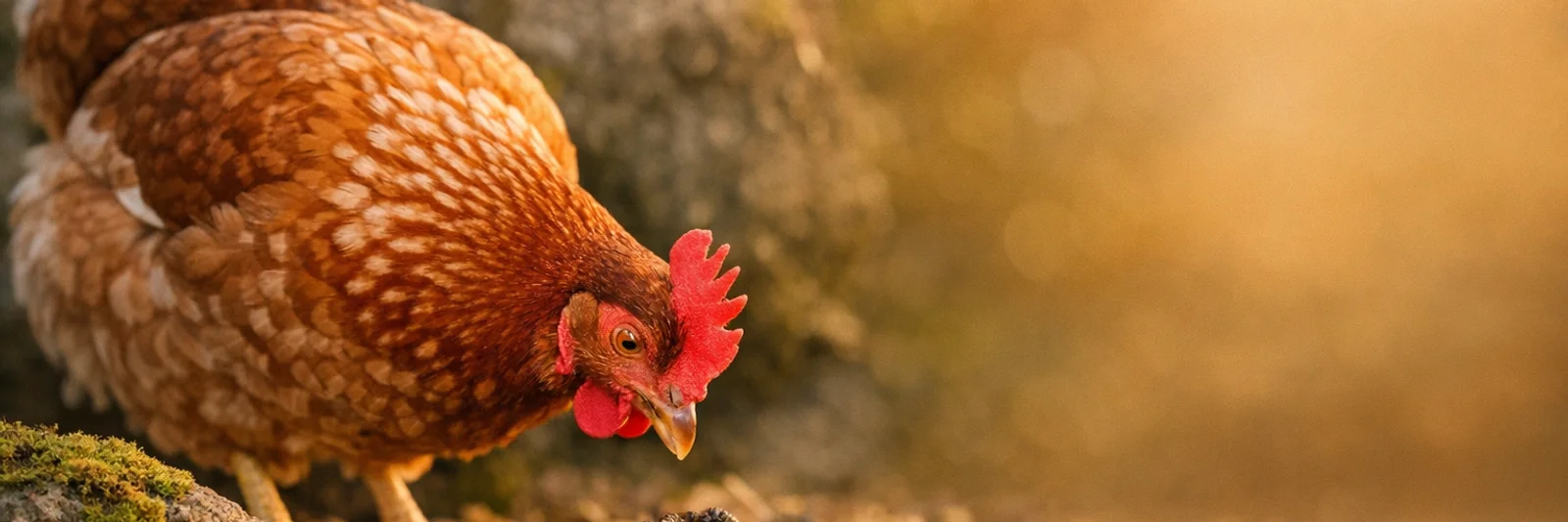
- Black soldier fly larvae are the best feeder insect for chickens because they are naturally calcium-rich, which supports strong eggshells.
- Feeder insects are a treat and a supplement, not a replacement for a complete layer feed.
- Keep insects to roughly 10 percent of a chicken's total diet, offered a few times a week.
- Dubia roaches are a great high-protein treat that chickens eagerly chase and eat.
- Mealworms are a favorite but higher in fat, so limit them rather than feeding them daily.
The Best Feeder Insects for Chickens
Chickens are natural foragers, and live insects give them protein, enrichment, and the chance to do what they love: scratch and hunt. Not every feeder is equal for a laying flock, though. Here are the three we recommend, ranked by how useful they are day to day, followed by an honest note on how much to feed.
- Black Soldier Fly Larvae (Calcium Worms) - The best choice for laying hens. They are naturally calcium-rich, which supports strong eggshells in a way mealworms cannot, so they double as a treat and a calcium boost. Shop Calcium Worms.
- Dubia Roaches - A high-protein treat chickens love to chase. They are meaty, easy for hens to eat, and a great way to add protein during a molt or a cold snap. Shop dubia roaches.
- Mealworms - The classic favorite. Chickens go wild for them, but they are higher in fat, so treat them as an occasional reward rather than an everyday snack. Shop mealworms.
BSFL vs Dubia vs Mealworms for Chickens
Each of these feeders brings something a little different to the coop. Here is the honest comparison so you can match the insect to what your flock needs. Exact nutrition varies with how the insects are raised, so we describe the profile rather than promising precise numbers.
- Black Soldier Fly Larvae (Calcium Worms): Naturally high in calcium, moderate protein, moderate fat. Best use: the everyday supplement for laying hens, since the calcium supports strong eggshells.
- Dubia Roaches: High in protein, low in fat, low in calcium. Best use: a protein-rich treat for molting birds, growing pullets, or a winter boost.
- Mealworms: Good protein but higher in fat, low in calcium. Best use: an occasional favorite treat and a training or hand-taming reward, fed in small amounts.
How Much and How Often to Feed
This is where many keepers go wrong out of love for their birds. Treats are exciting, so it is easy to overdo it. The rule that keeps a flock healthy is simple: insects and other treats should make up no more than about 10 percent of the diet. The other 90 percent should be a complete layer feed formulated with the protein, vitamins, and minerals hens need.
In practice, that means a small handful of insects per bird a few times a week, not a heaping scoop every day. Scatter them in the run so the flock has to forage, which turns feeding time into enrichment. If you notice hens ignoring their regular feed or laying softer-shelled eggs, that is a sign the treats have crept too high, so scale back to the layer feed base.
Feeder Insects and Egg Quality: The Honest Story
There is real substance behind the calcium angle, and it is worth getting right. Strong eggshells depend on a hen getting enough calcium, and black soldier fly larvae are naturally calcium-rich in a way most other feeder insects are not. That makes them a genuinely useful supplement for laying hens, on top of the calcium in a good layer feed and free-choice oyster shell.
Here is the honest framing, though: insects support egg quality, they do not work miracles. A hen laying thin shells because she is short on calcium overall will benefit from calcium-rich larvae, but no insect overrides a diet that is out of balance. Think of Calcium Worms as one helpful piece of the calcium picture, alongside layer feed and oyster shell, not a single fix that guarantees perfect eggs.
Can Chicks Eat Feeder Insects
Yes, baby chicks can eat feeder insects, as long as they are the right size and offered in moderation. Chicks are enthusiastic foragers and will happily peck at small insects, which gives them protein and a bit of enrichment early on. Choose appropriately sized feeders that a chick can swallow safely, such as smaller larvae or small dubia nymphs, and avoid anything too large or hard-shelled.
The same balance rule applies, only more strictly. Chicks grow fast on a complete starter feed built for their needs, so insects should stay an occasional treat, not a main course. Offer a few small insects now and then rather than a daily pile, and always make sure the chicks have grit available if they are eating anything other than starter crumble, so they can digest it properly.
Frequently Asked Questions
Can chickens eat dubia roaches?
Yes, chickens can eat dubia roaches and tend to love them. Dubia are a high-protein, low-fat treat that hens chase eagerly, which makes them a great protein boost during a molt or cold weather. Keep them to about 10 percent of the diet, since a complete layer feed should still be the base.
Are black soldier fly larvae good for chickens?
Yes, black soldier fly larvae are one of the best feeder insects for chickens. They are naturally calcium-rich, which supports strong eggshells better than mealworms do, so they work as both a treat and a calcium supplement for laying hens. They still belong in the roughly 10 percent treat portion of the diet.
How many mealworms can a chicken eat per day?
Only a small amount. Mealworms are a favorite but higher in fat, so they are best as an occasional treat, not a daily feeding. A small handful shared among the flock a few times a week is plenty, keeping all treats to about 10 percent of the total diet so the layer feed stays the main source of nutrition.
Do feeder insects boost egg production?
Feeder insects can support egg quality and give hens extra protein, but they do not replace a balanced diet. Calcium-rich black soldier fly larvae in particular help support strong eggshells alongside layer feed and oyster shell. The biggest drivers of laying are still a complete diet, daylight, and overall health, so treat insects as a helpful supplement, not a miracle.
Can baby chicks eat feeder insects?
Yes, baby chicks can eat feeder insects in moderation, as long as the insects are appropriately sized for them to swallow safely. Small larvae or small dubia nymphs work well as an occasional treat. Chicks grow on a complete starter feed, so insects should stay a small extra, and chicks eating anything besides starter crumble need grit to digest it.
What is the best feeder insect for laying hens?
Black soldier fly larvae, sold here as Calcium Worms, are the best feeder insect for laying hens. Their natural calcium content supports strong eggshells in a way mealworms and most other insects cannot. Offer them a few times a week as part of the roughly 10 percent treat portion, with a complete layer feed as the everyday base.
Keep comparing: Dubia vs Black Soldier Fly Larvae· Black Soldier Fly Larvae vs Mealworms· How to Gut Load Feeder Insects· Feeder Nutrition Chart
