
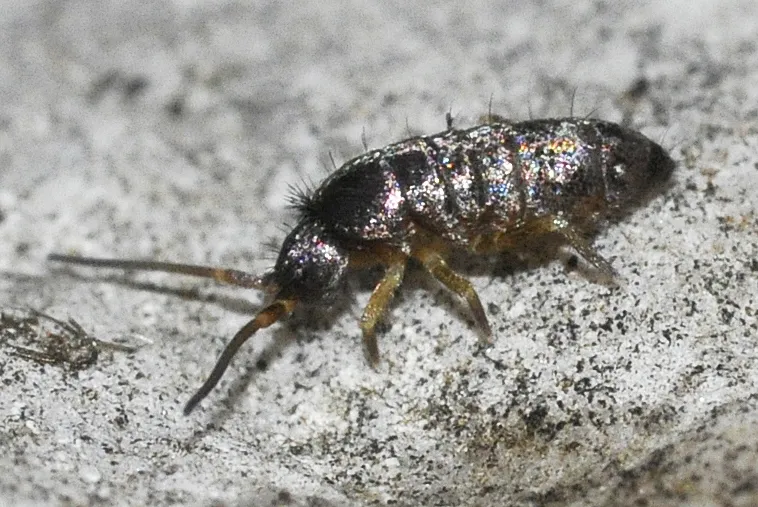
Tomocerus vulgaris “Giant Silver” Springtails for Sale
Overview
Giant Silver springtails are large, silver-gray live springtails used for display cultures, naturalistic bioactive terrariums, planted vivariums, isopod cultures, and springtail hobby projects. Customers receive live Tomocerus vulgaris “Giant Silver” springtails in the selected count.
This species belongs to the family Tomoceridae, a group known for larger, elongate-bodied springtails. Compared with tiny white springtails, Giant Silver springtails are much easier to see and observe. They are a strong choice for keepers who enjoy watching microfauna behavior instead of only using springtails as an invisible cleanup crew.
Giant Silver springtails can help process fungi, biofilm, bacteria, algae, and small decomposing organic material. However, they should not be treated as a fast, heavy-duty mold control species by themselves. They are best used as a display springtail, culture project, supplemental cleanup crew species, or naturalistic microfauna addition.
Pronounced
Tomocerus: Toh-MOH-seh-rus
vulgaris: vul-GAIR-iss
Giant Silver: Giant Sil-ver
Care Level
Care Level: Intermediate
Giant Silver springtails are best for keepers who can provide stable moisture, good ventilation, bark or wood cover, leaf litter, and a naturalistic culture environment. They are larger and more interesting to watch than many common springtails, but they are usually slower and more sensitive than basic white springtail cultures.
Appearance and Size
Giant Silver springtails have a long, slender body with a silver-gray, lightly metallic, or bluish-gray appearance. Their longer antennae and larger body make them stand out compared with many smaller springtail species.
They are often seen around bark, wood, leaf litter, moss, and moist substrate. In a stable culture, they may gather under cover or near food areas. Because they are larger than many springtails, they are excellent for macro photography, observation cultures, and educational displays.
Adult Size
Adult Size: Large for a springtail, often around 4 to 5 mm
Many Tomocerus-type springtails are noticeably larger than standard cleanup crew springtails. Their larger size makes them easier to observe, but it also means the culture may not reproduce as densely as smaller springtail species.
Reproductive Rate
Reproductive Rate: Slow to Moderate
Giant Silver springtails should be treated as a slower culture species. They are not usually as fast or dense as Temperate White springtails, Tropical White springtails, or other common cleanup crew cultures.
For best results, keep a backup culture and allow the colony time to establish before using large portions of the culture in an enclosure.
Giant Silver Springtail Care
Giant Silver springtails do best in a moist, breathable setup with substrate, bark, decaying wood, leaf litter, and good ventilation. They should not be kept in a sealed, stagnant, or overly wet container.
A good setup should feel humid and stable, but not swampy. Provide a moisture gradient so the springtails can move between damp areas and slightly drier cover. Bark, wood, moss, and leaf litter are especially helpful because they create shelter, grazing surfaces, and humidity pockets.
Avoid completely dry cultures, standing water, poor ventilation, direct heat lamps, pesticide-treated materials, chemical cleaners, and heavy overfeeding.
Giant Silver Springtail Husbandry
Temperature
Temperature: 65 to 78°F preferred
Giant Silver springtails do best at stable room temperatures. A practical target range around 68 to 75°F works well for most culture setups.
Avoid overheating. Direct sun, sealed containers, hot windowsills, heat mats, or placement near reptile basking zones can stress or crash a culture.
Humidity
Humidity: Moderate to high, with good ventilation
Giant Silver springtails need moisture, but they also need airflow. Keep part of the culture moist with substrate, moss, bark, or leaf litter. However, do not keep the entire culture wet and stagnant.
A good balance includes:
- Moist substrate layer
- Bark or wood cover
- Light leaf litter
- Sphagnum moss in one area
- Ventilation
- No standing water
- No sour odor
If the culture is too dry, activity and reproduction may slow. If it is too wet and sealed, mold, odor, and culture stress can become a problem.
Springtail Culture Setup
Giant Silver springtails are best cultured in a naturalistic setup with substrate, bark, wood, and leaf litter. A bare culture cup is not ideal for this species.
A good culture setup can include:
- Organic substrate or bioactive substrate
- Cork bark or hardwood bark
- Small pieces of decaying wood
- Leaf litter
- Sphagnum moss in one area
- TC INSECTS Springtail Culture Booster
- Moderate ventilation
- Stable moisture
- A shaded hiding area
Do not rely on a flooded charcoal-only setup for long-term success with this species. Giant Silver springtails benefit from structure, natural surfaces, and protected areas where they can hide and graze.
Giant Silver Springtail Diet
Giant Silver springtails feed on fungi, biofilm, bacteria, algae, decaying organic material, leaf litter surfaces, soft wood surfaces, and prepared springtail food. In culture, they benefit from light supplemental feeding.
Biofilm, Fungi, and Decaying Organic Matter
Springtails help process small organic debris and fungal growth in bioactive systems. Giant Silver springtails are especially suited to naturalistic culture setups with bark, wood, soil, moss, and leaf litter.
However, they should not be expected to replace a full cleanup crew. For stronger cleanup performance, pair them with a smaller, more productive springtail species or suitable isopods.
Wood, Bark, and Leaf Litter
Bark, wood, and leaf litter are important for this species. These materials provide hiding areas, natural grazing surfaces, and humidity pockets.
Good natural materials include:
- Cork bark
- Hardwood bark
- Decaying hardwood
- Oak leaf litter
- Magnolia leaf litter
- Bioactive substrate
- Moss in one moist area
Supplemental Springtail Food
Use TC INSECTS Springtail Culture Booster to support Giant Silver springtail culture growth and long-term maintenance. Feed lightly and place food near a moist area, under bark, or near protected cover.
Good feeding options include:
- TC INSECTS Springtail Culture Booster
- Small amounts of yeast-based springtail food
- Small amounts of grain-based springtail food
- Natural fungi and biofilm
- Decaying wood surfaces
- Organic matter in leaf litter
Feeding Notes
Feeding Notes: Feed lightly and avoid overfeeding.
A small amount of food is usually enough. Add more only after the previous feeding has been mostly consumed. Too much food can mold heavily, sour the culture, or attract pests.
Giant Silver Springtail Breeding
Giant Silver springtails can reproduce in captivity, but they should be treated as a slower culture project. They need stable moisture, food, cover, and airflow.
To support breeding, provide:
- Stable room temperatures
- Moderate to high humidity
- Good ventilation
- Naturalistic substrate
- Bark and wood cover
- Leaf litter
- Light feeding
- Minimal disturbance
- A backup culture when possible
Avoid frequently digging through the culture. This species is easier to maintain when allowed to settle naturally under bark, wood, moss, and leaf litter.
Females
Females: Sexing springtails is not needed for normal culture maintenance. Keep the group stable and allow the population to grow naturally.
Males
Males: Customers do not need to separate males or create breeding groups. Culture success depends more on moisture, food, cover, ventilation, and stable conditions.
Culture Maintenance
Check the culture weekly. Keep one area moist, feed lightly, and refresh bark or leaf litter as needed. If the culture begins to smell sour or looks overly wet, increase ventilation and reduce feeding.
Giant Silver Springtail Natural Habitat
Tomocerus vulgaris is an elongate-bodied springtail in the family Tomoceridae. Tomocerid springtails are often associated with soil, humus, leaf litter, loose bark, and decaying wood in wooded or organic-rich environments.
In captivity, Giant Silver springtails should be kept in a naturalistic setup that reflects those protected microhabitats. A culture with substrate, bark, wood, leaf litter, moisture, and airflow is more appropriate than a bare or flooded container.
Best Uses for Giant Silver Springtails
Giant Silver springtails are best for keepers who want a larger, more visible springtail species.
Best uses include:
- Display springtail cultures
- Bioactive terrariums with moderate humidity
- Naturalistic planted enclosures
- Springtail hobby collections
- Macro photography
- Educational observation cultures
- Supplemental cleanup crew diversity
- Isopod cultures when conditions match
- Small microfauna projects
- Micro feeder use for suitable animals, when appropriate
They are not the best choice if the customer needs a fast, dense cleanup crew for immediate mold control. For that purpose, pair them with smaller, more productive springtails.
Receiving and Acclimation Guidance
When your Giant Silver springtails arrive, open the package indoors and inspect the culture carefully. These springtails are larger than many common species, but they may still hide under bark, substrate, moss, or culture material.
Prepare the culture or enclosure before adding them. The setup should include moist substrate, bark, leaf litter, wood cover, and good ventilation.
To add them to a terrarium or culture bin, place the springtails near bark, wood, moss, or a moist shaded area. Then allow them to move into cover naturally.
Helpful receiving tips:
- Open indoors
- Keep away from heat and direct sun
- Maintain a moist area
- Provide bark or wood cover
- Avoid flooding the culture
- Feed lightly after arrival
- Do not seal the culture with poor airflow
- Avoid pesticide-treated decor
- Keep a backup culture if possible
Recommended Add-On: Springtail Culture Booster
Support your Giant Silver springtail culture with Springtail Culture Booster. A prepared springtail diet helps keep cultures active and easier to maintain between enclosure seedings.
For Giant Silver springtails, feed lightly near moist bark, wood, moss, or substrate. This helps the springtails find food without making the culture too wet.
Best used for:
- Maintaining springtail cultures
- Supporting reproduction
- Feeding backup cultures
- Encouraging activity
- Keeping springtails available for future bioactive setups
- Use a small amount at a time. If food remains uneaten, reduce the next feeding.
Recommended Add-On: Ultra Habitat Kit
Give your Giant Silver springtails a ready-to-use bioactive base with the Ultra Habitat Kit. This is a premade habitat setup designed so keepers can add isopods, springtails, and other compatible cleanup crew species directly into a prepared environment.
The Ultra Habitat Kit helps customers avoid starting with a bare container. Instead, it gives springtails and isopods a more complete habitat with moisture-holding areas, hiding spaces, grazing surfaces, and bioactive materials that support a living cleanup crew system.
It includes useful habitat components such as rotten soft wood, flake soil, moss, charcoal, calcium, worm castings, and other bioactive materials that help create a naturalistic setup for springtails and isopods.
This is useful for customers setting up:
- Bioactive cleanup crew cultures
- Display springtail cultures
- Isopod starter habitats
- Springtail culture habitats
- Naturalistic observation setups
- Planted terrarium cleanup crew bases
- Backup cultures for future enclosure seeding
Giant Silver springtails do best with bark, leaf litter, decaying wood, moisture, and airflow. The Ultra Habitat Kit gives customers a premade habitat foundation so they can add their springtails into a more suitable setup instead of trying to build one from scratch.
Frequently Asked Questions
Are Giant Silver springtails beginner-friendly?
They are better for beginner-to-intermediate keepers. They are not extremely difficult, but they need stable moisture, ventilation, bark cover, and time to establish.
Are Giant Silver springtails good cleanup crew animals?
They can help as part of a cleanup crew, but they are not the best standalone cleanup crew. They are better as a display springtail, culture project, or supplemental cleanup crew species.
How big are Giant Silver springtails?
They are large for springtails and are often around 4 to 5 mm. Their size makes them much easier to see than many common white springtail species.
What should I feed Giant Silver springtails?
Feed small amounts of Springtail Culture Booster, yeast-based foods, fungi, biofilm, and decaying organic matter. Bark, wood, and leaf litter also provide natural grazing surfaces.
Do Giant Silver springtails need moisture?
Yes. They need moisture to stay active and reproduce. However, they also need ventilation and should not be kept in a stagnant, waterlogged culture.
Can Giant Silver springtails live with isopods?
Yes, they can live in suitable isopod cultures or bioactive setups when moisture, ventilation, and food are appropriate.
Can Giant Silver springtails be used as feeders?
They may be used as occasional microfauna feeders for suitable small animals, but most keepers value them more as a display and culture species.
Why are my Giant Silver springtails hiding?
Hiding is normal. They often stay under bark, wood, leaf litter, moss, and substrate, especially after shipping or disturbance.
Learn More About Springtails and Bioactive Care
Check out our Springtail Care Blog here!
• NatureSpot: Tomocerus vulgaris
Natural history and taxonomy reference for Tomocerus vulgaris in the family Tomoceridae.
https://www.naturespot.org/species/tomocerus-vulgaris
• BugGuide: Tomocerus vulgaris
Observation reference showing Tomocerus vulgaris and noting a 4 mm specimen from a terrarium with dirt, leaves, and small logs.
https://www.bugguide.net/node/view/94409
• iNaturalist: Tomocerus vulgaris
Natural history reference for Tomocerus vulgaris as an elongate-bodied springtail in the family Tomoceridae.
https://www.inaturalist.org/taxa/472617-Tomocerus-vulgaris
• University of Minnesota Extension: Springtails
Educational resource about springtails feeding on fungi, pollen, algae, and decaying organic matter in moist habitats.
https://extension.umn.edu/nuisance-insects/springtails
• Colorado State University Extension: Springtails
Educational overview explaining springtails, moisture, organic matter, fungi, algae, bacteria, and decaying plant material.
https://extension.colostate.edu/resource/springtails/
Final Notes
Giant Silver springtails are a standout species for keepers who want springtails that are larger, more visible, and more interesting to observe. They work best as display cultures, naturalistic microfauna projects, or supplemental cleanup crew species.
For best results, provide a naturalistic setup with bark, leaf litter, decaying wood, steady moisture, light feeding, and good ventilation. Give the culture time to establish and avoid treating it like a fast-producing white springtail culture.



Reviews
There are no reviews yet.