Tropical Pink Springtails for Sale
Tropical Pink Springtails are a beautiful and useful cleanup crew species for bioactive terrariums, isopod cultures, planted vivariums, dart frog setups, and warm humid enclosures. Unlike standard white springtails, Tropical Pink Springtails have a lightly pink, peach, or translucent blush color that makes them stand out when viewed closely inside the culture.
These springtails are popular because they are active, useful, and easy to keep once established. They help break down mold, fungi, leftover food, decaying leaves, and organic waste inside a bioactive setup. As a result, Tropical Pink Springtails are an excellent choice for keepers who want a more diverse cleanup crew instead of relying on only one common white springtail species.
Tropical Pink Springtails are commonly sold in the hobby under names such as Coecobrya cf. tenebricosa, Coecobrya sp., or older mislabeled names such as Sinella curviseta. Current hobby usage generally favors Tropical Pink Springtails to avoid confusion with other springtail species and common names.
Why Choose Tropical Pink Springtails?
Tropical Pink Springtails are a strong option for warm, humid bioactive enclosures because they thrive in the same general conditions used for many tropical reptiles, amphibians, isopods, and vivarium plants. They are small enough to move through soil, moss, bark, leaf litter, and substrate pockets where leftover organic matter can build up.
They are especially useful in:
- Bioactive reptile terrariums
- Dart frog vivariums
- Tropical amphibian enclosures
- Isopod breeding bins
- Millipede-safe cleanup crew systems when the setup tolerates the culture medium
- Planted terrariums
- Warm springtail breeding cultures
- Mixed microfauna systems
Springtails are part of the soil and leaf-litter community that helps recycle organic material. NC State describes springtails as decomposers that help break down and recycle organic waste, while other educational sources also describe Collembola as important soil organisms that regulate microorganisms involved in decomposition.
Appearance and Size
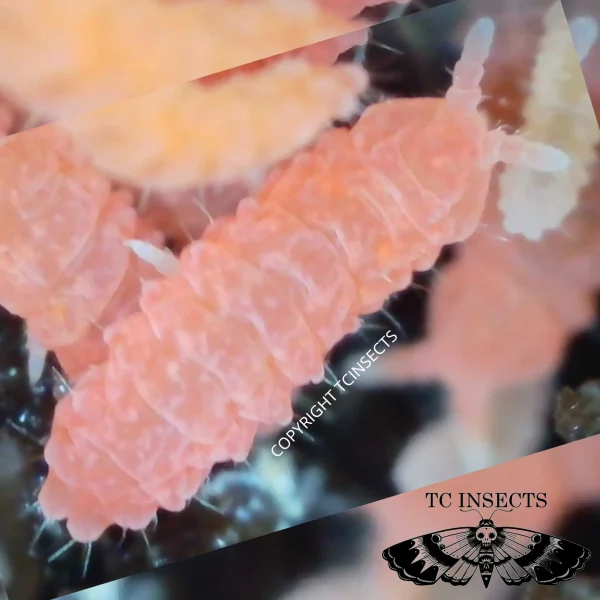
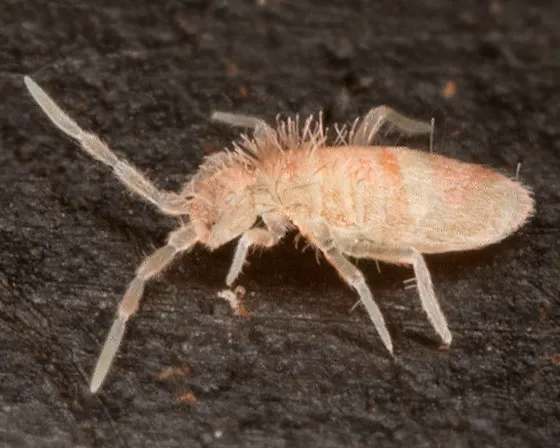
Tropical Pink Springtails are small, slender springtails that usually appear pale pink, peach, light salmon, or translucent depending on the lighting and culture conditions. They are not neon pink. Instead, their color is subtle and easiest to see against darker substrate, charcoal, clay, bark, or moist organic material.
Adult Tropical Pink Springtails usually stay around 1–3 mm long. Because they are tiny, they are best viewed closely under bright light or with a macro lens. In a terrarium, they often stay hidden in the substrate, under leaves, near moist bark, and around food sources.
Tropical Pink Springtail Care
Tropical Pink Springtails prefer warm, humid conditions. They can handle a range of moisture levels, but they do best when the culture or enclosure has access to consistent humidity and a moist retreat. For most keepers, a temperature range of 72–82°F is a strong target.
Keep the culture damp, but not flooded. Springtails need moisture to stay active, but stagnant water, sour food, or overly wet culture conditions can cause problems. A good culture should smell earthy and clean, not rotten.
Basic care tips:
- Keep the culture warm, humid, and ventilated.
- Feed lightly so food does not sour.
- Avoid letting the culture fully dry out.
- Do not overfeed rice, yeast, or powdered food.
- Give the culture time to reproduce before using the whole cup.
- Add small starter portions to multiple areas of the terrarium for better spread.
Best Uses in Bioactive Terrariums
Tropical Pink Springtails are excellent for bioactive setups because they work in the hidden micro-layers of the enclosure. They move through substrate, leaf litter, moss, and bark crevices, helping reduce mold and leftover food before it becomes a bigger issue.
They are a good choice for:
- Crested gecko enclosures
- Day gecko enclosures
- Dart frog vivariums
- Tree frog enclosures
- Tropical skink setups
- Small snake bioactive enclosures
- Isopod breeding bins
- Plant grow-out tubs
- Tropical roach and invertebrate bins
However, Tropical Pink Springtails should not be viewed as a replacement for proper terrarium maintenance. They help support a cleaner system, but keepers should still remove large food waste, avoid soaking the substrate, and maintain good airflow.
Tropical Pink Springtails for Isopods
They are a useful companion species for isopod cultures. They help consume mold and leftover food in the same bins where isopods eat leaf litter, wood, vegetables, calcium, and prepared diets. Because isopod bins often contain a damp side and a drier side, springtails can find the moisture pockets they prefer.
For isopod keepers, Tropical Pink Springtails are especially helpful in:
- Cubaris bins
- Porcellionides bins
- Porcellio bins
- Armadillidium bins with a proper moisture gradient
- Dwarf isopod cultures
- Bioactive cleanup crew starter kits
Springtails.us also lists Coecobrya sp. “Tropical Pink” as one of the strong single-species options for isopod enclosures with a moisture gradient, which supports positioning them as a serious cleanup crew choice for isopod keepers.
Feeding Tropical Pink Springtails
They feed on fungi, mold, decaying plant material, biofilm, and small organic particles in the culture. In a controlled culture cup, they can be fed small amounts of springtail food, yeast-based foods, rice, or other safe microfauna foods.
Feed lightly. Overfeeding is one of the most common mistakes with springtail cultures. It is better to feed a tiny amount and let the culture consume it than to add too much and cause the food to spoil.
Good feeding options include:
- TC INSECTS Springtail Food
- Small amounts of yeast-based springtail food
- Tiny pieces of rice
- Fungal growth from controlled culture feeding
- Decaying leaf litter in established bioactive setups
- Bioactive substrate with natural microbial growth
How to Add Tropical Pink Springtails to a Terrarium
To seed a terrarium, gently tap or pour part of the Tropical Pink Springtail culture into moist areas of the enclosure. Add them near leaf litter, moss, bark, cork pieces, water features, plant bases, and the humid side of the setup.
For best results:
- Add springtails after the enclosure is misted.
- Place them near moist substrate and leaf litter.
- Avoid dumping the entire culture into one dry corner.
- Give them time to settle and reproduce.
- Add food sparingly until the population is established.
- For larger terrariums, using more than one culture or spreading the culture across multiple areas can help the springtails establish faster.
How Many Tropical Pink Springtails Do I Need?
Use this as a simple starting guide:
- Small terrariums up to 10 gallons: 1 starter culture
- Medium terrariums around 20 gallons: 1 culture, or 2 cultures for faster establishment
- Large terrariums around 40 gallons: 2 or more cultures recommended
- Isopod bins: Add a small starter amount per bin and allow the culture to grow
- Bioactive rack systems: Keep one extra culture producing so you can reseed bins when needed
A single culture can help seed a setup, but springtails are living animals. Their success depends on moisture, temperature, food, substrate, airflow, and how established the terrarium already is.
Tropical Pink vs. Temperate White Springtails
They are better suited for warmer, more tropical setups. Temperate White Springtails are still a great all-purpose cleanup crew, but Tropical Pink Springtails offer another option for keepers who want a warm-loving species and more microfauna diversity.
Choose Tropical Pink Springtails if you want:
- A springtail species for warmer enclosures
- A more colorful springtail option
- A good cleanup crew for tropical bioactive setups
- A companion species for isopod bins
- A different species to diversify your microfauna
- Choose Temperate White Springtails if you want:
- A very common beginner springtail
- A classic culture for general use
- A cooler-tolerant springtail option
- A fast, proven cleanup crew species
Many advanced keepers use more than one springtail species because different species may occupy different moisture zones and substrate layers.
Are Tropical Pink Springtails Good Feeders?
They can be eaten by very small reptiles, amphibians, froglets, invertebrates, and micro-predators. However, they are usually purchased as a cleanup crew rather than a primary feeder insect.
They may be useful for:
- Dart frog froglets
- Tiny amphibians
- Small gecko hatchlings
- Young invertebrates
- Microfauna-rich vivariums
For regular feeding, most keepers still use feeder insects such as fruit flies, pinhead crickets, bean beetles, small roaches, or other appropriately sized feeders.
Live Arrival and TC INSECTS Quality
TC INSECTS ships with the goal of providing healthy, usable cultures for bioactive keepers, reptile keepers, amphibian keepers, and isopod breeders. Our springtails are packed with care so customers receive a culture they can use to seed terrariums, start breeding, or support existing microfauna systems.
Because springtails are tiny, they may be hiding in the substrate or culture medium when they arrive. Let the cup settle, open it carefully, and check the sides, surface, and food areas under good lighting.
Tropical Pink Springtail FAQ
Are Tropical Pink Springtails really pink?
They are lightly pink, peach, or translucent pink, not bright neon pink. Their color is subtle and easiest to see against darker culture media or substrate.
Are Tropical Pink Springtails good for bioactive terrariums?
Yes. Tropical Pink Springtails are excellent for warm, humid bioactive terrariums, planted vivariums, dart frog setups, and isopod bins.
Do Tropical Pink Springtails eat mold?
Yes. Springtails feed on mold, fungi, biofilm, and decaying organic material. They help reduce small mold blooms, but they do not replace proper enclosure maintenance.
Can Tropical Pink Springtails live with isopods?
Yes. Tropical Pink Springtails are commonly used with isopods because they help clean up leftover food and mold inside isopod cultures.
What temperature is best for Tropical Pink Springtails?
A warm room-temperature range around 72–82°F is recommended. Avoid extreme heat, freezing temperatures, and dry conditions.
Do Tropical Pink Springtails reproduce fast?
They can reproduce well once established, but culture growth depends on temperature, food, moisture, and overall conditions.
Can I add the whole culture directly into a terrarium?
Yes, but make sure the animals and setup can tolerate the added culture medium. For some enclosures, it may be better to add part of the culture and keep the rest producing.
Learn More About Tropical Pink Springtails and Bioactive Cleanup Crews
Springtails as Soil Decomposers
Springtails are important soil and leaf-litter animals that help break down and recycle organic waste. This supports why Tropical Pink Springtails are useful in bioactive terrariums, isopod bins, and planted vivariums.
https://genent.cals.ncsu.edu/insect-identification/class-collembola/
Springtail Biology and Moisture Needs
Springtails are tiny Collembola that live in moist environments and feed on organic material in soil. This helps explain why Tropical Pink Springtails do best in warm, humid bioactive setups.
https://mrec.ifas.ufl.edu/lsolab/springtails/
Springtails in Moist Habitats
Penn State explains that springtails are small, abundant animals found in many moist environments. This is helpful background for keepers using springtails in humid terrariums and vivariums.
https://extension.psu.edu/springtails/