
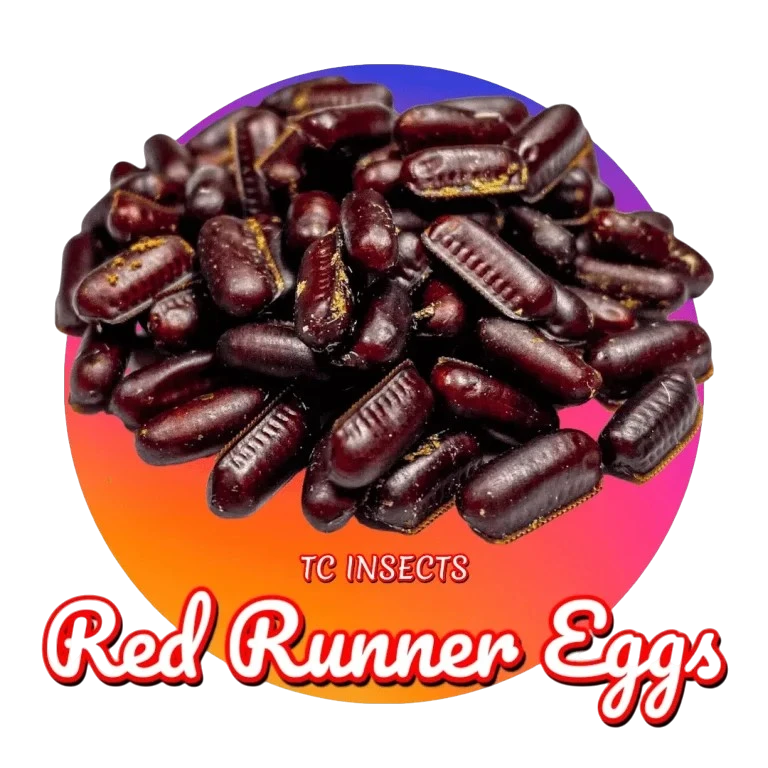
Red Runner Eggs for Sale
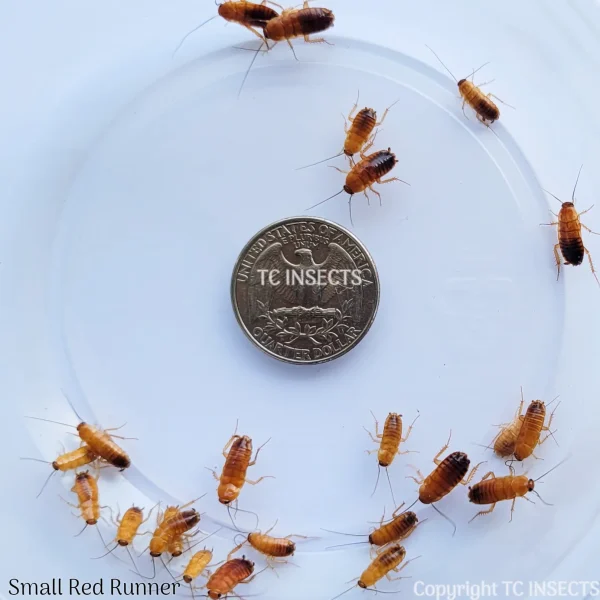
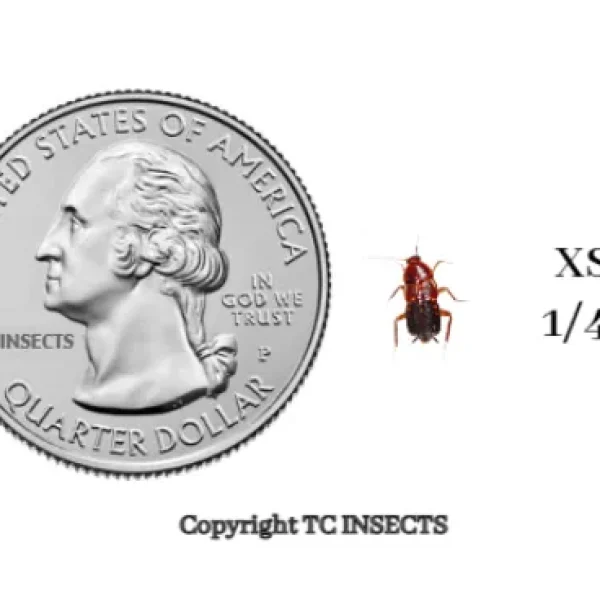
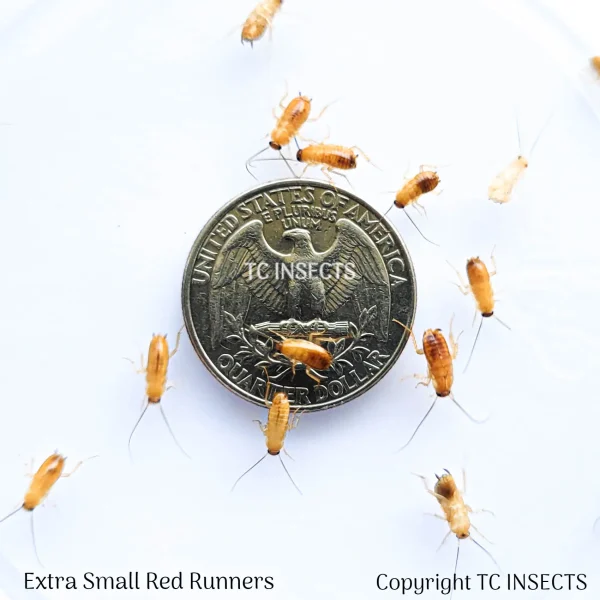
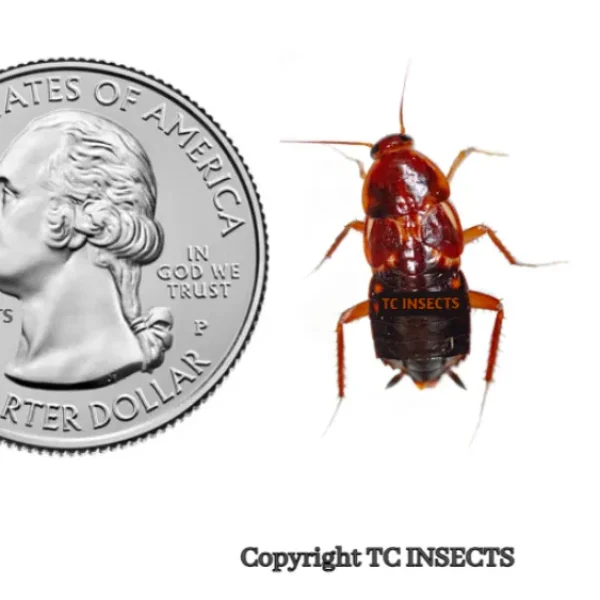
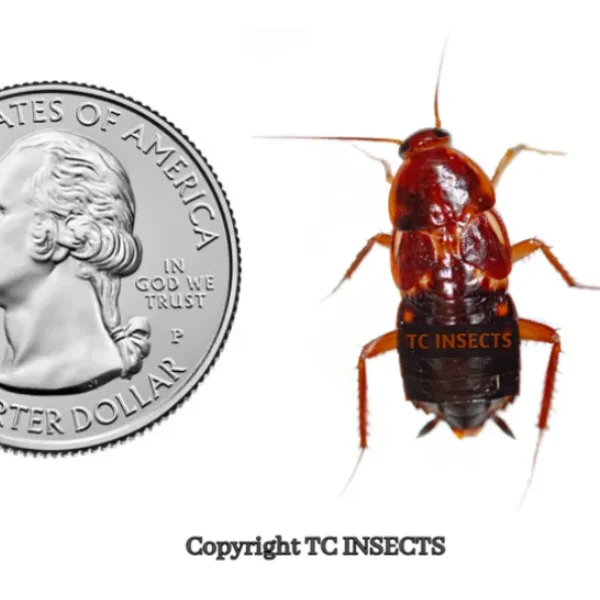
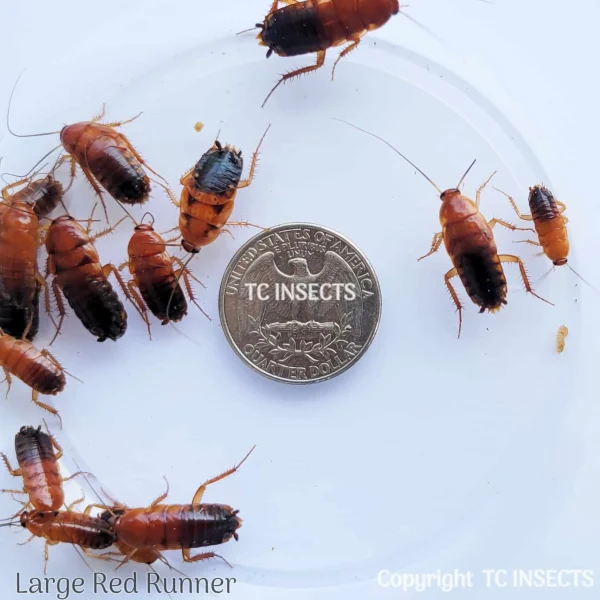
These are red runner egg cases, the oothecae of Blatta lateralis (the Turkestan or rusty red roach). Each egg case hatches 20 to 30 extra small 1/4″ nymphs, so a few cases yield a steady run of tiny feeders. They are a low-cost way to keep small feeders on hand, or to start a colony from scratch. They hatch easily with simple care.
How to Hatch Them
Keep the egg cases in a sealed container on lightly damp moss or soil, somewhere warm. The nymphs hatch out over a short period, ready to feed off or to grow into a colony. So you get a fresh batch of the smallest size without ordering live nymphs each time.
A Steady Supply of Small Feeders
Because each case produces many 1/4″ nymphs, eggs keep small feeders coming for longer than a single live order. That suits small reptiles, dart frogs, and mantises. You can also let the hatchlings grow up to seed a breeding colony.
Nutrition and Dusting
Once hatched, the nymphs are red runners, similar to dubia in nutrition, high in protein with moderate fat. Like most feeders, they are low in calcium, so dust them with TC Calcium Ultra Fine and gut-load them on a quality roach feed before feeding.
Care After Hatching
Keep the nymphs warm, around 70 to 85°F, in a vented bin with egg flats once they outgrow the hatch container. They cannot climb smooth surfaces and do not burrow. Keep them fairly dry with water crystals for moisture, and do not refrigerate them, since they are a tropical roach.
Best For
- A steady supply of tiny 1/4″ feeders.
- Small reptiles, dart frogs, and mantises.
- Starting a colony at a low cost.
- Keepers happy to hatch and grow their own.
Not Best For
- Keepers who need live feeders the day they arrive.
- Larger animals, which suit a larger live size.
- A calcium source, since the hatchlings need dusting.
Recommended Add-Ons
- Red Runner Roach Colony for a ready, producing culture instead of hatching.
- Live 1/4″ Red Runners for nymphs ready to feed now.
- Supreme Feed to feed and grow the hatchlings.
- TC Calcium Ultra Fine to dust them before feeding.
- Red Runner Roaches to browse all sizes and counts.
Frequently Asked Questions
What do I get with red runner eggs?
You get egg cases, each hatching 20 to 30 extra small 1/4″ nymphs. They are egg cases, not live roaches on arrival.
How do I hatch them?
Keep them in a sealed container on lightly damp moss or soil, somewhere warm. The nymphs hatch out over a short period.
What can I feed the hatchlings to?
The 1/4″ nymphs suit small reptiles, dart frogs, and mantises. You can also grow them up to start a colony.
Do I need to dust them?
Yes. Red runners are low in calcium like most feeders, so dust the nymphs and gut-load them before feeding.
Eggs or a live colony?
Choose eggs for a low-cost, hatch-your-own start, or the colony for a culture that produces right away.
Learn More About Feeder Roaches
These sources cover feeder roach nutrition and biology.
- ABVP: Feeder Roach Nutrition. A veterinary overview of feeder roaches and the inverse calcium-to-phosphorus ratio common to most feeders.
- ScienceDirect: Gut Loading (veterinary overview). A reference on gut-loading and supplementing feeder insects, which supports dusting roaches.
- Blatta lateralis Overview. A reference on the Turkestan cockroach and its life cycle, including the egg case.


Reviews
There are no reviews yet.