Jumbo Water Crystals for Sale
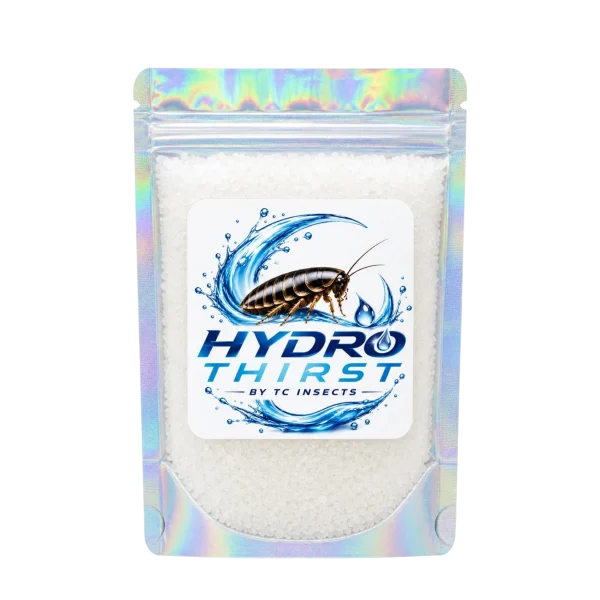
These jumbo water crystals give feeder insects a steady, drown-free water source inside their bin. The crystals absorb water, then release it slowly as the insects feed on the surface. Because they are larger than standard
crystals, each piece holds more water and dries out more slowly. As a result, you spend less time refilling and lose fewer feeders to drowning or spills. One honest note up front: these crystals hydrate insects, but they do not
replace gut-load food or calcium.
Overview
Water crystals are super-absorbent polymer beads that swell as they soak up water. Once hydrated, they sit in the bin as a firm, jelly-like water source. Feeders drink from the surface instead of from open water, so they cannot fall in and drown.
The jumbo size is the main difference here. Larger crystals hold more water per piece and stay moist longer between checks. Therefore, this option suits keepers who do not want to top off water every day.
Why Use Water Crystals?
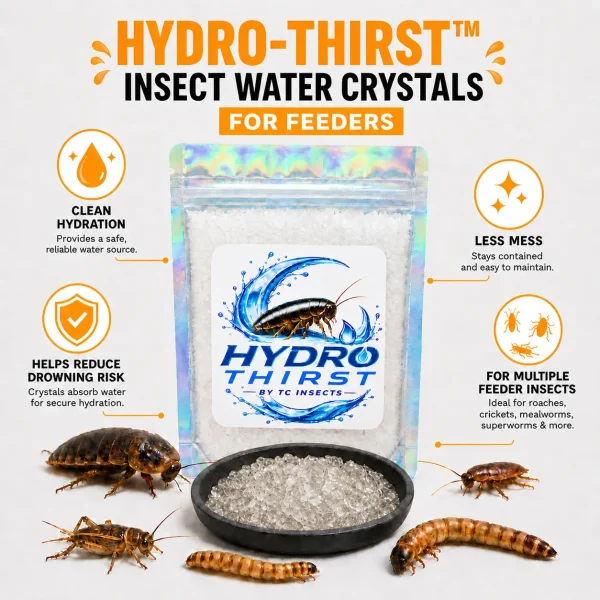
- No drowning. Feeders drink from the gel surface, so they avoid the open water that often kills crickets and roaches.
- No spills. Additionally, the crystals hold their shape, so they will not tip over and soak the substrate like a dish can.
- Slower dry-out. Because the jumbo pieces hold more water, they stay usable longer between bin checks.
- Simple to prep. You only soak, drain, and place them, then refresh as needed.
- Easy to store. Finally, you can hydrate a batch ahead of time and keep it in the refrigerator for later use.
Honest Note on Hydration vs Nutrition
Water crystals solve hydration, not nutrition. Veterinary guidance on feeder insects is clear that plain water gels add little or no calcium or vitamins. For that reason, treat these crystals as a water source only.
There is also a practical risk worth knowing. Insects sometimes prefer to sit on a gel water source instead of eating their gut-load diet. So keep the crystals as one part of the setup, and pair them with a proper feed such as Premium Cricket Feed and a calcium source like TC Calcium Ultra Fine.
How to Use
Setup takes only a few minutes, and most of that is waiting for the crystals to swell.
Preparing the Crystals
Submerge the crystals in water for a few hours until they swell fully. Distilled water gives the most absorption, since minerals in tap water reduce how much the crystals can hold. However, tap water still works fine for everyday use.
Placing in the Bin
Drain off any extra water, then place the hydrated crystals in a shallow dish or jar lid. This keeps them contained and easy to remove. For very small feeders such as pinhead crickets, use a thin layer so the insects cannot get stuck.
Storage
Hydrate a larger batch at once, then store the extra in a sealed container in the refrigerator. Cool storage slows mold, so the crystals stay fresh for later use.
Refreshing and Replacing
Replace the crystals once they shrink, dry, or pick up debris. You can re-soak dried crystals, but discard any that smell off or grow mold. Generally, a quick swap during normal bin cleaning is enough.
What You Can Use It With
These crystals work across most common feeders, including crickets, mealworms, superworms, and dubia roaches. They also help keep feeders hydrated during holding or shipping.
Best For
- Keepers maintaining cricket, roach, or worm colonies who want a clean water source.
- Anyone tired of losing feeders to drowning in open water dishes.
- Busy keepers who prefer a water source that lasts between bin checks.
- Keepers holding or shipping feeders who need short-term hydration.
Not Best For
- Anyone expecting nutrition, since these crystals add water only, not calcium or vitamins.
- Keepers who want a single all-in-one product, because hydration still needs to be paired with feed.
- Setups with the tiniest feeders unless you use a thin layer so they cannot get trapped.
Recommended Add-Ons
- Premium Cricket Feed to cover the nutrition that water crystals do not provide.
- TC Calcium Ultra Fine for dusting feeders before they go to your reptile.
- Live Crickets as a staple feeder to hydrate and gut-load.
- Dubia Roaches for a quiet, easy-to-keep feeder colony.
- Feeder Insect Mix Packs for variety across feeder sizes and types.
Frequently Asked Questions
What are water crystals and what do they do?
They are super-absorbent crystals that soak up water and release it slowly. As a result, feeder insects can drink from the gel surface without falling into open water and drowning.
How do I prepare them?
Soak the crystals in water for a few hours until they swell fully, then drain off the excess. Distilled water gives the most absorption, though tap water works well for daily use.
Which feeders can I use them with?
They suit most common feeders, including crickets, mealworms, superworms, and dubia roaches.
Do water crystals replace gut loading or calcium?
No, they only provide water. Therefore, you should still offer a gut-load feed and dust with calcium so the feeders pass real nutrition to your pet.
How long do they last before I replace them?
Replace them once they shrink, dry out, or collect debris. You can re-soak dried crystals, but discard any that smell off or show mold. Refrigerating a prepared batch helps it stay fresh.
Will small feeders get stuck in the crystals?
They can if the layer is too deep. For pinhead crickets and other tiny feeders, use a thin layer in a shallow dish so the insects stay on top and feed safely.
Learn More About Feeder Insect Hydration
These sources explain why hydrating and gut-loading feeders matters for the animals that eat them.
- ScienceDirect: Gut Loading (veterinary overview). A reference drawn from exotic-animal veterinary texts that explains gut loading and notes the limits of gel water products, which supports using crystals for hydration only.
- Long Island Bird and Exotics Pet Vet: How to Gut-Load Insects. A veterinary practice guide that lists water crystals as a hydration option and shows where hydration fits in the wider feeding routine.
- Veterinary handout: Feeding Insectivorous Reptiles and Amphibians. A vet-authored overview of why dehydrated, unfed feeders cause nutritional problems, which makes clear why hydration plus gut loading matters.