
Bean Beetle Culture Kit for Sale
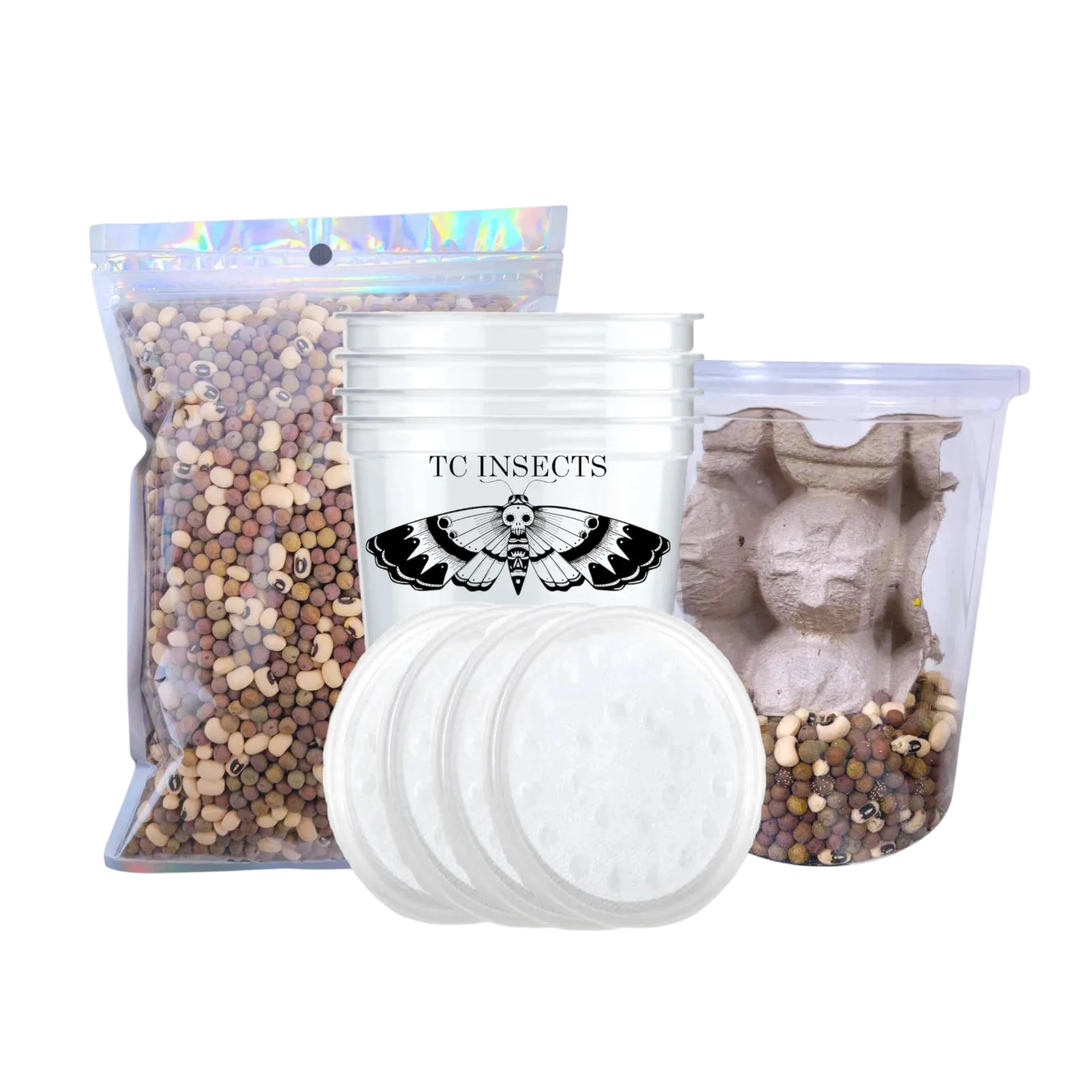
This kit gives you everything needed to start breeding bean beetles (Callosobruchus maculatus) at home. It pairs a live culture with the cups, lids, and organic bean blend to build up to four cultures. Bean beetles breed inside dried beans, and the small adults that emerge are the feeder. Because the adults do not eat or drink, the cultures stay low-maintenance once they are running. In short, this is the simplest way to get started without sourcing each piece separately.
What’s in the Kit
- 1 live Bean Beetle Culture to seed your new cups.
- 4 x 32oz culturing cups with lids for making and containing the cultures.
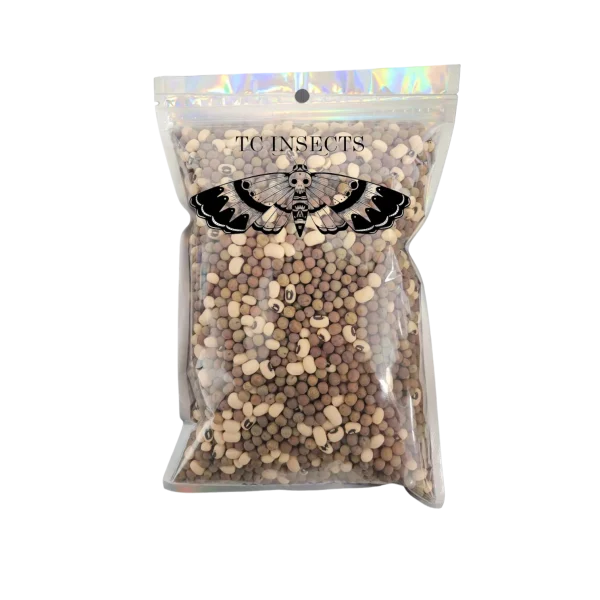
- 32oz TC’s Bean Beetle Blend, a sterilized, insecticide-free organic bean mix.
Together, these supplies make up to four cultures, which is enough to keep a steady rotation going.
How the Kit Works
Setup follows two simple steps from TC, then the colony does the rest.
Set Up a Cup
Add about one cup of TC’s Bean Beetle Blend to a 32oz culturing cup, then fit the lid. The beans act as both the egg-laying surface and the larval food.
Split the Culture
Next, collect about a quarter of the media from the established culture and add it to the new cup. This transfers beetles and eggs, so the new culture starts producing.
Conditions
Keep the cultures warm and dry, generally around 75 to 85 degrees Fahrenheit. Avoid damp conditions, since moisture encourages mold on the beans.
Harvest and Repeat
As adults emerge, tap them out to feed your animals. Meanwhile, start fresh cups over time so you always have a culture coming into production.
Why Start with the Kit?
- Everything in one box. You get the live culture, cups, lids, and blend together, so there is nothing else to source.
- Makes up to four cultures. Additionally, the supplies let you build a small rotation rather than a single cup.
- Steady supply. Because you can stagger cultures, you can keep feeders coming on a schedule.
- Low maintenance. The adults need no food or water, so upkeep mostly means harvesting and refreshing.
- Beginner-friendly. Finally, the simple two-step method makes this a straightforward first culture project.
Honest Note on the Feeder and Containment
The feeder is the emerging adult, not the larvae, which stay sealed inside the beans. Many keepers use bean beetles as a backup or occasional feeder rather than a sole staple, so plan to pair them with other foods.
There is also a containment point. Bean beetles are a regulated stored-legume pest, and at high density some develop a flying dispersal form. Therefore, keep the lids on and the cups contained, and note that live cultures may face shipping limits in some states. A new culture also takes a few weeks before adults emerge.
Best For
- Beginners who want a complete bean beetle setup in one purchase.
- Poison dart frog keepers who need an easy backup micro-feeder.
- Keepers of small or newly hatched reptiles and amphibians, small fish, mantises, and spiderlings.
- Hobbyists who want a steady rotation of low-maintenance cultures.
Not Best For
- Keepers of larger animals, since the beetles are small and better as a supplement.
- Anyone needing feeders immediately, because a new culture takes weeks to start emerging.
- Keepers who cannot keep a regulated legume pest contained away from pantry beans.
- Anyone wanting a single staple feeder, as bean beetles work best alongside other foods.
Recommended Add-Ons
- TC’s Bean Beetle Blend as refill media to keep making and refreshing cultures.
- Fruit Flies as a staple micro-feeder to pair with bean beetles.
- Rice Flour Beetle Culture Kit for keepers who want a second small-feeder culture.
- Springtails as another tiny feeder for dart frogs and small animals.
- Feeder Insect Mix Packs for variety across feeder types and sizes.
Frequently Asked Questions
What comes in the Bean Beetle Culture Kit?
The kit includes a live bean beetle culture, four 32oz culturing cups with lids, and a 32oz bag of TC’s Bean Beetle Blend. Together they make up to four cultures.
How do I start a culture from the kit?
Add about one cup of the blend to a culturing cup, then mix in about a quarter of the media from the established culture. After that, the beetles breed in the new cup.
Do I need to feed or water the beetles?
No. Adult bean beetles do not eat or drink, and the beans feed the larvae. Therefore, upkeep mostly means harvesting adults and refreshing the beans over time.
Which animals eat bean beetles?
They suit small animals such as poison dart frogs, small or newly hatched reptiles and amphibians, small fish, mantises, and spiderlings. Most keepers use them as a backup or occasional feeder.
How long until I have feeders?
A new culture usually takes a few weeks before adults emerge. For a steady supply, start fresh cups on a schedule so one is always coming into production.
Can the beetles get into my pantry or fly around?
They can if a cup is left open, since they are a stored-legume pest and a flying form can appear at high density. So keep the lids on, and check your state’s rules for live cultures.
Learn More About Bean Beetles
These sources explain the biology behind the culture you are starting.
- Bean Beetles Education Consortium: A Handbook on Callosobruchus maculatus. A non-commercial, science-education handbook on biology, life cycle, and the flightless and flying morphs, which helps you understand and manage your cultures.
- ABLE: Bean Beetles as a Model System. An academic teaching resource explaining why these beetles are so easy to rear and how females lay eggs on beans, useful background for getting your kit producing.
- NCBI: Rearing Callosobruchus maculatus on cowpea seeds. A research article describing standard rearing on dried beans and the use of sterilized seed, which supports why a clean, insecticide-free bean mix matters.
Reviews
There are no reviews yet.