
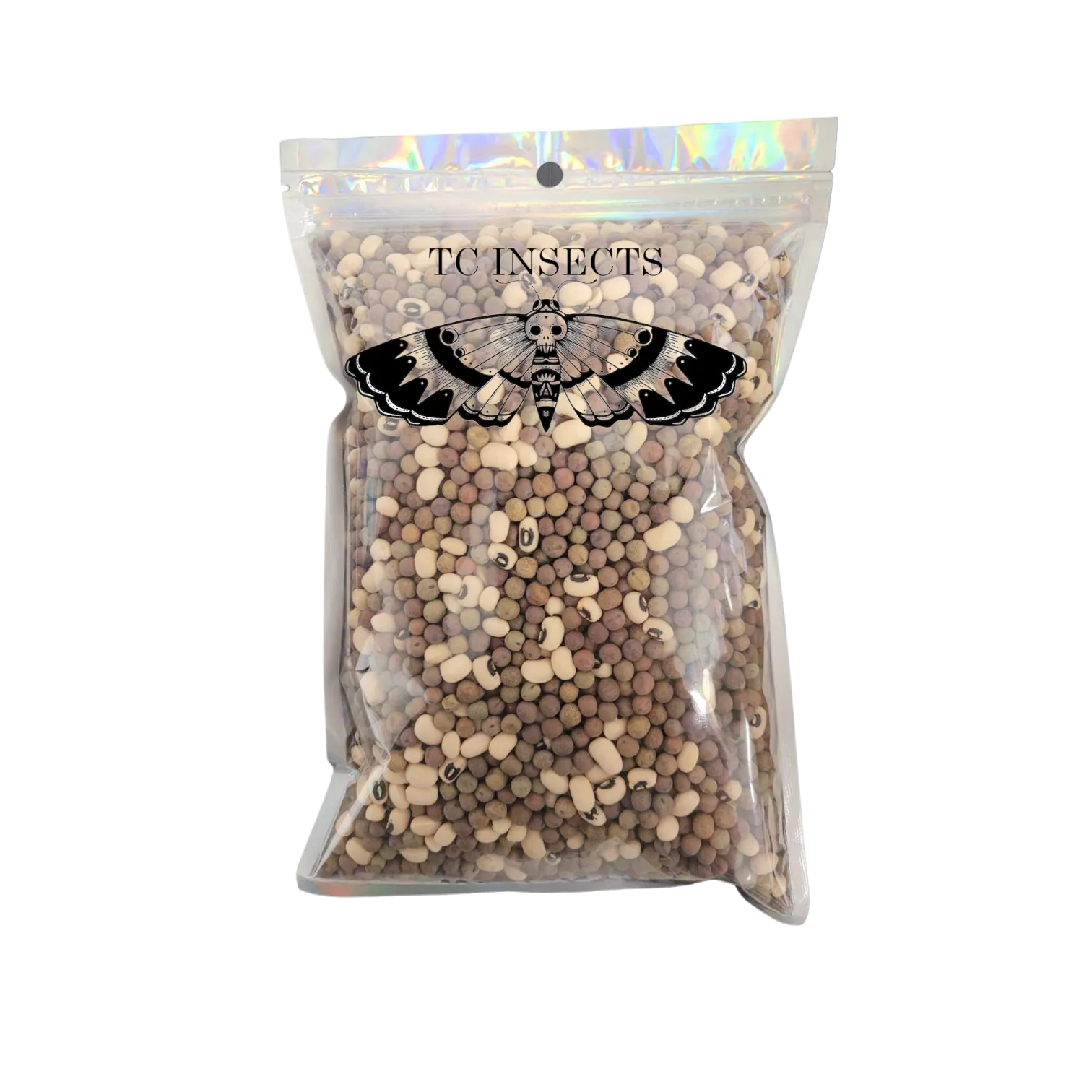
Bean Beetle Blend for Sale
This blend is a sterilized, insecticide-free organic bean mix for breeding bean beetles (Callosobruchus maculatus). The beetles lay eggs on the dried beans, and the larvae develop inside the beans before emerging as small adults. Those emerging adults are the feeder, which is the opposite of how flour beetle cultures work. Because adult bean beetles do not eat or drink, the culture stays remarkably hands-off once it is running.
Overview
The bean beetle, Callosobruchus maculatus, is also called the cowpea weevil or cowpea seed beetle. Despite the weevil name, it is a small bruchid leaf beetle, not a true weevil, and it lacks the long snout. Adults are reddish-brown with mottled wing covers and run around an eighth of an inch long.
In the wild, this species breeds in stored legumes such as cowpeas and mung beans. The same trait makes it simple to culture. The colony lives in the bean mix, and you harvest the adults as they emerge.
What You Get and What You Need
This listing is the bean mix itself, the sterilized organic beans the culture breeds in and feeds on. To produce feeders, you also add a live starter culture of bean beetles. After that, the females lay eggs on the beans, the larvae bore in and mature, and new adults emerge to become your feeders. In short, the blend is the home and the food, while the starter culture is the living part you add.
Why TC’s Bean Beetle Blend?
- Sterilized. The beans are sterilized, which reduces mold and unwanted pests in your culture.
- Insecticide-free and organic. Additionally, beans free of pesticide residue matter, since residue can harm or kill a breeding culture.
- Ready to use. Because the mix is prepared, you skip sourcing and prepping your own beans.
- Refreshes a culture. As larvae consume the beans, you simply add more of the blend to keep production going.
- Low effort. Finally, the adults need no food or water, so the colony mostly runs itself.
Honest Note on the Feeder and Containment
The feeder here is the emerging adult, not the larvae. Larvae stay sealed inside the beans, so you harvest the adults that crawl out. Many keepers treat bean beetles as a backup or occasional feeder rather than a sole staple, so plan to pair them with other foods.
There is also a containment point. Bean beetles are a regulated stored-legume pest, and at high density some develop a flying dispersal form. Therefore, keep cultures sealed and ventilated, and note that live starter cultures may face shipping limits in some states.
How to Use the Blend
Setup is quick, and most of the wait is the colony cycling through the beans.
Setting Up the Culture
Add a layer of the bean mix to a ventilated container with a secure lid. A lid with fine mesh or small air holes keeps beetles contained while letting the culture breathe.
Adding a Starter Culture
Introduce your live bean beetle starter culture to the beans. Soon after, the females begin gluing eggs onto the bean surfaces.
Conditions
Keep the culture warm and dry, generally around 75 to 85 degrees Fahrenheit. Avoid damp conditions, since moisture encourages mold on the beans. Steady warmth speeds up each generation.
Harvesting Beetles
As adults emerge, tap or gently shake them out to feed your animals. Meanwhile, leave plenty of beans and beetles in place so the next generation keeps developing.
Refreshing the Beans
Over several weeks the larvae hollow out the beans. When emergence slows, add fresh blend or start a new container with some old beans and beetles. Consequently, the culture keeps producing.
Best For
- Poison dart frog keepers who want an easy backup micro-feeder.
- Keepers of small or newly hatched reptiles and amphibians.
- Small fish, mantis, and spiderling keepers who feed tiny prey.
- Hobbyists who want a low-maintenance culture that needs no feeding or watering.
Not Best For
- Keepers of larger animals, since the beetles are small and better as a supplement.
- Anyone needing feeders right away, because a culture takes weeks to start emerging.
- Keepers who cannot keep a regulated legume pest contained away from pantry beans.
- Anyone wanting a single staple feeder, as bean beetles work best alongside other foods.
Recommended Add-Ons
- Insect Cultures to find a live bean beetle starter culture to seed this blend.
- Fruit Flies as a staple micro-feeder to pair with bean beetles.
- Rice Flour Beetle Culture Kit for keepers who want a second small-feeder culture.
- Springtails as another tiny feeder for dart frogs and small animals.
- Feeder Insect Mix Packs for variety across feeder types and sizes.
Frequently Asked Questions
What is TC’s Bean Beetle Blend?
It is a sterilized, insecticide-free organic bean mix that bean beetles breed in and feed on. The beans serve as both the egg-laying surface and the larval food.
Does this include live beetles?
This listing is the bean mix itself. To produce feeders, you add a live starter culture of bean beetles, then let them breed in the beans.
Do I need to feed or water the beetles?
No. Adult bean beetles do not eat or drink, and the beans feed the larvae. Therefore, upkeep mostly means harvesting adults and adding fresh beans over time.
Which animals eat bean beetles?
They suit small animals such as poison dart frogs, small or newly hatched reptiles and amphibians, small fish, mantises, and spiderlings. Most keepers use them as a backup or occasional feeder.
Why are the beans sterilized and insecticide-free?
Sterilizing reduces mold and unwanted pests in the culture. Insecticide-free, organic beans also matter, because pesticide residue can harm or kill your breeding colony.
Can bean beetles get into my pantry or fly around?
They can if a culture is left open, since they are a stored-legume pest and a flying form can appear at high density. So keep the culture sealed and ventilated, and check shipping rules in your state for live cultures.
Learn More About Bean Beetles
These sources explain the biology behind the beetle you are culturing.
- Bean Beetles Education Consortium: A Handbook on Callosobruchus maculatus. A non-commercial, science-education handbook covering biology, life cycle, and the flightless and flying morphs, which helps you understand how your culture behaves.
- ABLE: Bean Beetles as a Model System. An academic teaching resource explaining why these beetles are so easy to rear and how females lay eggs on bean seeds, useful background for keepers.
- NCBI: Rearing Callosobruchus maculatus on cowpea seeds. A research article describing standard rearing on dried beans and the use of sterilized seed, which supports why a clean, insecticide-free bean mix matters.


Reviews
There are no reviews yet.