
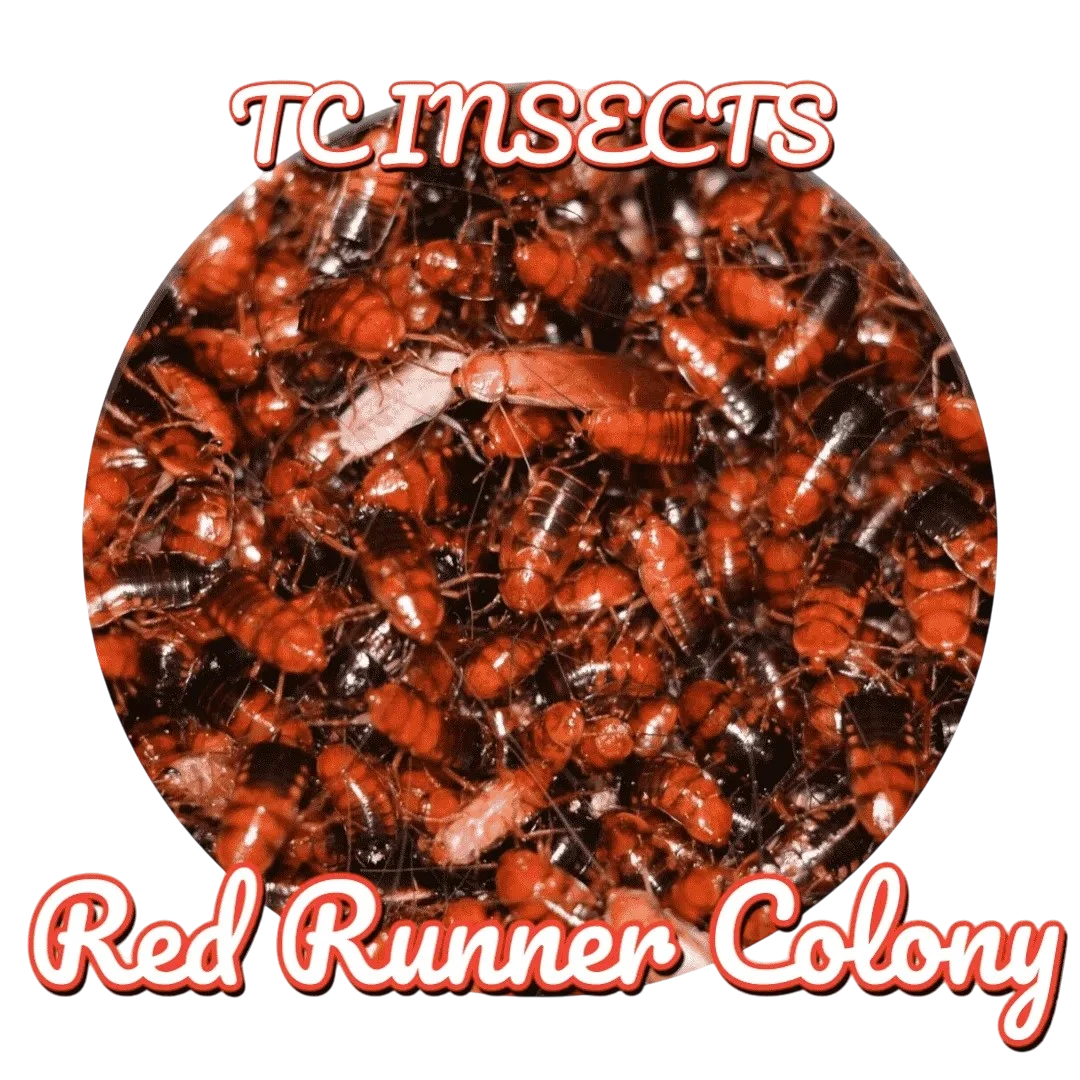
Red Runner Roach Colony for Sale
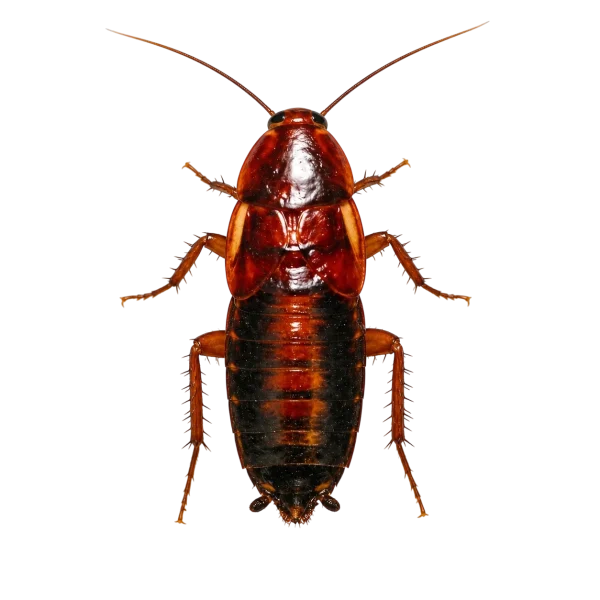
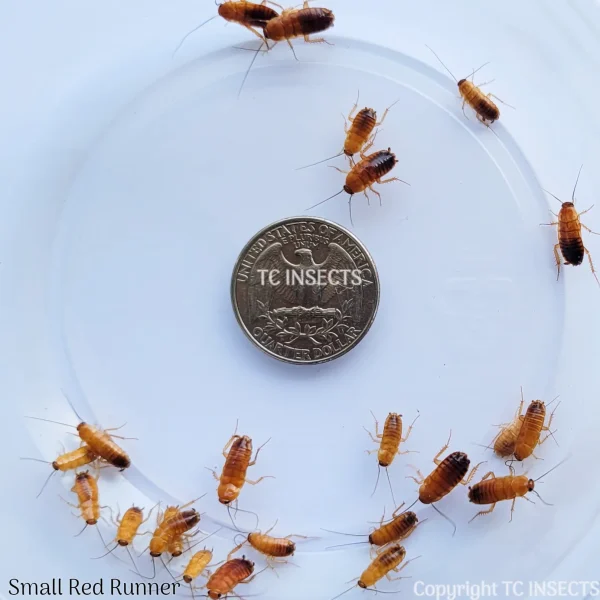
This is a ready-to-go red runner roach colony, Blatta lateralis (also called the Turkestan or rusty red roach). It comes with all sizes and both sexes, harvested from our master colony started in 2017, so it is set up to produce from the start. It is the fastest way to begin a self-sustaining feeder culture or to feed a whole collection of hungry animals.
Breed Your Own Feeders
A colony lets you stop reordering feeders. Red runners are prolific, so a starter culture grows quickly with basic care. TC suggests about 100 roaches per reptile, or 250 for larger animals, then scale the colony from there. The females and males arrive mixed, so the culture begins producing without extra setup.
Why Red Runners
Red runners make a strong cricket alternative. They carry more protein gram for gram than crickets, they are hardier and do not die off as easily, and their lower chitin makes them easier to digest. They move fast for reptiles to chase, they cannot climb smooth surfaces, and they do not burrow, so they stay visible and contained.
Nutrition and Dusting
Red runners are similar to dubia in nutrition, high in protein with moderate fat. Like most feeders, they are low in calcium, so dust them with TC Calcium Ultra Fine and gut-load them on a quality roach feed before feeding. A dusted roach also slows down, which makes it easier for your pet to catch.
Care and Setup
Keep the colony warm, around 70 to 85°F, in a vented bin with vertical egg flats and no substrate. Allow roughly 20 gallons per 1,000 adults. Keep it fairly dry, limit fruit and veg, and offer moisture with water crystals rather than open dishes. They are tropical, so keep them warm, not refrigerated, and keep the bin clean.
Best For
- Keepers with several hungry animals.
- Starting a self-sustaining feeder colony.
- Cutting the cost of reordering feeders.
- A fast, low-maintenance cricket alternative.
Not Best For
- A single small pet, where a single-size pack fits better.
- Keepers who cannot keep a warm bin.
- A calcium source, since red runners need dusting.
Recommended Add-Ons
- Supreme Feed to feed and breed the colony.
- Jumbo Water Crystals for clean, spill-free moisture.
- TC Calcium Ultra Fine to dust feeders before feeding.
- Single-Size Red Runners to feed specific sizes.
- Red Runner Roaches to browse all sizes and counts.
Frequently Asked Questions
What is a red runner colony?
It is a ready-to-go culture with all sizes and both sexes, harvested from our master colony. It is set up to produce from the start.
How big a colony do I need?
TC suggests about 100 roaches per reptile, or 250 for larger animals. Choose a count from 100 up to 5,000 and scale from there.
Do I need to dust them?
Yes. Red runners are low in calcium like most feeders, so dust them with calcium and gut-load them before feeding. A dusted roach also slows down for easier catching.
How do I keep the colony?
Keep it warm at 70 to 85°F in a vented bin with egg flats, kept fairly dry with water crystals. Do not refrigerate them.
Why choose red runners over crickets?
They carry more protein gram for gram, are hardier, are easier to digest, and do not chirp. They also breed readily for a steady supply.
Learn More About Feeder Roaches
These sources cover feeder roach nutrition and biology.
- ABVP: Feeder Roach Nutrition. A veterinary overview of feeder roaches and the inverse calcium-to-phosphorus ratio common to most feeders.
- ScienceDirect: Gut Loading (veterinary overview). A reference on gut-loading and supplementing feeder insects, which supports dusting roaches.
- Blatta lateralis Overview. A reference on the Turkestan cockroach and its biology.

Robert Myers (verified owner) –
Would recommend.