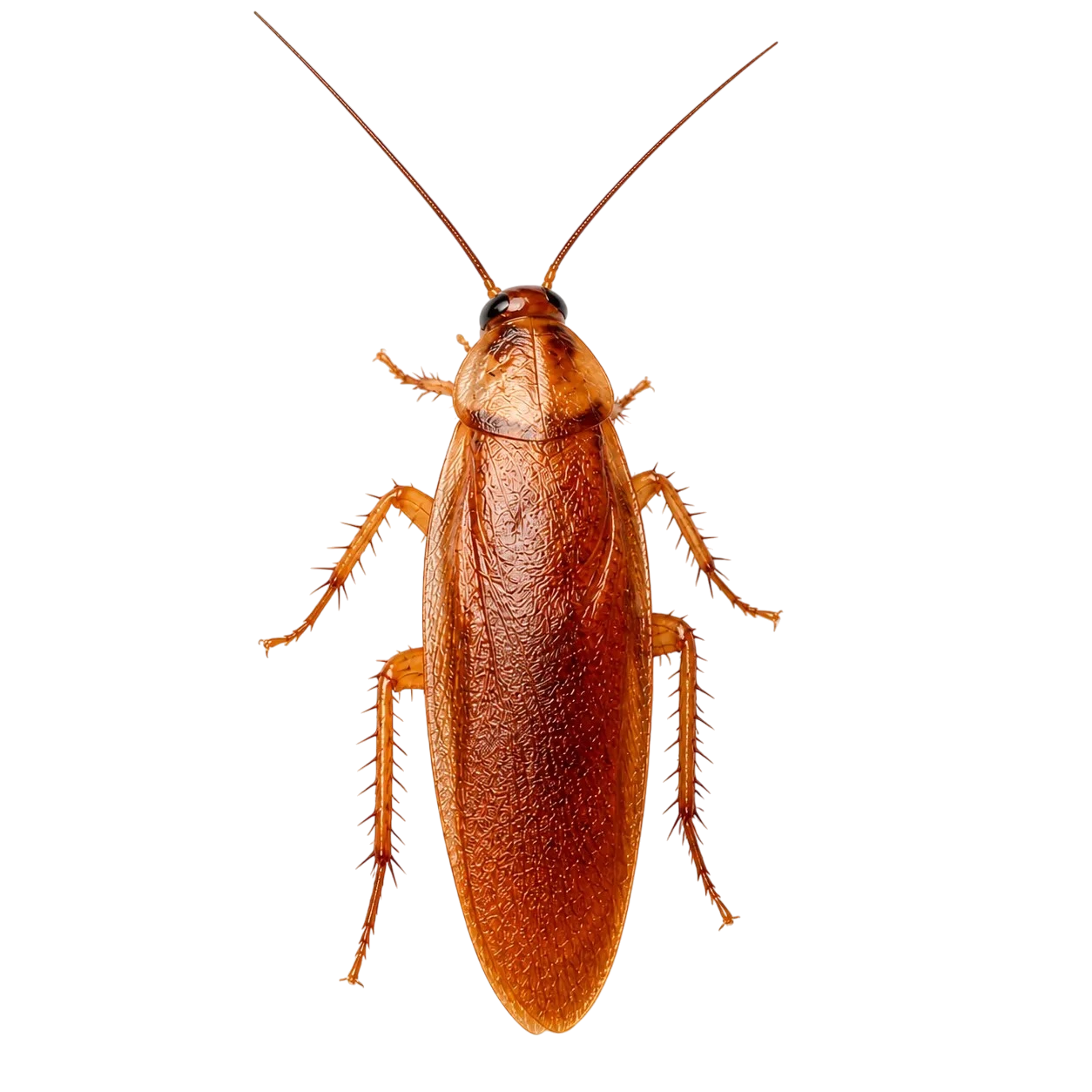
Red Runner Roaches
A.K.A.
Turkestan Cockroach, Rusty Red Roach
( Blatta lateralis, or Shelfordella lateralis )
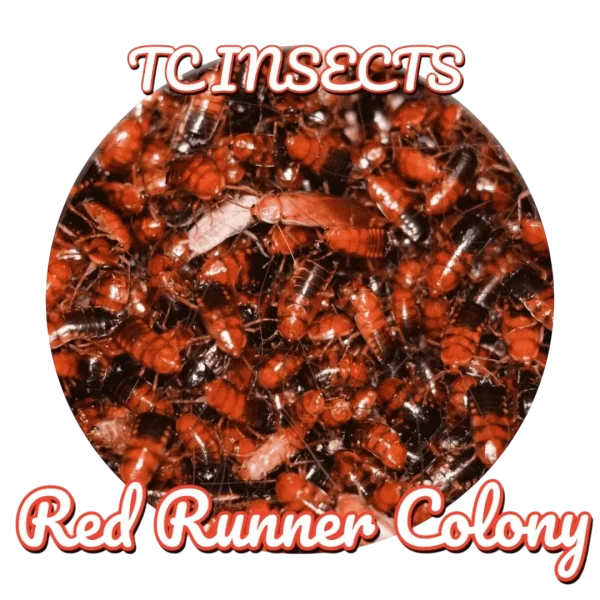
Our Adult Male Red Runner Roaches, also known as Turkestan Roaches or Rusty Red Roaches, are captive-bred feeder insects raised from our established TC INSECTS colony. These roaches are known for their speed, high activity level, and strong feeding response, making them an excellent choice for reptiles that prefer moving prey.
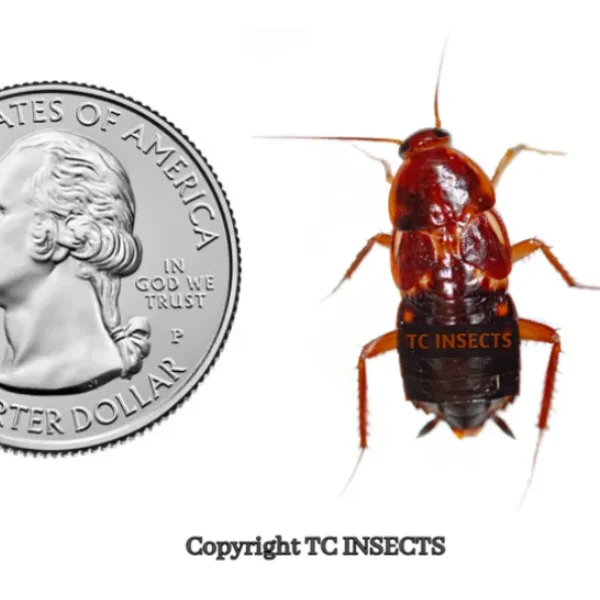
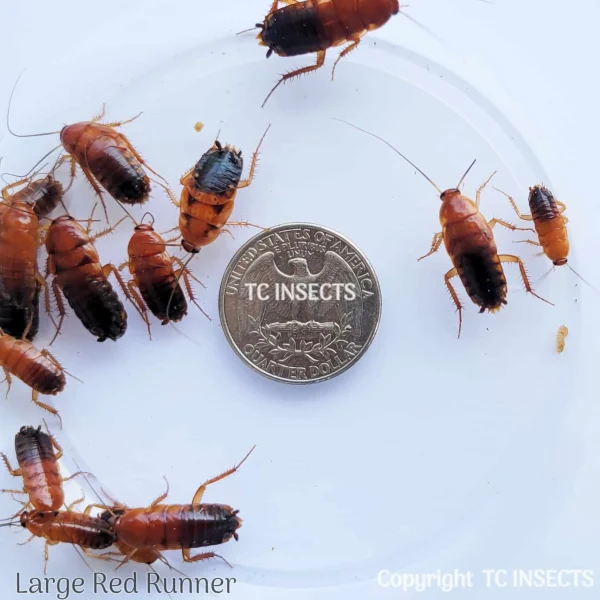
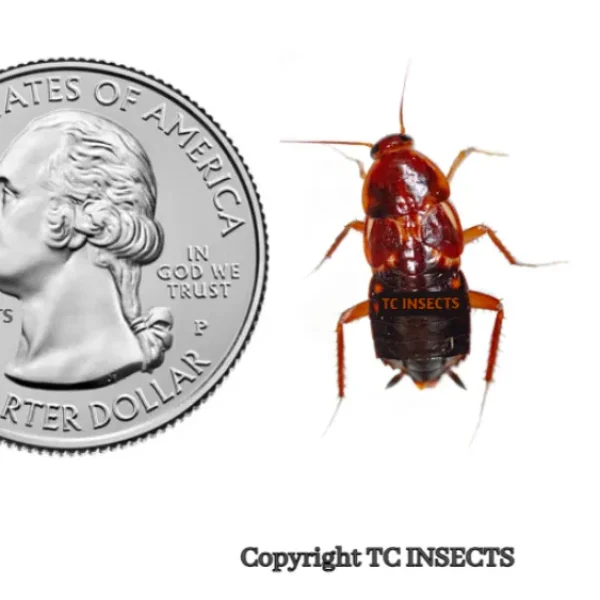
Adult males are about 1 inch long and have wings with a lighter brown to reddish appearance. Unlike Dubia roaches, Red Runners do not burrow and hide as much in substrate, making them easier for many reptiles to hunt. They are also easy to maintain, do not climb smooth surfaces, and are a popular choice for keepers looking for an active feeder insect.
|
RED RUNNER ROACH CHECKLIST |
|
|
Can they fly? |
Adult 1″ Males Glide horizontally, Females are wingless. |
|
Can they climb? |
NO |
|
Can I breed them? |
VERY EASY |
|
Do they smell? |
NO (keep clean) |
Appearance and Size of Red Runner Roaches
Adults Size: 2.3cm.
Life Span: 2 Years
Reproductive Rate: Very High
Also referred to as the Rusty Red Roach, this species displays a beautiful Orangish Red exoskeleton. The adult males have wings and a lighter brown color; they are known to flutter, but I have never witnessed them taking flight. The females’ hue is a deep and dark red. This species can reach a maximum size of about an inch. An exciting aspect of this roach is it has been tested to contain high levels of B12, which is known for keeping nerves and blood cells healthy. Overall this species is a spectacular live feeder insect.
Size Options
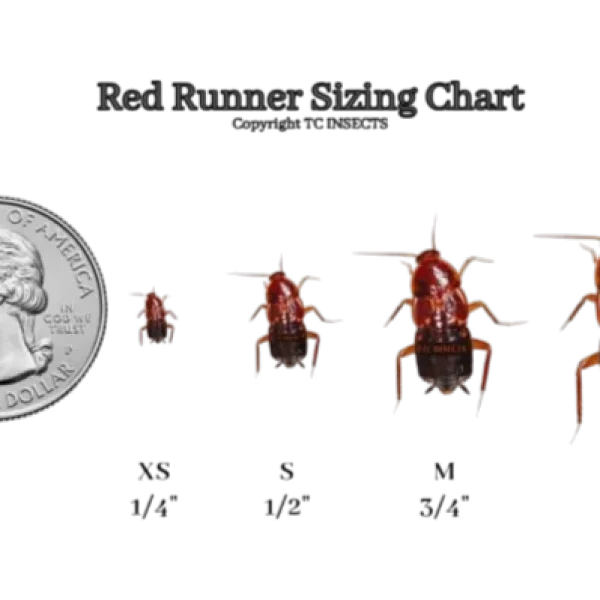
The sizing of this roach is not exact, but very close. Below is the recorded range of sizes you will receive or each size selected.
XS: 1/4″
S: 7/16″ – 9/16″
M: 5/8″ – 3/4″
L: 3/4″ – 7/8″
Husbandry and Diet of Red Runner Roaches
Temperature: 70-85
Humidity: 45-80%
Red Runner roach care is fairly simple compared to other roach species. The colonies can quickly boom, so cleanliness is an essential aspect of their husbandry. We prefer to feed this species, our Dry Roach Food, and Jumbo Water Crystals. We limit the veggies and fruit with this species to keep the containers as dry as possible. No substrate is required, and they are kept in vented containers with vertical egg flats (also available in our store)
Red Runner Colony Habitat: To breed, you need a warm, dark area to store them. House the Runners in a plastic storage container, tank with a screen lid, or pre-made habitat. 20-gallons per 1000 adults is ideal.
Red Runner Roach Diet
A quality Base diet for your roaches should be a professional premade mix. Our “Supreme Feed” is high in calcium, probiotics, and essential vitamins and minerals. The formulation acts as a gut-load, providing quality nutrition to your reptiles. The recipe has been perfected through experimentation since 2016.
>Click Here to Buy Supreme Feed<<
In addition to a Premade mix, supplemental food and treats should be added to the roach bin. Here are some of our top picks.
- Vegetable-Based: Potato, sweet potato, dried peas
- Fruit-Based: Oranges, Bananas, Apples
- Fungi-Based: Dried Mushrooms
- Fiber-Based: Leaf litter, Oats, Grains
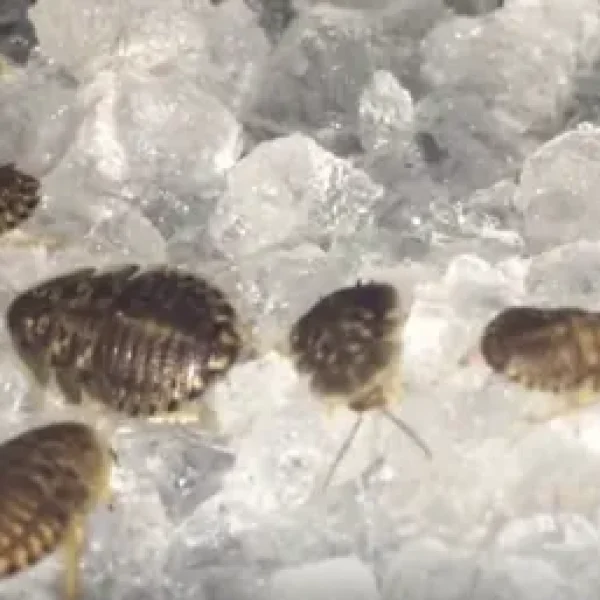
- Water: We Recommend giving water to your roaches using “water crystals.” Standing water in the habitat can cause, spills, mold, and unsanitary conditions. We have large size crystals that reduce surface area and evaporation making supplying water a breeze.
Breeding Red Runner Roaches
Starting a Red Runner roach colony is fairly simple. Unlike Dubia, with Red Runners you don’t need to count the males and females. The high reproductive rate of the species makes that chore pointless. However, you can set up in ratios of 1 male to 3 females for increased productivity.
Set up the bin to the habitat guide above. Make sure that the colony has plenty of food and water crystals.
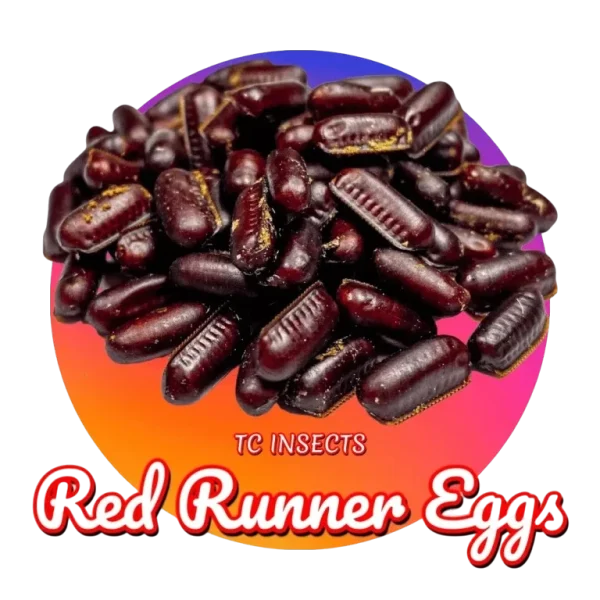
The females will lay eggs (ooth) that hatch in 7 to 14 days. The nymphs can be kept with the adults.
Red Runner Roaches Natural Habitat:
The native range includes Northern Africa and Stretches into Central Asia. Reported Invasive to southern Florida, USA.

TC INSECTS FEEDER NUTRITION TABLE
The Nutritional Contents of the Red Runner Roach will be similar to Dubia of equal size. However, this species has tested with higher levels of B12. Which helps energy and metabolism in reptiles.
|
Species |
Protein % |
Fat % |
Fiber % |
Calcium_(mg/kg) |
Phosphorus_(mg/kg) |
|
Crickets |
15.3 |
3.2 |
2.1 |
275 |
2510 |
|
Dubia |
22.9 |
7.1 |
2.8 |
798 |
2623 |
|
BSFL |
17.4 |
13.8 |
2.9 |
9380 |
3540 |
|
Superworms |
19.6 |
17.6 |
2.5 |
180 |
2350 |
|
Mealworms |
18.7 |
13.3 |
2.6 |
169 |
2980 |
|
Silkworms |
9.6 |
1.1 |
1 |
185 |
2400 |
|
Fruit Flies |
21.5 |
6 |
2 |
526 |
4000 |
|
Spikes |
17 |
12.5 |
2 |
5230 |
3540 |
|
Hornworms |
9 |
3 |
0.5 |
470 |
2000 |
Species-Specific Myths
There are rumors that this species can infest a house. However, this species has the same chances of infesting a house as a Dubia Roach. If you have a clean house, this species cannot and will not infest. Roaches need proteins to make eggs and reproduce. So if you are not already dealing with a roach problem in your home, then this species poses you no risk. Keepers that have experienced indoor infestations from this species had to have the ideal conditions for it to occur. Keep pet safe roach poison if this is something you might be concerned with.